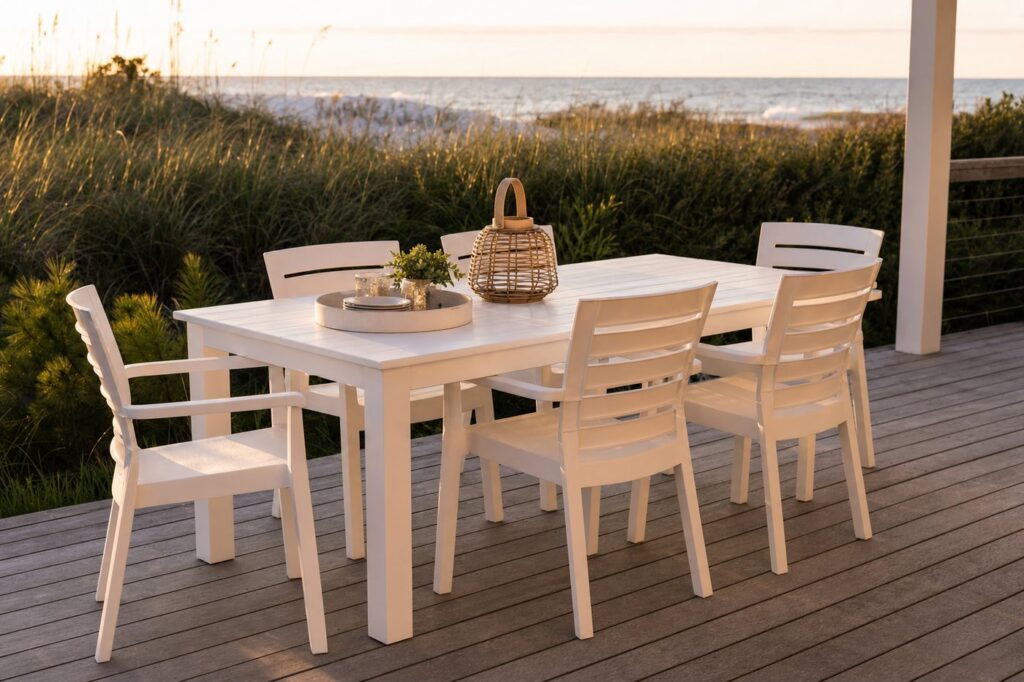
A plastic outdoor dining chair fit and finish checklist gives you a structured way to evaluate every chair before it ships — not after it arrives and you realize it crowds your table, sits awkwardly low, or shows rough edges that catch on clothing. That decision matters more than most buyers expect because “plastic” covers a wide spectrum of materials, construction methods, and surface quality. The sections below walk through seat height, table clearance, frame construction, hardware, surface finish, assembly expectations, and delivery logistics, so you can compare chairs on the same terms rather than relying on glamour photography and vague marketing copy.

Seat Height and Body Fit
Standard dining table height in the United States runs 28 to 30 inches, and most dining chairs are designed with a seat between 17 and 19 inches to leave roughly 10 to 12 inches of thigh clearance beneath the tabletop. If you land outside that range — taller chairs for counter-height surfaces, lower chairs for vintage or custom tables — the proportion quickly becomes awkward. Measure your table from floor to underside apron before you buy any chair.
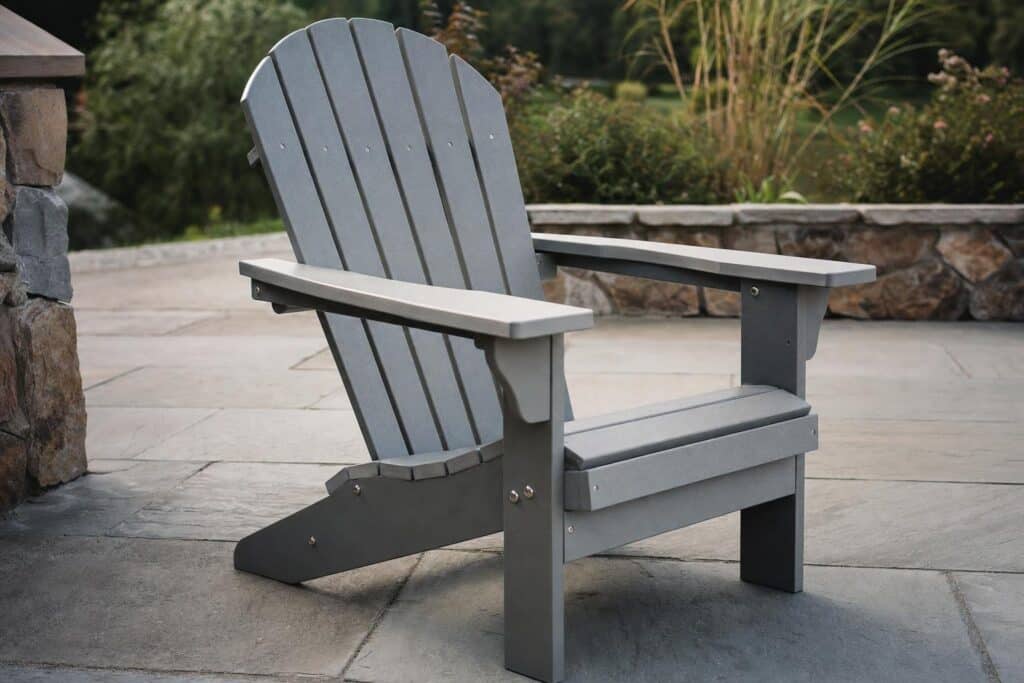
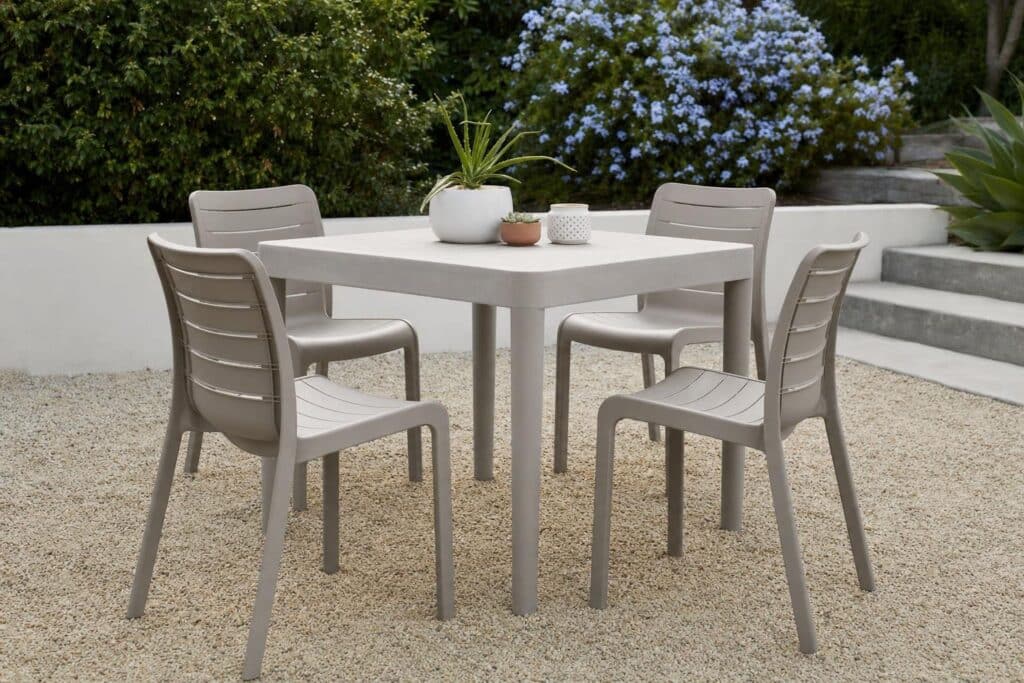
The Armless Cafe Chair from Plastic Furniture To Go sits at a verified 17 inches at the seat, which pairs comfortably with most 28-to-30-inch dining tables. The Hampton Adirondack Chair, by contrast, seats at 16 inches — suitable for lounging beside a low side table but low for a dining surface. Neither figure is a guess; both are published seat heights you can use directly in your clearance calculation.
Also consider the depth of the seat pan. A seat that is too shallow will feel unsupportive for longer meals; one that is too deep pushes shorter-legged users to the edge. Manufacturers should publish seat depth as a separate dimension. If the listing only shows overall depth, learn how to read outdoor furniture dimensions online so you can interpret what each number actually measures.
Table Clearance and Armrest Interference
Armrests are a common source of fit problems that buyers discover too late. A chair with armrests that sit above the table apron cannot slide under the table at all, which forces you to pull the chair further out, loses floor space, and creates a cluttered look. Armrest height is not always listed, so contact the seller directly if the specification is missing.
An armless design sidesteps this entirely. Because there is nothing to collide with the table edge, the chair tucks cleanly underneath regardless of apron height, and you can seat more people per linear foot of table edge. The Armless Cafe Chair’s armless profile is a practical advantage specifically in this context, not just an aesthetic choice.
Beyond armrests, check the chair’s overall width. Chairs that are wider at the seat than at the front legs create a wedging problem when pushed together at a rectangular table. Look for the widest point listed — sometimes called “overall width” — and compare it to the spacing between your table legs.
Frame Construction and Material Integrity
The word “plastic” gets applied to outdoor furniture made from several different materials, ranging from injection-molded polypropylene chair shells with thin walls to solid-profile lumber-style planks of Marine Grade Polymer. These are not equivalent products and they do not perform the same way over time.
Plastic Furniture To Go identifies its furniture material as Marine Grade Polymer. That verified name alone does not establish whether every frame member is solid or hollow, how it is formed, or how a particular joint is engineered. When comparing any plastic outdoor dining chair, use only published construction details and ask the seller to clarify anything the listing does not state.
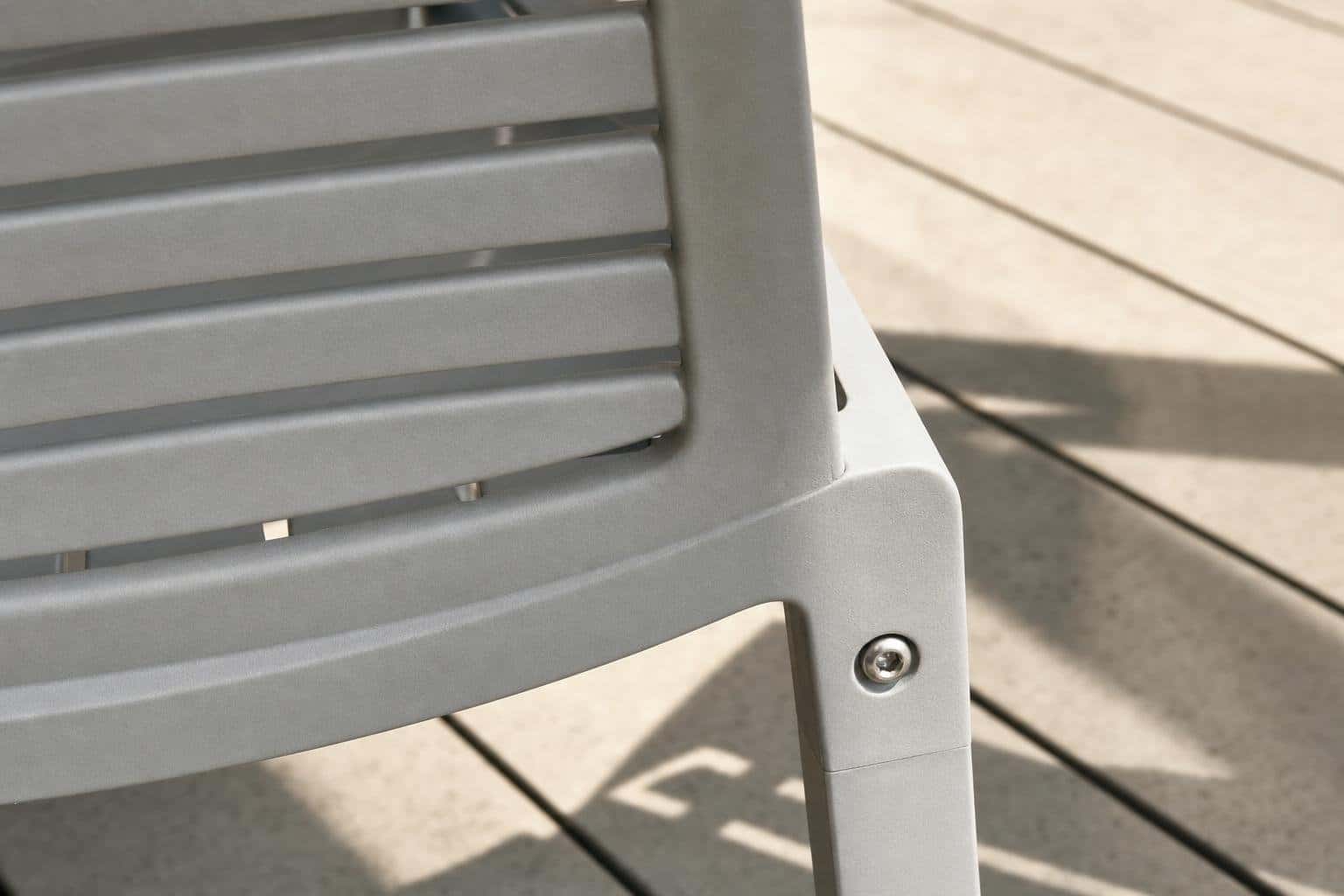
Also look at how the frame is joined, but do not infer a connection method from a product photo. Plastic Furniture To Go verifies that 3/16-inch stainless steel hardware is included; it does not publish enough information here to claim through-bolted construction, connection tolerances, or replacement-hardware availability. Ask about those details if they affect your decision.
Hardware and Fastener Quality
Hardware is an area where outdoor furniture corners get cut quietly. Zinc-plated or uncoated carbon steel screws will rust visibly within one to two seasons in humid or coastal conditions, leaving stains that run down the chair legs. When you see chairs listed at the lower end of the price range with no hardware specification, corrosion risk is one of the likely trade-offs.
Stainless steel hardware — specifically 304 or 316 grade in marine environments — resists surface rust far better and maintains clamping strength over years of seasonal expansion and contraction. Plastic Furniture To Go specifies included 3/16-inch stainless steel hardware. Treat that as a verified fastener specification, while evaluating the complete joint and following the current care instructions.
Ask separately whether replacement hardware is available. A published hardware size does not guarantee that a seller supplies replacement parts, and that availability should be confirmed before it becomes important.

Surface Finish and Edge Quality
A plastic outdoor dining chair that looks clean in product photography may show a different story on inspection: visible gate marks from the mold injection point, rough parting lines along the seat edge, or flash that has not been trimmed from the frame corners. These are not merely cosmetic; sharp or rough edges on a dining chair cause snags on clothing and discomfort on the back of bare legs.
On solid polymer plank-style chairs, the finish quality depends on how the material is milled and how the edges are radiused. Look for product descriptions that address edge finish, or read verified customer reviews specifically for comments about rough edges or sharp corners rather than just overall appearance.
Color stability is a separate finish concern. Terms like “colorfast” and “UV-stabilized” are used loosely across the market, and very few sellers publish standardized fade-testing data. Plastic Furniture To Go backs its Marine Grade Polymer furniture with a five-year warranty against fading, which is a concrete commitment you can weigh against competing products. That is not the same as saying the color will never change — it means the manufacturer stands behind the material’s color performance for a defined period.
Texture also affects comfort. A slightly textured seat surface provides grip; an overly smooth surface can become slippery when wet. Ask the seller or check reviews for any comments about wet-surface performance if your dining area is exposed to rain or sprinklers.
Assembly and Out-of-Box Experience
Knock-down furniture shipped in a flat box lowers freight cost and damage risk compared to fully assembled chairs, but the experience of opening the box matters. A well-designed knock-down chair should include pre-labeled parts, fasteners organized by type, and an instruction sheet clear enough that you do not need a video tutorial to follow it. Vague exploded diagrams with unnumbered parts are a sign that the assembly process was not thoroughly tested.
Plastic Furniture To Go chairs are designed for approximately 20-minute assembly with included hardware. That is a realistic estimate for a single chair; budget slightly more for your first one while you learn the sequence. The tools required are typically basic — a wrench or socket that matches the supplied hardware. Confirm the tool requirement before you begin so you are not making a hardware-store run mid-assembly.
Check the hardware bag before you start. Count fasteners against the parts list so you discover any missing pieces while you can still contact customer service efficiently, not after you have already attached the seat to the frame in a configuration that requires partial disassembly to fix.
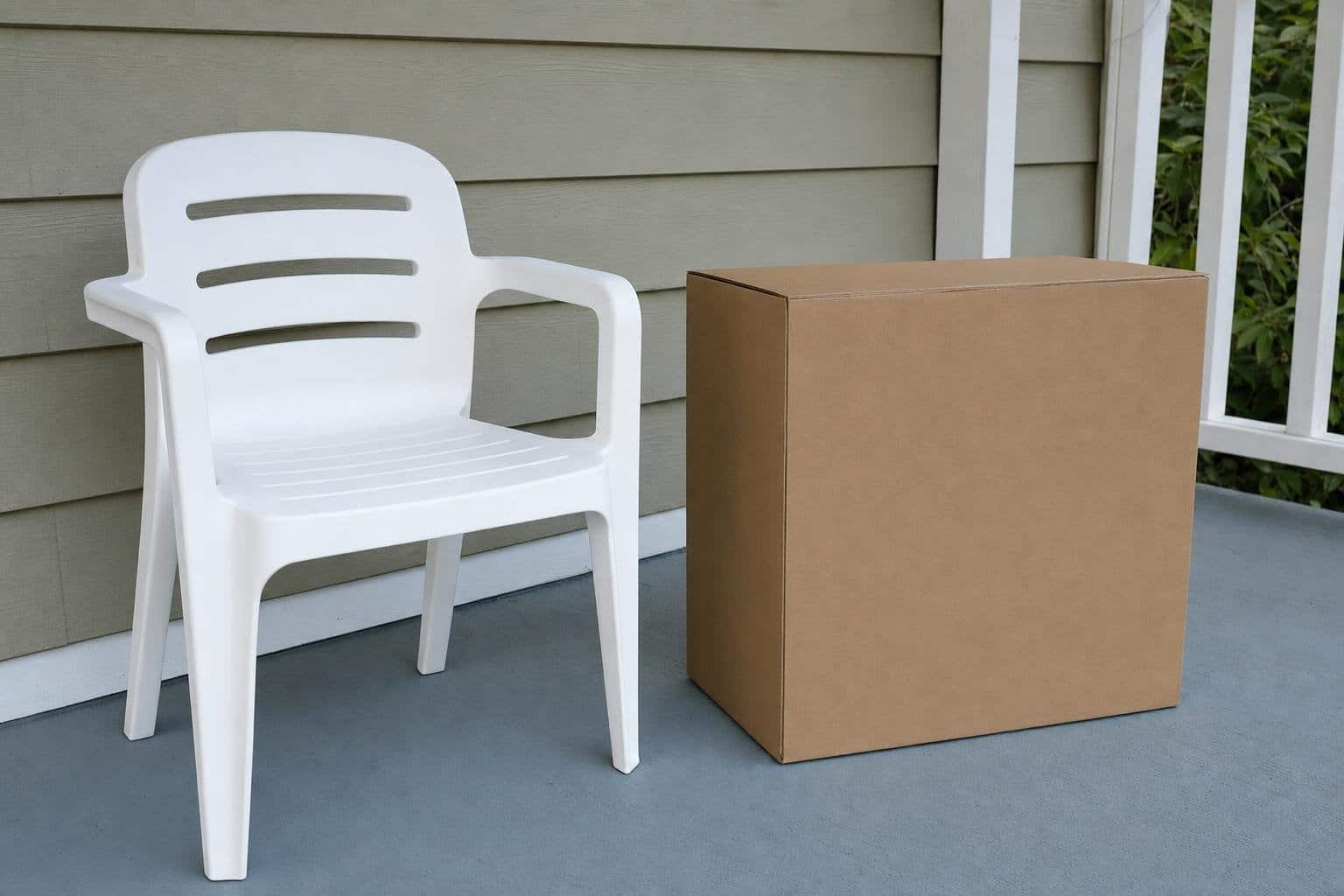
Delivery Window, Returns, and the Plastic Outdoor Dining Chair Fit and Finish Checklist in Practice
Even the best checklist is only useful if you apply it before committing. For online orders, “before committing” means reading the shipping timeline and return policy with the same attention you give to dimensions.
Plastic Furniture To Go orders generally ship within three business days, with carrier transit estimated at two to seven additional business days, putting the customer delivery window at five to ten business days. Free shipping is included nationwide, which removes a variable that sometimes makes comparing total landed cost difficult across sellers.
The return policy is 30 days from receipt for products that are new, unused, unassembled, and in original packaging with proof of purchase. The practical implication: do not assemble a chair you are unsure about. Inspect the parts first. If something is wrong — damaged in transit, wrong item, missing hardware — contact the seller before assembly so the return pathway is straightforward. Returns due to seller error are handled differently from buyer-initiated returns, and knowing the distinction saves confusion.
On the accessibility side, the 2010 ADA Standards document useful seat height and circulation clearance principles that inform how designers think about seating comfort and passage space, even when formal accessibility compliance is not the goal for a private patio.
Keep the packaging until you have assembled and sat in the chair at your actual table. That is when you will know for certain whether the seat height, table clearance, and surface finish match your expectations — or whether you need to initiate a return.
Frequently Asked Questions
What seat height works best for a standard 30-inch dining table?
Most ergonomics guidance suggests 10 to 12 inches of clearance between the seat surface and the underside of the table apron. For a 30-inch table with a 2-inch apron, a seat height in the 17-to-19-inch range is typical. The Armless Cafe Chair from Plastic Furniture To Go has a verified 17-inch seat height, which falls within that standard range for most adult users.
Will an armless plastic dining chair feel less comfortable than one with armrests?
For dining use — where people sit relatively upright, rotate in and out frequently, and need to get close to the table — armless chairs are practical. Armrests become more valuable in lounge or conversation seating where you stay reclined for longer periods. Comfort also depends on seat depth, back angle, and material texture, not just whether arms are present.
How do I check whether a plastic outdoor chair’s finish will hold up over several seasons?
Look for a specific warranty against fading rather than vague language about UV resistance. Confirm whether the color goes all the way through the material — solid-color-through construction means a scratch or nick does not expose a different-colored core. Ask the seller what maintenance, if any, is recommended, and whether any cleaning products will damage the surface.
What should I do if parts are missing or damaged when my order arrives?
Document the issue with photographs immediately and contact the seller before you attempt assembly. For Plastic Furniture To Go, returns of seller-error orders are handled differently from standard buyer-initiated returns, meaning you are not responsible for return freight in those cases. Acting before assembly keeps all return and replacement options available to you.
Ready to apply this checklist to a specific product? Browse the full Plastic Furniture To Go catalog, or go directly to the Armless Cafe Chair product page for dimensions, color options, and ordering details. If you have a question about table clearance, compatibility with an existing dining set, or anything else this article did not cover, contact Plastic Furniture To Go before you order — it is easier to clarify a fit question upfront than to repackage a chair for return.