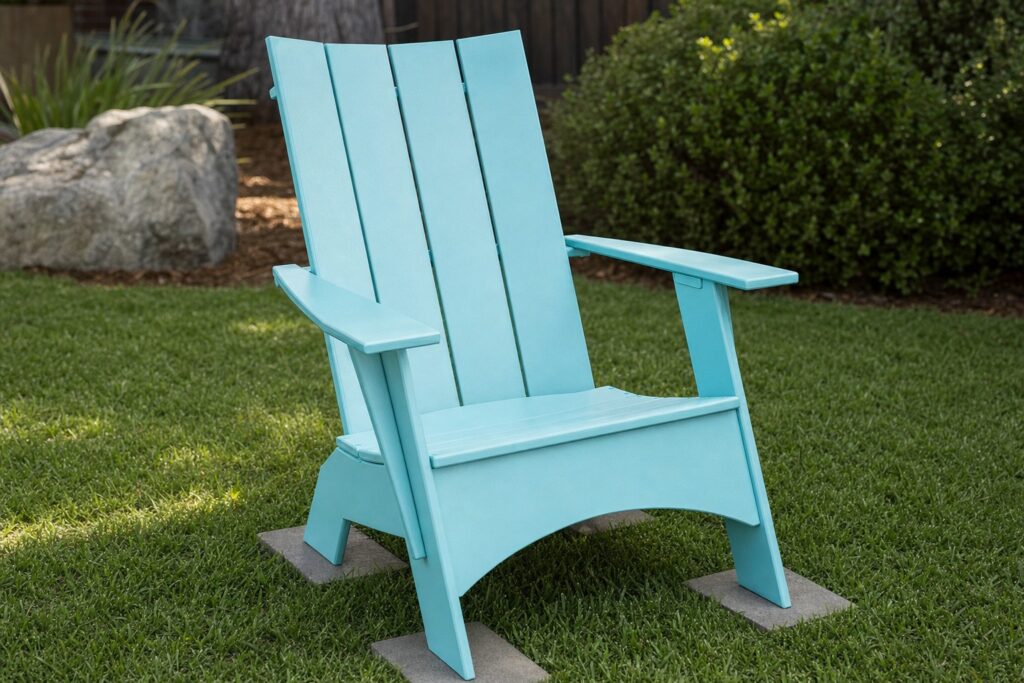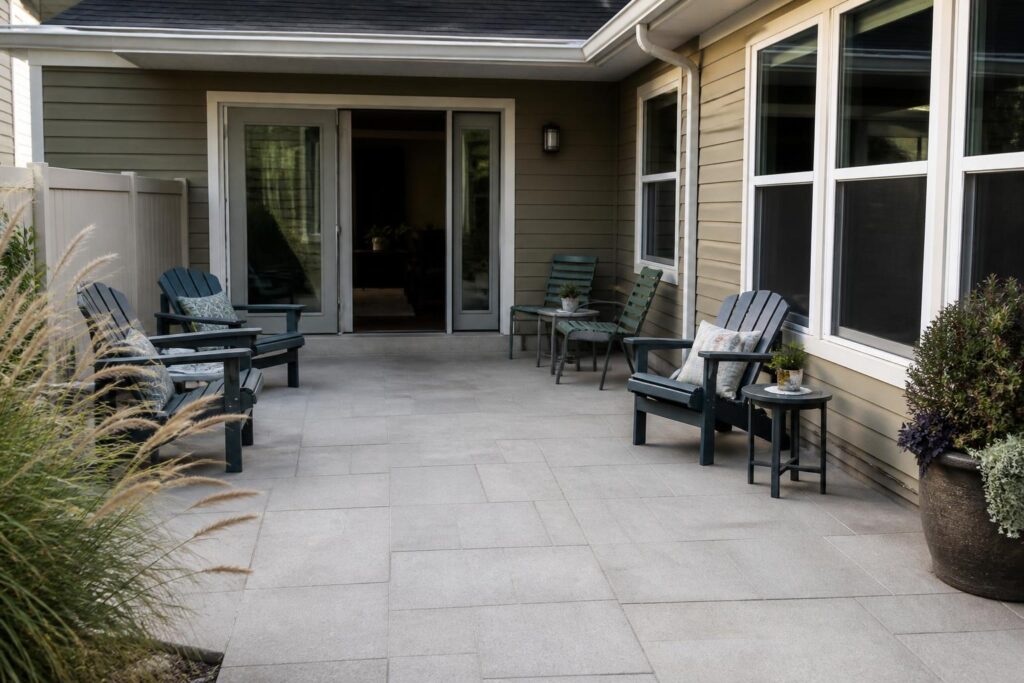

A small porch shouldn’t rule out the deep, leaned-back comfort of a classic Adirondack. Adirondack chairs for small porches take a little more planning than dropping two chairs onto a deep patio, but the payoff is real: a proper reading spot, a place to nurse a morning coffee, and a genuine outdoor room even on a footprint that measures six or eight feet across. This guide walks through the actual dimensions to check, how to angle chairs so two people can talk without shouting, where to place a side table, and how to keep the front door swing and walkway clear.
Measure Your Porch Before You Fall in Love With a Chair
Before you compare styles or colors, pull out a tape measure and sketch your porch on paper. You need three numbers: usable depth (front edge of the porch to the house wall, minus any door swing), usable width (inside rail to inside rail, or the full slab width if it’s open), and the door swing arc if the door opens onto the porch. Most Adirondack chairs occupy a footprint of roughly 30 to 36 inches wide and 36 to 38 inches deep, with a seat back that leans another few inches into that depth number.
If your porch is only 5 feet deep, a full-size Adirondack pushed against the wall will leave you about 24 inches of walking clearance in front of it. That’s tight but workable for a single person passing through. Drop to 4 feet of depth and the same chair leaves you 12 inches, which is not a walkway. On porches under 5 feet deep, you’re generally better off with a slimmer profile like a café-style seat rather than a full Adirondack.
Width matters just as much. Two Adirondacks side by side need roughly 72 to 80 inches of clear wall length, plus at least 6 inches of breathing room on the outside of each chair so arms don’t scrape the railing or siding. Write those numbers down before you shop.
Why Adirondack Chairs Fit Small Porches Better Than You’d Think
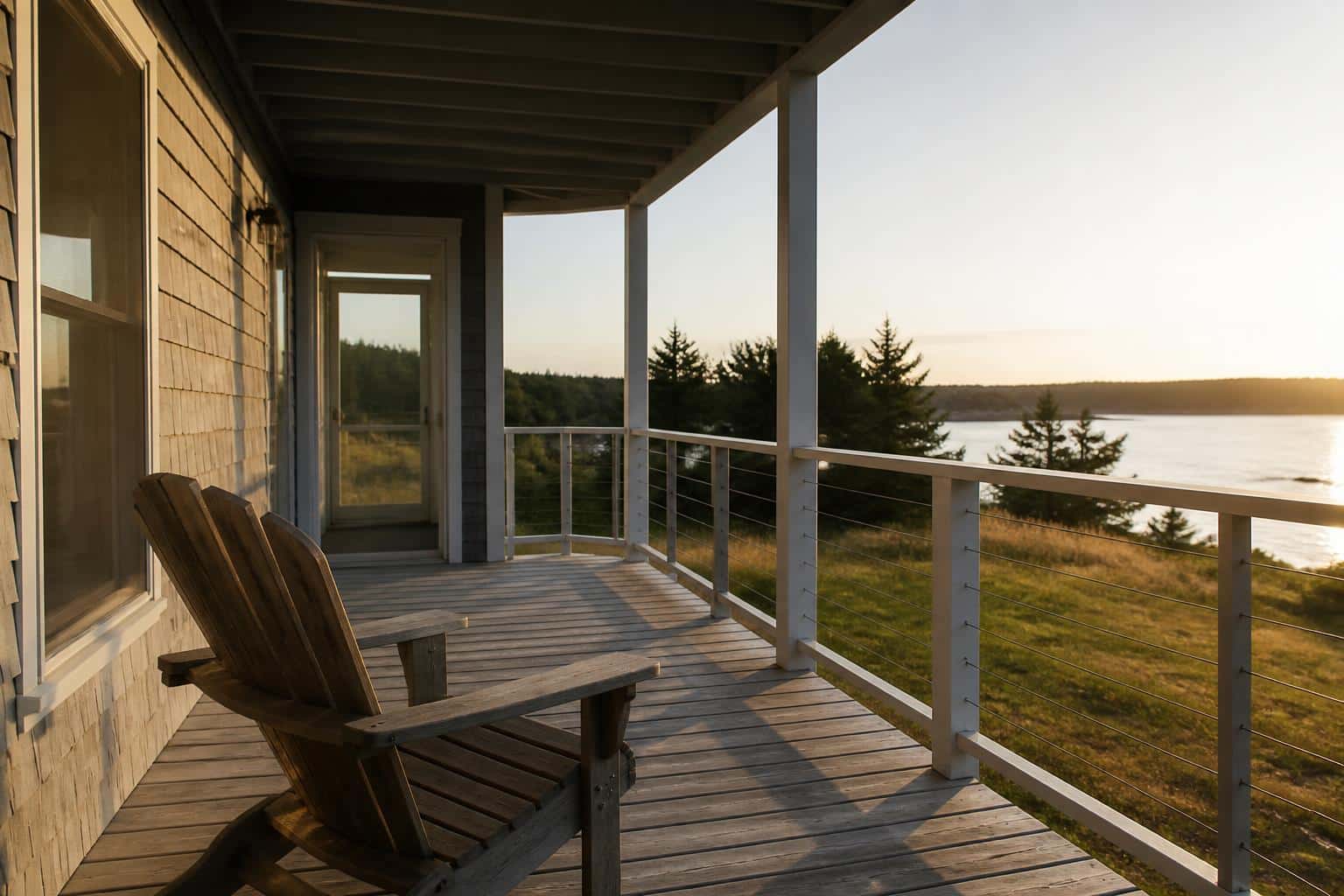
The Adirondack silhouette looks bulky, but the geometry actually favors compact spaces. The seat sits low, usually 12 to 15 inches off the ground, and the back reclines at roughly 100 to 105 degrees. That reclined posture pulls your knees forward and your head back, which means the chair reads as long and low rather than tall and boxy. On a small porch, a low visual line keeps the space from feeling stuffed.
Compare that to a tall dining chair or a wingback-style outdoor armchair, both of which stand 36 to 42 inches at the back and block sightlines through the porch. A pair of Adirondacks tops out around 36 to 38 inches at the seatback peak, and because the peak is behind the seated occupant, it doesn’t crowd the door or the front window.
There’s also a functional reason: Adirondacks are single-occupancy by design. Nobody expects to squeeze two adults onto one, and nobody tries to prop their feet on a shared ottoman. That means you’re not tempted to add a bulky footrest or a wide loveseat frame that would eat your remaining floor space. The Hampton Adirondack Chair is a good example of the traditional proportions – wide contoured arms that double as drink rests, so you often don’t need a separate side table at all if space is truly tight.
If you like to sit outside in cooler months, the reclined back also lets you tuck a blanket around your shoulders without it sliding off the way it would on a straight-backed chair.
Angling Two Chairs for Real Conversation
The single biggest mistake on a small porch is lining two chairs up in parallel, both facing the yard. It looks tidy in photos, but it forces two people to talk sideways to each other for hours. A slight inward angle solves this without eating extra space.
The 15 to 20 Degree Rule
Rotate each chair 15 to 20 degrees toward the center of the porch. That’s a subtle turn – the outside front leg moves maybe 4 to 6 inches forward compared to the inside front leg on a standard chair. The effect is that both occupants can see each other’s faces without turning their necks, but they still get most of the view out toward the street or yard.
Spacing Between the Two Chairs
Aim for 18 to 30 inches of clear space between the inside arms of the two chairs. Under 18 inches feels crowded and prevents a side table from fitting between them. Over 30 inches makes casual conversation feel formal, like you’re across a table at a restaurant. If your porch width forces you outside that range, angle the chairs more sharply (up to about 30 degrees) to visually pull them closer.
What to Skip
Don’t try to face two chairs directly at each other on a small porch. That layout works on a wide deck with a coffee table between, but on a 6-foot-deep porch it eliminates your view and forces you to step around chair legs every time you come through the door.
Where the Side Table Goes (and When to Skip It)
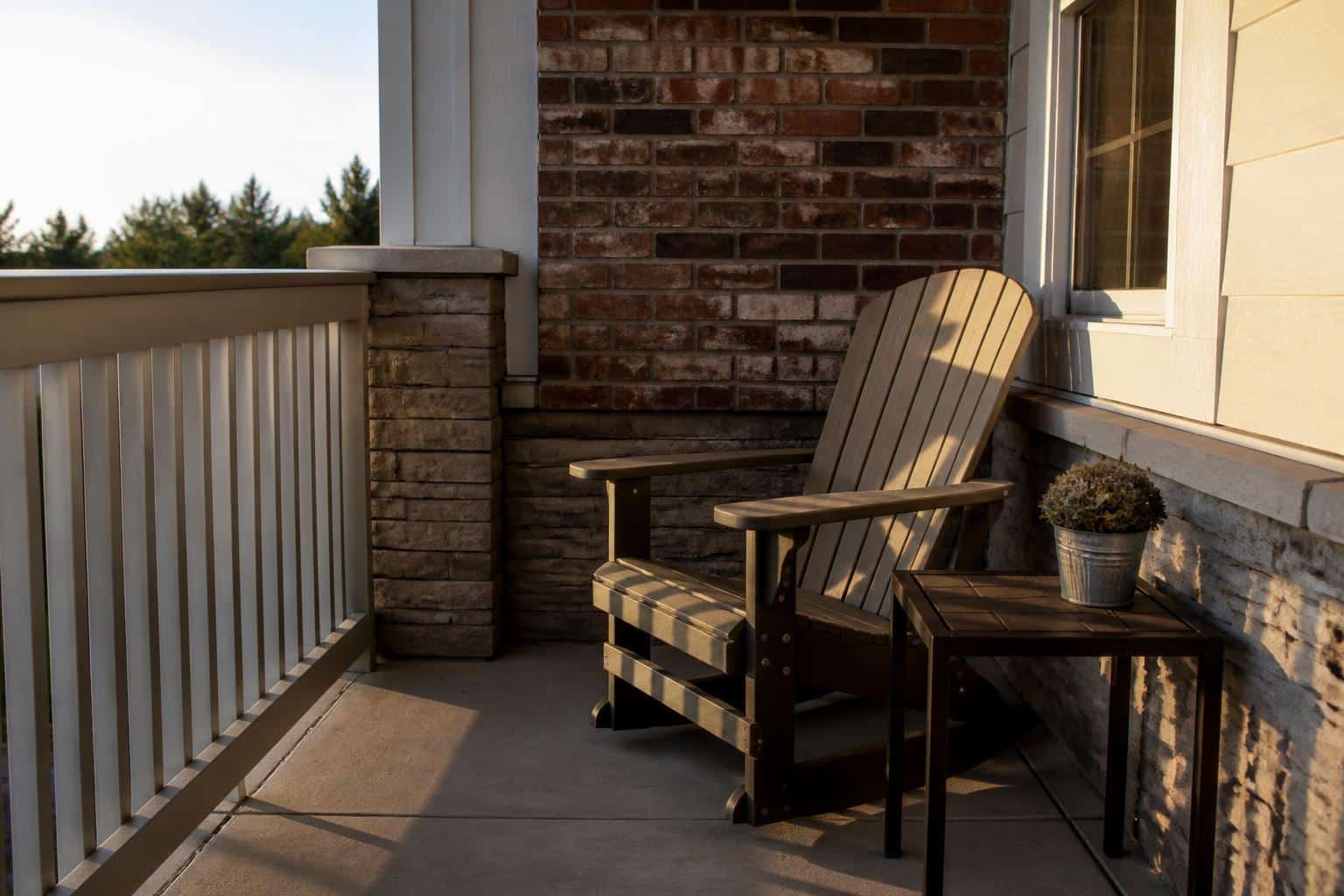
On a small porch, a side table is optional. Adirondack arms are typically 4 to 6 inches wide – enough to balance a mug, a paperback, or a phone. If you’re setting up for one person and reading is your main activity, you may not need a table at all.
When you do want one, the sweet spot for a small porch is a compact square or round table roughly 17 to 20 inches on a side and 18 to 20 inches tall. That height puts the tabletop near the Adirondack armrest, so you don’t have to reach down. A Hampton Square End Table tucked between two chairs handles a shared snack plate, two drinks, and a small lantern without wobbling.
Placement tips:
- Center the table between the two chairs, not pushed against one arm. Equal reach for both people prevents the “whose drink is that” shuffle.
- Leave 2 to 3 inches of gap between the table and each chair arm. That’s enough to prevent scraping when someone shifts weight but close enough that you’re not stretching.
- If you only have room for one chair, place the table on the side away from the door, so entering guests don’t clip it with a bag.
Skip a coffee table entirely on porches under 7 feet deep. A coffee table pushes chairs backward, kills your walkway, and rarely gets used because the Adirondack recline puts your lap too high above a low table anyway.
Keeping the Walkway and Door Swing Clear
Every porch has a traffic path from the steps to the front door. Furniture that blocks that path becomes furniture people learn to hate. On small porches the walkway is usually 30 to 36 inches wide, and it should stay that wide from the top step to the door threshold.
Start by mapping the door swing. A standard 36-inch exterior door swinging outward carves an 18 square-foot arc. Even inward-swinging doors need 6 to 8 inches of clearance in front so the storm door or screen door can open without hitting a chair. Mark that arc on your porch with painter’s tape before you place any furniture.
For safety and code awareness on stair and rail clearances near your seating, the U.S. Consumer Product Safety Commission publishes general home safety guidance worth a quick read if your porch has steps close to the seating zone.
Layout patterns that work on tight porches:
- Two chairs on one side, walkway on the other. Best when the porch is wider than it is deep. Both chairs live to the left or right of the door, walkway runs down the opposite side.
- One chair each side of the door. Symmetrical, formal, and works when depth is limited but width is generous. Chairs face outward toward the yard, walkway runs straight through the middle.
- Single chair with a view. On truly small porches (under 40 square feet), one chair angled toward the view beats two crammed-in chairs every time.
Whichever pattern you choose, walk the path from the steps to the door with a laundry basket in your arms. If you can’t pass without turning sideways, the chairs need to move.
Weather, Sun, and Long-Term Livability
A small porch usually has partial shelter – roof overhead, at least one wall behind – which helps furniture last. But porches also concentrate heat and reflected light, especially those facing south or west. Plastic outdoor furniture, particularly poly and HDPE, handles that exposure well because the color goes all the way through the material rather than sitting on the surface as paint. Look for chairs with UV inhibitors built into the resin, not just applied as a finish coat, and check the fade warranty the manufacturer stands behind before you buy.
Plastic Furniture To Go backs its chairs with a 7-year structural warranty and a 5-year fade warranty, which gives you a realistic timeline for how the furniture should perform under normal porch conditions. That’s a useful benchmark when you’re comparing brands – if another manufacturer won’t put a specific fade number in writing, that tells you something.
Cleaning is straightforward on plastic. A bucket of warm water with a squirt of dish soap and a soft brush handles pollen, cobwebs, and the film that builds up over a season. For stubborn spots, a mix of one part white vinegar to three parts water lifts most mildew without harming the color. Rinse with a garden hose, let air dry, and you’re done in fifteen minutes for two chairs and a table.
Think about winter storage too. On a covered porch in a mild climate, plastic chairs can stay out year-round. In regions with heavy snow load, drag them against the house wall or tip them forward against a railing so snow doesn’t pile in the seat and freeze.
Frequently Asked Questions
What’s the minimum porch size for two Adirondack chairs?
You need roughly 40 to 45 square feet of usable floor space beyond the door swing and walkway. In practical terms, that’s a porch at least 5 feet deep and 8 feet wide. Any smaller and you’re better off with one Adirondack plus a compact side table, or switching to a slimmer chair style. Always subtract the door swing arc and a 30-inch walkway before you calculate what’s left for seating.
Can I put an Adirondack chair on a porch that’s only 4 feet deep?
You can, but it becomes the only piece of furniture and the walkway squeezes down to about 12 inches, which is uncomfortable for anyone carrying groceries. On a 4-foot-deep porch, consider placing the chair at one end so people pass in front of the door rather than in front of the chair. A café-style chair with a shallower footprint often serves that space better than a full Adirondack.
How much space do I need between two Adirondack chairs?
Aim for 18 to 30 inches between the inside armrests. That range fits a small side table, allows a conversation without shouting, and prevents the arms from touching when someone leans sideways. Under 18 inches feels cramped; over 30 inches feels distant. If the porch forces you outside that range, angle the chairs inward by 15 to 30 degrees to visually and acoustically bring the seats closer together.
Do plastic Adirondack chairs get too hot to sit on in direct sun?
Lighter colors like white, sand, and light gray stay noticeably cooler than dark greens, blues, and blacks in direct afternoon sun. Any solid material – plastic, wood, or metal – will feel warm after hours of exposure, but plastic doesn’t scorch skin the way dark metal can. A porch roof or shade sail makes the biggest difference. If your porch bakes from noon on, choose a lighter color and thank yourself in July.
Plastic Furniture To Go ships the Hampton Adirondack and its matching square and round end tables factory-direct with free nationwide shipping, so you can build a small-porch setup without hunting through a warehouse store or paying a delivery surcharge. Browse the Hampton Adirondack Chair in the colors that fit your house, and if you’d like a second opinion on which layout suits your specific porch dimensions, send your measurements through the contact page and we’ll help you sketch it out.