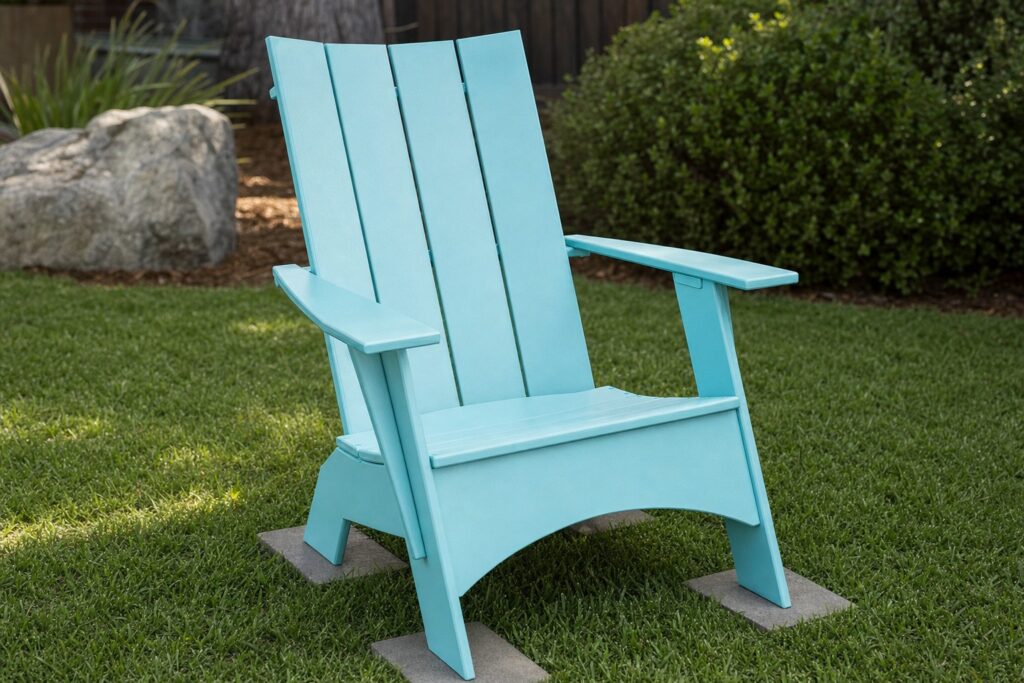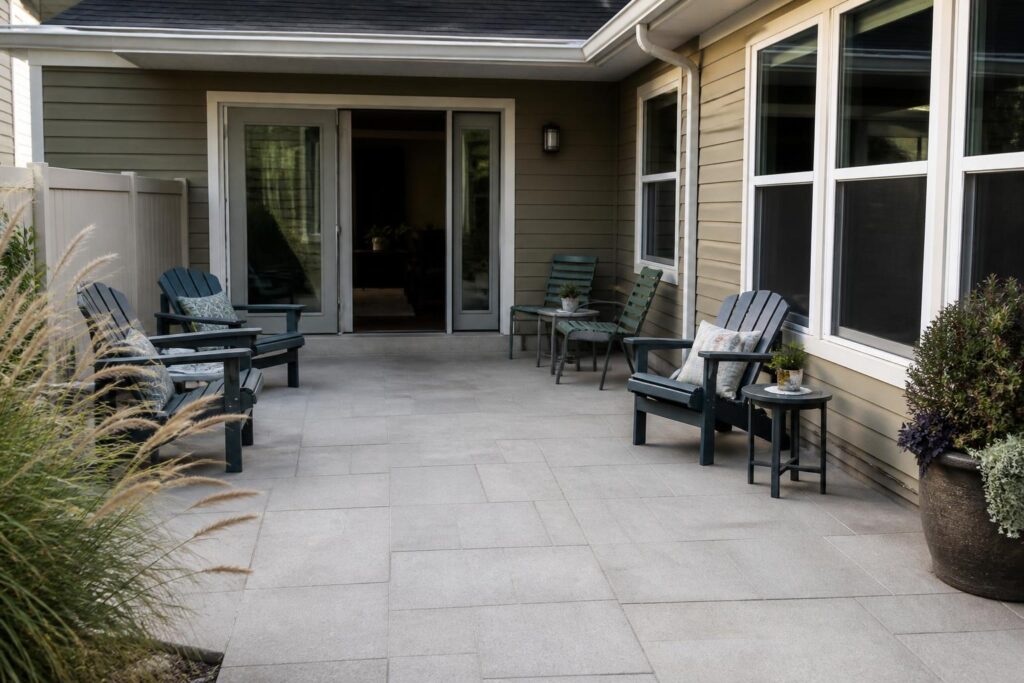

Getting poolside Adirondack chair placement right is one of those details that quietly makes or breaks a backyard. Push the chairs too close to the coping and you end up with slippery footing, splashed cushions, and chairs that block the walkway every time someone climbs out. Set them too far back and the swimmers feel disconnected from the loungers, and the whole space stops functioning as one hangout. This guide walks you through the distances, spacing rules, and layout patterns that keep a pool deck safe, comfortable, and easy to move through, whether you have a compact plunge pool or a full-sized rectangle with room to spare.
How Far From the Water Should Adirondack Chairs Sit?
The single most useful rule for poolside Adirondack chair placement is to keep the front feet of each chair at least 36 inches back from the pool coping. That three-foot buffer gives swimmers a dry landing zone when they climb out, keeps the chair legs off the wet edge where water pools after cannonballs, and leaves room for a towel to drop without landing in the water.
If the deck is wide enough, 48 to 60 inches is more comfortable. That extra foot or two lets someone walk between the chair and the pool without turning sideways, which matters when guests are carrying drinks, kids are running past, or an adult is pacing the edge to watch swimmers. Building code minimums for pool deck width vary, but most residential decks are built at 4 to 6 feet on the long sides for exactly this reason.
An Adirondack chair has a deeper footprint than a standard patio chair. From the front of the leg rest to the back of the rear leg, most designs measure 34 to 38 inches. That means once you add the 36-inch water buffer, you need a deck at least 6 feet deep to place a chair comfortably. On narrower decks, angle the chairs at 30 to 45 degrees toward the water instead of setting them square. The angled placement shortens the footprint the chair projects toward the pool and opens up a walking lane behind it.
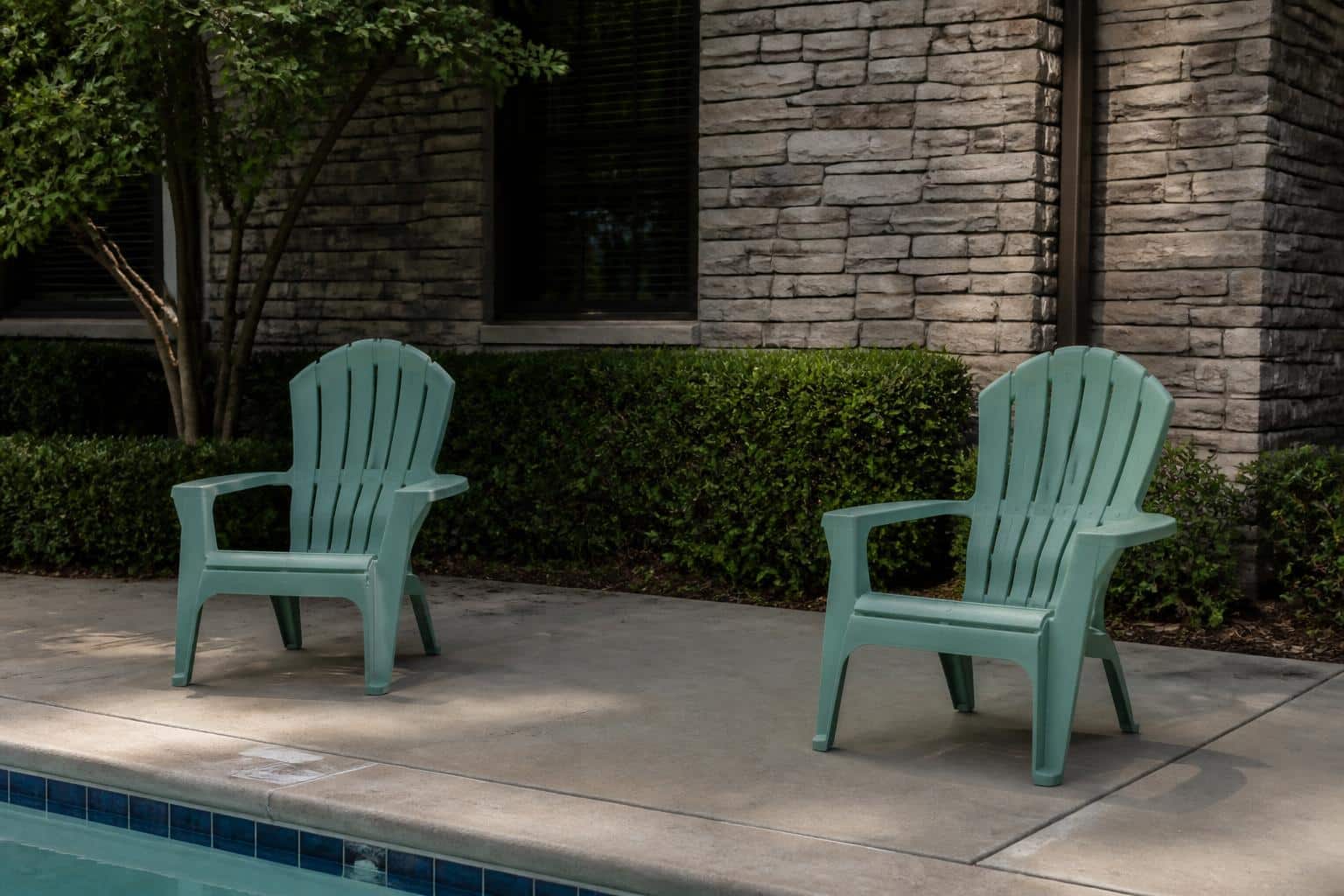
Spacing Between Chairs for Conversation and Comfort
Once you know how far back the row sits, the next question is how much space to leave between chairs. For Adirondack chairs specifically, plan on 8 to 12 inches of clear space between the widest points of adjacent chairs. Adirondacks flare out at the arms – most sit around 30 to 32 inches wide across the armrests – and if you butt them any closer, the wide arms clash and neither person can rest an elbow without bumping a neighbor.
If you want the chairs to feel like a conversation group rather than an assembly line, 12 to 18 inches between arms works well. That’s close enough to talk without raising your voice but far enough that each person has a private zone for a drink, a book, or a wet towel draped over the arm.
Center-to-center spacing is another way to think about it. For a straight row of Adirondacks, plan on 42 to 48 inches from the center of one chair to the center of the next. That number does the math for you regardless of the exact model width. In a curved arrangement facing a fire feature or a corner of the pool, you can tighten to 40 inches center-to-center because the fanned angle naturally opens the arms away from each other.
Skip trying to squeeze a fifth chair into a space that comfortably fits four. Crowded loungers rarely all get used at once – people spread out to the empty ones instinctively, and the extra chair just becomes a laundry drop.
Layout Patterns That Work for Different Pool Shapes
Pool shape drives layout more than pool size. A rectangular pool with two long sides invites a mirrored row on each side, while a freeform kidney pool usually looks better with clustered groupings at the wider ends. Here are four patterns that consistently work.
The Straight Row
Two to four Adirondacks in a straight line along the long side of a rectangular pool. Face them directly at the water for sunbathing, or angle each chair 15 degrees toward the center for a subtle inward tilt that encourages conversation while still letting everyone watch swimmers. Add a small square end table between every two chairs for drinks and sunscreen.
The Corner Cluster
Three chairs arranged in a shallow arc at a corner of the deck, facing the pool at roughly a 45-degree angle. This works beautifully on freeform pools and on decks where one long side is too narrow for a full row. A round end table in the middle of the cluster gives everyone a reachable landing spot.
The Facing Pair
Two Adirondacks set 6 to 8 feet apart, angled toward each other with the pool as the backdrop. Good for smaller decks and plunge pools where the deck itself is the destination. A shared end table between them anchors the setup.
The Split View
Two loungers on one side of the pool facing a matching pair on the opposite side. Works on rectangular pools where both long sides are usable and creates a natural gathering shape – swimmers in the middle, conversation on both banks.
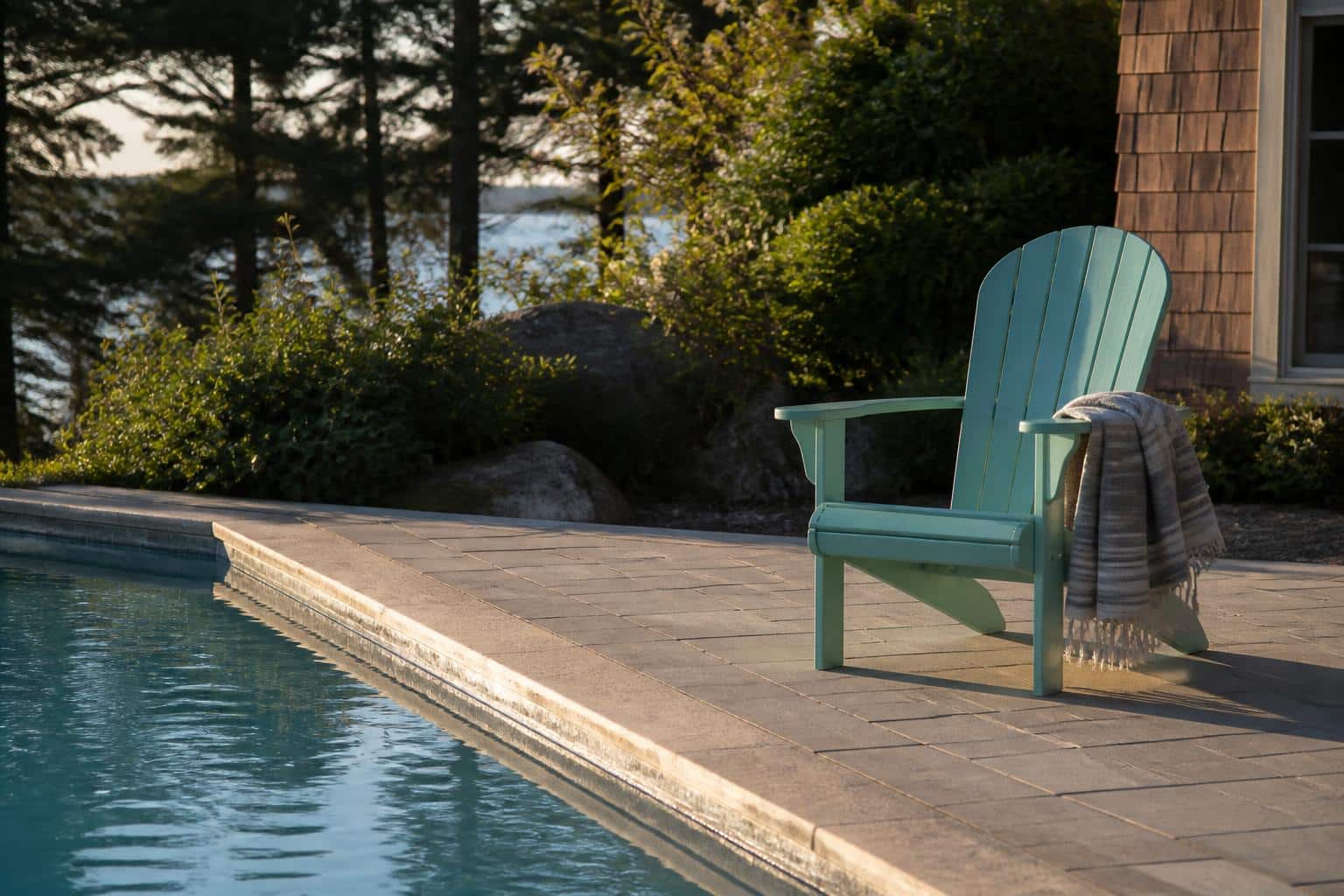
Walkways, Splash Zones, and Traffic Flow
Even a beautiful layout falls apart if people can’t move through it. The main walking path around a pool needs a minimum of 36 inches of clear width – that’s the ADA reference number for accessible routes and a solid baseline for any deck. If the path is between chairs and the coping, aim for 42 to 48 inches so a person carrying a float or a tray isn’t threading a needle.
Splash zones deserve their own thought. On a rectangular pool with a diving end or a swim ladder, the water within about 4 feet of those features gets wet constantly. Don’t place chairs there – the seats stay damp, the deck stays slick, and you’ll fight algae and mildew all season. Save those zones for towel racks, umbrellas, or open walking space.
Think about where wet feet enter and exit. Every pool has two or three natural exit points: the steps, the ladder, and sometimes a shallow-end wade-in. Keep a 5-foot dry corridor from each exit to a towel station. Chairs placed inside that corridor will always be the wet ones, and you’ll get frustrated with the puddles.
Sun and shade shift the whole plan too. Morning sun on the east side of the pool means those chairs will feel hot by 11 a.m. If your deck has permanent shade on one side, put the seating there and reserve the sunny side for a couple of chairs meant for tanning. If you live in a hot-summer climate, our notes on outdoor furniture in intense desert heat cover surface temperatures and material behavior that apply anywhere summer highs regularly top 100 degrees. The CDC and EPA both publish guidance on outdoor heat exposure at epa.gov/heatislands that’s worth a look if you’re planning summer entertaining.
Choosing Chairs and Tables That Belong Poolside
Not every Adirondack chair is built for pool life. Chlorinated water, direct UV, and constant humidity are unforgiving. Poolside chairs should shed water quickly, resist fading, and clean up with a hose. Wooden Adirondacks look great for a season or two, but the chlorine spray shortens their finish life and the porous surface holds moisture that leads to mildew streaks along the slats.
For poolside use, check the particular chair’s material, hardware, and cleaning instructions. Do not assume that all plastic furniture has the same color construction or chemical resistance. Rinse splashes and clean only as the manufacturer directs; inspect the hardware and joints as part of routine care.
Product weight helps you plan rearranging and storm storage. It does not prove that a chair will resist tipping, sliding, or wind. Check the feet and the surface under them, keep walkways clear, and include every item in your severe-weather preparation.
Pair each chair or every-other chair with a side table. Wet swimmers need a place to set a phone or a water bottle that isn’t the deck (where it gets kicked or stepped on). A round table works well in curved arrangements; a square table lines up cleanly between chairs in a row. The Hampton Adirondack Chair is sized to work with either the round or square Hampton end table without crowding.
Consider your color choices against the deck and water. Bright white shows dirt and pool-chemical dust quickly. Deep colors absorb more heat in direct sun. Mid-tone grays, sage greens, and driftwood tans tend to stay comfortable to sit on and hide splash marks between rinses.
Frequently Asked Questions
How many Adirondack chairs fit along a 20-foot pool side?
Using 42 to 48 inches of center-to-center spacing, a 20-foot run comfortably holds four Adirondack chairs with breathing room between them, or five if you tighten spacing and skip side tables. If you want to add end tables between pairs, plan on four chairs and two tables – that arrangement uses about 18 feet and leaves a foot on each end so the row doesn’t crowd the corners of the deck.
Can I put Adirondack chairs directly on a wet pool deck?
Yes, if the chairs are made from poly or recycled plastic. Those materials don’t absorb water or rot, and the feet won’t stain from standing moisture. Wooden chairs are a different story – even sealed wood eventually wicks moisture through the end grain of the legs and develops soft spots. If you have wooden chairs, add rubber leg caps or move them to a dry area between uses.
Should Adirondack chairs face the pool or away from it?
Face them toward the water for the strongest use case: watching swimmers, catching sun, and enjoying the view that made you install the pool in the first place. The one exception is when the sun sets directly over the pool – facing chairs into a setting sun is uncomfortable. In that case, angle chairs 30 to 45 degrees so you see the water peripherally without staring into the glare.
Do I need to anchor Adirondack chairs against wind?
Use the furniture manufacturer’s guidance and any pool or property requirements when deciding how to secure furniture. There is no universal weight or wind-speed threshold that makes an unsecured chair safe. Arrange indoor storage or an appropriate approved securing method before severe weather, without obstructing pool access or creating trip hazards.
When you’re ready to build out your poolside setup, Plastic Furniture To Go ships the Hampton Adirondack and matching end tables factory-direct with free nationwide shipping – no dealer markup, no freight surprises. Browse the full Hampton Adirondack Chair lineup to see the color options, and reach out through our contact page if you’d like a second opinion on how many chairs will fit your deck before you order.