
An adirondack chair size guide is one of those small pieces of homework that saves real frustration later. These chairs look compact in photos, but a full-size adirondack is a substantial piece of furniture — wide arms, a deep seat, and a tall fan back that changes how a porch or patio actually feels once the chair is in place. Before you commit to one, two, or a matching set, it helps to know the typical dimensions, the clearances you need around them, and how they behave in different outdoor spaces. This guide walks through the numbers and the practical decisions so you can measure once and order with confidence.
Standard Adirondack Chair Dimensions You Should Expect
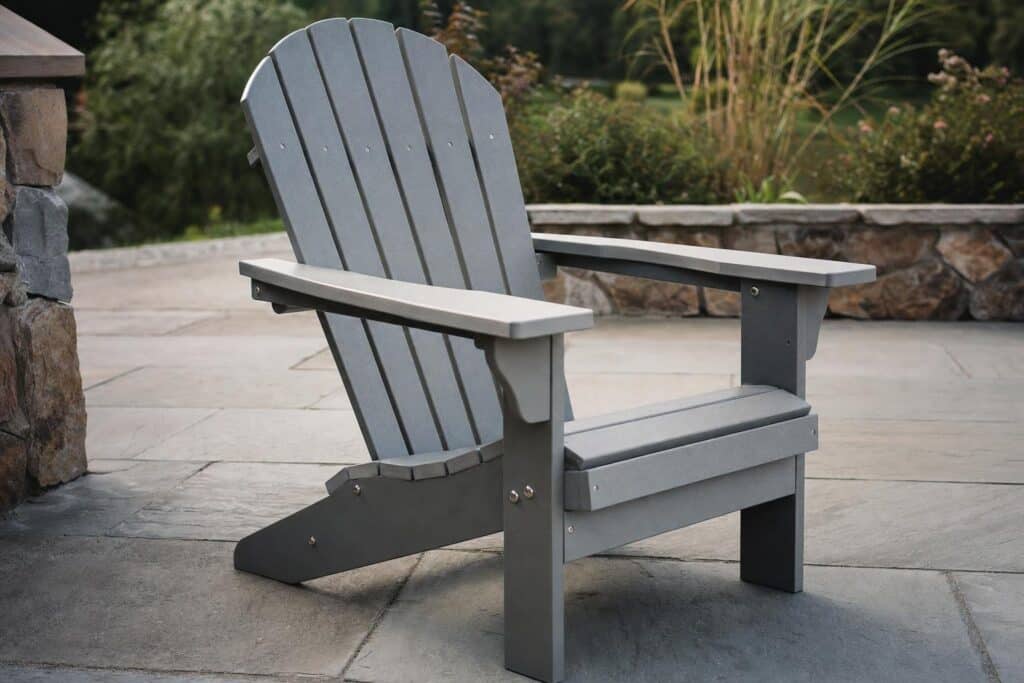
Most full-size adirondack chairs land in a predictable dimensional range, and knowing that range is the foundation of any adirondack chair size guide. Overall width — measured across the outside of the arms — typically runs 30 to 34 inches. Overall depth, from the front of the seat to the back of the rear leg or lower back slat, is usually 35 to 40 inches. Total height at the top of the fan back generally sits between 37 and 42 inches. These are the outside envelope numbers, and they matter because they determine whether a chair physically fits where you want it to sit.
Inside those outer dimensions, the seat itself is smaller than people expect. Seat width between the arms is usually 20 to 22 inches, seat depth is around 18 to 20 inches, and the seat pitches back at roughly a 15-degree angle so your weight settles against the fan back. The arms are the giveaway feature: broad, flat, and 6 to 8 inches wide, wide enough for a mug and a paperback. Front seat height off the ground is low — often 13 to 16 inches — which is part of the classic silhouette but worth knowing if standing up from a low seat is uncomfortable for anyone in your household.
How to Measure Your Space Before You Order
Once you know the chair’s dimensions, the next step is measuring the spot where it will actually live. Grab a tape measure and note three numbers: the usable width of the area (wall to railing, post to post, or the edges of a patio slab), the usable depth from the back wall or edge outward, and any obstructions like planters, downspouts, or door swings. Sketch a rough top-down view on a piece of paper. Even a napkin drawing catches mistakes that photos and mental math miss.
Single Chair Placement
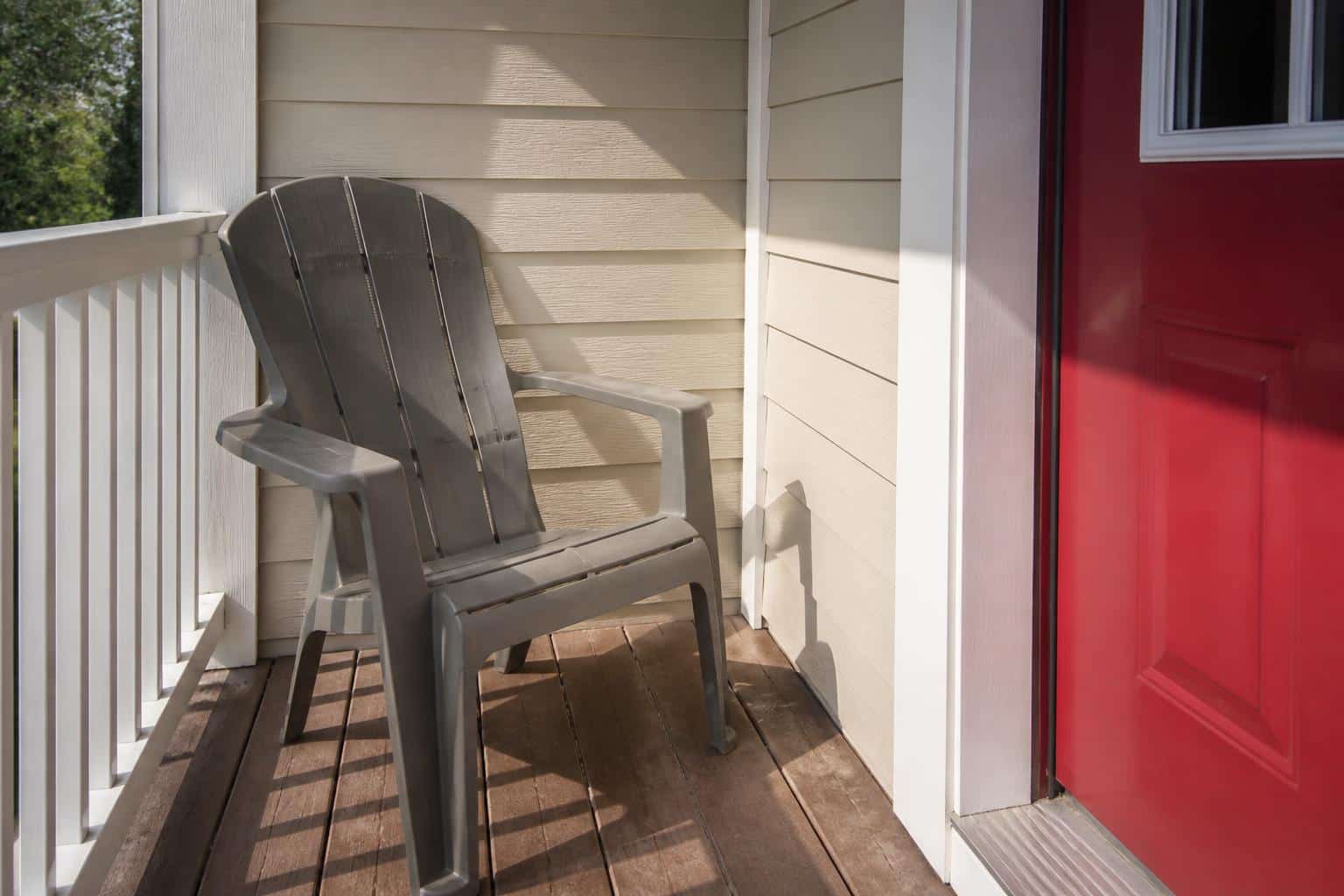
A single adirondack needs its 30-to-34-inch footprint plus breathing room. Plan for at least 6 inches of open space on either side so the arms don’t crowd a wall or railing, and ideally 18 to 24 inches of clear space in front so you can push off the arms when standing. If the chair sits near a door, check the door swing arc — nothing ruins a new chair faster than a screen door hitting the fan back every time someone comes outside.
Two-Chair Groupings
For two chairs side by side with a small table between them, budget 7 to 8 feet of total width. That gives you two 32-inch chairs, an 18-inch table, and a few inches of padding on each side. Angling the chairs slightly toward each other at 10 to 15 degrees creates a more conversational feel without eating more floor space. The Hampton Square End Table is a natural fit between two adirondacks because its footprint matches the visual weight of the chairs without dominating the arrangement.
Arm-to-Arm Space and Why It Drives Comfort
The arm-to-arm measurement is the single most useful number in an adirondack chair size guide, and it’s the one most shoppers overlook. Arm-to-arm is the interior width between the two arms at the point where you’d rest your elbows — usually 22 to 25 inches on a full-size chair. That number tells you three things at once: how much hip room you have, how much shoulder room, and whether the chair will feel roomy or snug when you actually sit in it.
For most adults, 22 inches of arm-to-arm space is comfortable but not generous. Anything under 20 inches starts to feel tight around the hips, especially when you’re wearing a jacket or wrapped in a blanket on a cool evening. Twenty-four inches and up feels genuinely spacious and gives you room to shift around, tuck a leg up, or share the chair with a small child or a determined dog. The Hampton Adirondack Chair sits in the roomy range, which is one reason the classic silhouette has stayed popular for a century.
Arm width matters too. A 6-to-8-inch arm gives you a stable surface for a coffee mug, a phone, or a glass of iced tea, but it also adds to the overall footprint. If you’re trying to squeeze chairs into a tight balcony, narrower arms may buy you a few inches of width — at the cost of that famous drink-holding surface. Decide what you value more before you order.

Fitting Adirondacks Into Common Outdoor Spaces
Different spaces impose different constraints, and the adirondack that looks great on a wide back deck may overwhelm a small balcony. Here’s how the numbers translate to real-world layouts.
Small balconies (under 40 square feet): A single adirondack fits, but only just. You’ll want the chair pulled close to one railing to preserve a walking path. Skip the side table or choose a compact one that tucks under the arm. Two chairs on a small balcony almost always feels cramped — one chair and a footrest reads better.
Standard porches and decks (60 to 150 square feet): This is the sweet spot for adirondacks. You can comfortably fit two chairs with a table between them and still have room to walk past. If your porch is 8 feet deep or more, you can even push the chairs a foot or two off the back wall to create a more relaxed arrangement.
Larger patios (150+ square feet): You have room for a four-chair conversation grouping. Arrange them in a loose semicircle or two pairs facing each other, with 3 to 4 feet of open space in the middle. This keeps conversation easy — sound falls off quickly outdoors — and gives everyone a clear sightline.
Around a fire pit: Plan for 3 feet of clearance between the front edge of each chair and the outer edge of the fire pit for safety and comfort. Any closer and radiant heat becomes uncomfortable; any farther and the fire loses its social pull. The U.S. Consumer Product Safety Commission publishes helpful general safety guidance for outdoor fire features at cpsc.gov that’s worth a read before you finalize the layout.
Weight Capacity, Materials, and Long-Term Fit
Size on paper is a starting point. Compare the seat and overall dimensions with your space, then read the manufacturer’s assembly, care, and intended-use instructions. Inspect joints and seating surfaces over time; no material label guarantees that dimensions or condition remain unchanged. Ask for a published load capacity when needed. Plastic Furniture To Go does not publish that rating, and product weight is not a substitute.
If the chair will live in full sun, look for UV-stable materials that resist fading. If you’re in a region with heavy freeze-thaw cycles, check that the material won’t crack in cold weather — poly and HDPE-style plastics generally handle temperature swings from well below freezing to over 100°F without issue. A structural warranty of several years and a separate fade warranty are useful signals that a manufacturer stands behind the dimensional stability of what they’re selling. Plastic Furniture To Go backs the Hampton Adirondack with a 7-year structural warranty and a 5-year fade warranty, which means the fit you measured will still be the fit you have well down the road.
Kid-Size and Counter-Height Considerations
Not every adirondack in the world is full-size, and knowing what you’re looking at matters. Child-size adirondacks are typically 60 to 70 percent of adult dimensions — around 22 inches wide, 26 inches deep, and 28 inches tall — and they’re built for kids roughly 3 to 8 years old. If you’re shopping for a family setup, a full-size chair actually accommodates a child just fine; the child-size version is more of an aesthetic choice than a functional necessity.
On the other end, counter-height and bar-height adirondack-inspired seating exists but behaves very differently from the traditional low-slung chair. If you want the elevated seat position that pairs with a raised deck rail or a bar-height table, look at options like a classic adirondack paired with the right table height instead of trying to force a hybrid. The traditional adirondack silhouette really works best at its native low seat height, where the recline angle and the fan back make sense together.
Frequently Asked Questions
How much space do I need between two adirondack chairs?
For two adirondacks with a small table between them, plan for 18 to 24 inches of table space plus 6 inches of breathing room on each outer side. That means a total width of about 7 to 8 feet for a comfortable two-chair grouping. Without a table between them, 6 to 8 inches of gap keeps the arms from touching while still feeling social. Closer than that and standing up becomes awkward.
Are adirondack chairs comfortable for tall people?
Generally yes. The deep seat, reclined back, and full-length fan back support taller frames well. The main issue for very tall users — 6’3″ and up — is that the low seat height can make standing up harder. The wide arms help, giving you a stable surface to push off. If height is a concern for anyone in your household, test-sitting a similar chair before ordering is worth the effort.
Will an adirondack chair fit on a standard 4-foot-wide balcony?
A single full-size adirondack will fit on a 4-foot balcony but will take up most of the depth. You’ll have about 12 to 18 inches of walking clearance in front of the chair, which is workable but tight. A better fit on a narrow balcony is often a slimmer café-style chair paired with a compact table. Measure the actual usable depth — not counting the railing thickness — before ordering.
Do I need to leave space behind the chair too?
A few inches, yes. The fan back leans backward at an angle, so the top of the chair sits several inches behind the rear legs. Plan for at least 4 to 6 inches between the top of the fan back and any wall or railing. This also lets air circulate behind the chair, which helps the material dry out after rain and reduces mildew on adjacent surfaces.
Try the patio furniture fit calculator to compare a row of Hampton chairs and an optional end table with your available patio width and depth.
If you’ve measured your space and the numbers line up, the Hampton Adirondack Chair is a straightforward next step — American made, factory-direct from Plastic Furniture To Go, and shipped free anywhere in the country. Explore colors, pair it with a matching end table, or send any lingering fit questions through our contact page before you order. Getting the size right the first time is the whole point of measuring, and we’re happy to help you check the math.