
Finding outdoor furniture for tall people that actually fits is a surprisingly specific problem. Standard patio chairs are typically engineered around a mid-range seated height, which means a person with longer legs, a longer torso, or both can end up with knees above hip level, feet dangling, or a backrest that hits somewhere between the shoulder blades and nowhere useful. This checklist walks you through six measurable factors—seat height, seat depth, back height, arm clearance, foot position, and material structure—so you can evaluate any piece of outdoor furniture with confidence before it ships to your door. Each section names the number to look for and explains why it matters for a taller frame.
Why Standard Seat Heights Fall Short for Taller Sitters
Most outdoor seating ships with a seat height somewhere between 16 and 18 inches from the ground. That range is workable for people of average stature, but if your inseam runs long, a seat at the low end of that range forces your knees up and your hips into a backward tilt, which puts strain on the lower back within minutes.
A rough field guideline—not a medical prescription—is that seat height should allow your feet to rest flat on the ground while your thighs are roughly parallel to it or angled very slightly downward toward the knee. For many tall adults, that means seeking seat heights of 18 inches or above for standard dining-height chairs. The NIOSH ergonomics overview addresses seated posture principles broadly; while it focuses on workplace settings, the underlying logic about hip and knee angle translates reasonably well to any extended sitting situation.
Counter-height and bar-height stools sidestep this problem for certain settings. A seat at 25 inches, for example, suits a tall person at a counter-height surface the same way a standard chair suits an average-height person at a dining table. The Plastic Furniture To Go Counter Height Stool sits at a verified 25-inch seat height, which makes it a practical fit for tall adults using a counter-height outdoor table without the cramped-leg feeling of lower seating.
Whatever the listed height, always confirm the actual specification on the product page rather than relying on category labels like “standard” or “dining height,” since manufacturers define those terms inconsistently. Our guide on how to read outdoor furniture dimensions online explains exactly what to look for in a product listing.
Seat Depth: The Measurement Most Shoppers Overlook
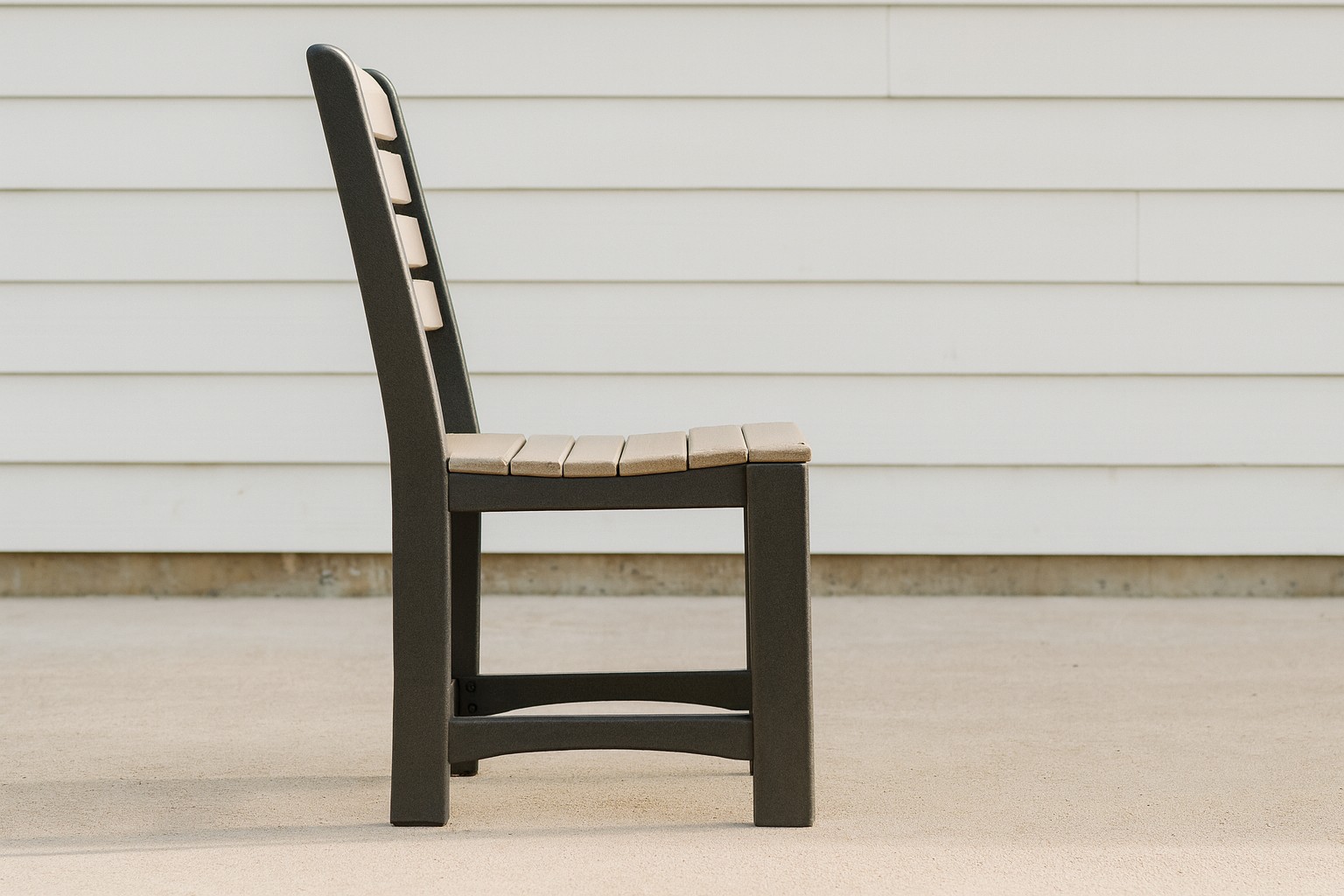
Seat depth—the front-to-back measurement of the seating surface—affects tall people at least as much as seat height does. A shallow seat, commonly around 18 to 20 inches, leaves a tall sitter’s thighs hanging unsupported past the front edge, which creates pressure on the backs of the knees and forces forward slouching. A seat depth in the 20-to-24-inch range suits most tall adults better, though the specific number that works depends on your individual leg length.
For Adirondack-style chairs, seat depth is complicated by the angled seat design. The seat slopes backward, which distributes thigh pressure differently than a flat seat does. If you want a closer look at how those proportions play out, the Adirondack chair size guide breaks down the key dimensions in practical terms. The Hampton Adirondack Chair has a verified seat height of 16 inches at the front—lower than many dining chairs—but the reclined angle and deeper seat profile suit a different posture: more relaxed than upright, better for unwinding than for eating or working.
The practical step is simple: measure your own seated thigh length before shopping. Sit in a firm chair with your feet flat on the floor and measure from the back of your knee to the back of your thigh where it meets the seat. That number is a reasonable minimum seat depth to target.
Back Height and Lumbar Position for Longer Torsos
A backrest that ends at mid-back height works acceptably for a shorter torso, but leaves a tall person’s upper back and shoulders unsupported, which causes fatigue and forward lean over time. Look for a backrest that reaches at least to the shoulder blades—or higher for full shoulder and head support in a lounge-style chair.
Adirondack chairs traditionally offer tall backs that extend well above the seated shoulder line, which is one reason they remain popular with tall adults specifically. The reclined geometry means lumbar contact happens naturally at a lower point on the back, so the support character is different from an upright chair but often more comfortable for long sessions outdoors.
Café-style armless chairs and stools, by contrast, are generally designed for shorter contact time—meals, conversation—so their backrests tend to be briefer. If you need several hours of comfortable outdoor seating, a chair with a full-height back is worth prioritizing over a lower profile option.
Outdoor Furniture for Tall People: Arm Height and Shoulder Clearance
Armrests that are positioned too low create an awkward shoulder drop; armrests that are too high force the shoulders upward and restrict blood flow to the forearm. For tall adults, low armrests are the more common problem because armrest height is often scaled to the same mid-range sitting population as seat height.
A useful reference point: armrest height is typically most comfortable when it lands close to your natural elbow height while seated, roughly 7 to 10 inches above the seat surface for many adults. Taller people—especially those with longer arms—often need the upper end of that range or above.
Check the actual listed armrest height on any chair you consider. If the product page does not publish this number, contact the retailer to request it before ordering. Armrest dimensions are often omitted from standard spec sheets even when other dimensions are provided.
Foot Position and Ground Contact
This one sounds obvious, but it catches a lot of buyers off guard: if your feet cannot rest flat on the ground from the seat, you will feel it within 20 minutes. Dangling feet shift weight onto the backs of the thighs, restrict circulation, and make the torso slump backward.
For tall sitters at a standard-height chair, this is rarely the problem—the problem is usually knees too high, not feet too high. But it becomes relevant in two specific scenarios:
- Counter-height or bar-height stools without a footrest rail: A 25-inch seat height works well if the stool provides somewhere to rest your feet. Without a footrest, foot position becomes uncomfortable at any height. Verify whether a stool includes a footrest ring or rail before purchasing.
- Sloped or uneven patio surfaces: A chair that fits properly on flat ground may feel off on a sloped deck. For outdoor use on irregular surfaces, factor in a small adjustment range when you assess seat height.
The Plastic Furniture To Go Counter Height Stool has a verified 25-inch seat height. Confirm footrest details directly with Plastic Furniture To Go before ordering, and pair it with an appropriately surfaced counter-height table—where feet can brace against a lower rail on the table, or rest on a floor-level surface—for the best fit.
Material Structure and Long-Term Fit
Seat fit is not only about initial dimensions. Outdoor furniture made from materials that flex, compress, or degrade under regular use can change its effective geometry over time. A cushion that compresses by an inch lowers the functional seat height; a frame that sags changes the seat-back angle.
For Marine Grade Polymer furniture, fit decisions should rest on the product’s published dimensions and warranty rather than an assumption that any outdoor material can never change. That documentation-led approach is particularly valuable for tall buyers who have chosen a piece specifically because its dimensions work for their body, since a slight change in seat height or angle has an outsized effect on comfort for someone at the taller end of the range.
All PFTG pieces arrive knock-down in a box with included stainless steel hardware and are designed for assembly in roughly 20 minutes. Because fit depends on correct assembly, following the included instructions fully—particularly for joint alignment—ensures the finished dimensions match the published specifications.
Frequently Asked Questions
What seat height works best for outdoor furniture for tall people?
Most ergonomic references suggest a seat height that allows feet to rest flat on the ground with thighs roughly parallel to the floor. For many tall adults, that points toward 18 inches or higher for standard upright seating. Counter-height options around 25 inches suit taller users at counter-height tables. Always verify the published specification for any specific piece rather than trusting a category label.
Are Adirondack chairs a good fit for tall adults?
Adirondack chairs often work well for tall people in a lounging context because they typically feature taller-than-average backrests and a wider seat. The reclined geometry keeps legs extended rather than bent acutely at the knee. The Hampton Adirondack Chair has a 16-inch front seat height. Review the full dimensions in the Adirondack chair size guide to assess fit for your frame.
How do I find reliable dimensions on an online product page?
Look for spec sheets that list seat height, seat depth, overall height, and armrest height as separate measurements. If only overall dimensions appear, contact the retailer to ask for the seated-surface measurements specifically. Our article on reading outdoor furniture dimensions online walks through what each number means and where gaps in listings commonly occur.
Does Marine Grade Polymer furniture hold its shape over time?
Marine Grade Polymer is the structural material used in the current Plastic Furniture To Go catalog. For a fit-sensitive purchase, use the published dimensions as your starting point and review the 7-year structural warranty for the actual coverage terms. Avoid treating a material label as a promise that geometry can never change under every condition.
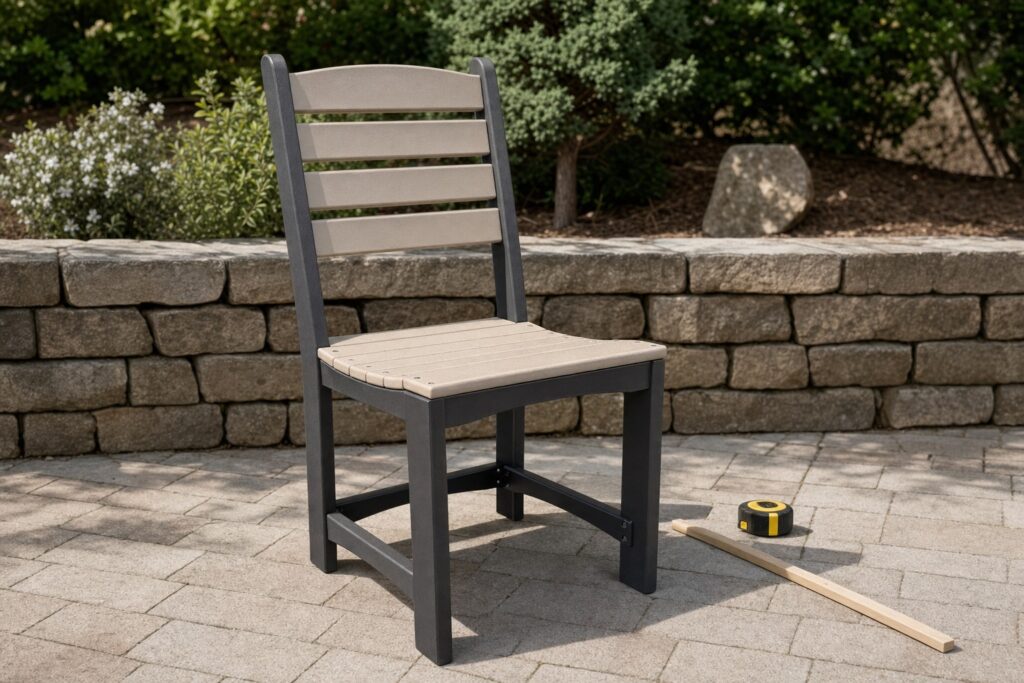
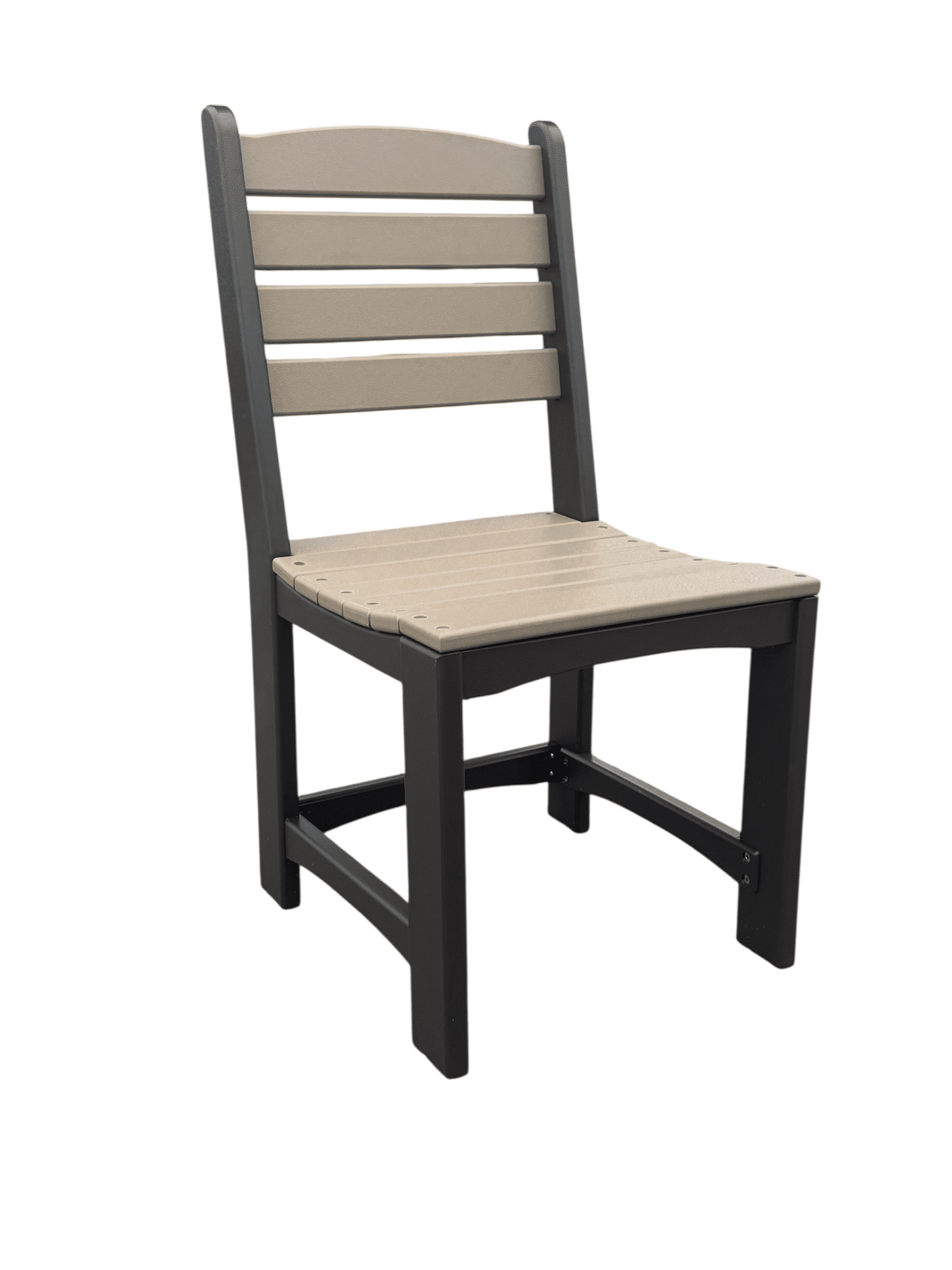
If you have questions about specific dimensions not listed on a product page, or want help deciding which piece suits your setup, contact Plastic Furniture To Go directly before placing your order. You can also browse the full current selection—including the Counter Height Stool, Hampton Adirondack Chair, and Armless Cafe Chair—in the Plastic Furniture To Go shop, where each product page lists verified seat heights and additional specifications to support your fit decision.
Related guides: Why Adirondack Chairs Are So Comfortable (It’s the Geometry), Adirondack Chair Set of 2 With Table, and Backless Outdoor Stools: Pros, Cons, and Who They Fit.

