If you’ve ever settled into a well-built Adirondack and felt yourself exhale a little, you’ve experienced what makes this chair legendary. So why are Adirondack chairs so comfortable? The short answer is geometry. Every angle, every proportion, every inch of that fan-shaped back was worked out over a century ago to support the human body at rest in the outdoors. Once you understand the math behind the shape, you can spot a good one from across a patio, test one properly before you buy, and know exactly why the cheap versions feel wrong the moment you sit down.
The Origin Story Behind the Shape
The chair we now call the Adirondack was designed in 1903 by Thomas Lee, who was vacationing in Westport, New York, and needed outdoor seating that worked on a sloped mountain lawn. He cut prototypes from single planks of wood and tested them on his family until the proportions felt right. His friend Harry Bunnell patented the design in 1905, and the “Westport chair” became the ancestor of every Adirondack you see today.
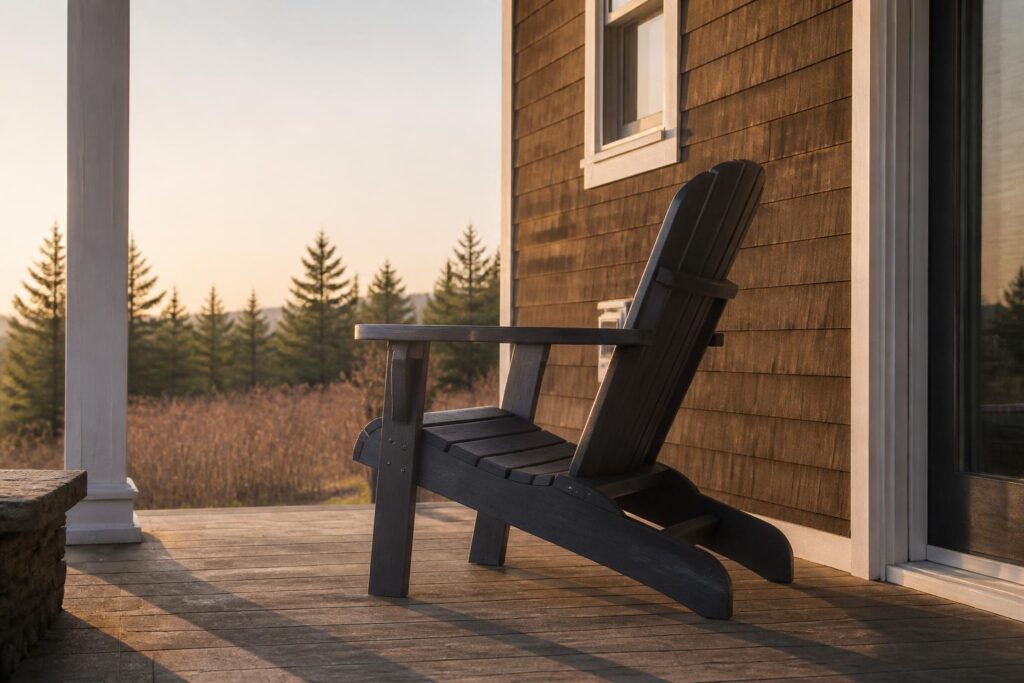
What Lee stumbled onto was something ergonomists would later formalize: a reclined seating angle with the hips lower than the knees pushes your weight into the seat pan and back rather than concentrating pressure on your thighs. On a hillside, this made the chair stable and level. On a flat deck, it produces the same effect that makes recliners feel restful. Your spine loads against a broad surface, your legs relax forward, and your circulation isn’t pinched at the back of your knees.
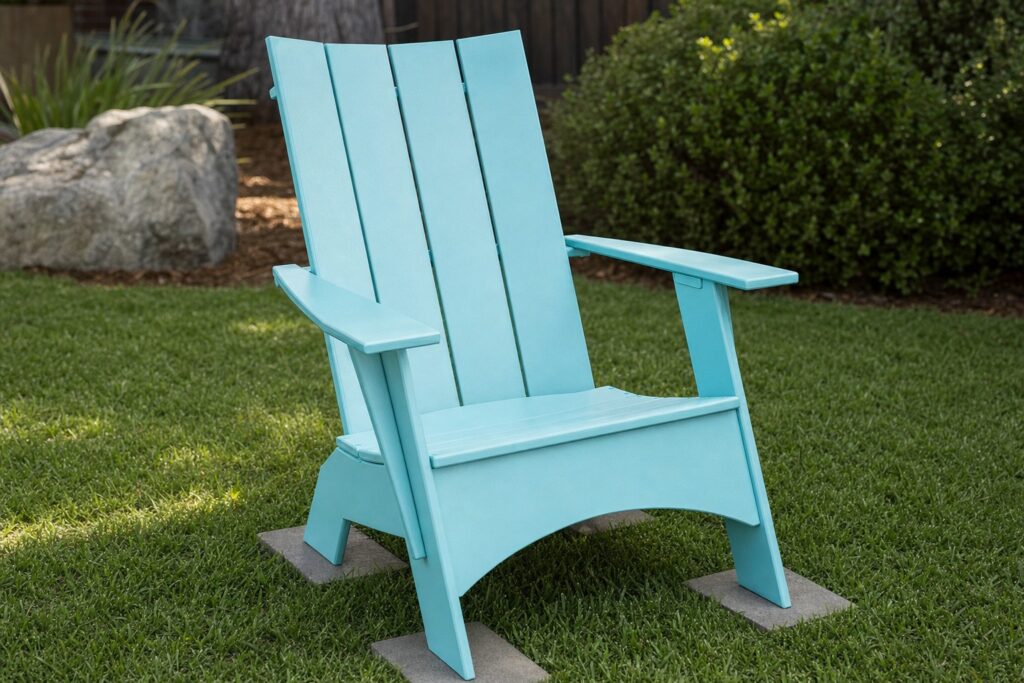
Modern versions have refined the details, but the bones of the design haven’t changed. The wide plank arms, the fanned back slats, the low forward seat edge, and the tilted seat pan are all still there because they still work. When you’re evaluating chairs today, you’re really evaluating how faithfully each one honors those original proportions.

The Seat Angle Does Most of the Work
The single most important dimension in an Adirondack is the angle of the seat pan. On a well-designed chair, the seat tilts backward roughly 15 to 20 degrees from horizontal, with the front edge sitting about 14 to 16 inches off the ground and the rear edge around 11 to 12 inches. That downhill slope is what makes the chair feel like it’s holding you rather than making you hold yourself up.
When your hips settle lower than your knees, three things happen. First, gravity pulls your pelvis back into the joint between the seat and the backrest, so you naturally end up in the position the chair was designed to support. Second, your thighs stop bearing your full weight because your torso is loaded against the back. Third, your lower back stops working. In a dining chair, your core muscles fire constantly to keep you upright. In an Adirondack, the chair does that job.
The tradeoff is that getting out of a deeply reclined Adirondack takes a small effort, and the low seat height can be tough on knees and hips that don’t like deep bends. If mobility is a concern, look for a chair with a slightly higher front edge, around 16 inches, and a less aggressive recline. You can also add a firm cushion to raise the seating surface an inch or two without ruining the geometry.
Why the Back Feels Like It Was Cut for You
The fanned backrest is the visual signature of an Adirondack, but it’s also functional engineering. A traditional back uses five to seven vertical slats that widen slightly toward the top and curve gently at shoulder height. The curve is critical. A flat plank across your shoulder blades feels like leaning on a fence. A shaped curve cradles the natural convex arc of your upper back and lets your shoulders rotate slightly rearward, which opens your chest and makes breathing easier.
Back height matters too. A proper Adirondack back rises 35 to 40 inches from the seat, tall enough to support your head when you tilt it back. Shorter backs force your neck to work, which defeats the whole point. Look at the top of the back when you’re evaluating a chair: if the tallest slats reach roughly the height of your ears when you’re seated, you’ve got a chair you can actually rest your head against.
The slats themselves should have small gaps between them. Those gaps let rainwater drain, let air move against your back on warm days, and prevent the whole surface from feeling like a solid wall. On poly and recycled-plastic chairs, the slats also flex just enough under weight to distribute pressure evenly, which is one reason well-built plastic versions can rival wood for comfort. If you want to compare specific proportions on a modern build, take a look at the Hampton Adirondack Chair and note how the back rises and fans out.
Those Wide Arms Are Not an Accident
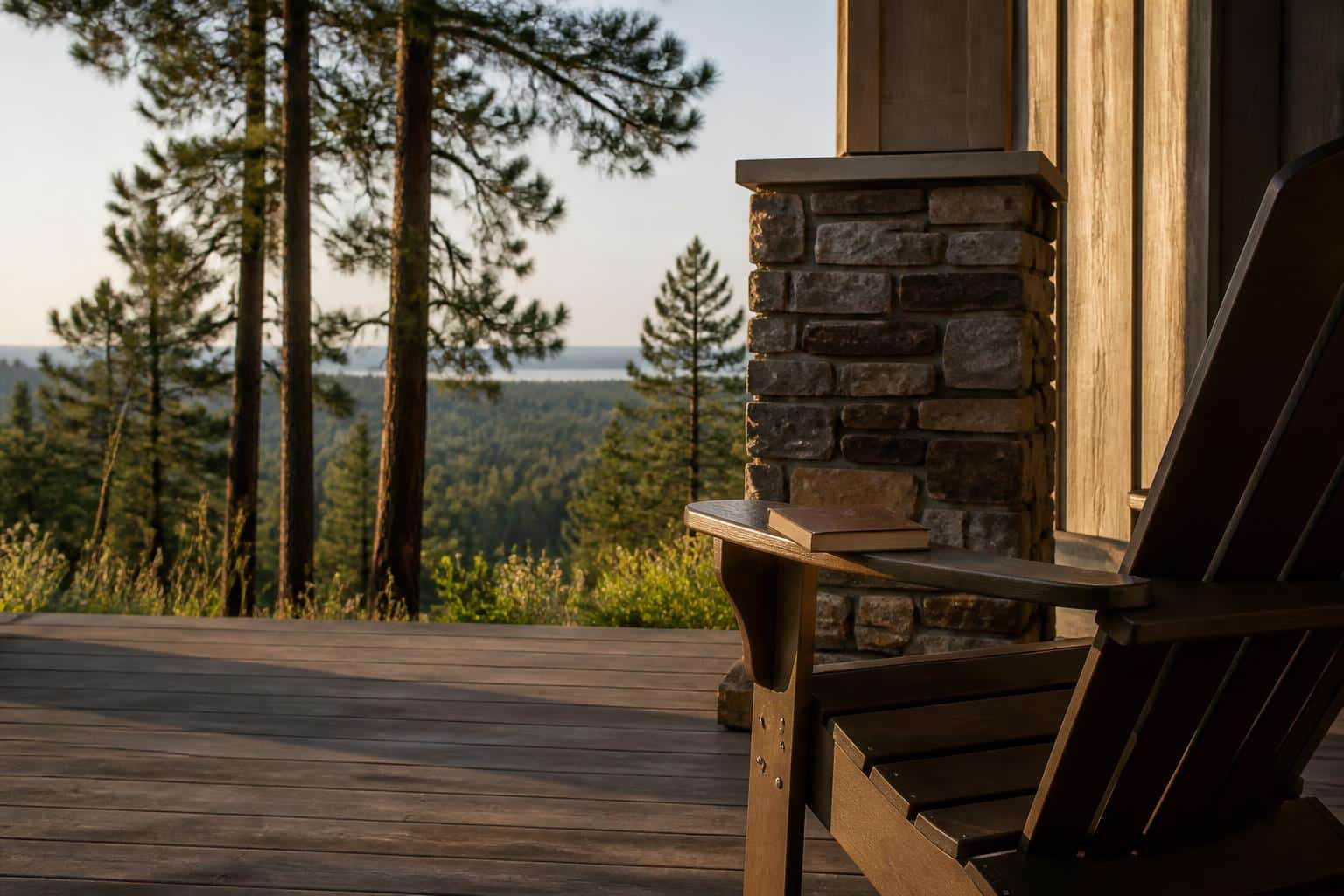
Ask anyone why Adirondack chairs are so comfortable and eventually they’ll mention the arms. A traditional Adirondack arm is 5 to 7 inches wide and flat across the top, and it sits roughly 24 to 26 inches off the ground. That’s much wider than the arm on any other outdoor chair, and it changes how you use the chair completely.
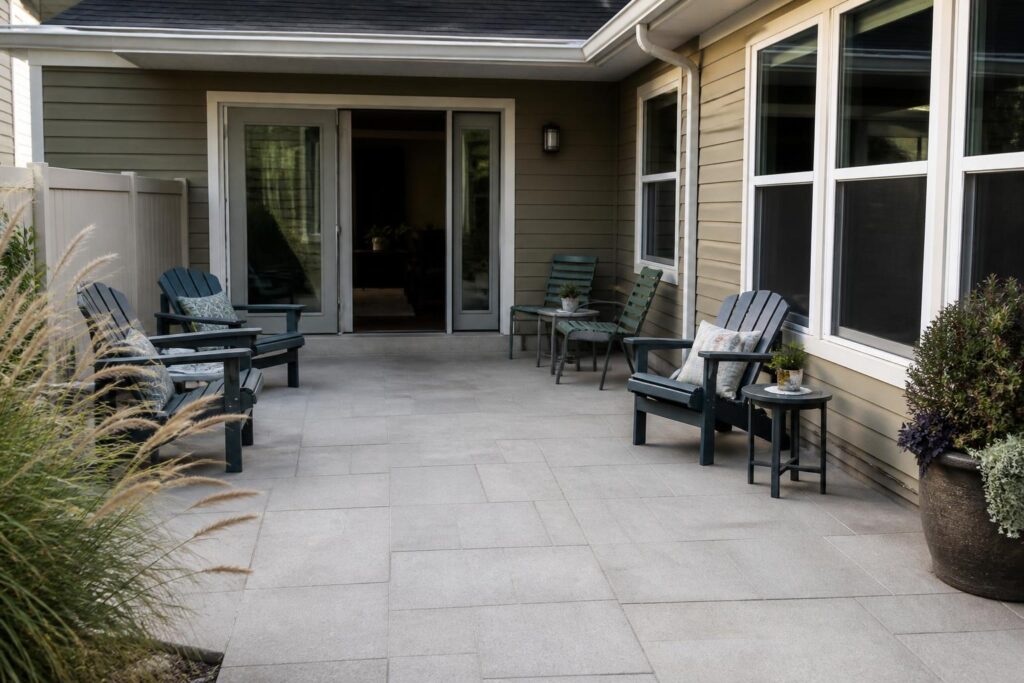
A wide arm becomes a side table. You can set down a coffee mug, a paperback, a phone, a plate of appetizers, or a glass of wine without needing furniture next to you. That single feature is why Adirondacks work so well in landscapes where you don’t want to clutter a lawn with side tables between every seat. It also means the chair functions as a complete unit rather than half of a set.
Beyond utility, the arm height and width support your shoulders in a specific way. Your elbows rest naturally, your forearms lie flat, and your shoulders drop rather than hunching. That posture reduces neck tension and lets you sit for long stretches without shifting. On dining chairs with narrow or lower arms, you eventually pull your elbows in and your shoulders creep up toward your ears. On an Adirondack, gravity is doing the opposite.
If you plan to pair chairs with a small drink table anyway, you still benefit from the wide arms as an overflow surface. And if you’re arranging a conversation cluster, the arms mean you can space chairs a bit farther apart, around 30 to 36 inches between seats, without losing the ability to hand something to your neighbor.
Testing an Adirondack Before You Commit
Because so much of the comfort depends on geometry, small differences in the numbers produce real differences in how a chair feels. When you sit in an Adirondack for the first time, whether in person or by studying the specs online, run through a short checklist.
- Seat pan depth: from the front edge to the backrest should be 19 to 22 inches. Shorter cuts off your thighs; longer forces you to slouch to reach the back.
- Seat width: 20 to 22 inches between the arms is standard. If you plan to sit cross-legged or wear bulky winter layers, look toward the wider end.
- Back angle: the backrest should lean roughly 25 to 30 degrees back from vertical. Anything less feels stiff, anything more traps you.
- Arm height above the seat: about 8 to 10 inches, so your elbows land naturally when your shoulders relax.
- Front edge rounding: the front of the seat should be gently rounded or curved down to avoid pressure behind your knees.
Also consider material behavior. Wood Adirondacks look beautiful but need regular sealing and often develop splinters. Recycled-plastic and poly outdoor furniture as a category has grown popular because it holds color in UV exposure, doesn’t rot, and cleans with soap and water. The U.S. Environmental Protection Agency covers the broader context of recycling plastics if you want to understand where recycled outdoor furniture materials generally come from. For more comparisons across furniture types and outdoor scenarios, our outdoor living guides walk through pairing, placement, and material choices.
Common Comfort Complaints and What They Actually Mean
Not everyone loves their first Adirondack, and the complaints tend to point back to specific geometry problems rather than the design itself. If a chair “hurts your back,” the seat angle is probably too steep for your body, or the lumbar area of the backrest is flat where it should curve. If you “can’t get out of it,” the front edge is too low for your knees, or the recline is too aggressive for the muscle groups you rely on to stand.
If the chair “makes your legs fall asleep,” the front edge is pressing behind your knees, meaning either the seat pan is too long for your leg length or the front edge isn’t rounded. If the arms “feel wrong,” they’re either too high, forcing your shoulders up, or too low, making you lean sideways. And if the whole chair “feels flimsy,” the joints where the seat meets the back and where the legs meet the seat aren’t reinforced enough to handle the leverage that comes from a reclined posture.
Check any published weight capacity and the manufacturer’s intended-use instructions. A capacity figure is a product-specific limit, not a universal quality score. Plastic Furniture To Go does not publish a load-capacity rating; ask about suitability before ordering if that information is essential for your use.
Frequently Asked Questions
Are Adirondack chairs comfortable for tall people?
They can be, but only if the proportions fit. Tall sitters, roughly 6 feet and up, should look for a seat pan depth of at least 21 inches, a back height of 38 to 40 inches so the head is supported, and a front seat edge of at least 15 inches off the ground for easier standing. If a chair feels cramped, it’s usually the seat depth, not the width, that’s the problem.
Do Adirondack chairs need cushions to be comfortable?
No, a properly proportioned Adirondack is designed to be comfortable without cushions, which is part of its appeal for outdoor use where wet cushions become a hassle. That said, many people add a thin seat pad or lumbar cushion for longer sitting sessions or for sitters who prefer a softer surface. If you cushion the seat, keep it thin so you don’t lose the tilt that makes the chair work.
Why do Adirondack chairs sit so low to the ground?
The low front edge, typically 14 to 16 inches, is what creates the reclined weight distribution that makes the chair restful. Sitting lower with your hips below your knees lets your spine load into the backrest instead of your core muscles holding you up. It’s the same principle behind recliners and beach chairs, adapted to a piece of standalone patio furniture that still looks upright and traditional.
How long can you comfortably sit in an Adirondack chair?
Most people can settle in for one to three hours without shifting, which is dramatically longer than a typical dining chair. The reclined angle takes pressure off the lower back, the wide arms prevent shoulder tension, and the shaped back supports the head. For all-day outdoor lounging, an Adirondack paired with an ottoman or footrest extends comfortable sitting time even further by taking pressure off the backs of your thighs.
At Plastic Furniture To Go, the Hampton Adirondack Chair is built to honor the proportions that make this design work, and every order ships free to your door anywhere in the country, factory-direct from an American maker. If you’re weighing where an Adirondack fits into your yard or want to talk through sizing before you order, browse the Hampton Adirondack Chair page or send a note through the contact form and we’ll help you sort it out.