
Adirondack chair cushions can take an already-comfortable seat and make it feel custom-fitted for hours of reading, entertaining, or simply doing nothing in the backyard. But buying the wrong cushion—or storing a damp one—creates problems that no amount of comfort is worth. This guide will help you decide what thickness, shape, and fabric to look for, how to confirm a cushion will actually fit your specific chair, and how to dry and store cushions so mildew does not quietly ruin them over a season. The Hampton Adirondack Chair is used throughout as a concrete reference point.
How Adirondack Chair Shape Affects Cushion Fit
Adirondack chairs are not a standardized product. Seat width, seat depth, the angle of the back slats, and the curve of the seat pan all vary by manufacturer and model. A cushion labeled “fits most Adirondacks” is a loose promise, not a measurement.
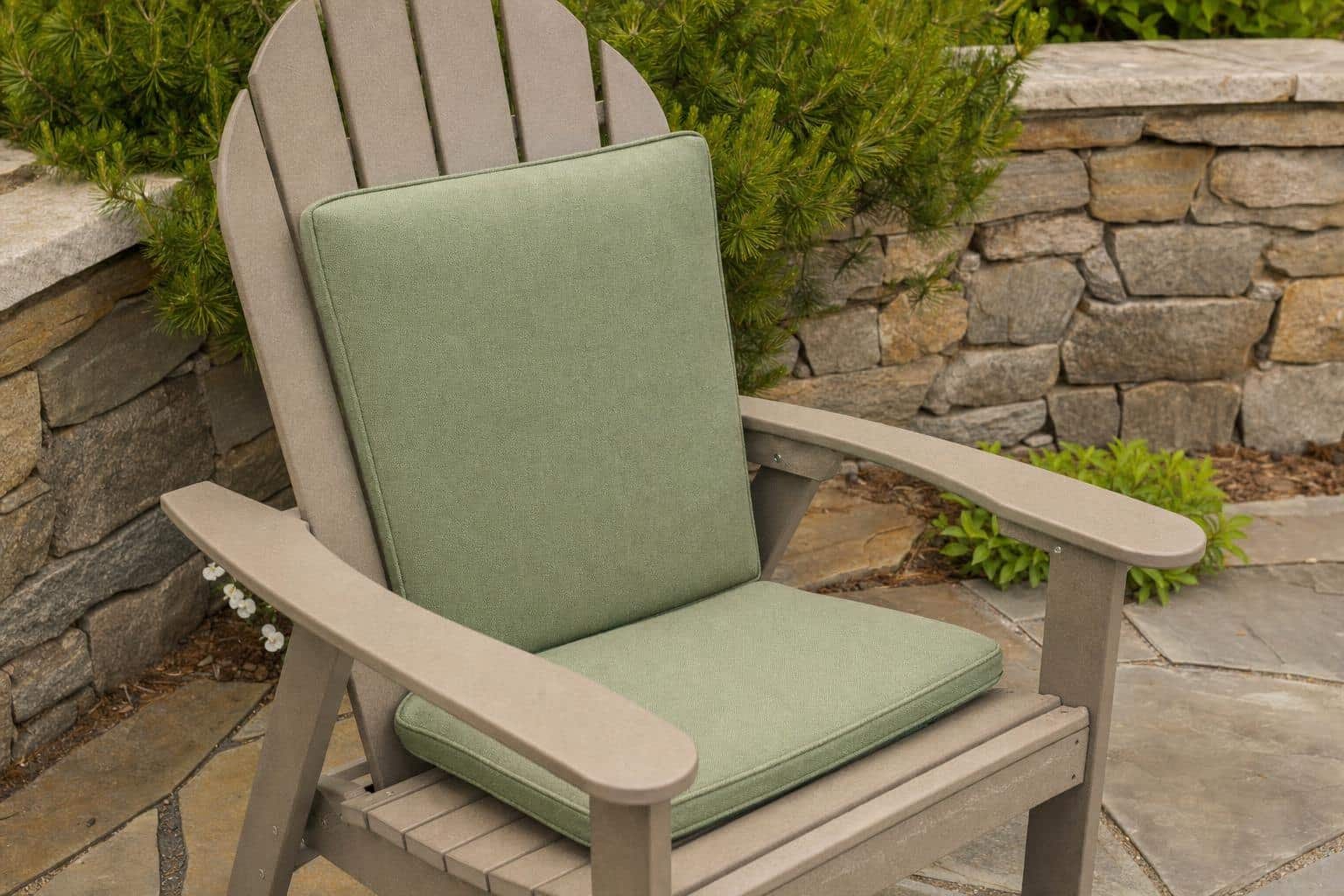
The two surfaces you need to measure are the seat and the back. For the seat, measure the front width, the rear width (most Adirondack seats are wider at the front), and the front-to-back depth from the front edge to where the seat meets the back. For the back, measure the width at the widest point and the usable height from the seat surface up to where the top slat ends.
Some chairs have a contoured or scooped seat; others are nearly flat. A cushion with a flat bottom on a curved seat will shift or buckle. Look for cushions that specifically describe a contoured or waterfall front edge if your chair has a pronounced scoop. Also verify seat height if you are buying for comfort or accessibility reasons—the Hampton Adirondack Chair has a verified seat height of 16 inches, which is lower than a standard dining chair, and that lower angle affects how a cushion positions your hips.
Cushion Thickness and What It Does to Your Sitting Angle
Because Adirondack geometry already reclines the sitter at a meaningful angle—something worth reading more about in why Adirondack chairs are designed the way they are—adding cushion thickness changes more than just softness. A thick cushion raises the effective seat height, which shifts your knees upward and can actually make it harder to rise from the chair. A thinner cushion preserves the chair’s intended geometry while adding surface softness.
In the general market, Adirondack cushions run from about 2 inches to 5 or more inches thick. A 2- to 3-inch cushion tends to complement the chair’s angle without dramatically altering it. Cushions at 4 to 5 inches add significant padding but can feel like they are fighting the chair’s recline rather than working with it. Neither thickness is universally correct—it depends on your body and how long you typically sit—but the geometry effect is worth understanding before you order.

Fabric and Fill: What Handles Outdoor Exposure
Outdoor cushion fabric does real work. It faces UV radiation, rain, humidity, bird droppings, pollen, and anything a guest might spill. The most common materials in the market are solution-dyed acrylic, polyester with a water-resistant coating, and Sunbrella-type performance fabrics (though brand names vary). Each has trade-offs.
Solution-Dyed Acrylic
Color is baked into the fiber rather than applied to the surface, which makes it more resistant to fading over time. It also tends to dry relatively quickly and resist mildew growth when it does dry. This is generally the higher-cost option but holds up better over multiple seasons.
Coated Polyester
Often the lower-cost option. The coating resists water initially, but repeated UV exposure and washing can degrade it. Once the coating breaks down, the fabric absorbs moisture more readily, which is where mildew risk increases. Check whether the coating can be renewed with a fabric-treatment spray.
Fill Material
Quick-dry polyester fill is strongly preferable for outdoor use over traditional foam, which can hold water for days. Look for fill described as “quick-dry,” “open-cell,” or “outdoor-rated.” A cushion with a great cover and poor fill will still stay wet inside long after the surface feels dry—which is exactly the condition that promotes mold growth.
Tie Placement and Securing a Cushion to the Chair
Most Adirondack cushions come with fabric ties intended to wrap around the chair’s slats and keep the cushion from sliding. The location of those ties matters as much as whether they exist at all. A tie designed for a chair with wide horizontal back slats will not anchor cleanly to a chair with narrow vertical slats, even if the cushion dimensions otherwise fit.
Before buying, look at your chair’s slat configuration and compare it to the tie positions shown in the cushion’s product photos. Ties should be long enough to wrap around the slat and tie securely without bunching. If the cushion comes with only two back ties, check whether the seat cushion also has ties or relies entirely on friction and weight to stay in place. A seat cushion without ties on a sloped Adirondack seat can creep forward over time.
Some cushions use Velcro or snap attachments instead of ties. These can be more secure but are also more specific to the slat pattern of the target chair. Verify compatibility before ordering.

Drying Cushions After Rain or Cleaning
This is where most cushion problems begin. The term “weather-resistant” is more accurate for most outdoor fabrics than “waterproof”—that distinction matters because weather-resistant materials slow water penetration but do not stop it entirely. After a rain event or after hosing off a cushion, the fill can hold moisture that is not visible from the outside.
The practical standard is to stand cushions on their edge in a sunny, well-ventilated spot until you can squeeze the middle and feel no dampness. This may take several hours or a full day depending on fill thickness, humidity, and airflow. Do not stack wet cushions—that traps moisture between surfaces and creates exactly the warm, damp, low-light environment that mold favors. The EPA moisture and mold guide explains why even brief periods of moisture retention in enclosed spaces can be enough for mold to establish.
If you hose down cushions as part of regular cleaning, do it on a sunny morning rather than late afternoon so drying time is maximized before evening humidity rises. For solution-dyed acrylic fabrics, mild soap and water is typically sufficient. Avoid bleach unless the manufacturer specifically permits it, as bleach can degrade both the fabric and any water-resistant treatment.
Storing Adirondack Chair Cushions Between Seasons
The single most important rule of cushion storage is simple: do not store damp cushions. It sounds obvious, but many cushions go into storage in the fall while still holding some moisture from a late-season rain. By spring, they have developed mildew, odor, or staining that is difficult or impossible to reverse.
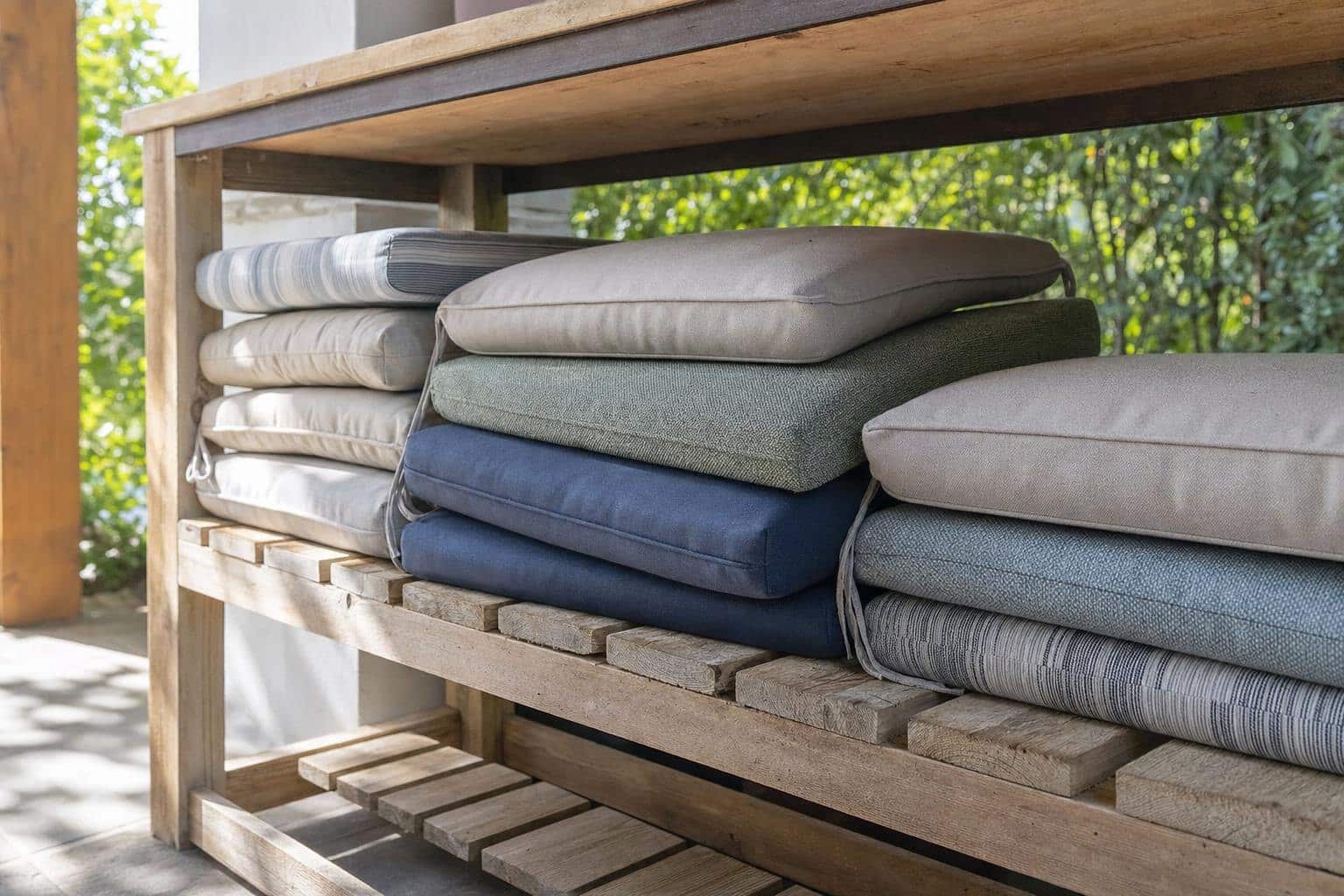
Dry storage options in general use include breathable canvas bags, slatted storage benches with ventilation gaps, and deck boxes with drainage holes. Fully sealed plastic bins or airtight storage bags are risky unless the cushions are bone-dry, because any residual moisture has nowhere to go. If you use a storage bin, choose one with small ventilation slots rather than a fully airtight lid.
Store cushions in a cool, dry location with stable temperature. Garages that experience wide temperature swings can promote condensation on cold surfaces, which reintroduces moisture. A dry basement or climate-controlled storage space is preferable. Keep cushions off the floor if possible—concrete floors can wick moisture upward into fabric.
When Cushions Are Not the Right Answer for Your Setup
Cushions add comfort but they also add a maintenance task. If your household routinely leaves patio furniture through unexpected rain, or if no one will reliably move cushions to covered storage before a storm, that cushion will cycle through wet-dry-wet patterns repeatedly—which shortens its life and increases mildew risk regardless of fabric quality.
A separate fabric cushion introduces drying and storage work that the chair itself does not create. Whether that extra comfort is worth the upkeep depends on the user, climate, and storage routine. Plastic Furniture To Go publishes a 16-inch seat height for the Hampton Adirondack Chair, but this article does not infer cushion compatibility or a comfort claim from unlisted seat geometry.
Frequently Asked Questions
Do Adirondack chair cushions come in standard sizes?
There is no single industry standard. Seat widths commonly range from about 20 to 24 inches, and back heights vary by manufacturer. Always measure your specific chair’s seat width, depth, and back dimensions before ordering a cushion. Do not rely on “fits most Adirondacks” language without cross-checking the listed cushion dimensions against your actual measurements.
How do I know if a cushion will stay in place on a sloped Adirondack seat?
Look for ties or attachment points on both the seat cushion and the back cushion, and confirm the tie position matches your chair’s slat layout. A seat cushion that relies only on friction and body weight will tend to creep forward on the Adirondack’s angled seat. Longer ties give you more flexibility when wrapping around different slat configurations.
Can I leave Adirondack cushions outside overnight?
Generally yes, if rain is not forecast and humidity is low. Repeated overnight dew exposure will, over time, cycle moisture into the fill even if the surface feels dry. Most cushion manufacturers suggest bringing cushions under cover when not in use or during extended periods away. A storage bench or covered deck box close to the seating area makes this easier to do consistently.
Should I buy a cushion before the Hampton Adirondack Chair arrives?
Wait until you have checked the current product-page package details and can compare the assembled chair’s measurements with the cushion listing. Plastic Furniture To Go publishes a 16-inch seat height, but cushion fit depends on additional seat and back measurements plus tie placement. Contact the seller if a needed dimension is not listed.
Have questions about the Hampton Adirondack Chair before you order, or want help thinking through whether a cushion makes sense for your setup? Contact Plastic Furniture To Go and a team member will respond. When you are ready to browse, the full outdoor seating lineup is available at the Plastic Furniture To Go shop.
Related guides: Outdoor Side Tables With Storage: Pros and Cons and Patio Furniture for Humid Climates.