
Choosing patio furniture for humid climates is a different exercise than shopping for a dry backyard in Colorado or a breezy hillside in California. When the air holds moisture for weeks at a stretch, everything you put outside has to contend with damp cushions, slow drying times, mildew on porous surfaces, and hardware that corrodes faster than the marketing photos suggest. If you live along the Gulf Coast, the Southeast, the Mid-Atlantic river valleys, or anywhere the dew point routinely sits above 70°F, this guide walks through what actually holds up, how to lay out a patio that dries between rain showers, and where to spend your money first.
How Humidity Changes What Works Outdoors
Humidity is not just rain by another name. Relative humidity above 70% for extended stretches means porous materials never fully dry, organic residues (pollen, tree sap, food) stay tacky longer, and mildew spores find happy homes in seams, cushion foam, and untreated wood grain. Metal fasteners lose their protective coatings faster in salt-laden coastal air, and even “outdoor rated” fabrics can develop that gray-green haze on the underside where sun never reaches.
The National Weather Service tracks dew point as a more honest measure of muggy conditions than relative humidity alone, and if yours consistently reads above 70°F from May through September, you are shopping in a different market than someone in Phoenix. The practical implications for patio furniture for humid climates come down to four issues: how quickly a piece sheds water, how well it resists biological growth, how its hardware handles constant moisture, and whether its shape traps standing water in cups, seams, or cushion channels.
Wood swells and cracks. Powder-coated steel eventually rusts at scratches. Wicker (even synthetic wicker on a metal frame) traps moisture in the weave. Cushions with polyester fill hold water like a sponge unless you flip and dry them regularly. Understanding these failure modes before you buy saves you from replacing a full set in three years.
Material Choices Ranked by Humid-Climate Performance
Not every “all-weather” label means the same thing. Here is how the common patio materials actually behave when the air is thick:
- Solid poly lumber (HDPE-based recycled plastic): Non-porous, will not absorb water, will not host mildew in the material itself, and stainless hardware is standard on quality pieces. Surface pollen and dust still need rinsing, but the substrate is inert.
- Teak and ipe: Dense tropical hardwoods handle humidity better than most woods, but they still gray, still need occasional oiling if you want the warm tone preserved, and their price puts them out of reach for many patios.
- Powder-coated aluminum: Rust-resistant frame, but any chip or scratch in the coating lets moisture reach the metal. Fine for covered porches; less forgiving in the open.
- Wrought iron and steel: Beautiful, heavy, and a maintenance commitment in humid air. Expect annual touch-up on rust spots.
- Synthetic wicker over steel: The resin wrap is fine; the interior frame is the weak point once moisture finds a crack.
- Softwood (pine, cedar): Budget-friendly but short-lived without diligent sealing.
When you shop poly-based furniture as a category, look for solid (not hollow) lumber, stainless steel fasteners, a warranty that specifically addresses both structural failure and color fade, and a seat design that lets water drain through slats or a shaped surface rather than pooling. If you are comparing options, our guide on patio furniture built for Texas heat covers the sun-and-humidity combination that many Southern patios deal with year-round.
Airflow and Drying Time on Your Patio
The most overlooked factor in humid-climate outdoor living is not the furniture itself, it is the air moving around it. A well-ventilated patio dries in an hour after a summer storm. A stagnant, over-planted, wall-cornered patio may stay damp for a day and a half. That difference is what determines whether mildew becomes an annual battle.
Reading Your Site Before You Arrange
Walk your patio at three times: mid-morning after dew, an hour after a rain shower, and late afternoon. Where does water bead and evaporate quickly? Where does it linger? Those slow-drying zones are where you do not want to place seating or cushions. Screened porches with only one open side hold moisture. Patios shielded by dense hedges on the prevailing-wind side act like sponges.
Elevation and Spacing
Keep furniture legs off standing water. A concrete slab that slopes toward a wall creates a puddle line – do not park chairs in it. Leave at least 6 inches between the back of a chair and any wall or railing so air can circulate behind it. For grouped seating, 18 to 24 inches between chair arms is typical, but in humid climates lean toward the wider end so cushions have room to breathe.
Overhead Coverage vs. Open Sky
A partial roof is a mixed blessing. It blocks direct rain but also blocks the sun that dries lingering moisture and the UV that kills mildew spores. If your patio is fully covered, plan on running a fan for a few hours after wet weather, or accept that cushions will need indoor storage between uses.
Cushions, Fabrics, and What to Do About Them
Cushions are where humid-climate patios go to die. Even solution-dyed acrylic fabric (the industry standard for outdoor upholstery) is only as mildew-resistant as its foam core and its drying opportunities allow. Quick-dry reticulated foam is worth the upgrade if you buy cushioned seating; it lets water pass through rather than absorbing and holding it.
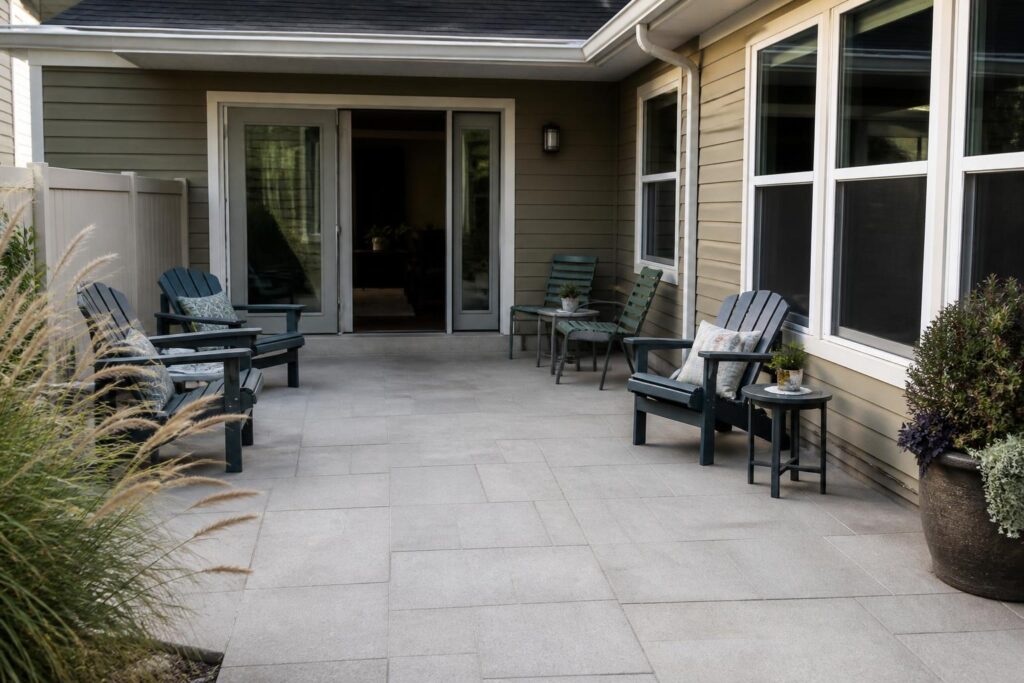
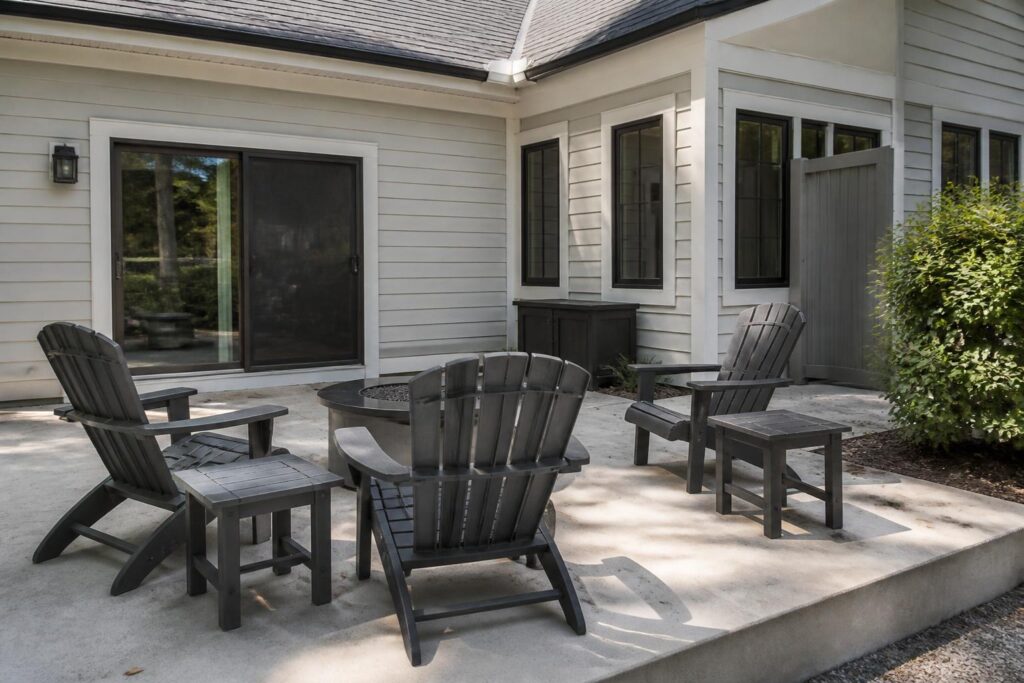
A practical alternative many humid-climate homeowners land on: buy furniture that is comfortable without cushions in the first place. A contoured Adirondack chair with a properly angled back and a wide armrest does not need a seat pad to be inviting for a two-hour conversation. Dining chairs with a shaped seat pan and a slight back curve work the same way. When cushions are optional rather than structural, you can bring them out for guests and skip them on humid afternoons when no one wants to sit on damp foam anyway.
If you do use cushions, three habits extend their life dramatically: stand them on edge (not flat) after any rain so both sides can dry, store them in a deck box or indoors during multi-day wet stretches, and rotate which side faces up weekly so no single surface stays permanently shaded. A mild solution of one cup white vinegar per gallon of water, applied with a soft brush and rinsed clean, handles early mildew spots before they set.

Layout Strategies That Fight Moisture
Your furniture arrangement is a moisture-management tool whether you think about it that way or not. A few layout habits pay off across every humid summer:
- Group for airflow, not just conversation. A tight circle looks cozy in a magazine but traps humid air. Leave at least one “open side” so cross-breeze can pass through.
- Use bar-height seating along the perimeter. Counter-height stools at a bar rail or high-top ledge sit above the humid microclimate that hangs 12 to 18 inches off the ground. If your patio is prone to lingering damp, a bar setup with counter height stools keeps guests literally above the muggiest layer of air.
- Separate the eating zone from the lounging zone. Food residue plus humidity plus fabric equals problems. Keep cushioned lounging away from where crumbs land.
- Leave a “dry lane.” Reserve one section of the patio – ideally the sunniest, breeziest corner – as the spot where cushions and umbrellas go to dry after rain.
- Prepare every loose piece before storms. A heavy chair can still move, and placing furniture against a wall is not a securing method. Make an indoor-storage plan or follow appropriate manufacturer-approved securing guidance. Complete preparation before dangerous weather and follow local instructions.
The EPA’s guidance on controlling mold and moisture is written for indoor spaces, but the principles – ventilation, prompt drying, and removing organic food sources – translate directly to outdoor living areas that stay damp for days at a time.
Care Routines That Actually Get Done
A maintenance plan you will not follow is worse than no plan at all. For patio furniture in humid climates, the routine that sticks is usually the simplest one: a quick rinse with the garden hose every two to three weeks, and a proper wash twice a season.
For the wash: mix a few drops of dish soap into a bucket of warm water, use a soft-bristle brush on textured surfaces, rinse thoroughly, and let air dry. For mildew spots on non-porous surfaces, the vinegar solution above handles most cases; for stubborn areas on white or light-colored poly, a diluted oxygen bleach (not chlorine) works without discoloring surrounding material. Skip pressure washers on any wood or wicker – they drive water into places it should not go.
Hardware deserves an annual check. Walk around each piece and tighten any bolts that have loosened; humid-cold-humid cycles work fasteners loose faster than dry climates. If you spot rust bloom on any exposed metal, address it before it spreads. Quality poly furniture uses stainless hardware specifically so this becomes a five-minute inspection rather than a repair project.
Finally, keep an eye on what is growing near your furniture. Overhanging branches drip sap and drop leaves into cushion channels. Ground cover that creeps up to chair legs holds moisture against them. Trimming a two-foot clear zone around your seating area is one of the highest-value maintenance habits in a humid backyard.
Frequently Asked Questions
Does poly furniture get mildew in humid climates?
The poly material itself does not host mildew because it is non-porous – there is nothing for spores to feed on. What you may see is a surface film of pollen, dust, and organic debris that mildew grows on top of. A rinse every two to three weeks removes that food source. Cushions and any fabric elements are the actual vulnerable parts, so choose quick-dry foam and store cushions during long wet stretches.
How long does patio furniture last in coastal humid air?
It depends heavily on material. Untreated softwood may need replacing in three to five years. Powder-coated steel typically shows rust within five to seven years without touch-up. Quality solid poly furniture with stainless hardware is designed for much longer service, which is why reputable manufacturers back it with multi-year structural and fade warranties. Salt air accelerates metal corrosion specifically, so coastal patios should prioritize non-metal seating surfaces.
Should I cover my patio furniture during humid weather?
Covers are useful for storms and off-season storage but can backfire during ordinary humid weeks. A cover traps moisture against the furniture and blocks the sun and airflow that would otherwise dry it. If you use covers, choose breathable fabric rather than sealed plastic, and lift them on dry afternoons to let air circulate. For daily use in a humid summer, no cover usually beats a bad cover.
What furniture layout works best on a screened porch?
Screened porches limit airflow, so lean into open arrangements. Pull furniture at least six inches from screens to allow circulation, avoid tight conversational groupings, and consider a ceiling fan to keep air moving even when outside is still. Bar-height seating along the rail catches whatever breeze does enter. Reserve cushioned pieces for the driest corner and plan a nearby dry-storage spot for pads between uses.
At Plastic Furniture To Go, our lineup is built with humid-climate patios in mind – contoured Adirondack chairs, café seating, counter-height stools, and end tables that skip fabric and porous materials in favor of surfaces you can hose off and forget about. Every piece is American made, shipped factory-direct with free nationwide shipping, and available in colors that hold up to Southern sun. Browse the full shop to see what fits your space, and reach out through our contact page if you would like a second opinion on layout or sizing before you order.