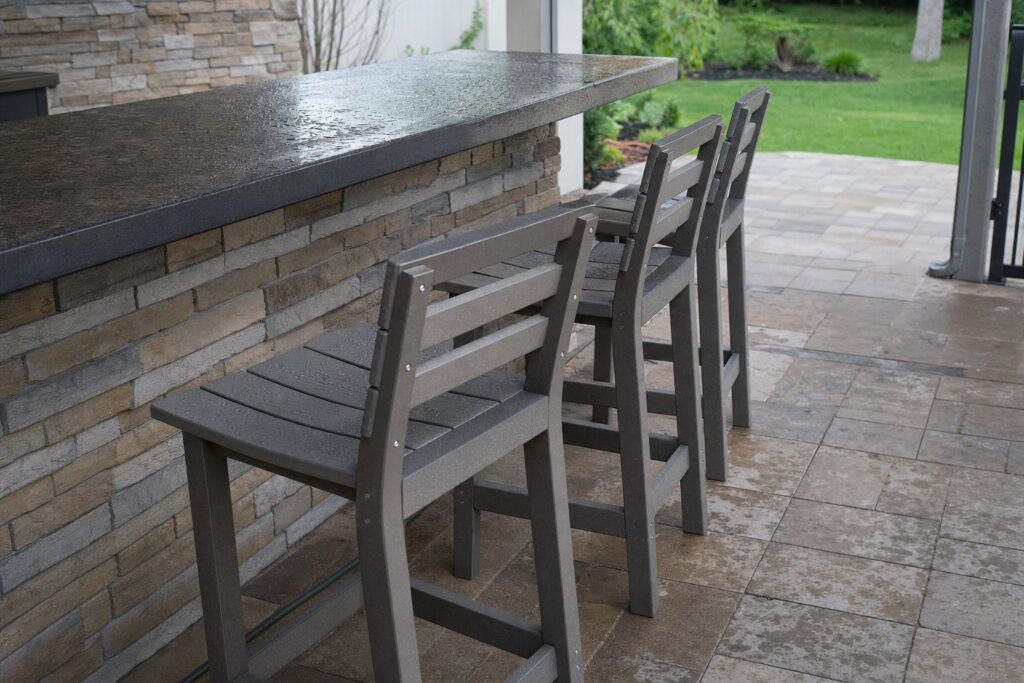

A reliable routine to keep spiders off patio furniture is less about any single product and more about consistent inspection, timely removal of webbing and debris, and knowing when to escalate to a licensed professional. No routine can guarantee spiders stay away, but a methodical approach — grounded in the EPA’s integrated pest management principles — gives you a repeatable framework you can actually follow. This article covers the inspection steps, the cleaning habit, how to keep the area orderly, how to monitor what you observe, and when professional help makes sense.
How to Keep Spiders Off Patio Furniture: Start With a Visual Inspection
Before sitting down in any outdoor chair or pulling up to a table, spend sixty seconds looking at the furniture rather than sitting in it. This brief check is the foundation of the routine and costs nothing.
Work through the following checklist each time furniture has been sitting unused for more than a day or two:
- Look at the underside of each seat and the back of each chair back for visible webbing or debris accumulation.
- Check the joints where slats meet the frame — these recessed junctions are easy to overlook.
- Run your eye along each leg from top to foot. Note any silky strands, shed casings, or dark debris that was not there during the last inspection.
- Inspect the underside rails of any end tables. The Hampton Round End Table and Hampton Square End Table both have rail structures underneath that can go unexamined during routine wiping.
- If you use removable cushions, lift them and check the surface beneath before replacing them.
Write down or photograph anything unusual. A simple note — date, which piece, what you saw — gives you a record to assess whether a situation is stable or escalating.
Remove Webbing and Debris Promptly
Once you have completed the visual check, remove any webbing you found before using the furniture. Prompt removal is more useful than waiting for a scheduled cleaning day, because undisturbed webbing signals to other spiders that a location is suitable.
Effective tools for removal include:
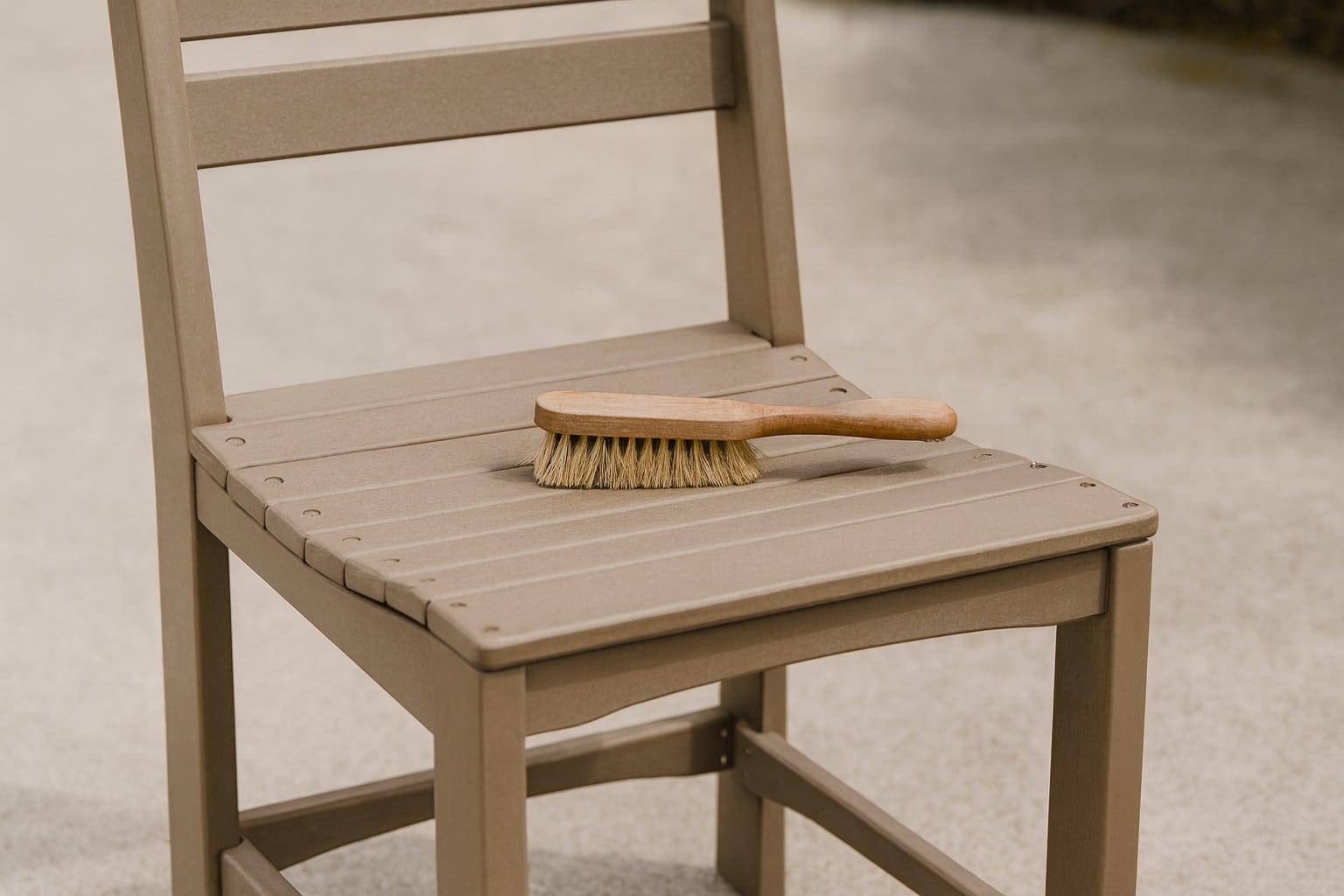
- A soft-bristle brush with a long handle, which lets you reach undersides and joints without putting your hand directly into webbing.
- A handheld vacuum with a narrow crevice attachment for corners and recessed channels.
After brushing or vacuuming, dispose of the collected debris away from the immediate seating area. Empty the vacuum canister into a sealed bag before discarding it.
For furniture made from Marine Grade Polymer — such as the Hampton Adirondack Chair, Armless Cafe Chair, Counter Height Stool, Hampton Round End Table, or Hampton Square End Table — a follow-up wipe with mild soapy water and a soft cloth removes fine debris the brush may have missed. For a thorough cleaning protocol that avoids surface damage, see the companion guide on cleaning plastic outdoor furniture without damage. Allow each piece to dry completely before covering it or returning it to storage.
Keep the Seating Area Orderly and Reasonably Dry
An orderly area is easier to inspect and easier to maintain. The following practical steps reduce the conditions that make any outdoor space harder to manage, without promising a specific pest outcome:
- Clear debris after each use. Leaves, food residue, and similar organic material that accumulates on or around furniture is harder to inspect through and provides material that can support webbing.
- Wipe table surfaces after outdoor meals. Food residue and moisture left on table surfaces can be addressed with a quick wipe, keeping surfaces cleaner between formal cleaning sessions.
- Allow furniture to dry after rain before covering it. Covering damp furniture traps moisture; allowing it to air-dry first keeps surfaces drier and makes subsequent inspections more straightforward.
- Store removable cushions when furniture will sit unused for an extended period. Cushion fabric and seams require their own inspection routine — check the seams and zipper areas each time you retrieve cushions from storage.
- Avoid stacking furniture pieces directly against each other without inspection. Stacking is convenient during off-season storage, but check each piece before and after stacking so you do not consolidate unnoticed issues.
These steps are reasonable housekeeping measures. They do not guarantee that spiders will not appear, but they support a cleaner baseline for your inspection work.
Monitor What You Observe Over Time
The EPA’s integrated pest management framework emphasizes monitoring as a deliberate step — not just noticing a problem when it becomes obvious, but actively tracking what you see so you can make an informed decision about whether action is necessary.
A practical monitoring habit looks like this:
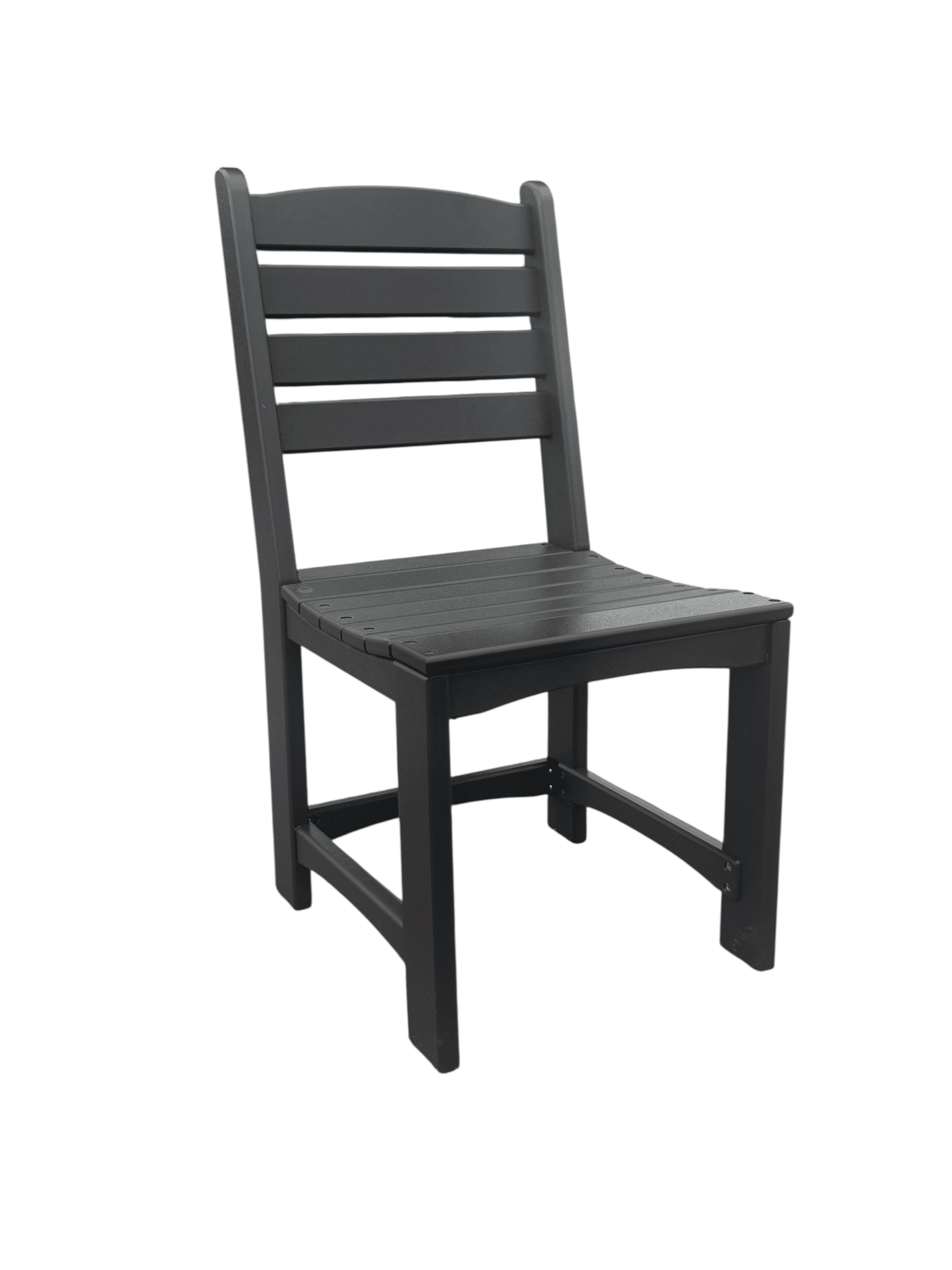
- Inspect on a consistent schedule — weekly is a workable minimum for furniture in regular use.
- Record each observation briefly: the date, which piece, and what you found. A note on your phone or a simple paper log works equally well.
- After four to six weeks, review the log. Is the amount of webbing you’re removing stable, decreasing, or increasing? Are the same spots affected repeatedly, or does the pattern shift?
- Use that pattern to decide whether your current routine is adequate or whether the situation warrants a different response.
Monitoring takes very little time per session, but the cumulative record is genuinely useful when you need to describe the situation to a professional or decide whether the effort you are putting in is proportionate to the problem.
Evaluate Whether Action Beyond Cleaning Is Necessary
After a period of consistent inspection and cleaning, you will have enough information to make a considered decision. The EPA’s integrated pest management approach frames this as an evaluation step: weigh the evidence you have gathered, consider whether the issue is stable or worsening, and choose a response proportionate to what you observed.
Questions to guide that evaluation:
- Is webbing returning within a day or two of removal, consistently, in the same locations?
- Are you observing live spiders on or near furniture regularly, despite prompt web removal and an orderly area?
- Has the frequency of webbing increased over several weeks rather than staying stable or declining?
If your answers to most of those questions are yes, and the cleaning and orderliness steps you have already taken have not moved the situation in a better direction, that is a reasonable basis for deciding that additional action is warranted.
Know When to Consult a Licensed Pest-Management Professional
If monitoring shows that your inspection-and-removal routine is not producing a stable or improving result, the appropriate next step is to consult a licensed pest-management professional rather than to try additional products on your own. A licensed professional can assess the broader situation — not just the furniture, but the surrounding environment — and recommend a course of action appropriate to what they actually observe.
The EPA’s integrated pest management principles are clear that if a regulated pesticide product is used, it must be applied strictly according to its label. The label is a legal document, and following it exactly is not optional. A licensed professional will apply any regulated product in compliance with label requirements and applicable regulations.
This article does not recommend any specific pesticide, spray, trap, or other product. If you decide to use any regulated pest-control product on your own after consulting a professional, read the product label in full before use and follow every instruction on it.
Frequently Asked Questions
Does furniture material affect how easy it is to inspect and clean for spiders?
In a practical sense, yes. Smooth, flat surfaces are faster to wipe down and easier to visually inspect than textured or fabric surfaces with many seams and crevices. Marine Grade Polymer, used in all Plastic Furniture To Go pieces, provides relatively smooth surfaces that can be checked and wiped quickly. However, any outdoor furniture can develop webbing and debris in joints and undersides, so a consistent inspection routine matters regardless of material.
How often should I inspect my patio furniture?
Weekly is a reasonable minimum for furniture in regular use. If your monitoring log shows repeated activity in the same spots, inspecting more frequently — every few days — gives you earlier notice of changes. The goal is to catch new webbing quickly, before it becomes established, rather than waiting until a problem is visually obvious.
Can I handle a persistent spider problem with cleaning alone?
Cleaning and timely web removal are the first steps in the integrated pest management framework, and for many situations they are sufficient to keep the problem at a manageable level. If your monitoring log shows that the situation is worsening despite a consistent routine, that is a signal to evaluate whether additional action — including consulting a licensed pest-management professional — is appropriate. No cleaning routine can guarantee that spiders will not return.
When should I contact a pest-management professional?
Contact a licensed professional when your inspection and cleaning routine has not produced a stable or improving result over several weeks, when you are observing live spiders frequently despite prompt removal of webbing, or when you are uncertain about the appropriate response to what you are seeing. A professional can assess the full situation and advise on label-compliant options. Do not rely on this article or general online guidance as a substitute for that assessment.
If you have questions about which Plastic Furniture To Go pieces work best for your space or your maintenance routine, contact Plastic Furniture To Go directly — the team is glad to help. When you are ready to browse, the full selection of Marine Grade Polymer outdoor furniture is available in the Plastic Furniture To Go shop, with free shipping to the contiguous U.S., simple assembly in about 20 minutes, and a seven-year structural warranty on every piece.
You may also find these helpful: Patio Furniture Pollen-Season Maintenance Checklist and Patio Furniture on Grass: A Stable Setup That Protects the Lawn.