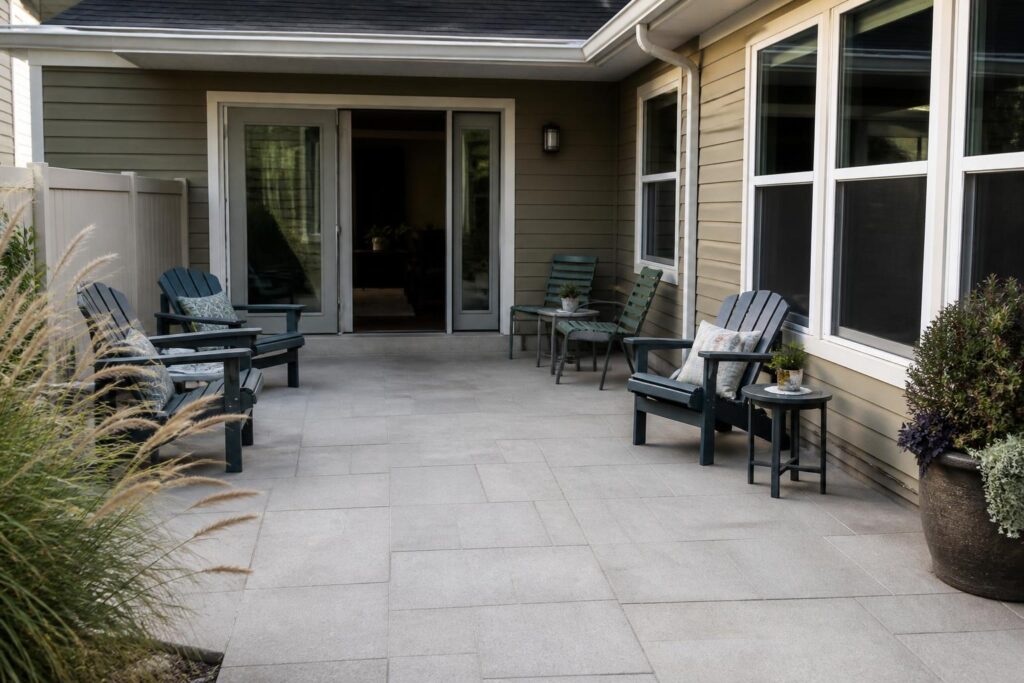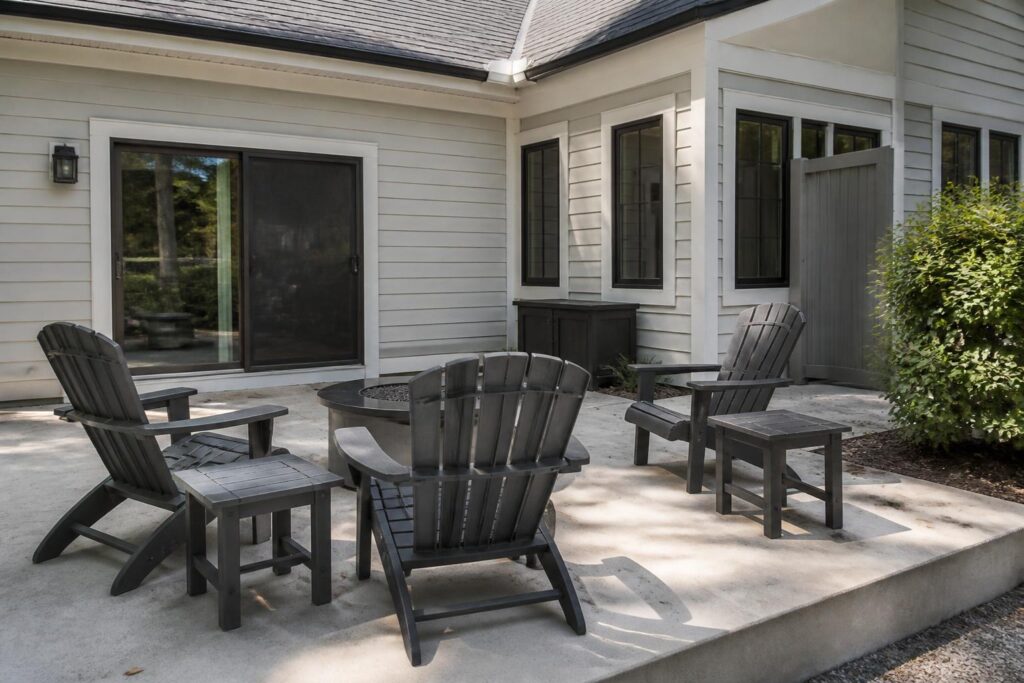

Choosing patio furniture for desert climates means designing around a sun that is closer to overhead than most of the country ever experiences, surface temperatures that can climb well past 150°F on dark materials, and a dryness that makes wood split, fabric fade, and cheap plastics turn brittle within a season. If you live in the Southwest, you already know that “outdoor furniture” as marketed nationally often can’t survive your yard. This guide walks through the specific setups that actually hold up: how to plan for sun angles, which shade strategies work, why color choice matters more than in other regions, and how to arrange pieces so they last and stay usable.
Understanding What the Desert Actually Does to Furniture
Before you buy anything, it helps to understand the four separate stresses your patio faces. First is UV intensity. At elevations common across Arizona, Nevada, New Mexico, and inland Southern California, UV index readings regularly hit 11 or higher from May through September – the National Weather Service classifies anything above 11 as “extreme.” That radiation breaks down polymer chains in cheap plastics, bleaches dyes, and cooks the oils out of untreated wood.
Second is heat load. Dark surfaces in full desert sun routinely measure 160-180°F with an infrared thermometer. Metal frames become genuinely dangerous to touch. Even light-colored materials get uncomfortable to sit on without a cushion or a shade break.
Third is thermal cycling. Summer nights can drop 30-40°F below the daytime high, and winter nights in higher-elevation desert (Flagstaff, Santa Fe, Reno) freeze regularly. Materials expand and contract with every cycle. Anything with mixed materials – metal fasteners in wood, glass in aluminum – loosens over time.
Fourth is dust and monsoon. Fine dust settles into every crevice, and July-September storms bring sudden 60 mph gusts that turn light chairs into projectiles. Any patio furniture for desert climates needs to handle all four stresses at once, not just one or two. That’s why so many “outdoor” sets sold at big-box stores fail here inside 18 months.

Choosing Materials That Survive Extreme Sun
The material conversation for desert patios comes down to a short list. Wrought iron and steel look substantial but conduct heat aggressively and rust wherever the powder coat chips. Aluminum stays cooler than steel but still gets hot, and thin extruded aluminum warps in monsoon winds. Untreated wood – even the tropical hardwoods marketed as “outdoor” – dries, cracks, and grays within two summers unless you refinish annually. Wicker and rattan, whether natural or synthetic, get brittle under sustained UV.
Recycled poly lumber and HDPE have become the standard recommendation for harsh-sun regions for a reason. Quality poly furniture is engineered with UV inhibitors mixed throughout the material rather than applied as a surface coating, so fading is dramatically slower and there’s no finish to peel. It doesn’t rot, doesn’t rust, and doesn’t need sanding or sealing. When you’re shopping, look for stainless steel hardware (galvanized rusts eventually in monsoon humidity), through-body color rather than surface coating, and a manufacturer willing to publish specific warranty terms for both structure and fade resistance – those are two different failures and both matter here.
Price ranges vary widely. Entry-level resin chairs from discount stores run $30-80 and typically last one to three summers in extreme sun. Mid-tier recycled poly seating typically falls in the $200-400 range per chair, with genuine structural longevity. If you want more detail on how these materials perform under sustained heat, our guide to outdoor furniture built for Arizona heat goes deeper on the specific failure modes and what to watch for.
Color Strategy: Why It’s Different in the Desert
Everywhere else in the country, patio color is an aesthetic decision. In the desert, it’s a thermal one. A black chair and a white chair made from identical material can differ by 40-50°F in surface temperature at 3 p.m. in July. That’s the difference between “grab a cushion” and “physically cannot sit here.”
Light and mid-tone colors – sand, driftwood gray, sage, aqua, soft yellow, light blue – stay meaningfully cooler and also hide the fine reddish dust that settles across everything in the Southwest. Bright white shows dust immediately and can create glare that hurts your eyes at midday. Deep colors like navy, forest green, and black look striking in shade but become unusable furniture in open sun for about six hours of every summer day.
A practical compromise: choose lighter colors for any seating in full or partial sun, and reserve darker accent pieces for spots that are shaded from roughly 10 a.m. to 6 p.m. year-round. If you’re building a set around a shaded ramada or a north-facing patio, you have more freedom. If your patio faces south or west with no permanent shade, commit to light tones. A classic Hampton Adirondack chair in a driftwood or sand color reads as intentional Southwestern design and stays sittable through the afternoon – a black one in the same spot won’t.
Planning for Sun Angles and Shade
Desert sun tracks differently than most people expect, and planning your layout around actual sun angles saves years of frustration. In June, the sun rises nearly northeast and sets nearly northwest, passing almost directly overhead at noon. In December, it swings much farther south and sits lower in the sky. That means a south-facing patio wall that’s fully shaded in summer can get direct sun all afternoon in winter, and vice versa.
Fixed Shade Structures
Ramadas, pergolas, and covered patios are the most durable shade solutions. Solid roofs block 100% of direct sun; slatted pergolas typically block 40-70% depending on slat spacing and orientation. For a pergola to actually shade seating in midday summer sun, slats need to run east-west (perpendicular to the sun’s path) with spacing no wider than the slat depth. North-south slats look nice but let direct sun through for hours.
Movable and Seasonal Shade
Cantilever umbrellas with a heavy weighted base (minimum 150 lbs for a 10-foot umbrella) work well for adjustable coverage. Retractable shade sails cost less than a permanent structure and can come down before monsoon season. Whatever you choose, plan for wind – a 60 mph gust will destroy any shade element that isn’t secured to structural anchors or heavily weighted.
Living Shade
Mature mesquite, palo verde, and desert willow trees provide dappled shade that reduces surface temperatures dramatically while allowing airflow. A young tree planted today takes 5-10 years to shade a patio meaningfully, so treat living shade as a long-term layer, not your primary strategy.

Layout and Spacing for Desert Patios
Desert patios work best when they’re designed around micro-zones rather than one big furniture arrangement. Because sun angles shift dramatically through the day, a single fixed layout is rarely comfortable for more than a couple of hours. Instead, plan two or three smaller groupings in different spots and move between them as the sun moves.
Basic clearance rules still apply. Allow at least 36 inches of walking clearance around seating groups, 18-24 inches between a chair and a side table (close enough to set a drink without leaning), and 30-36 inches between facing chairs for comfortable conversation. Adirondack-style chairs are deeper than standard patio chairs, so add another 6-8 inches of clearance behind them if they’re near a walkway.
For dining or counter-height setups, standard rules: 24 inches of table edge per seated person, 12 inches from seat to table underside for knee clearance, and 10-12 inches from seat to counter-top surface for stool seating. Counter-height stools work particularly well on desert patios because they pair naturally with the outdoor kitchens and built-in bars that are common in Southwestern design.
One practical tip: leave wide open sightlines to your yard rather than crowding furniture against walls. Desert landscapes reward being looked at – saguaros, agaves, the mountains beyond – and heavy furniture arrangements against the house block the view that drew you outside in the first place. A conversation grouping of three to four chairs pulled a few feet away from the wall, oriented outward, generally feels more spacious than a full sectional pushed against the stucco.
Maintenance Habits That Extend Furniture Life
Even the right materials benefit from a light maintenance routine in desert conditions. Dust accumulates faster than in most climates, and if you let it bake on through a full summer, it can dull even fade-resistant finishes. A rinse with a garden hose every two to three weeks knocks the worst of it off. For sticky buildup – sunscreen residue, mesquite sap, monsoon dust that mixed with humidity – a soft brush with mild dish soap and water (roughly one tablespoon per gallon) handles almost everything. Skip pressure washers on any joints or hardware; they force water into fastener holes and accelerate corrosion.
Before monsoon season, identify loose furniture, cushions, umbrellas, and decor that need storage. Do not assume a heavy chair can remain outside or improvise tethers from cord and hardware. Plan indoor storage or an appropriate manufacturer-approved securing method, follow local alerts, and prepare before hazardous winds arrive.
The EPA’s guidance on recycling and recycled-content products is a useful primer if you want to understand how recycled poly furniture fits into a broader household sustainability approach, particularly since many desert homeowners are already thinking about water and material conservation.
Finally, when you’re comparing brands, ask specifically about UV performance and fade coverage rather than accepting vague “weather-resistant” claims. Reputable manufacturers will separate structural warranties (does the chair break?) from fade warranties (does the color hold?). At Plastic Furniture To Go, that coverage is a 7-year structural warranty and a 5-year fade warranty, which gives you a real baseline to compare other options against.
Frequently Asked Questions
Can plastic patio furniture really handle 115°F desert summers?
Quality recycled poly and HDPE furniture is engineered specifically for extreme UV and heat, with stabilizers blended through the material rather than coated on the surface. Cheap thin resin chairs from discount retailers, on the other hand, warp and crack quickly at those temperatures. The category matters less than the manufacturing quality – look for through-body color, stainless hardware, and published warranty terms that specifically address fade separately from structural failure.
What’s the coolest color for desert patio furniture?
Light tones – sand, driftwood, soft gray, pale aqua, cream – stay coolest under direct sun, typically 30-50°F cooler than black or navy in the same conditions. Pure white is coolest but shows dust immediately and can cause glare. A mid-tone driftwood or weathered gray tends to be the practical sweet spot: cool enough to sit on without a cushion, dark enough to hide dust, and neutral enough to work with most Southwestern color palettes.
How do I keep patio furniture from blowing away in monsoon storms?
Heavier poly furniture is much less likely to move than lightweight resin or aluminum. For any piece you’re worried about, options include tethering to a wall anchor with paracord during storm season, storing lighter pieces (side tables, cushions, umbrellas) indoors when storms are forecast, and grouping furniture close to walls or under covered structures rather than in open patio areas. Check NOAA forecasts through monsoon season – warnings are usually issued hours ahead.
Do I need to store patio furniture indoors during summer?
No – if you’ve chosen materials rated for extreme UV, the whole point is that they stay outside year-round. Storing quality poly or HDPE furniture indoors during summer offers no real benefit and creates the hassle of moving heavy pieces twice a year. Cushions and fabric elements are a different story: those genuinely benefit from being brought in or covered during peak sun months, and they’ll last much longer if you do.
If you’re ready to build a patio setup that actually holds up to Southwestern sun, take a look through the collection at Plastic Furniture To Go. Everything ships free anywhere in the country, straight from our factory to your door, so you can compare American-made poly seating without leaving the shade of your kitchen. Questions about color choices, sizing, or which pieces work together in your specific space? Reach out through the contact page and we’ll help you think it through before you order.