
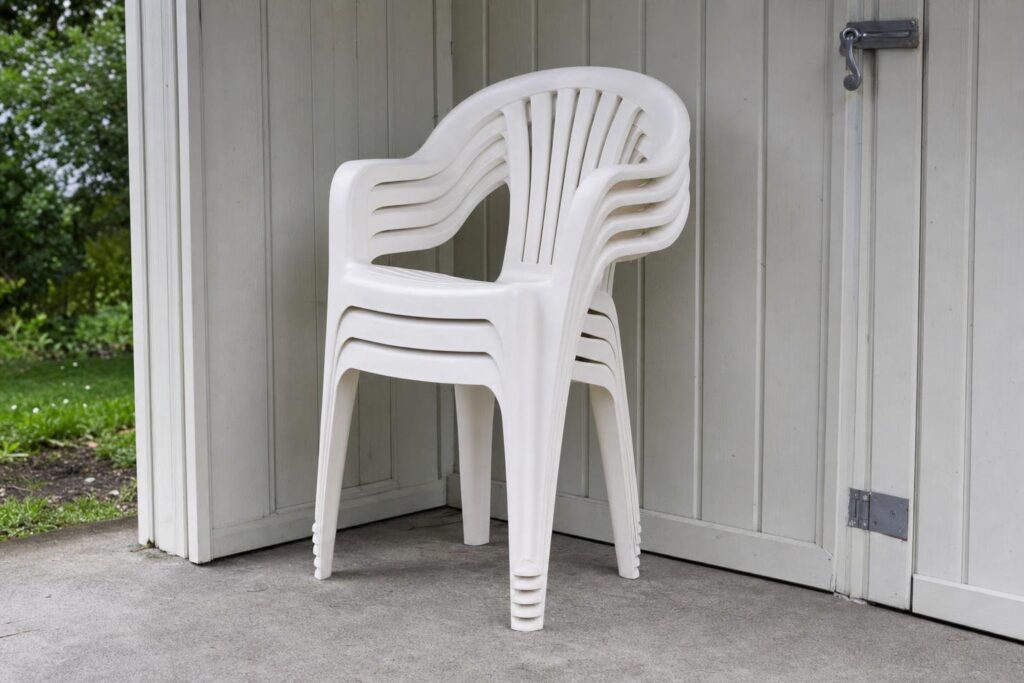
Understanding stackable plastic patio chair benefits and limits before you buy can save you from a furniture decision you regret by midsummer. Stacking chairs look like a simple convenience — pile them up, reclaim the patio — but the trade-offs are real enough that they deserve a clear-eyed look. This article walks through how stackable chairs are built differently from non-stacking designs, where the convenience pays off, where it costs you in durability or comfort, and what questions to ask before committing. Along the way, you’ll see which specifications must be confirmed before you treat any chair as stackable, so you can match the right design to your situation.
How Stacking Changes Chair Construction
A chair engineered to stack is not simply a regular chair with extra clearance. Designers have to solve a specific geometry problem: the top chair must rest cleanly on the lower one without the legs sliding inward or the seat resting on the frame in a way that causes cracking over time. That constraint usually means slimmer legs, a more vertical backrest angle, and a shallower seat scoop compared to what you’d find on a chair built purely for comfort.
The trade-off shows up most clearly in the seat profile. A deeply contoured Adirondack-style seat or a sculpted ergonomic shape makes stacking difficult or impossible, so manufacturers flatten the geometry to make the stack work. The result is a chair that stores efficiently but may feel less cradling during a long afternoon outdoors. Neither approach is wrong — they’re just optimized for different priorities.
Material also matters here. Marine Grade Polymer furniture, for example, is built for weather resistance and dimensional stability, but the specific profile of each chair determines whether stacking is feasible. Always check the manufacturer’s product specifications, not just the material description.
Where Stackability Genuinely Earns Its Keep
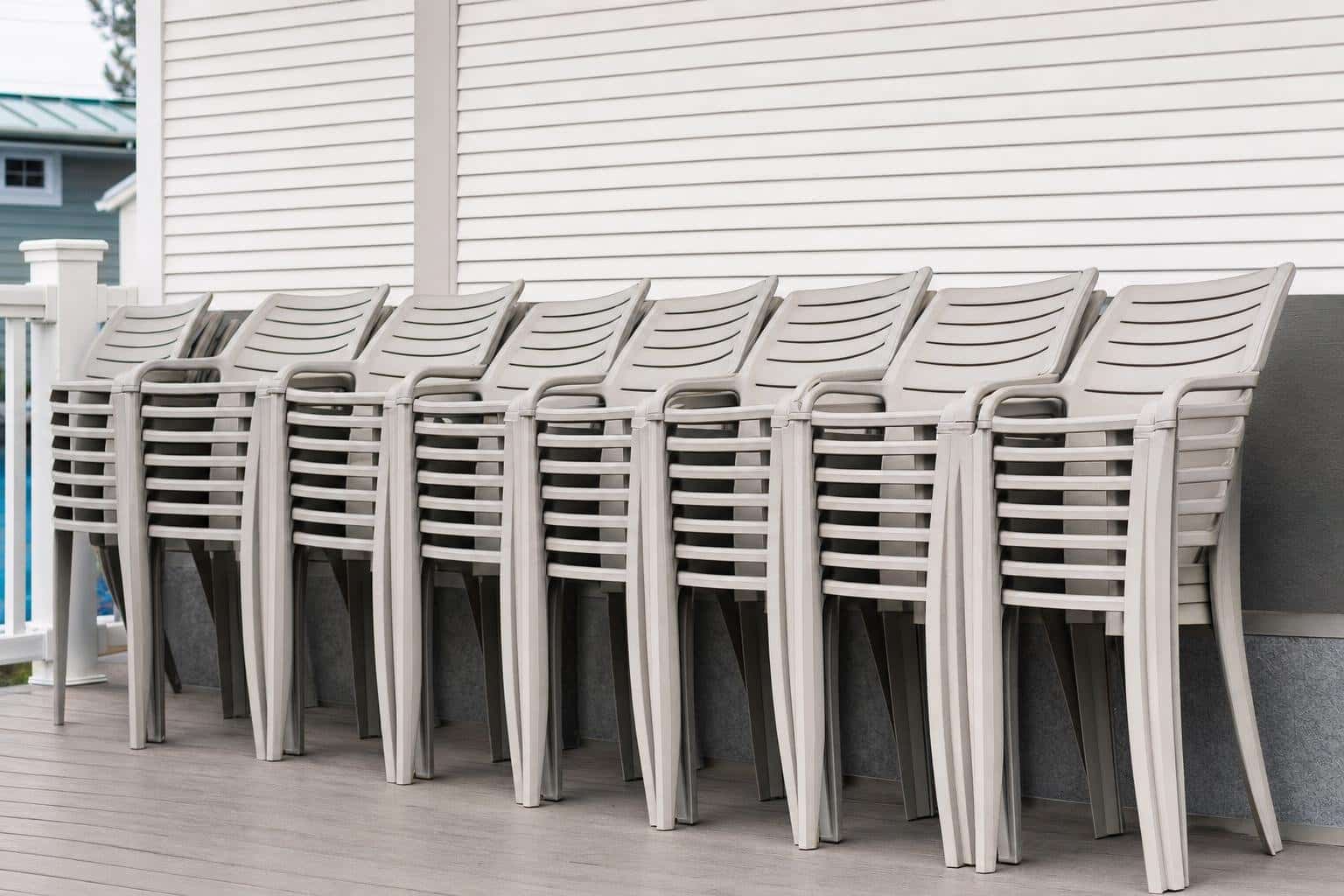
Stacking chairs solve a real storage problem for specific settings. If your household regularly hosts larger gatherings — backyard dinners, graduation parties, holiday cookouts — and then returns to a smaller everyday table setting, keeping six to ten chairs in usable condition between events is a genuine challenge. Stacking brings that footprint down dramatically.
Commercial settings benefit even more obviously. Restaurants with covered patios, event venues, and rental operations can store dozens of chairs in a fraction of the floor space required by fixed-profile seating. For those buyers, stackability isn’t a nice-to-have; it’s a logistical requirement.
Seasonal storage is another case where stacking earns its keep. If you live in a climate with hard winters and you bring patio furniture indoors or into a shed, the ability to nest chairs reduces how much space you need. That said, even stacked chairs should be stored thoughtfully — more on that below.
Where Stacking Causes Wear Over Time
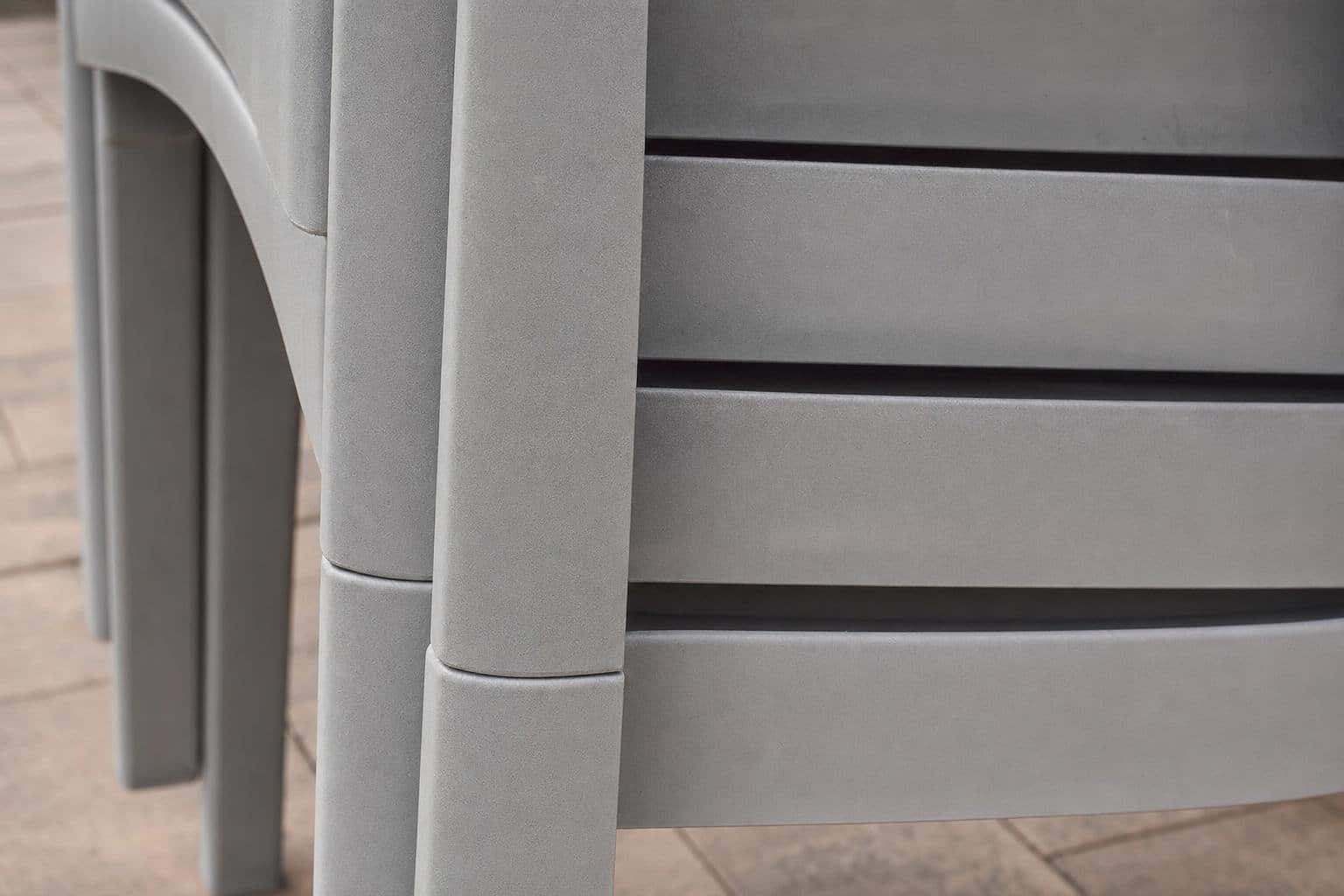
Stacking is convenient, but repeated stacking and unstacking creates contact stress that stationary chairs never experience. The points where one chair’s legs or frame rest on the chair below are subject to rubbing, scraping, and compressive load each time the stack is assembled or disassembled. On cheaper materials, this can show up as surface marring, cracking around the contact points, or loosened joints.
Plastic chairs vary widely in how well they handle that stress. Repeated chair-on-chair contact may mark a finish or stress contact points, but the outcome depends on the actual design. Ask for a documented stack limit and storage instructions rather than guessing about wall thickness or reinforcement from a product photo.
Hardware is another consideration. Some stackable chairs use metal fasteners, and if those fasteners are not stainless steel or a similarly corrosion-resistant alloy, the contact zones can develop rust staining that migrates to the chair surface. On assembled furniture that stays outdoors, inspecting your outdoor furniture hardware seasonally is a practical habit regardless of chair type.
Stackable Plastic Patio Chair Benefits and Limits for Stability and Safety
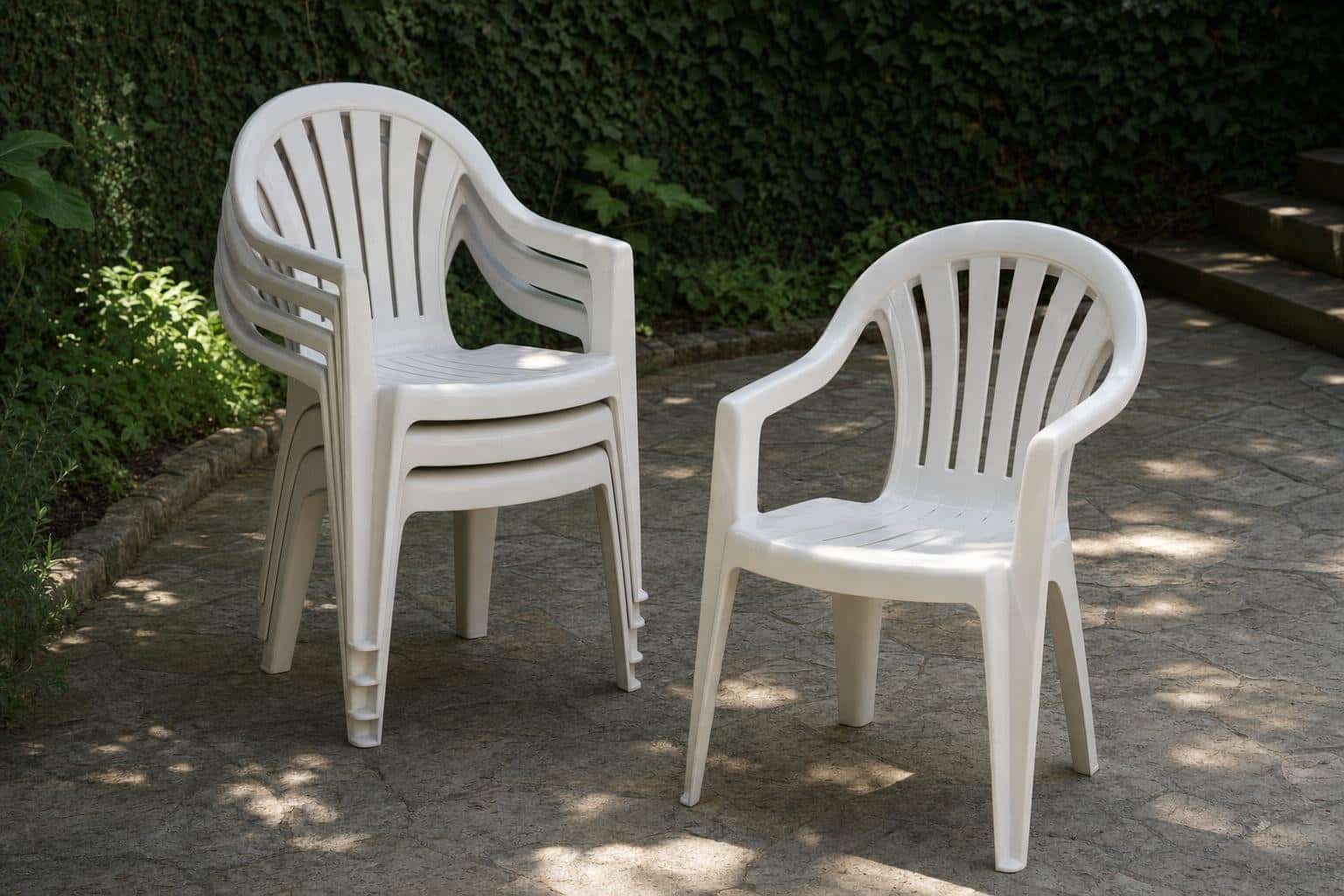
A stacked column of chairs is a wind hazard. This isn’t a hypothetical: the National Weather Service notes that thunderstorm winds can exceed 50 to 60 miles per hour — well above what a standing stack of lightweight chairs can handle without tipping. Even moderate gusts can send a five-chair stack across a patio or into a glass door. This doesn’t mean stacking is unsafe, but it means stacked chairs need a wind management plan: store them inside before a storm, secure them against a wall or structure, or bring the stack down to two or three chairs maximum when high winds are possible.
Individual chair stability is a separate question. Stackability by itself does not establish a chair’s center of gravity, leg spread, or stability. Compare the published footprint and test the chair on the type of surface where it will be used. Sit in any chair before committing to a full set if you can; otherwise, look for verified dimensional specs that suggest a wider base.
Drainage and Wet-Weather Performance
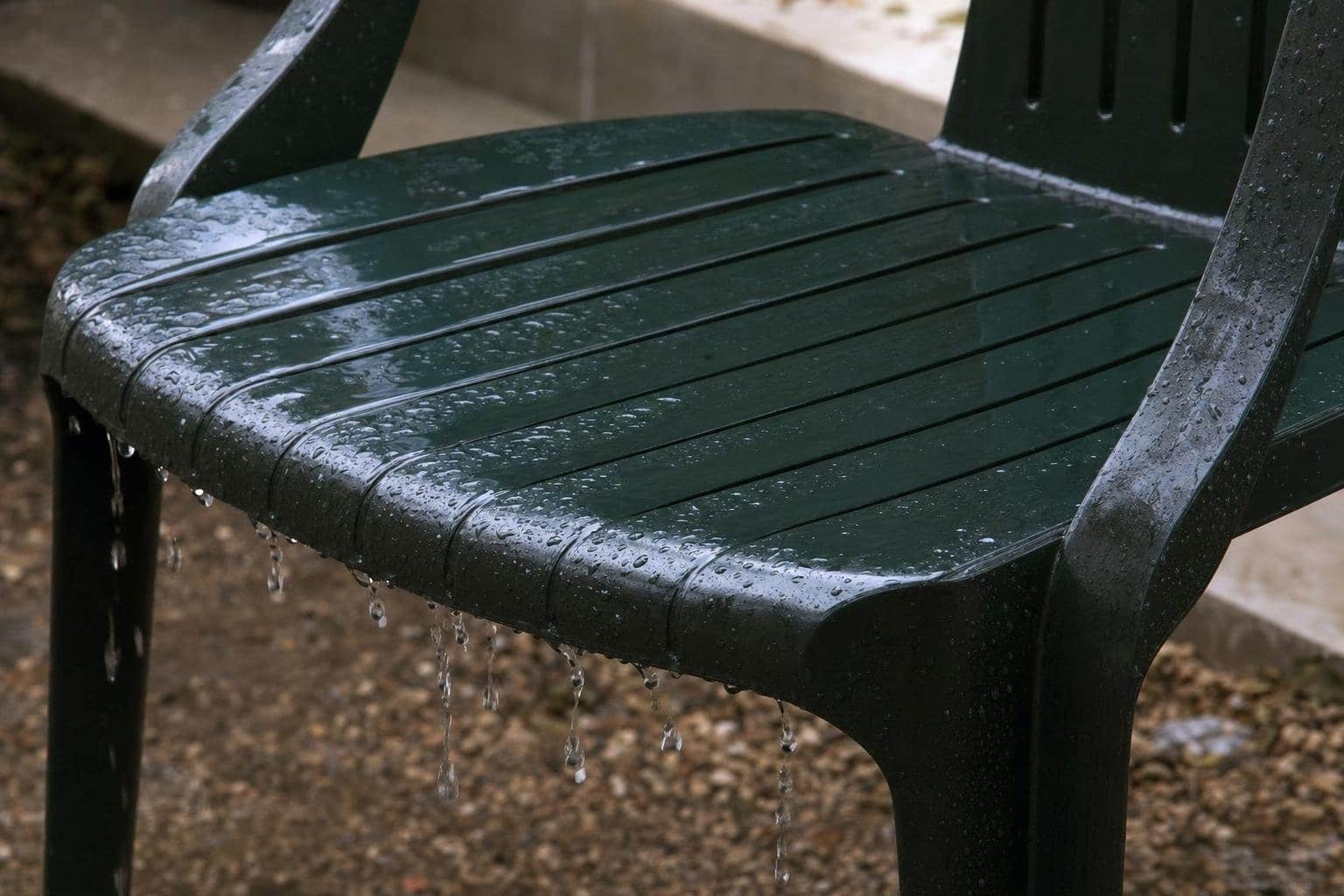
The word “waterproof” gets used loosely in outdoor furniture marketing. In real-world use, a patio chair lives through rain, humidity, morning dew, and occasional submersion in a puddle — conditions that are better described as weather-resistant requirements than a single pass/fail waterproof test. What actually matters is whether water drains off the seat quickly, whether the material absorbs moisture, and whether any fasteners or joints trap water in ways that accelerate deterioration.
Plastic patio chairs, including stackable designs, generally shed rain well if the seat is either perforated or sloped. Solid flat seats in a stacked position can trap water between chairs, which creates a standing-water problem that promotes algae or mildew over time. When evaluating a stackable chair, look at how the seat and back are profiled and whether there’s a gap between stacked surfaces that allows drainage and airflow.
A chair that is not designed to stack avoids chair-on-chair drainage and contact questions. That is not an argument against stacking; it is a reminder to verify both the storage configuration and water-shedding details for the exact model under consideration.
What Seat Height Means for Stackable Chair Selection
Seat height is often overlooked in stackable chair shopping because buyers focus on the stacking feature itself. But seat height determines whether a chair actually fits your table, your users, and your use case. Most standard patio dining chairs fall in the 17-to-19-inch seat height range as a market convention, though you should always verify the exact published specification for any chair you’re evaluating — manufacturers do vary.
The Armless Cafe Chair from Plastic Furniture To Go, for reference, sits at a verified 17-inch seat height. The Hampton Adirondack Chair comes in at 16 inches — a lower, more reclined position suited to lounging rather than dining. Plastic Furniture To Go has not provided a verified stackability specification for either chair, so do not assume that they stack or that they do not; confirm the current product guidance before ordering for compact storage. If you need stacking, look at chairs specifically marketed and built for it, and confirm the seat height independently before buying a full set.
Counter-height seating is another category where stacking chairs exist in the broader market, typically with seats around 24 to 26 inches. Plastic Furniture To Go’s Counter Height Stool sits at a verified 25 inches and is backless and stationary. Its stackability has not been verified, so contact the seller if stacking is a requirement.
How to Evaluate Stackable Chair Quality Before You Buy Online
Buying patio furniture online without sitting in it first is the norm for most shoppers, so knowing what to look for in a product listing matters. Here’s a practical checklist:
- Stack height per chair: How much vertical clearance does each chair add when stacked? A lower number means a more compact storage column.
- Contact point design: Does the listing describe reinforced legs, protective pads, or rubberized contact zones? These details suggest the manufacturer thought about stacking wear.
- Hardware corrosion resistance: Stainless steel fasteners are the standard to look for. Plated steel fasteners can rust and stain adjacent surfaces.
- Seat drainage: Look for perforations, slat gaps, or contours that prevent water pooling between stacked chairs.
- Warranty scope: A structural warranty that covers real-world conditions gives you recourse if contact stress causes cracking. Read the warranty terms — duration and what’s excluded matter as much as the headline number.
- Return policy: If you can’t test the chair in person, a reasonable return window protects you if the chair doesn’t perform as expected.
Frequently Asked Questions
Do plastic patio chairs need any upkeep even if they’re weather-resistant?
Yes. Weather-resistant doesn’t mean care-free. Plastic outdoor chairs benefit from periodic washing with mild soap and water to remove dirt, pollen, and mildew that can dull the surface. Check fastener points seasonally for any corrosion or loosening, especially on chairs that stack and experience repeated contact stress. A quick inspection each spring takes little time and extends the useful life of the furniture.
How many stackable chairs are safe to stack at once?
Follow the exact manufacturer’s stack limit and storage instructions; there is no safe universal number. Before high winds, move chairs to an enclosed location or follow local emergency guidance rather than relying on a wall or an improvised stack.
Can I mix stackable and non-stackable chairs at the same table?
Yes, functionally — the chairs just need compatible seat heights and a shared visual style. Mixing works well when you want the storage convenience of stackable chairs for occasional-use seats while keeping more comfortable fixed-profile chairs in the permanent positions. Verify seat heights match closely enough that all guests sit at a similar level relative to the tabletop.
What should I check when a stackable plastic chair arrives in a box?
Inspect all components against the parts list before assembling. Check for any cracks, warping, or surface damage that may have occurred in shipping. Confirm that the hardware included matches what’s described — stainless steel fasteners should look uniformly silver without surface rust. If anything is missing or damaged, contact the seller before assembly, since most return policies require furniture to be unassembled and in original packaging.
If you’re weighing stackable designs against simpler fixed options and want to understand exactly what’s available through this store, browse the Plastic Furniture To Go shop for current product specs and configurations. For questions about whether a specific piece fits your setup, contact Plastic Furniture To Go directly — it’s the fastest way to get accurate answers before placing an order.
Keep planning with these guides: Outdoor Restaurant Chairs, Outdoor Side Tables With Storage: Pros and Cons, and Weatherproof Outdoor Bar Stools.

