Choosing a patio side table sounds simple until you’re standing between two Adirondack chairs with a measuring tape, wondering whether 15 inches or 17 inches will actually work. This outdoor side table size guide walks through the real footprints, clearances, and use cases behind those two common dimensions, using a 17-inch round and a 15-inch square as reference points. You’ll learn how to measure the gap you have, how table height should relate to chair arm height, what fits a drink versus a dinner plate, and how shape changes the way a small table feels between two seats.
Why an Inch or Two Changes Everything
On paper, a 15-inch square and a 17-inch round sound nearly identical. In practice, they behave very differently. A 17-inch round table has a top surface of about 227 square inches. A 15-inch square comes in at 225 square inches. Almost the same area, but the way that area is distributed matters more than the total.
A round table has no corners, so it slides into tight spots between chair arms without catching. That makes 17 inches of diameter feel generous but forgiving. A square table, on the other hand, uses its corners aggressively. The 15-inch square reaches its full 15 inches across at every edge, and the diagonal corner-to-corner measurement is closer to 21 inches. If your chair arms are only 18 inches apart, that square won’t tuck between them the way a round will.
Height is the other quiet variable. Most outdoor lounge chairs, including Adirondack styles, have arm heights between 22 and 26 inches off the ground. A good side table sits within an inch or two of that arm height so you can set a glass down without lifting or reaching down. If a table is three inches shorter than the chair arm, drinks feel awkward. Three inches taller and it blocks the arm entirely. Before you pick a shape, confirm the height works with the specific chairs you’re pairing it with.
The 17-Inch Round: When It’s the Right Call
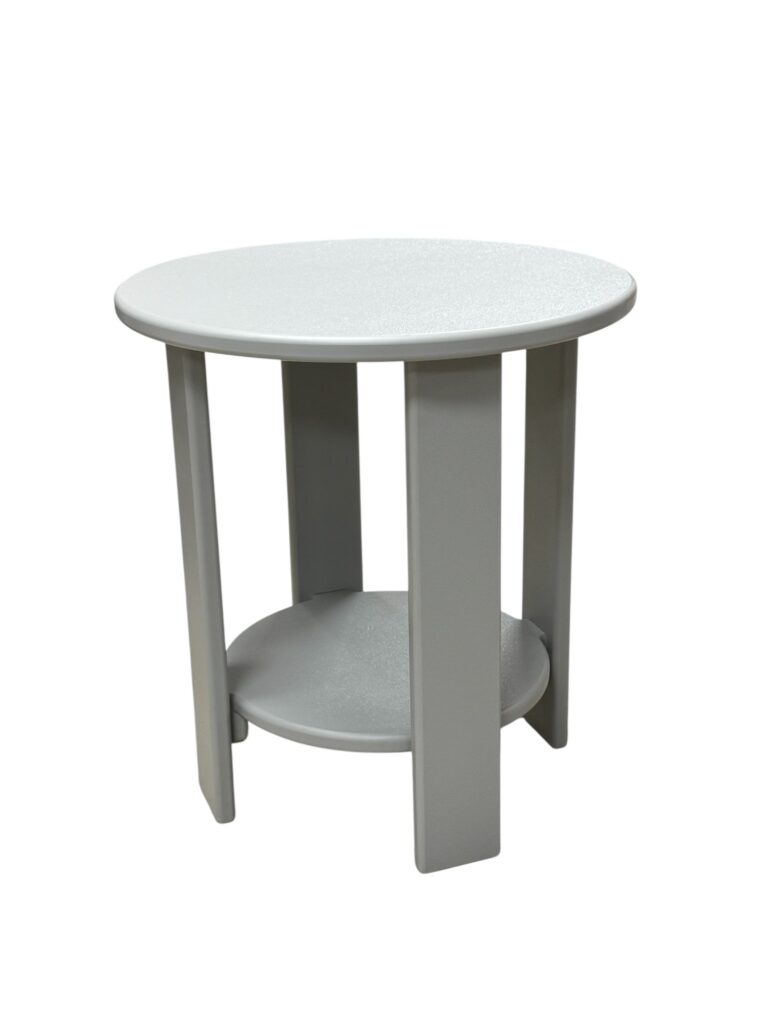
A 17-inch round shape is the workhorse of patio side tables for good reason. It gives you enough surface for a drink, a book, a phone, a small plate of snacks, and maybe a citronella candle without feeling cramped. Because it’s round, it doesn’t visually crowd the space between two chairs, and it forgives slightly uneven placement. If your chairs aren’t perfectly parallel (and they rarely are on a deck), the round shape hides that.
Use a 17-inch round when:
- You have at least 20 inches of clear space between two chair arms.
- You want the table to serve two seats equally rather than one.
- You expect to set down full meals occasionally, not just drinks.
- The area gets foot traffic and you don’t want sharp corners at shin height.
The Hampton Round End Table at 17 inches works well in this classic between-two-chairs setup. It also holds its own as a standalone accent next to a single lounger, where its softer shape reads more like furniture and less like a utility platform. If you’re placing it on a smaller balcony, the round profile is easier to walk past without banging a knee.
The tradeoff is that a round top doesn’t push against a wall or railing as cleanly as a square. You’ll always have a small crescent-shaped gap behind it. If your patio layout needs a table that sits flush against something, this shape works against you.
The 15-Inch Square: Where It Shines
A 15-inch square trades the friendly curves for four straight edges that mate well with railings, walls, sofa arms, and other squared furniture. That makes it the smarter pick in tighter, more architectural spaces. On a narrow balcony, a square pushed against the railing wastes almost no depth, while a round of the same footprint gives up an inch or two of usable surface to that awkward gap.
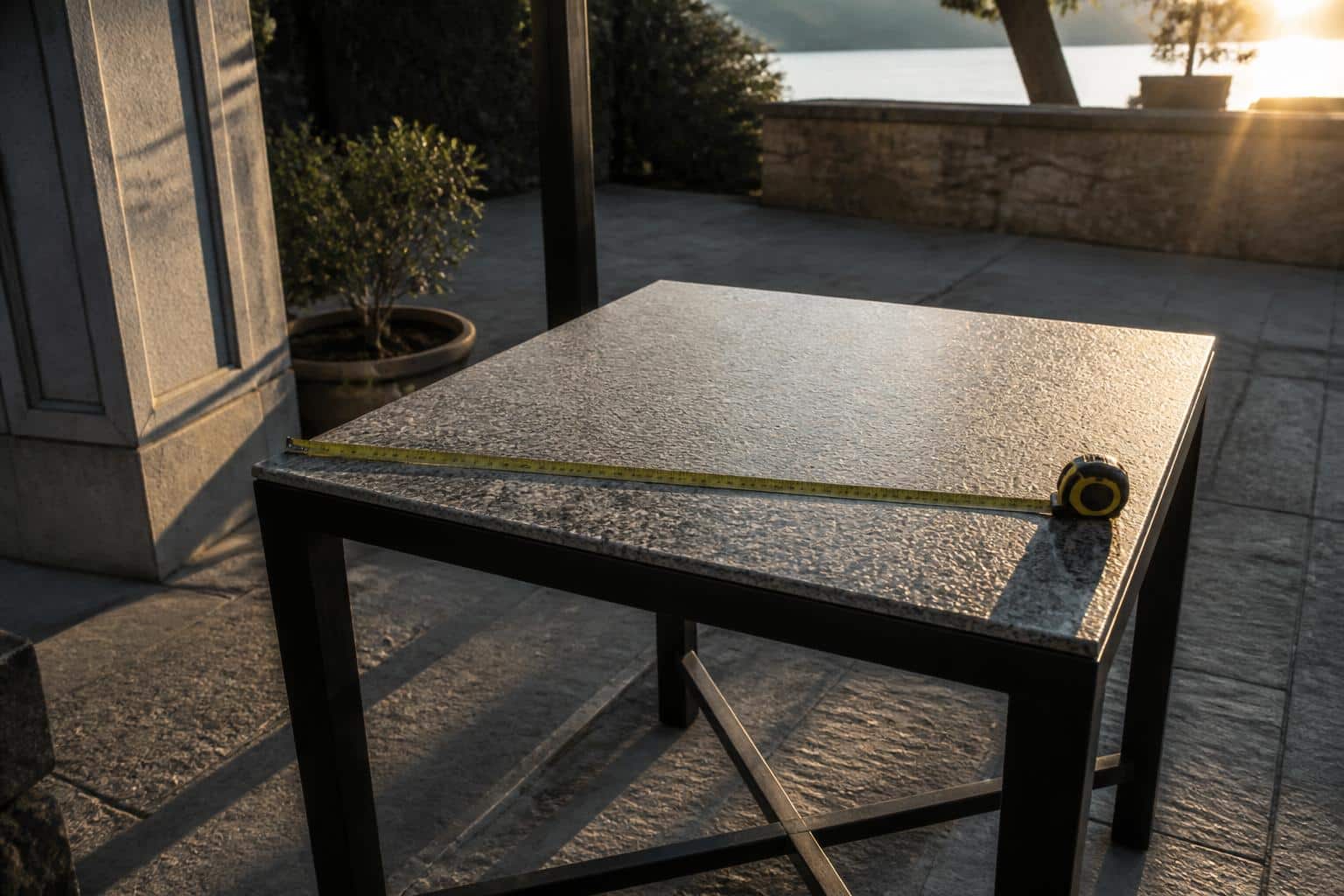
Square tables also cluster well. Two 15-inch squares pushed together give you a 30-by-15-inch rectangle for a shared coffee-table moment, then split apart again when you need side tables. Rounds can’t do that cleanly. If you entertain in small groups and rearrange furniture often, squares are more flexible.
Consider a 15-inch square when:
- The table will live against a wall, railing, or sofa arm.
- You have less than 20 inches between chair arms and need something narrower.
- Your outdoor style leans modern, and you want lines that match a rectangular deck or a linear pergola.
- You plan to pair two tables to serve a small sofa or bench.
The Hampton Square End Table handles those scenarios comfortably. Just remember the corner math: even though the sides are 15 inches, the diagonal reaches around 21 inches, which affects how the table clears chair arms when you approach from an angle. Measure the actual opening, not just the distance between arm centers.
How to Measure Your Space Before You Buy
Before you commit to either size, take five minutes and a tape measure to your patio. Getting these numbers right is the entire point of an outdoor side table size guide, and the measurements are simple.
The Chair-to-Chair Gap
Place your two chairs where they’ll actually live. Sit in one. Have a friend sit in the other. Adjust until the spacing feels natural for conversation and shared use. Then measure the clear opening between the closest points of the two chair arms. If that number is under 18 inches, you probably want a 15-inch square, since even a 17-inch round leaves too little breathing room. If it’s 20 to 24 inches, the 17-inch round is often ideal. Above 24 inches, either works, and you can choose on style.
Arm Height
Measure from the ground to the top surface of the chair arm. Compare that to the side table’s total height. A one-inch mismatch either way is fine. Two inches lower than the arm is workable for drinks. More than that and you’ll notice the reach.
Traffic Clearance
Behind and around the table, aim for 24 to 30 inches of walking clearance if the table sits on a main path. Furniture placement guides from university extension programs and design references generally recommend at least 30 inches for comfortable circulation in outdoor rooms, and you’ll feel the difference immediately if you cut that short. For more on planning outdoor living spaces and material choices, the EPA’s guidance on recycling and recovered materials is worth a read if you’re weighing recycled-content options across the outdoor category.
The Full-Plate Test
Grab a standard 10-inch dinner plate and a 16-ounce glass. Can they both fit on the table with a small margin? A 17-inch round handles this easily. A 15-inch square manages it but with less spare room around the edges. If you’ll eat outside regularly, that margin matters.
Materials, Weight, and How Small Tables Behave Outdoors
Size is only half the story. Compare the actual material, hardware, weight, and care instructions, including storage guidance for your climate. Both Hampton end tables use Marine Grade Polymer with 3/16-inch stainless steel hardware and weigh 15 lb. That weight helps you plan handling; it does not guarantee wind stability or resistance to damage in freezing weather.
When shopping the category, look for:
- Solid, thick tops (usually 3/4 inch to 1 inch) rather than hollow tops that flex under a heavy drink pitcher.
- Stainless steel hardware, not zinc-plated, so nothing streaks rust down the legs after a season.
- Color that goes all the way through the material rather than a painted finish, since scratches disappear instead of showing white underneath.
- A clear structural warranty and a separate fade warranty. Plastic Furniture To Go backs its pieces with a 7-year structural warranty and a 5-year fade warranty, which is a useful benchmark when you’re comparing brands.
Weight matters more with small tables than you’d think. A 15-pound square is stable in most conditions, but if you’re on an exposed rooftop or an oceanfront balcony where gusts hit 30-plus miles per hour, you’ll want the heavier end of the range. On covered porches, weight is a non-issue and you can prioritize how the table looks and feels.
Pairing Tables with Chairs and Loungers
The last piece of this outdoor side table size guide is thinking about the whole grouping. A side table shouldn’t be chosen in isolation. It’s a supporting piece for the chair or sofa next to it.
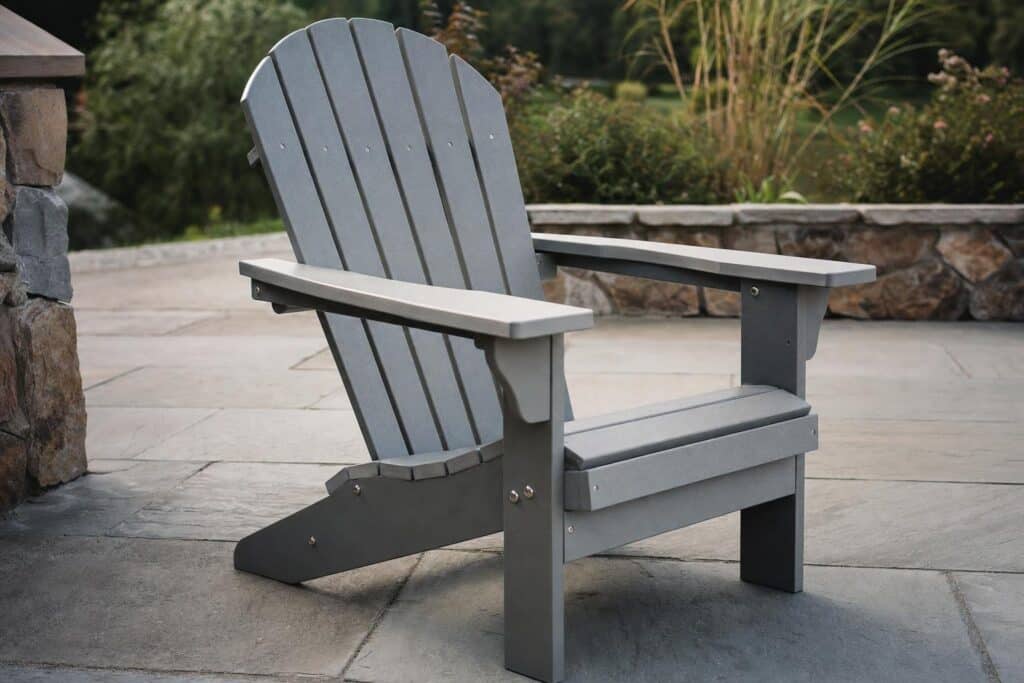
With a deep-seated Adirondack, arms usually sit around 25 to 27 inches off the ground. A side table in the 20 to 22-inch height range meets that arm cleanly. The 17-inch round is the classic pairing because Adirondack chairs already have generous curves, and a round table echoes that language. Two Adirondacks with a round between them read like a matched set.
With straight-lined café chairs or armless dining-style seats, a square table often looks more intentional. The parallel lines reinforce each other. If you’re building a small outdoor bistro corner with two café chairs and a table between them meant for coffee cups and a small plate, the 15-inch square is often a cleaner fit visually.
For counter-height or bar-height setups, remember that side tables at 20 to 22 inches tall won’t work at all next to a 26-inch counter stool. In those cases you’re looking at a different furniture category entirely, closer to a bar-height accent table, which isn’t the same product as a lounge-height side table.
Frequently Asked Questions
Is a 17-inch table too big between two chairs?
Not usually. A 17-inch round needs about 20 inches of clear space between chair arms to feel comfortable, plus a little extra for the tabletop to overhang the base. If your chairs are already spaced for conversation, that gap is almost always there. Where 17 inches becomes too much is on a narrow balcony where you’re squeezing chairs against railings and every inch of walkway matters.
Can I use one side table between three chairs?
You can, but it works better with a round shape than a square. A 17-inch round in the middle of a curved three-chair arrangement gives each seat roughly equal access. A square table forces one chair to sit at a corner, which reads awkwardly and reduces reachable surface for that seat. If you regularly host three, consider two smaller tables instead of trying to stretch one across the group.
How much weight can a small poly side table hold?
Well-built poly side tables in this size range typically handle 40 to 75 pounds of static load without issue, which covers any realistic patio use, including a full ice bucket or a stack of dinner plates. The failure point on cheap tables is usually the connection between top and legs rather than the top itself. Look for reinforced joinery and stainless hardware rather than a specific weight rating, since ratings on outdoor tables are inconsistently reported across brands.
Do I need to bring side tables indoors for winter?
Quality poly and HDPE-category tables are engineered for year-round outdoor exposure and handle freeze-thaw cycles without cracking. You don’t need to store them, though covering them or tipping them under an eave keeps them cleaner. What you do want to avoid is leaving heavy objects on top through winter, since concentrated point loads on a frozen surface can stress the material more than temperature alone.
If you’ve measured your space and you’re ready to see how these dimensions translate into finished furniture, both the round and square options at Plastic Furniture To Go are American-made, sold factory-direct, and shipped free anywhere in the country. Browse the Hampton Round End Table or Hampton Square End Table to compare colors, or reach out through the contact page if you’d like a second opinion on which shape fits your layout best.