

Can plastic furniture stay outside in winter? In many cases it can, but the right answer depends on the material, construction, local weather, and the care instructions supplied with the furniture. A dense outdoor polymer chair and a thin molded-resin chair may both be described as “plastic,” yet they can behave very differently when temperatures fall, wind picks up, or water repeatedly freezes and thaws.
The safest approach is to identify what you own, follow the manufacturer’s guidance, and prepare the patio for the weather your area actually receives. This guide explains which winter conditions deserve attention, how to position and clean outdoor furniture before cold weather, when a cover or sheltered storage is worthwhile, and what to inspect when spring returns.
Can Plastic Furniture Stay Outside in Winter? Start With the Material
“Plastic outdoor furniture” is a broad category. Lightweight molded chairs, hollow resin pieces, composite boards, recycled-plastic lumber, and Marine Grade Polymer furniture do not share one universal cold-weather rating. Before deciding what stays outside, check the product label, owner information, or manufacturer’s care instructions.
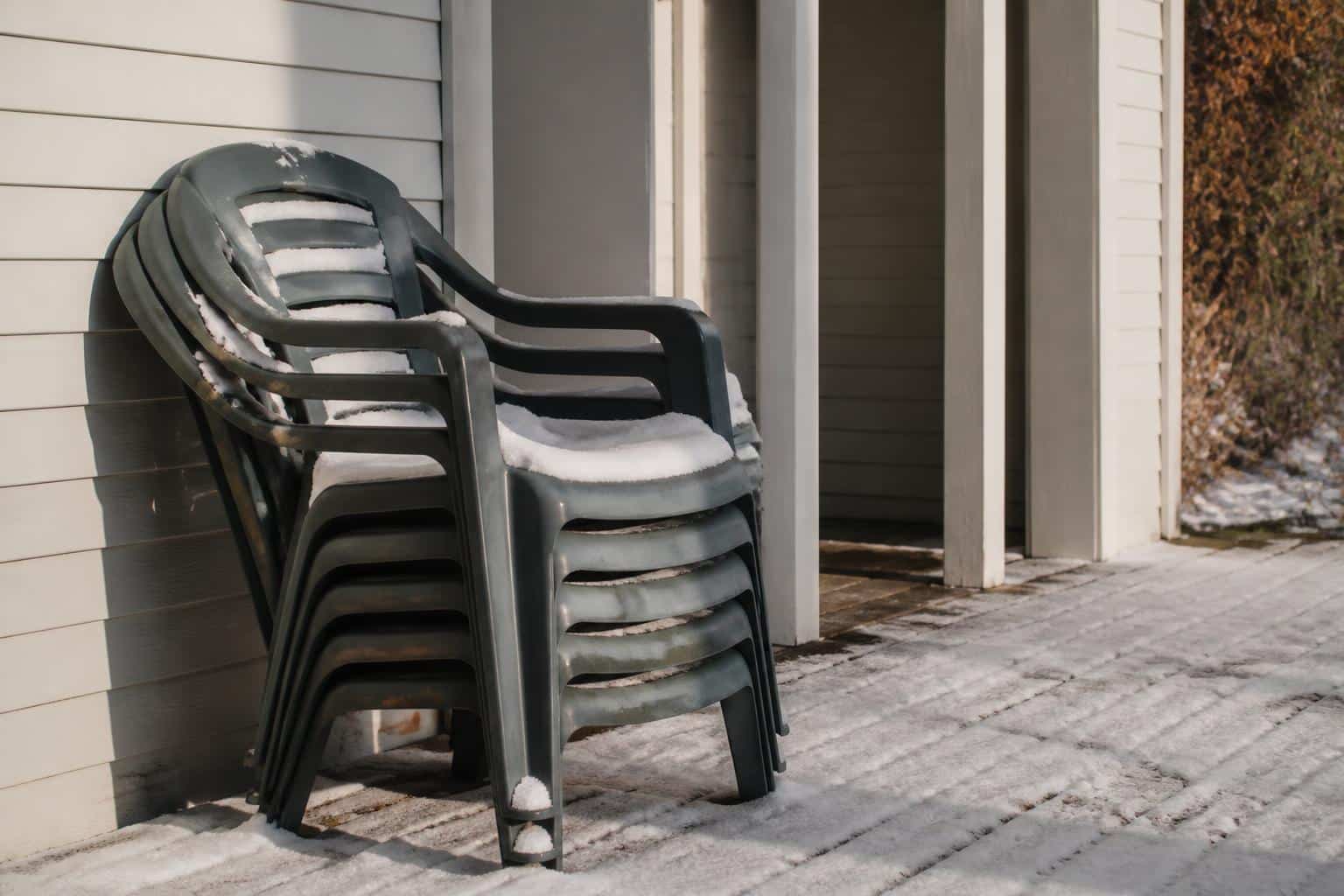
Lightweight molded furniture deserves extra caution. Many consumer-grade plastics become less impact-resistant as temperatures fall, particularly after years of sun exposure and regular use. A cold chair may be more vulnerable to a hard impact, being dropped, or being blown into another object. Avoid relying on one temperature threshold for every product because the formulation, wall thickness, age, and construction all matter.
Furniture built from solid outdoor polymer boards is heavier and assembled more like conventional lumber furniture. Plastic Furniture To Go products use Marine Grade Polymer with 3/16-inch stainless steel hardware. Those confirmed construction details help shoppers compare the products with thinner molded alternatives, but they do not replace sensible winter care or the instructions for a specific piece.
If you cannot identify the material or find reliable care information, use the conservative option: clean and dry the furniture, move it to a sheltered location, and avoid using it while it is extremely cold. That protects an unknown product without making assumptions about its performance.
What Winter Weather Can Do to Outdoor Furniture
Cold is only one part of winter exposure. Wind, standing water, ice, accumulated debris, uneven ground, and heavy loads often create the more immediate problems. Thinking through those conditions produces a better plan than treating every winter day the same.
Wind can move or overturn furniture. Lightweight chairs are the most obvious concern, but any piece can shift on a smooth or icy surface. Group furniture in a sheltered part of the patio when practical. If anchoring is necessary, use a method approved for the furniture and the structure rather than tying pieces to a railing in a way that could damage either one.
Standing water and blocked drainage need attention. Leaves, dirt, and other debris can collect in seat contours, between slats, or around hardware. When that material stays wet, it can cause stains and make spring cleaning harder. Clear drainage paths before the first cold spell and after major storms.
Snow and ice add weight. The amount that is safe varies with the design and condition of each product. Brush off substantial accumulation with a soft tool when it is safe to do so, and never strike frozen furniture with a metal shovel or chip at ice with a sharp object.
The surface underneath can move. Soil, gravel, pavers, and deck areas may settle or shift through wet and cold periods. Check that every chair and table sits level and that no leg is perched on an unstable edge. This practical placement advice is useful even in regions that receive little or no snow.
The National Weather Service winter resources explain how snow, freezing rain, sleet, and wind can affect different parts of the country. Use your local forecast and alerts to plan for actual conditions rather than relying on a national average.
A Practical Winter Preparation Checklist
A short preparation routine can protect the furniture, keep the patio orderly, and reduce the work waiting in spring.
- Clean the frames. Remove pollen, food residue, leaves, and dirt using the cleaning method recommended for the material. For Plastic Furniture To Go pieces, start with mild soap, water, and a soft cloth or brush. Avoid solvents, abrasive pads, or other products unless the care instructions specifically permit them.
- Let everything dry. Do not place a tight cover over wet furniture. Trapped moisture and debris can create staining or mildew on nearby fabrics and surfaces.
- Inspect the hardware. Look for a loose fastener, a part that rubs, or a chair that no longer sits squarely. Address an obvious issue before the furniture is exposed to months of wind and precipitation.
- Move pieces away from hazards. Avoid roof drainage paths, unstable tree limbs, low areas where water pools, and places where a plow, shovel, or falling object could strike the furniture.
- Secure lightweight items. Stack or group them only when the design allows it. Move especially light pieces into a garage, shed, or covered area when severe wind is expected.
- Bring in soft goods. Cushions, pillows, umbrellas, and most small accessories benefit from dry indoor storage. Clean and dry them first, then use a ventilated storage area or suitable container.
Planters and accessories also deserve attention. Water inside a pot can freeze and expand, and metal decor can corrode when it stays wet. Check the care instructions for each item instead of assuming the furniture and everything placed on it have the same weather tolerance.
Should You Cover It, Store It, or Leave It in Place?
There is no single storage rule for every climate or every product. Choose among three practical options after considering the furniture’s construction, the exposure of the patio, and the amount of seasonal maintenance you are willing to do.
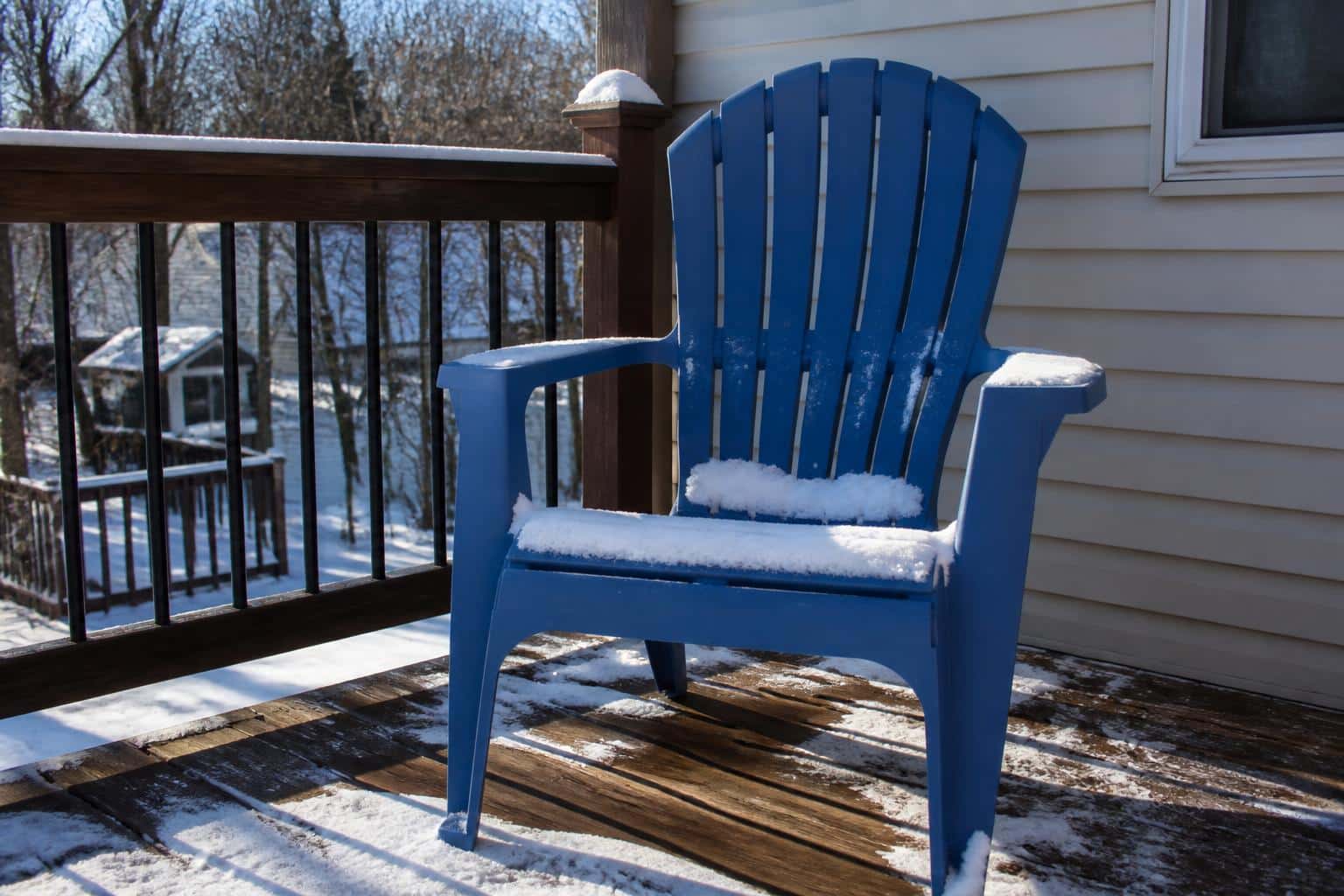
Leave it in place. This may be reasonable for substantial outdoor furniture when the manufacturer permits year-round exposure and the pieces can remain level, clean, and clear of dangerous loads. Check the setup periodically after strong wind, heavy rain, snow, or ice.
Use a fitted, breathable cover. A cover can reduce dirt, leaf stains, and cleanup, but poor fit can create new problems. Choose a cover designed for the furniture, secure it against wind, and keep it from forming pockets that hold water. Avoid wrapping a wet piece tightly in an unventilated tarp.
Move it to sheltered storage. Storage is the safest choice for lightweight molded furniture, unidentified materials, removable fabrics, and any item whose manufacturer recommends protection from freezing conditions. Clean and dry each piece before putting it away. A dry garage, shed, or covered space is generally more useful than a damp area with little airflow.
A hybrid approach often works best. Keep a substantial chair or table available on a covered patio while moving spare seating and accessories indoors. The goal is not to create the most elaborate routine; it is to choose one that you will maintain through the season.
If you are comparing replacement furniture, review the confirmed construction, dimensions, weight, warranty, and care information rather than relying on broad phrases such as “all-weather.” The Marine Grade Polymer guide explains the material used by Plastic Furniture To Go, and the shop provides the current product choices and specifications.
Spring Inspection and Cleaning
When regular patio use returns, begin with a visual inspection. Confirm that every piece still sits level, hardware looks secure, and no crack, deep gouge, or other structural change is visible. If something looks wrong, stop using the piece until you have checked the care or warranty information.
Remove loose debris with a soft brush, then clean the furniture according to the manufacturer’s instructions. Mild soap and water are an appropriate starting point for Plastic Furniture To Go products. Rinse away residue and let the surfaces dry before replacing cushions or moving furniture back into its normal arrangement.
Do not assume that a pressure washer, concentrated cleaner, bleach mixture, or abrasive pad is suitable for every plastic. Those methods can affect surfaces or finishes and may conflict with product instructions. When in doubt, use the least aggressive method and ask the manufacturer before trying something stronger.
Plastic Furniture To Go publishes a seven-year structural warranty and five-year fading warranty for its furniture. Review the complete returns and warranty information for coverage terms rather than treating routine weathering, cleaning, and structural issues as interchangeable.
Bottom line: Can plastic furniture stay outside in winter? It can when the product is built for outdoor exposure, the manufacturer permits it, and the owner manages wind, drainage, loads, placement, and seasonal care.
Frequently Asked Questions
Does all plastic furniture handle freezing weather the same way?
No. Thin molded resin, hollow components, composite products, and solid outdoor polymer boards can use different formulations and construction methods. Check the product’s care information and cold-weather guidance instead of applying one temperature rating to every plastic chair or table.
Should snow be removed from outdoor plastic furniture?
Remove substantial accumulation when it is safe and practical, especially if the product instructions set a load limit or the piece is lightweight or worn. Use a soft broom or brush. Avoid metal tools, sharp edges, and forceful impacts against a frozen surface.
Do outdoor furniture covers prevent every winter problem?
No. A cover can reduce dirt and direct exposure, but it needs to fit, stay secured, and allow ventilation. A loose cover may flap and abrade a surface, while a sagging or unventilated cover may hold water and moisture where you do not want it.
Should cushions remain outside with the furniture?
Dry indoor storage is the safer choice for most cushions, pillows, umbrellas, and other soft goods. Clean and dry them first, and follow the textile manufacturer’s care instructions. If indoor space is unavailable, use a storage product intended for outdoor fabrics and check it periodically for moisture.
Can plastic furniture stay outside in winter? Often yes, provided the manufacturer allows it and you account for wind, drainage, loads, placement, and seasonal cleaning. If you are choosing American-made outdoor seating or tables for year-round use, compare the verified specifications in the Plastic Furniture To Go collection. The products ship free to the contiguous U.S. and include published structural and fading warranty coverage. For questions about a specific piece or climate, use the contact page before relying on a general rule.
Keep planning with these guides: How to Clean Sunscreen From Plastic Patio Furniture, Cleaning Adirondack Chairs: A 10-Minute Routine, and Preparing Your Patio for Monsoon Season.
For local conditions, see our Houston patio furniture guide.

