
Cleaning Adirondack Chairs: A 10-Minute Routine
If you’ve been putting off cleaning your outdoor seating because you assumed it would swallow a Saturday, here’s some relief: learning how to clean Adirondack chairs takes about ten minutes per chair, and the supplies are almost certainly already under your kitchen sink. Poly Adirondack chairs shrug off most of what nature throws at them, but pollen, tree sap, spider webs, and a fine film of atmospheric dust do build up over a season. This guide walks you through a fast, low-effort cleaning routine, the mistakes that scratch or dull the surface, and how often you actually need to bother.
What You Need Before You Start
The supplies for cleaning a poly Adirondack chair are refreshingly boring. You don’t need specialty outdoor furniture cleaners, marine-grade products, or anything with a warning label. In fact, the harsher the cleaner, the more likely you are to damage the finish or leave a residue that attracts more grime.
Here’s the working kit:
- A bucket with about a gallon of warm water
- One to two tablespoons of mild dish soap (Dawn, Seventh Generation, or any grease-cutting dish detergent)
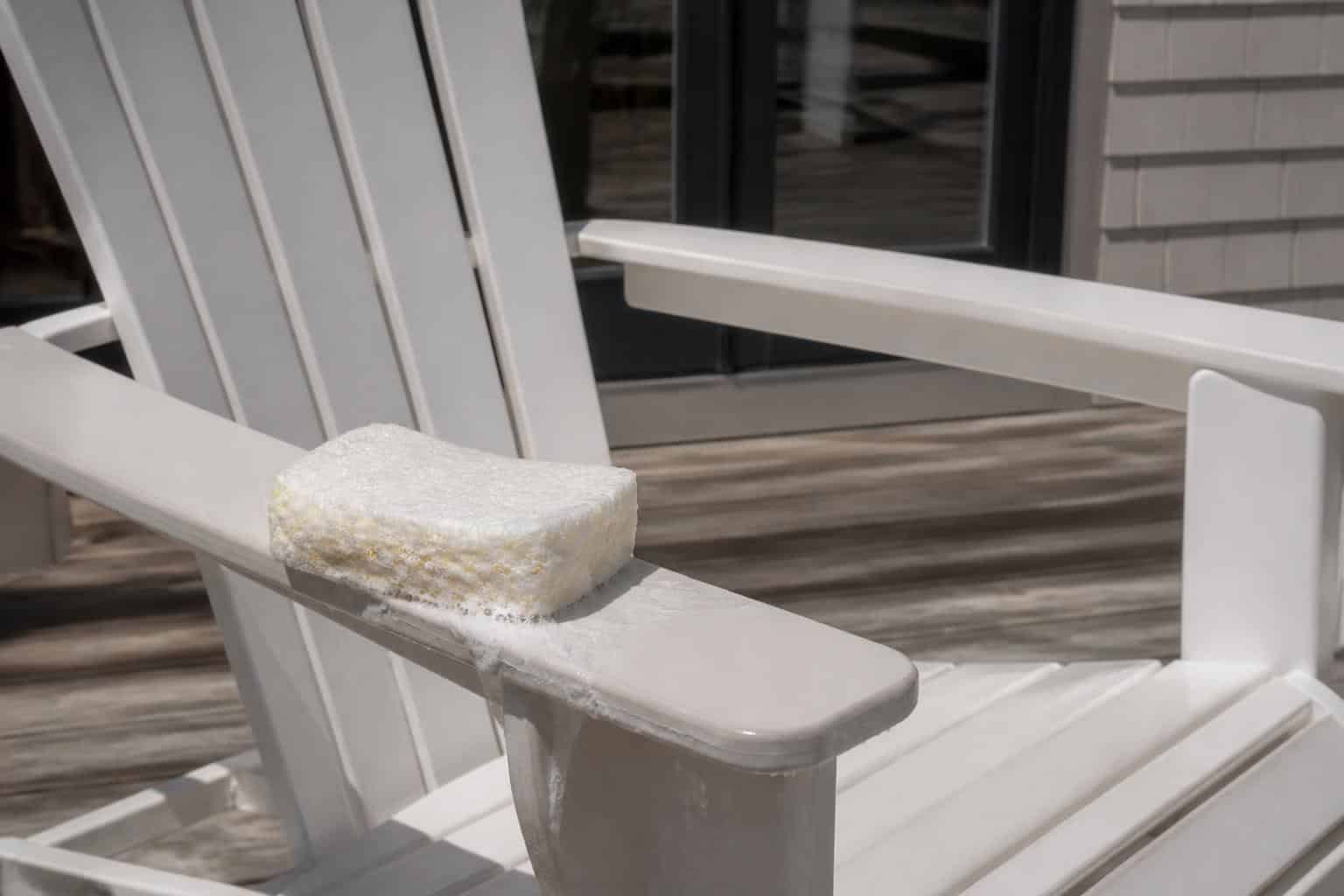
- A soft-bristle brush – a car wash brush, a soft nylon scrub brush, or even a large sponge with a scrubbing side
- A garden hose with a standard spray nozzle
- An old microfiber cloth or two for stubborn spots
- A dry towel if you want to sit on the chair right away
What you should leave in the garage: wire brushes, steel wool, magic erasers, bleach at full strength, acetone, paint thinner, oven cleaner, and pressure washers set anywhere above about 1,500 PSI at close range. Poly lumber is durable, but a wire brush will absolutely leave visible scratch lines, and aggressive solvents can dull the color over time. If you’re not sure whether a cleaner is safe, the rule of thumb is simple: if you’d use it on dishes or a car, it’s probably fine. If you’d use it to strip a driveway, it’s not.
Pick a mild, overcast day if you can. Cleaning in direct summer sun means soapy water evaporates before you can rinse it, leaving streaks behind.
The 10-Minute Cleaning Routine, Step by Step
Once you have your supplies ready, the process itself is straightforward. Set a timer if you’re skeptical – most chairs really do come clean in about ten minutes, and much of that is standing around while soap does its work.
Step 1: Dry knock-down (about 1 minute). Before any water touches the chair, brush off loose debris with a dry hand or a dry brush. Get the leaves out of the slats, sweep pollen off the arms, and knock down any obvious cobwebs. Doing this dry means you won’t smear that debris into a paste when you introduce water.
Step 2: Initial rinse (about 1 minute). Give the whole chair a quick hose-down. This loosens surface dust and pre-wets the plastic so the soap spreads evenly instead of beading up.
Step 3: Soap and scrub (about 4-5 minutes). Dip your soft brush in the soapy water and work top-down: back slats first, then armrests, then seat, then legs. Use circular motions on the flat areas and long strokes along the slats. Don’t forget the underside of the armrests and the front edge of the seat – these are the spots where hands, drinks, and legs leave the most grime. If the chair has hardware, briefly scrub around the stainless fasteners too.
Step 4: Let it sit (about 2 minutes). Walk away. Let the soapy water actually work on any stuck-on residue. This is the most-skipped step and the reason people think they need harsher cleaners – they don’t give the mild ones time to do their job.
Step 5: Final rinse (about 1-2 minutes). Rinse thoroughly from the top down. Any soap left behind will streak once the chair dries in sunlight, so be generous with the water. Towel-dry the seat if you want to sit down immediately, otherwise let air handle it in about 15-20 minutes on a warm day.
Dealing With Stubborn Stains
The ten-minute routine handles ninety percent of normal use. But every so often, something more challenging shows up: tree sap after a windy week, bird droppings that baked in the sun, red clay tracked in on shoes, or the ghost of a wine glass from last month’s cookout. Here’s how to handle the usual suspects without escalating to anything that could scratch the finish.
Tree Sap and Sticky Residue
Sap responds well to a small amount of rubbing alcohol on a soft cloth. Dab, don’t scrub – the alcohol breaks down the resin, and you’re just wiping the loosened material off. Rinse with soapy water afterward. For pine sap that has fully hardened, a little longer contact time is fine, but resist the urge to scrape with anything metal.
Mildew and Green Film
Poly furniture doesn’t grow mildew itself, but organic matter (pollen, leaf tannins, spider debris) sitting on the surface can. A diluted bleach solution – one part household bleach to ten parts water – applied with a soft brush, left for five minutes, then rinsed thoroughly, will handle it. Wear gloves and rinse nearby plants immediately if any splashes reach them. The EPA has helpful general guidance on managing mold and mildew that applies to outdoor surfaces too.
Sunscreen, Grease, and Food Stains
These are oil-based and need a degreaser. Full-strength dish soap dabbed onto the spot, worked in with a soft brush, and rinsed off will usually lift them on the first try. For older, set-in stains, a paste of baking soda and water left on for ten minutes before scrubbing gives you a mild abrasive that’s still safe on poly.
Mistakes That Damage Poly Furniture
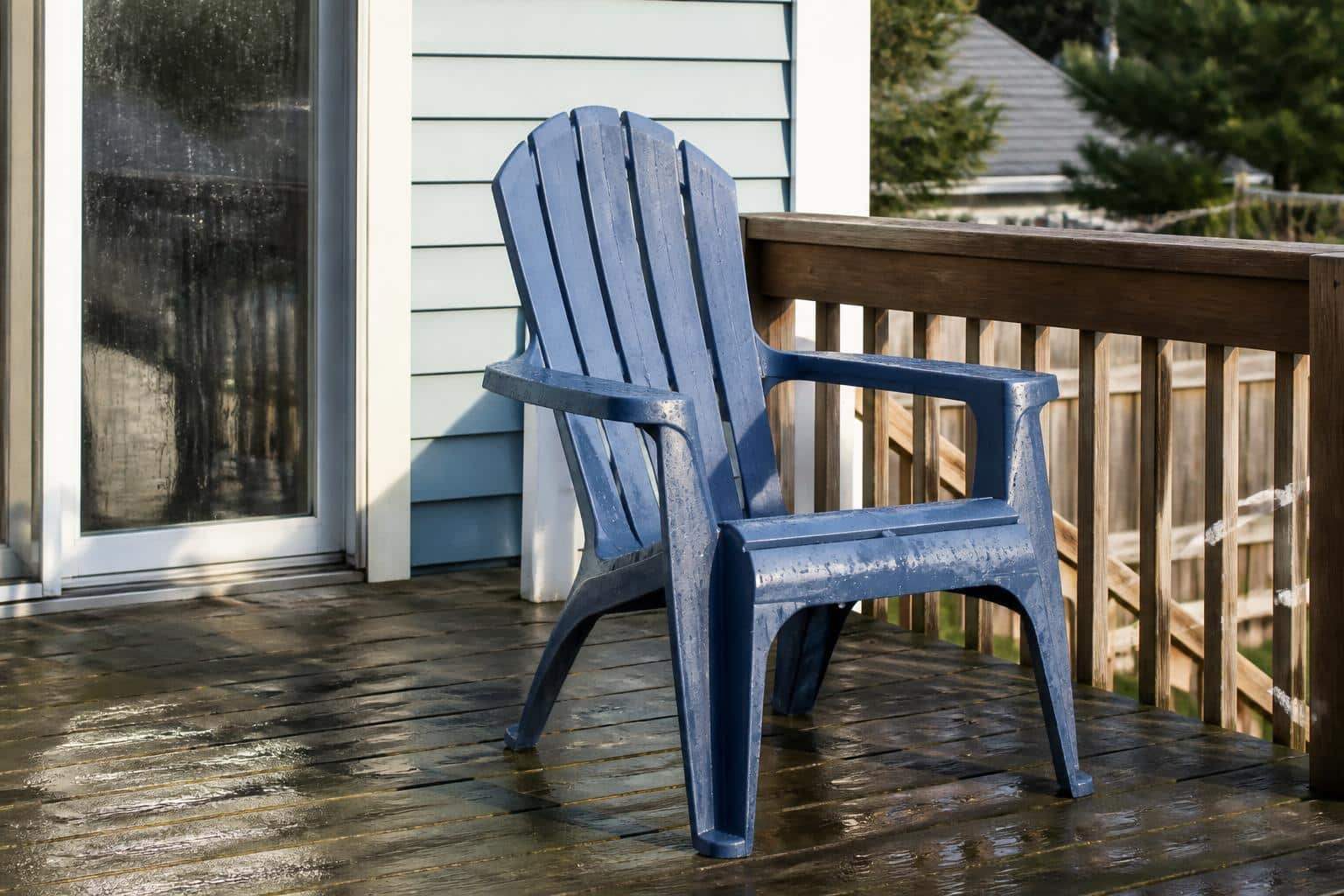
Knowing how to clean Adirondack chairs also means knowing what not to do. Poly lumber is one of the most forgiving outdoor materials available, but there are a few habits that will visibly shorten its good looks.
Pressure washing at close range. A pressure washer isn’t automatically off-limits, but people routinely use them at the wrong distance and PSI. If you must use one, stay at 1,500 PSI or lower, keep the wand at least 18 inches from the surface, and use a wide-angle tip. Getting closer or higher-pressure can etch matte lines into the finish that never fully rinse out.
Abrasive scrubbing pads. Green scouring pads, steel wool, and even some “heavy-duty” sponges are abrasive enough to leave micro-scratches. Those scratches then trap dirt, and the chair looks dingier faster after each cleaning. Stick with soft brushes and the non-scrub side of sponges.
Solvent-based cleaners. Acetone, paint thinner, gasoline, and lacquer-based products can dull, discolor, or soften the surface. If a stain seems to demand something aggressive, try a longer soak with soapy water first – patience beats chemistry almost every time on poly.
Skipping the rinse. Soap film left on the surface attracts new dirt within days. A thorough final rinse is what makes the clean actually last.
Cleaning only when the chairs look bad. Waiting until a chair is visibly grimy means the routine takes longer and stains have more time to set. A quick hose-down every few weeks during heavy-use season keeps the ten-minute cleaning a ten-minute cleaning.
How Often to Clean, and Seasonal Care Notes
For most households, a full soap-and-water cleaning two to four times a year is plenty. Homes under heavy tree cover, near dirt roads, or in coastal areas may want to clean monthly during peak season. If you live somewhere with heavy pollen in spring, a rinse in April or May is often enough to prevent yellow-green film from setting in.
Poly furniture is designed to live outdoors year-round in most climates. It doesn’t need to come inside for winter, and it handles freeze-thaw cycles, summer heat, and UV exposure without warping or splintering the way wood does. That said, a few seasonal habits help:
- Spring: A full cleaning to remove winter grime and pollen buildup.
- Summer: Quick hose rinses as needed, especially after storms that stir up dust and pollen.
- Fall: Clear leaves out of slats before they mat down and stain from tannins.
- Winter: In heavy snow regions, brush snow off rather than letting it sit in deep drifts on the seat. If you’d rather cover the chairs, use breathable covers – never sealed plastic tarps, which trap moisture.
Well-made poly chairs are meant to age gracefully. If you’re shopping and want to know what to look for in a chair that will still look good after a decade, check the warranty terms. Good outdoor furniture should come with meaningful structural and fade coverage – the Hampton Adirondack Chair, for example, is backed by a 7-year structural warranty and a 5-year fade warranty, which gives you a real sense of how long the manufacturer expects the product to hold up.
Frequently Asked Questions
Can I use a pressure washer on plastic Adirondack chairs?
Yes, but carefully. Keep the pressure at 1,500 PSI or lower, use a wide-angle tip (25 or 40 degrees), and stay at least 18 inches from the surface. Higher pressure or closer distance can etch fine lines into the poly that dull the finish. Honestly, a garden hose with a standard nozzle plus a soft brush does the job well enough that most people never need to break out the pressure washer at all.
Will bleach discolor my poly Adirondack chair?
Diluted household bleach – roughly one part bleach to ten parts water – is safe on poly for short contact times of about five minutes, followed by a thorough rinse. Full-strength bleach or long soaks aren’t a good idea, and you should protect nearby lawns and plants from runoff. For most cleaning, mild dish soap and water is more than enough; save the bleach solution for actual mildew or organic stains that soap alone won’t lift.
How do I remove scratches from a poly Adirondack chair?
Light surface scuffs from shoes or moved planters can sometimes be buffed with a soft cloth and a bit of soapy water. Deeper scratches, unfortunately, are usually permanent because the color runs through the material rather than sitting on top as a coating. The good news is that this same property means scratches don’t expose a different color underneath – they just show up as slightly duller marks that most people never notice from a normal viewing distance.
Do I need to bring my chairs inside for winter?
No. Quality poly Adirondack chairs are built to stay outside year-round in every U.S. climate, including areas with hard freezes and heavy snow. The material doesn’t absorb water, so freeze-thaw cycles don’t crack or split it the way they do wood. If you want to reduce cleanup in spring, brush heavy snow off the seat and clear leaves out of the slats in fall – but there’s no need for a garage or a shed.
A clean chair invites you to sit down, which is the whole point of owning one in the first place. If you’re ready to add durable, low-maintenance seating to your yard, deck, or patio, Plastic Furniture To Go builds American-made poly furniture and ships it factory-direct with free shipping to your door anywhere in the country. Browse the full lineup on the shop page, or reach out through the contact form if you have questions about colors, dimensions, or what will work for your space.