
Rooftop deck patio furniture planning starts long before you pick chair styles or table shapes. A rooftop can be one of the best places to relax, dine, or entertain, but it also has limits that ground-level patios do not.
Before furnishing the space, think through building rules, delivery routes, wind exposure, drainage, clear exits, and where furniture will go during severe weather. A smart plan helps you choose pieces that fit your layout, move well, and stay practical season after season.
Start With Building Rules and Access Limits

The first step is confirming what your rooftop deck allows. Condos, apartment buildings, townhome associations, and mixed-use buildings often have rules about furniture size, open-flame appliances, storage, rail clearances, and shared access. Even in a private residence, the deck may have design limits that affect your setup.
Look for written guidelines that explain what can be placed on the rooftop and where. You may find restrictions on blocking drains, storing large covers or bins, or placing furniture too close to doors, stair access, elevators, or mechanical equipment. If the rooftop serves as part of an exit route, keeping those paths open is not optional.
It also helps to measure every access point before ordering. Check stair landings, door widths, elevator dimensions, hallway corners, and gate openings. A furniture layout can look perfect on paper and still become a problem if a chair or table cannot make the trip to the roof. Planning access early saves hassle and keeps your options realistic.
If your building has delivery windows, freight rules, or protection requirements for common areas, note those too. Since Plastic Furniture To Go is factory direct with free nationwide shipping, reviewing the shipping policy before purchase can help you prepare for arrival and rooftop transport.
Map the Layout Before You Shop
On a rooftop, every square foot has a job. Unlike a wide backyard, the space may need to handle seating, dining, planters, door swing, service access, and walking lanes all at once. That makes layout planning more important than browsing by style alone.
Start by sketching the deck and marking fixed features: doors, stairs, railings, drains, walls, built-in benches, grill zones, and utility access. Then identify your main use. Do you want casual lounging, compact dining, conversation seating, or a mix? Your answer will shape how much room should go to chairs, stools, and tables.
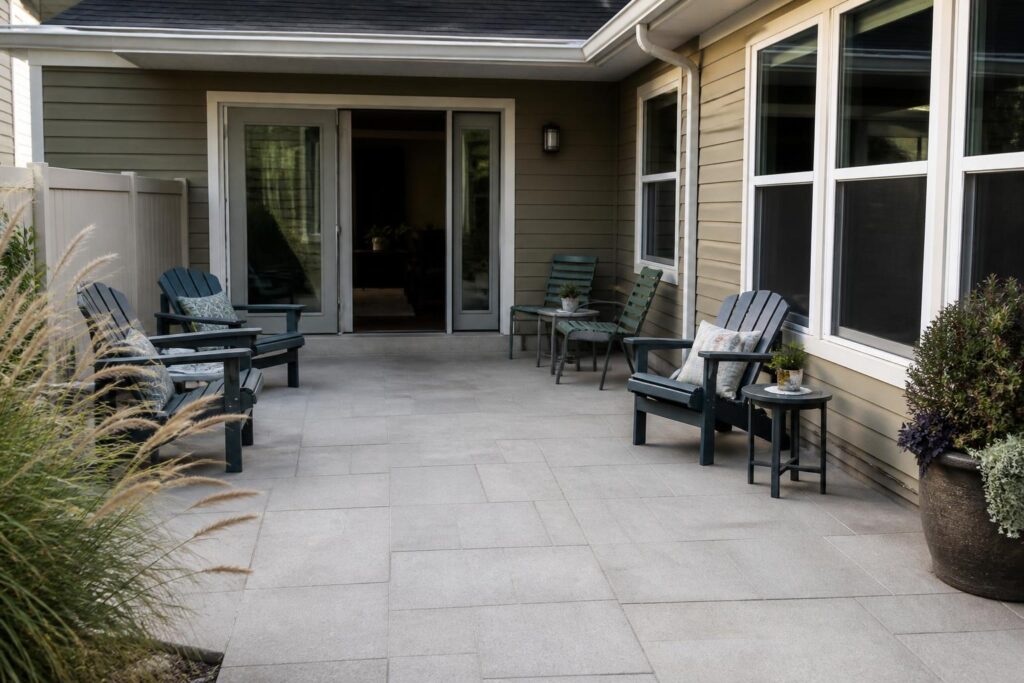
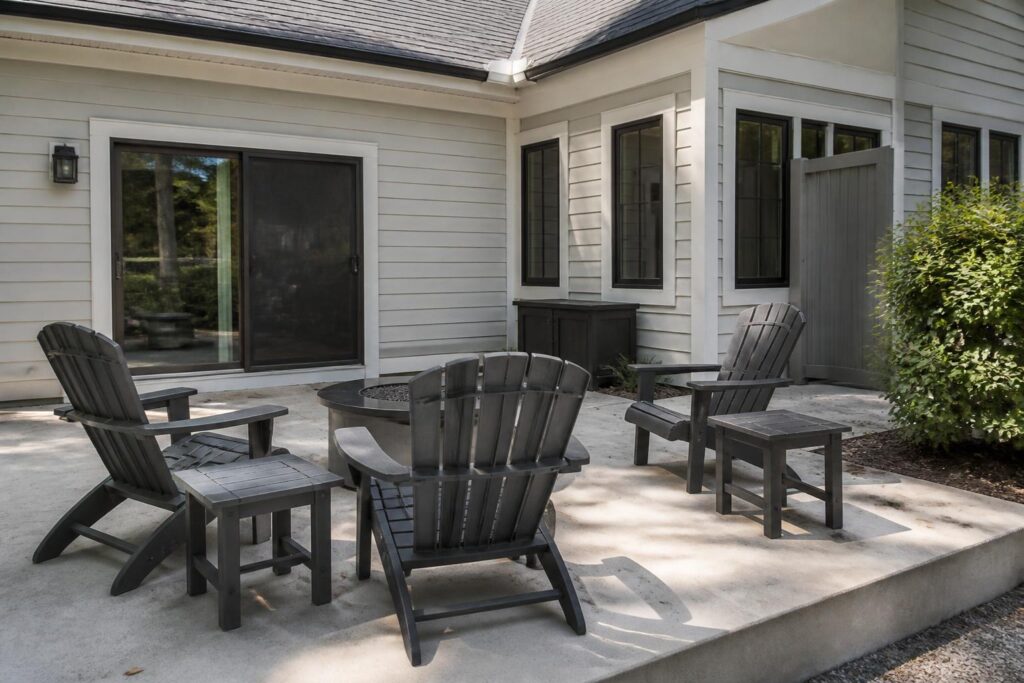
Think in zones. A pair of Adirondack chairs with an end table creates a relaxed corner for sunrise coffee or evening views. A cafe grouping works better near a wall or smaller footprint where circulation needs to stay open. Counter-height seating can be useful where you want a lighter visual profile without taking over the whole deck.
As you compare options in the shop, use actual product weights to picture movement and handling. Confirmed examples from Plastic Furniture To Go include the Hampton Adirondack Chair at 52 lb, the Armless Cafe Chair at 27 lb, the Counter Height Stool at 21 lb, and Hampton round and square end tables at 15 lb each. Those numbers are useful for rooftop planning because they give you a realistic sense of how each piece may behave in wind, during cleaning, or when the layout needs to change.
Plan for Wind Before It Becomes a Problem
Wind exposure is one of the biggest rooftop differences. Even a modest breeze at street level can feel much stronger above surrounding buildings. Corners, open rail lines, and uninterrupted exposure can all increase movement risk for lighter items, cushions, umbrellas, and accessories.
Before buying, observe the rooftop at different times of day if possible. Notice where wind funnels between walls or structures and which edges stay most exposed. If your area is prone to strong weather, review basic wind safety guidance from the National Weather Service wind safety page. That kind of planning helps you avoid furniture arrangements that create constant frustration.
For rooftop use, heavier furniture often gives you a more settled feel in open-air settings. That does not mean any outdoor piece should be ignored during storms. It means your daily setup should account for normal wind exposure, while your severe-weather plan should cover what gets secured, moved, or stored.
Accessories deserve the same attention. Side tables, decorative items, and loose textiles may need a storage solution nearby. If you know your rooftop gets gusty, keep the setup simple and stable rather than filling the area with many small movable items. A cleaner plan usually performs better and feels calmer too.
Drainage Has to Stay Open
Rooftops are designed to move water away, but furniture placement can interfere with that if you are not careful. Drains, scuppers, slope transitions, and low points should stay visible and accessible. If water regularly collects because furniture blocks drainage paths or cleaning access, the problem can spread beyond inconvenience.
As you place seating groups, leave enough room to inspect and clear drains. Avoid pushing tables, chairs, planters, or storage items into corners where they hide buildup. On a rooftop, leaves, dust, and windblown debris can collect quickly, so convenience matters. If maintenance is difficult, small issues are more likely to turn into larger ones.
It is also worth thinking about how furniture feet interact with the surface. You want pieces that can be moved for routine cleaning and seasonal reconfiguration without turning upkeep into a major project. That is one reason practical weight and manageable layouts matter so much in rooftop spaces.
Plastic Furniture To Go uses Marine Grade Polymer with 3/16-inch stainless steel hardware, which supports a low-maintenance outdoor setup. For rooftop buyers, that can be helpful when furniture needs to handle regular exposure while still being easy to wipe down and reposition as needed.
Keep Exits, Doors, and Shared Paths Clear

A beautiful layout fails if it makes the rooftop harder to use safely. Doors need full swing clearance. Stairs need open approach space. Shared rooftop areas may also require clear walk paths around seating. On a small deck, it is easy to crowd the best view and accidentally pinch the route people need to use.
As a rule, do not place the main seating group where people must weave around it to enter or exit. Instead, create a natural path first and furnish around it. That usually produces a cleaner layout anyway. If a rooftop door opens outward, map that full arc. If access is narrow, choose furniture that can tuck in neatly without creating daily obstacles.
This is where smaller accent pieces earn their place. A 15 lb end table can add function without visually or physically closing off the space. Armless seating can also help keep a dining or conversation area compact. The goal is not to fill every corner. The goal is to make the rooftop enjoyable without sacrificing movement.
If your building has emergency egress requirements or service access points, leave extra clearance rather than trying to maximize seating. A rooftop should feel open, not overpacked.
Choose Furniture You Can Actually Move
Movement planning is one of the most overlooked parts of furnishing a rooftop deck. Furniture may need to shift for cleaning, gatherings, seasonal use, maintenance visits, or weather changes. If every piece is difficult to carry through a stairwell or awkward to reposition, the space becomes less flexible over time.
Think about who will move the furniture and how often. A 52 lb Adirondack chair can feel reassuringly substantial in an exposed setting, but you should still decide where it would go if you wanted to open up the deck for guests or stage the area differently. A 21 lb counter-height stool may be much easier to rearrange when you need adaptable seating.
Matching furniture to your habits is just as important as matching it to your style. If you host often, choose groupings that can be shifted without too much effort. If your rooftop is mainly a quiet retreat, a more anchored arrangement may work well. If storage is limited, avoid buying more individual pieces than you realistically want to manage.
Simple combinations usually perform best: two statement chairs and one table, a compact cafe set, or a small run of counter-height seating. Those arrangements stay functional without making the deck feel crowded or hard to maintain.
Build a Severe-Weather Storage Plan
Every rooftop setup should include a plan for bad weather. That does not mean waiting until a storm is already approaching. It means deciding in advance what stays out, what gets moved, and where smaller pieces go. Rooftops have less shelter than many ground-level patios, so preparation matters.
Start with the items most likely to need attention first: loose accessories, lightweight decor, cushions if used, and smaller tables or stools. Then think through your path for moving them. Is there an indoor storage closet nearby? A protected room off the roof? A clear stair route? If the answer is no, keep your rooftop furnishings simpler so weather prep stays manageable.
Also be realistic about the time needed. If moving your furniture would take too long or require too many trips, trim the plan down. A rooftop deck should support your routine, not create last-minute stress every time the forecast changes.
For many buyers, this is where a durable, straightforward furniture mix makes the most sense. Fewer pieces, better placement, and a clear storm routine will usually serve you better than an oversized setup with too many movable parts.
Pick Materials and Warranty Terms With Rooftop Use in Mind
Rooftop conditions can be demanding, so it makes sense to review materials and warranty details before you buy. Plastic Furniture To Go offers American Made outdoor furniture built from Marine Grade Polymer with 3/16-inch stainless steel hardware. Those details are especially relevant on rooftops, where sun, moisture, and exposure are regular parts of the environment.
Warranty coverage is worth reading carefully too. Confirmed coverage includes a 7-year structural warranty and a 5-year fade warranty. That gives shoppers clear terms to consider as they compare long-term value and expected appearance retention.
Because rooftops often have strong sun and frequent exposure, many buyers prefer furniture that fits a practical maintenance routine instead of requiring extra seasonal treatment. If that sounds like your priority, keep the focus on durable essentials first: seating that fits the deck, tables that support actual use, and arrangements that leave maintenance access open.
Good rooftop planning is not about buying the most furniture. It is about choosing pieces that work with the realities of the space from day one.
Frequently Asked Questions
How much furniture should I put on a rooftop deck?
Usually less than you would place on a ground-level patio of the same size. Rooftops need room for circulation, door clearance, drainage access, and weather-related movement. Start with essential seating and one or two tables, then add only if the layout still feels open.
What rooftop furniture details should I check before ordering?
Check product weights, overall footprint, how each piece moves through your building, and where it will sit in relation to exits and drains. Also review warranty terms, hardware details, and delivery planning so you know what to expect before the furniture arrives.
Is heavier furniture better for a rooftop?
Heavier pieces can feel more settled in everyday wind exposure, but no rooftop furniture should be treated as storm-proof. You still need a severe-weather plan for securing, moving, or storing items when conditions worsen.
Can I furnish a rooftop deck if I do not have much storage?
Yes, but keep the layout simple. Choose a smaller number of useful pieces, avoid too many loose accessories, and make sure anything that may need to move can be handled without difficulty. A streamlined setup is usually the most practical choice for rooftops with limited indoor backup space.
Shop rooftop-friendly seating and tables at /shop/, or use the contact page if you want help choosing a practical furniture mix for your deck layout and access needs.