Shopping for balcony seating is easier when you start with an HOA balcony furniture checklist instead of a product page. Condo associations and apartment-style communities often regulate what can sit outside, how much can be visible, and how deliveries move through the building.
A few pre-buy questions can save you from returns, rule violations, and furniture that simply does not fit your space. Use the checklist below to confirm dimensions, colors, floor protection, wind exposure, visible storage, delivery access, exit clearance, and written approval before you place an order.
Start with the written rules, not verbal guidance
Before comparing chairs, stools, or tables, ask for the current balcony, terrace, patio, or exterior-use policy in writing. Many buyers make the mistake of relying on a quick comment from a front desk team member, neighbor, or board volunteer. That can create problems if the official rulebook says something else.
Ask for the exact document that governs outdoor furniture. Depending on the property, that may be the HOA handbook, condo association rules, architectural guidelines, welcome packet, or a separate balcony-use policy. If the building manager emails a summary, request the full rule section too.
As you review the document, look for language about:
– Approved furniture types
– Maximum furniture count
– Color restrictions
– Prohibited items such as storage bins or visible covers
– Rules for railings and attached items
– Fire safety and egress requirements
– Seasonal storage expectations
– Delivery or move-in restrictions
If a rule feels vague, send a short written question and keep the reply. That record matters if policy interpretation changes later. If you ever need broader consumer guidance about resolving a purchase-related dispute, the government complaint portal at USA.gov consumer complaints is a useful general resource.
Measure the balcony with furniture placement in mind
A balcony can look roomy until the door swings open, the table is in place, and a walkway disappears. Measure more than just the overall slab.
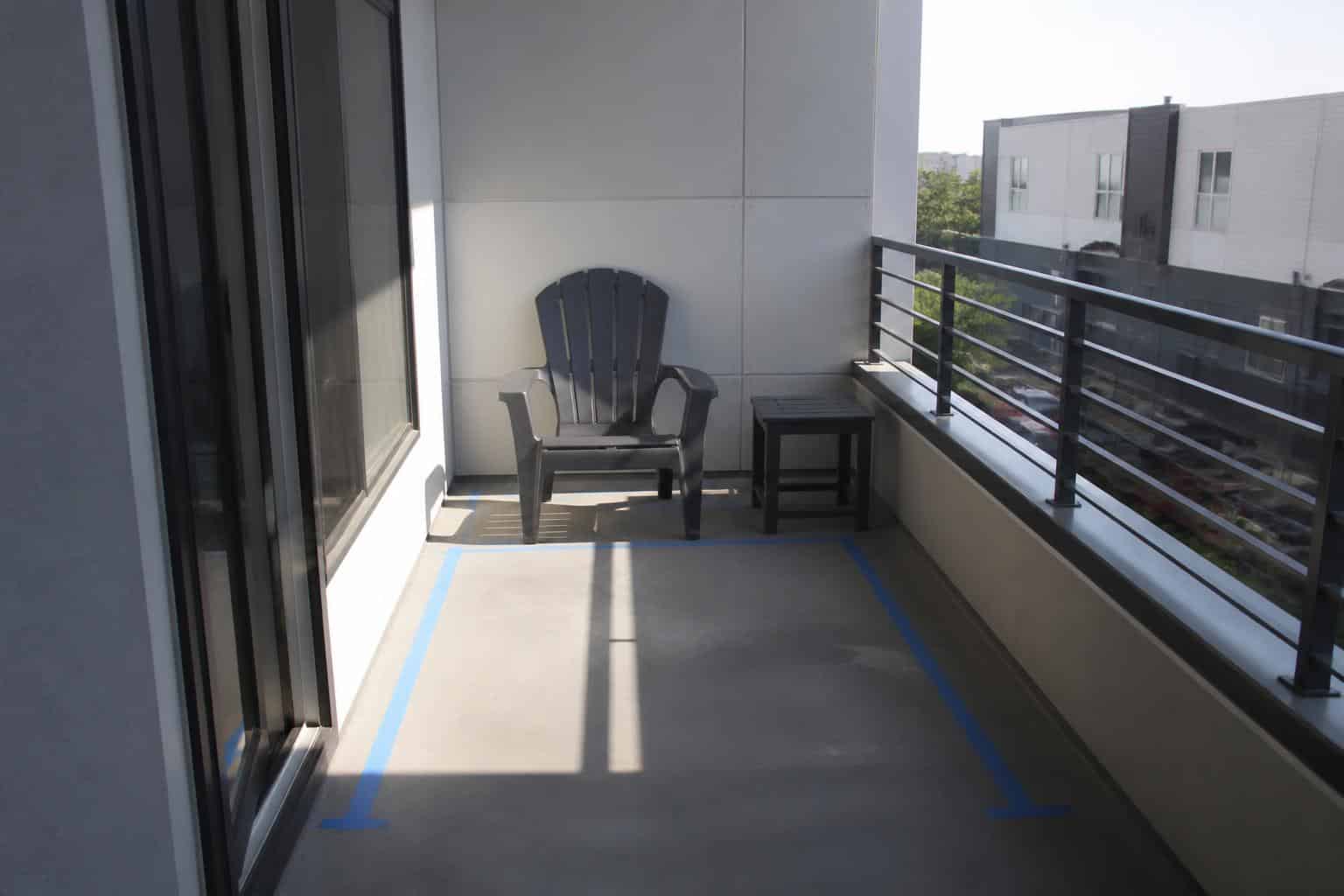
Start with the usable footprint. Note the width and depth of the open floor area, then mark obstacles such as door swings, posts, utility boxes, drain locations, and railing offsets. If your association has a required clearance path, measure that too.
Think in real layouts instead of isolated item sizes. A deep lounge chair may fit physically but still make the balcony feel blocked. If you want a table-and-chair setup, sketch the arrangement first and leave enough circulation space to move comfortably.
This is especially important in condo buildings where balcony doors serve as a key access point to fresh air and where pathways cannot feel cramped. Also check whether anything can extend above the railing line or beyond the interior face of the balcony.
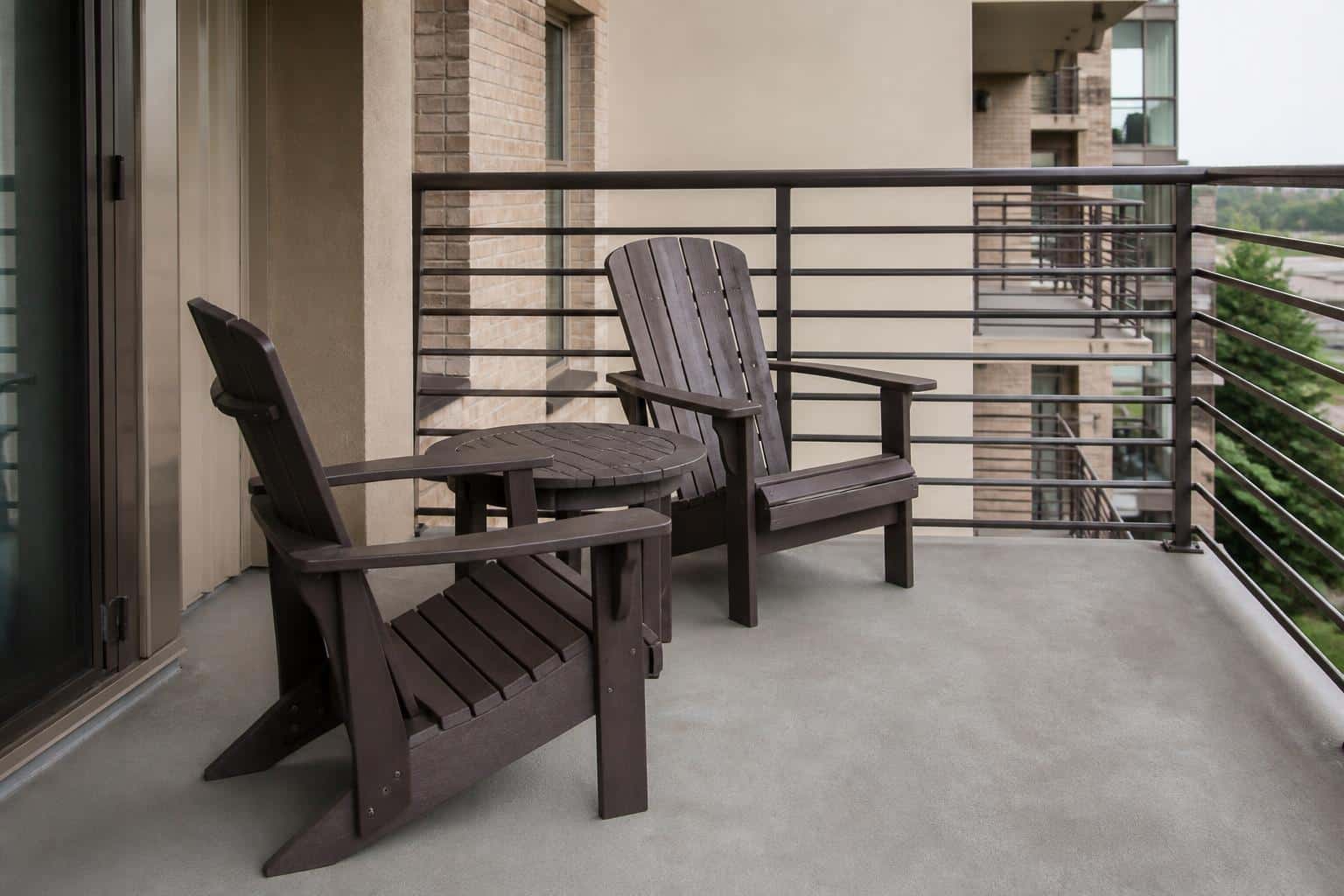
For smaller spaces, lighter visual layouts often work better than trying to maximize seat count. A compact setup can still feel substantial when the pieces are well built. For example, weight can be a clue that a chair is not flimsy: the Hampton Adirondack Chair weighs 52 lb, the Armless Cafe Chair weighs 27 lb, the Counter Height Stool weighs 21 lb, and Hampton round and square end tables weigh 15 lb each.
Confirm color, finish, and visibility rules
Many associations care as much about appearance as they do about size. Even when furniture itself is allowed, the board may limit visible colors, bright accents, mixed styles, or anything that changes the building’s exterior look from the street.
Ask these questions before buying:
– Are neutral tones required?
– Are black, white, gray, beige, or wood-look colors preferred or mandated?
– Are bright coastal colors prohibited on front-facing balconies?
– Do cushions need to match approved exterior palettes?
– Are furniture covers allowed when visible from outside?
This step matters if your balcony faces a common courtyard, a main road, or a highly uniform building facade. Some properties allow more flexibility on rear units or upper floors, while others apply the same standard everywhere.
If the rules mention “harmonious appearance” or “consistent exterior presentation,” do not assume your preferred color will pass. Request examples or written approval. It is much easier to choose a compliant color upfront than to argue later over whether a shade is “muted” enough.
Ask how the building wants floors protected
Balcony floors are a frequent source of complaints. Associations may worry about scratching, rust transfer, moisture trapping, staining, or noise moving into the unit below.
Ask whether furniture feet need protective pads or glides. Also confirm whether the building prohibits dragging furniture across the surface. If your balcony has a coated concrete finish, tile, waterproof membrane, or another specialty surface, the association may have specific instructions.
This is also a good time to ask about rugs and mats. Some HOAs permit outdoor rugs only if they are breathable and low profile. Others dislike anything that can hold moisture or cover drainage paths.
Furniture built with durable components can make balcony ownership simpler over time. Plastic Furniture To Go offers American Made outdoor furniture crafted from Marine Grade Polymer with 3/16-inch stainless steel hardware. For buyers comparing practical ownership details, you can also review the company’s shipping policy before placing an order.
Plan for wind exposure and everyday stability
Upper-floor balconies can experience more wind than ground-level patios, and corner units often get stronger gusts than expected. Some associations specifically address lightweight items, loose textiles, and anything that could blow against railings or over the edge.
Ask whether the HOA bans:
– Freestanding umbrellas
– Lightweight folding furniture
– Unsecured cushions
– Hanging decor or attached screens
– Tall items placed near railings
Even if a product is approved, think about how often you will actually use it if your balcony is breezy. Heavier, sturdier pieces can help reduce that constant feeling that furniture needs to be moved or brought inside after every weather shift.
Wind planning also affects table size and layout. A smaller, stable seating arrangement may serve your daily routine better than a larger setup that always feels exposed. Keep accessories minimal if your building has strict exterior housekeeping rules.
Check rules on visible storage and balcony clutter
A surprising number of HOA violations have nothing to do with the main furniture at all. The issue is often what residents leave beside it: stacked chairs, cleaning supplies, planters in excess, folded carts, coolers, or bins.
Before buying, find out whether the association allows any storage on the balcony. Some properties prohibit all visible storage containers. Others permit only furniture and a limited number of accessories. A few allow deck boxes, but only below railing height and only in approved colors.
If your goal is a tidy morning coffee spot, keep your setup simple. Choose the core pieces first, then verify whether extras are allowed. That includes:
– Seat cushions when not in use
– Furniture covers
– Side tables with lower shelves
– Plant stands
– Lanterns or battery lights
– Folding stools stored against the wall
This is one of the easiest ways to avoid overbuying. A clean, open balcony often feels better and stays within HOA standards more easily than a fully accessorized setup.
Verify delivery logistics before ordering
Even if the furniture is HOA-compliant once installed, your building may still have strict rules about receiving it. Check delivery procedures before checkout, especially in condominiums with controlled access, loading zones, elevators, and staffed receiving areas.
Ask these questions:
– Does the building accept large deliveries?
– Are there receiving hours or loading dock windows?
– Are reservations required for freight or oversized packages?
– Must boxes be moved through a service entrance?
– Are elevator pads, certificates, or move forms required?
– How long can packages remain in a package room or lobby?
Plastic Furniture To Go is factory direct and offers free nationwide shipping, but it is still your job to make sure your building can receive the order properly. If your property has limited access or special delivery instructions, confirm them in advance so the handoff goes smoothly.
If you are still comparing pieces, start with the main shop collection and narrow your shortlist to items that make sense for your available space and building rules.
Protect door swings, exits, and daily usability
A balcony should not just pass inspection on paper. It should remain easy to use every day. Check how furniture placement affects the door threshold, walking path, and any required emergency access.
Avoid layouts that force you to turn sideways to get outside or that crowd the door when a chair is pulled out. If your building references egress, means of escape, or access clearance, take that language seriously. Furniture should never create a blocked feeling around the only balcony door.
Also think about maintenance access. If building staff need occasional reach to drains, railings, or facade areas, a jam-packed layout can become a headache. A modest arrangement with breathing room usually performs better than one that fills every inch.
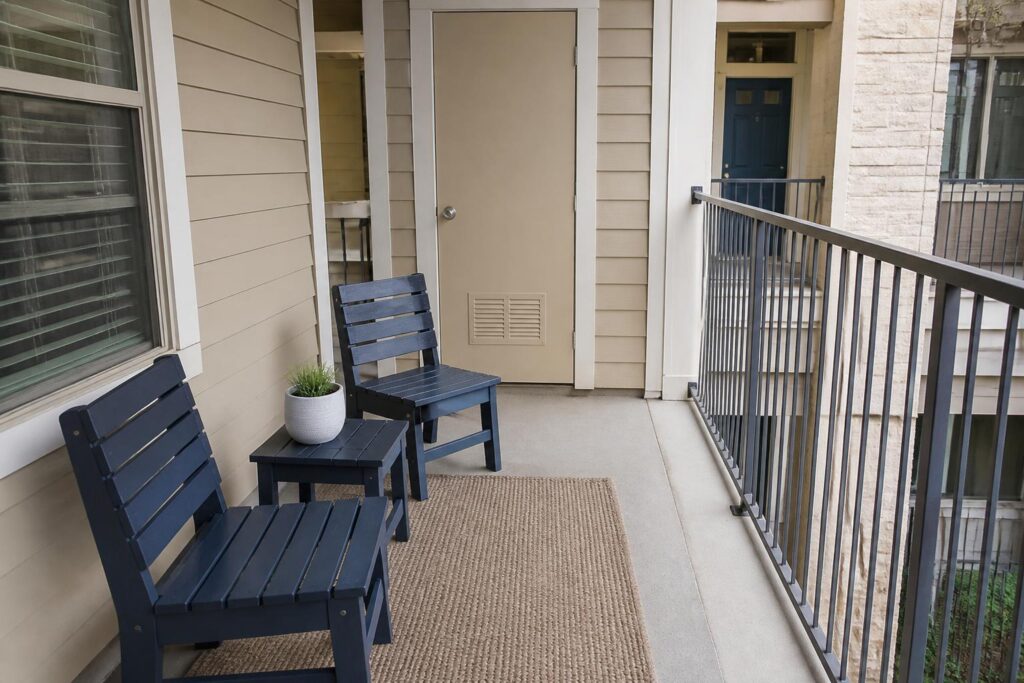
For many buyers, this is where a two-chair-plus-table setup wins. It gives the balcony a finished look without overpowering the footprint. If your community is strict, simpler is often safer.
Keep approvals, product notes, and order records together
Once you have confirmed the rules, create a small digital folder before you buy. Save screenshots, emails, measurements, and the exact product names you are considering. This takes a few minutes and can save a lot of backtracking.
Your file should include:
– The current HOA or condo rule document
– Any written approval from management or the board
– Your balcony measurements and layout sketch
– Notes about color restrictions
– Delivery details for the building
– Product links and quantities
– Warranty information
Keeping records is especially useful if you are buying furniture for a rental condo, a second home, or a unit managed by more than one person. It helps everyone stay aligned.
Plastic Furniture To Go backs its furniture with a 7-year structural warranty and a 5-year fade warranty, which is helpful information to keep with your order documents. If you need clarification before ordering, use the written inquiry form on the contact page so your questions and answers are easy to reference later.
Frequently Asked Questions
Should I get HOA approval before I order balcony furniture?
Yes, if your association requires approval or if the rules are not clear. Written confirmation is the safest route, especially for questions about color, quantity, balcony appearance, or delivery restrictions.
What balcony furniture details should I verify first?
Start with overall dimensions, required walking clearance, allowed colors, floor protection, and whether the building limits visible storage. Then confirm wind-related restrictions and delivery procedures.
Can an HOA restrict furniture even if it fits my balcony?
Yes. Many associations regulate more than size. They may control appearance, placement near railings, loose accessories, storage boxes, umbrella use, and anything visible from the exterior of the building.
What records should I keep after I buy?
Save the rule document, written approvals, product details, delivery instructions, and your order confirmation. Keeping everything together makes future questions much easier to resolve.
Shop balcony-friendly outdoor furniture at Plastic Furniture To Go, or send your pre-buy questions through the contact page so you can order with your HOA checklist complete.