If you are planning to use plastic patio furniture on composite deck surfaces, a few setup details can make the space look better and stay easier to maintain. The deck and the furniture can work well together, but placement, cleaning habits, and movement all play a big role.
Composite decking is designed to simplify outdoor living, and Marine Grade Polymer furniture fits that same low-maintenance mindset. With a little attention to feet, drainage, grit control, and color selection, you can create a patio arrangement that feels stable, comfortable, and easy to keep looking sharp.
Start with the deck maker’s care instructions
Before arranging furniture, check the care and use guidance from your deck manufacturer. Composite boards can vary in finish, texture, and surface temperature, so the brand’s recommendations should come first for routine cleaning, approved products, and anything they specifically discourage.
That matters most in three situations: dragging furniture, trapping debris under chair legs, and using strong cleaners that may not be recommended for the deck surface. If the manufacturer gives specific rules for rugs, planters, furniture glides, or standing water, follow those instructions even if the deck looks tough enough to handle more.
A good general rule is simple: lift furniture instead of dragging it, keep the area under furniture clean, and address spills or buildup before they sit for long periods. If you use a cleaner on nearby furnishings or outdoor accessories, make sure overspray is also appropriate for your deck boards. For broader outdoor cleaning awareness, the EPA Safer Choice program is a useful starting point when reviewing product labels.
Choose furniture feet that stay smooth and clean
One of the most practical ways to protect a composite deck is to pay attention to what touches the boards. Furniture feet collect grit, pollen, and tiny bits of debris. Once that material gets trapped under a chair or table leg, moving the piece can create avoidable scuffing.
Look over the bottoms of chairs, tables, and stools regularly. You want the contact points to stay smooth, dry, and free of rough buildup. Even durable furniture benefits from this kind of quick check, especially after storms, yard work, or heavy pollen days.
If you add protective pads or glides, make sure they are suitable for outdoor use and appropriate for your specific deck manufacturer’s guidance. Replace them once they wear unevenly or start holding grit. A worn pad can be worse than no pad at all if it becomes a catch point for sand and dirt.
This is especially important with heavier seating. For example, the Hampton Adirondack Chair weighs 52 lb, while the Armless Cafe Chair weighs 27 lb and the Counter Height Stool weighs 21 lb. A Hampton round end table or square end table weighs 15 lb. Those weights are helpful for outdoor stability, but they also make clean contact points more important whenever you reposition furniture.
Keep grit under control before it turns into scuffs
Composite decks usually stay at their best when surface grit is kept to a minimum. Most wear concerns are not caused by the furniture material itself. They come from abrasive particles between the deck and the furniture when pieces shift or get moved.
A simple cleaning routine helps a lot:
Sweep regularly, especially around chair legs and table bases.
Rinse away fine dust after dry, windy weather.
Check under furniture after mowing, landscaping, or nearby construction work.
Lift pieces to clean beneath them instead of pushing them aside.
If your deck connects directly to a yard, pool area, or garden path, consider how dirt travels onto the boards. A transition mat near the doorway can reduce how much grit gets tracked into the seating area. The same thinking applies to planters. Soil spills and mulch fragments can get ground into traffic paths and then end up under chair feet.
Routine cleaning is a small effort compared with trying to correct visible rubbing patterns later. In day-to-day use, prevention is usually easier than repair.
Plan for drainage and avoid trapped moisture
Water management is another part of making furniture and composite decking work well together. Outdoor furniture will get wet from rain, sprinkler overspray, and occasional washing, so it helps to arrange pieces in a way that lets the deck dry normally.
Avoid placing furniture where it blocks drainage paths or creates pockets where leaves, dirt, and moisture collect. Corners, railing lines, and tight clusters of furniture are the most common trouble spots. If a table and several chairs are packed too closely together, debris tends to gather underneath and stay damp longer.
This does not mean you need large empty gaps everywhere. It simply means giving the layout enough breathing room for sweeping, rinsing, and airflow. If you notice one area of the deck stays damp longer than the rest, move the grouping slightly and see if the surface dries more evenly.
It is also worth checking beneath end tables and around chair legs after a storm. Composite decks generally benefit from regular cleanup of wet leaves and organic debris. The furniture should support that routine, not make it harder.
For homeowners comparing materials, our overview of Marine Grade Polymer furniture explains why this category is a practical fit for low-maintenance outdoor spaces.
Think about heat and sun exposure across the whole setup
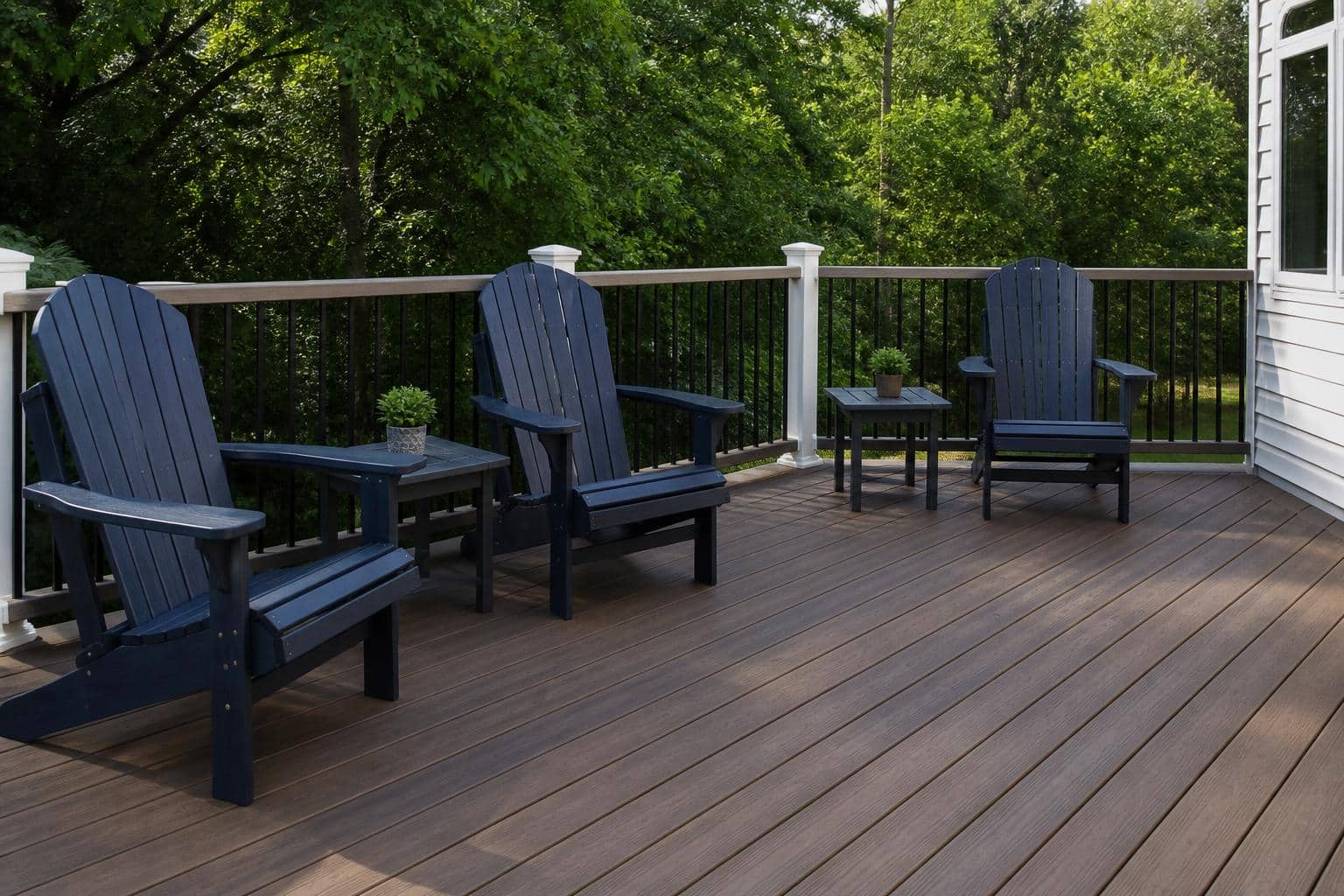
Composite decking can become warm in direct sun, particularly in darker colors. That affects how the entire space feels, not just the boards underfoot. When arranging furniture, think about where the hottest zones will be during the hours you actually use the deck.
Lighter furniture colors can create a softer visual balance on a dark deck and may help the seating area feel less heavy in full sun. Dark-on-dark combinations can look sharp, but they often absorb more visual heat and can make a compact deck feel smaller.
This is also where layout matters. If one side of the deck gets intense afternoon sun, consider placing less frequently used pieces there and keeping primary seating where shade arrives earlier. End tables can be moved more easily than large chairs, so they are useful for flexible setups.
Heat awareness is not about avoiding the deck. It is about using the space intentionally. A comfortable arrangement often comes from balancing color contrast, shade timing, and furniture placement rather than focusing on any one factor alone.
Use color contrast to make the deck look cleaner
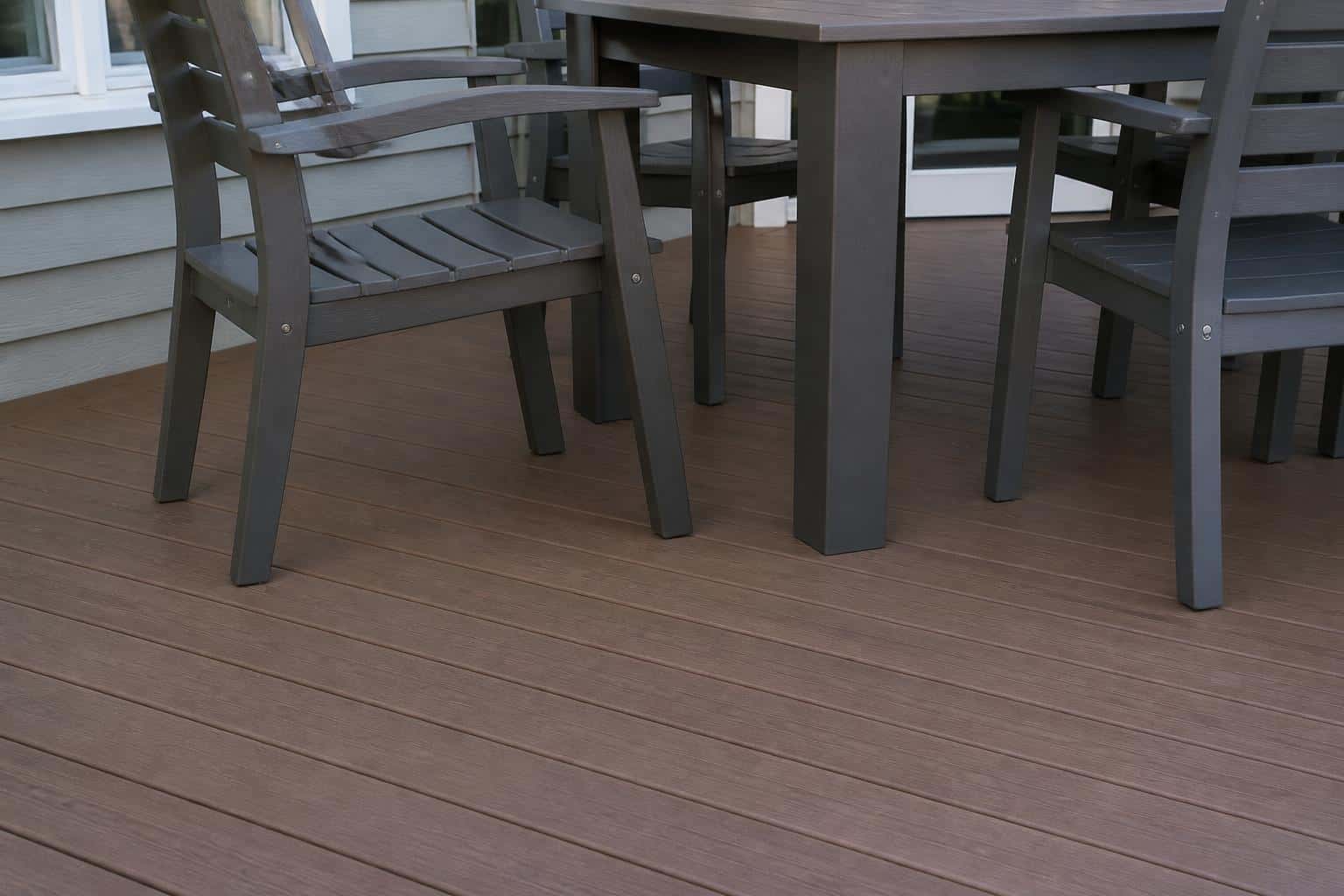
A smart color pairing can do more than improve style. It can also help everyday dust, pollen, and footprints feel less noticeable. On many composite decks, furniture that contrasts the board color slightly rather than matching it exactly creates a cleaner, more finished look.
If your deck boards are a medium gray or weathered brown, consider whether your furniture should sit a shade lighter or darker. Too perfect a match can flatten the space visually and highlight every bit of dirt between the pieces. A bit of contrast helps define the furniture grouping and can make the layout feel more intentional.
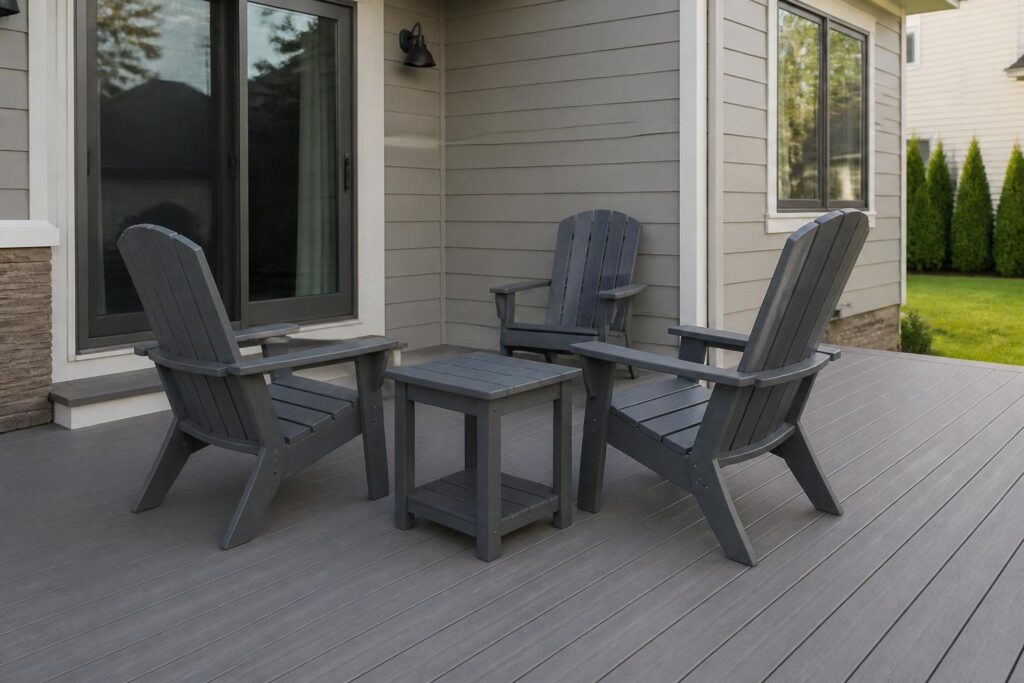
This is especially useful on smaller decks where every piece is visible at once. A pair of chairs and matching end tables can either blend into the floor or create a clear destination for sitting. Since composite decks already have their own pattern and tone variation, the furniture does not need to compete with that. It should complement it.
Marine Grade Polymer furniture is often chosen for that tailored, clean-lined appearance on deck surfaces. The goal is not just durability. It is also creating a space that still looks organized between cleanings.
Reduce unnecessary furniture movement
Frequent dragging is one of the fastest ways to create preventable wear on a deck surface. The easiest fix is not a special product. It is setting up the space so furniture does not need to move more than necessary.
Start by defining how the deck will actually be used. If the area is mainly for morning coffee, set the chairs and table where they can stay in place comfortably. If you host meals, keep dining or cafe seating in a layout that does not require constant reshuffling to open doors or clear pathways.
Heavier pieces can be a real advantage here. A 52 lb Hampton Adirondack Chair feels substantial outdoors and is less likely to shift casually than a flimsy chair. The tradeoff is that you should plan the location thoughtfully from the start and lift it when repositioning.
If you like to refresh the arrangement often, lighter pieces such as a 15 lb end table can do that job without turning the whole deck into a moving target. In other words, let smaller accent pieces provide flexibility while your main seating stays anchored.
This approach also supports better deck care because fewer movements mean fewer opportunities for grit to scrape across the surface.
Match low-maintenance furniture to a low-maintenance deck
One reason composite decking is popular is that people want outdoor living to feel simpler. The same logic applies to furniture selection. American Made furniture built with Marine Grade Polymer and 3/16-inch stainless steel hardware is well suited to homeowners who want a durable setup without a lot of fuss.
At Plastic Furniture To Go, pieces are shipped factory-direct with free nationwide shipping, which makes it easier to furnish a deck even if you are not near a retail floor. The furniture is backed by a 7-year structural warranty and a 5-year fade warranty, so you can shop with clear product support in mind.
That said, low maintenance is not the same as no maintenance. Composite decking still benefits from regular sweeping, occasional rinsing, and attention to trapped debris. Furniture still benefits from being lifted instead of dragged and from having clean contact points. The best results come when both the deck and the furnishings are treated as part of the same outdoor system.
When those habits are in place, the combination is straightforward: a deck surface designed for easier care and furniture designed for everyday outdoor use.
Frequently Asked Questions
Can you put plastic patio furniture directly on a composite deck?
Yes, as long as you use good everyday care. Keep furniture feet clean, avoid dragging pieces across the boards, and follow the deck manufacturer’s guidance for surface care and approved accessories.
How do I keep furniture from marking a composite deck?
The biggest step is controlling grit. Sweep often, check the bottoms of chair and table legs, and lift furniture when moving it. If you use pads or glides, choose outdoor-appropriate options that fit your deck maker’s instructions.
Is heavier outdoor furniture bad for composite decking?
Not automatically. Heavier furniture can actually feel more stable outdoors. The key is thoughtful placement and careful movement. A substantial chair should be lifted rather than dragged, and the area underneath should be kept free of abrasive debris.
What furniture color looks best on composite decking?
Usually, a little contrast works best. Furniture that is slightly lighter or darker than the deck boards helps define the seating area and can make dust and surface debris less visually obvious between cleanings.
Shop outdoor seating, tables, and more at Plastic Furniture To Go, or contact us online if you want help choosing a Marine Grade Polymer setup for your composite deck.