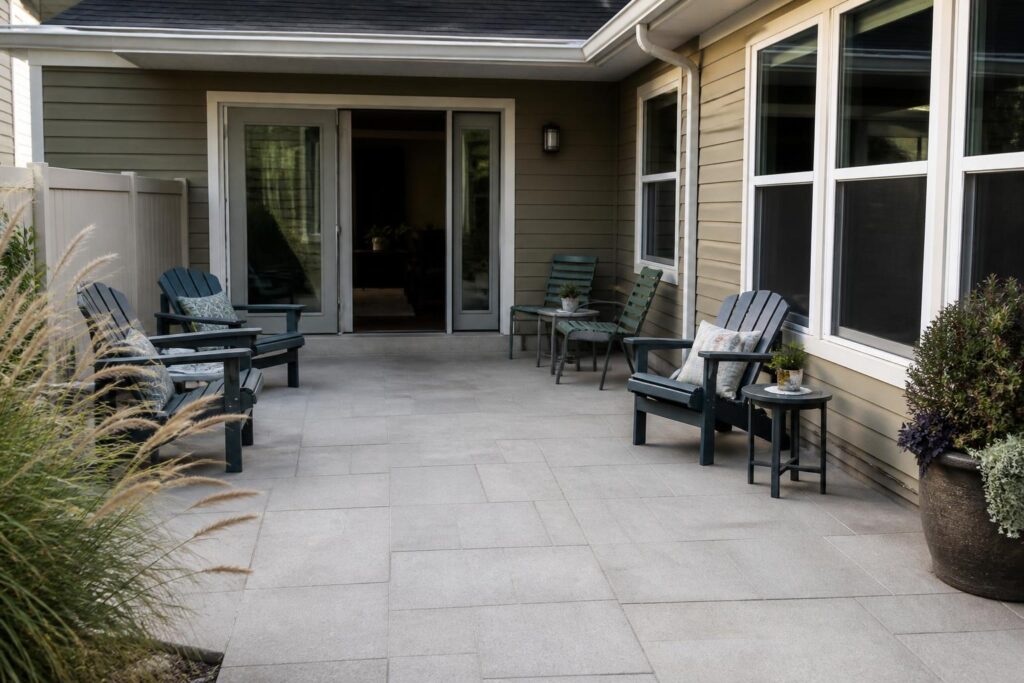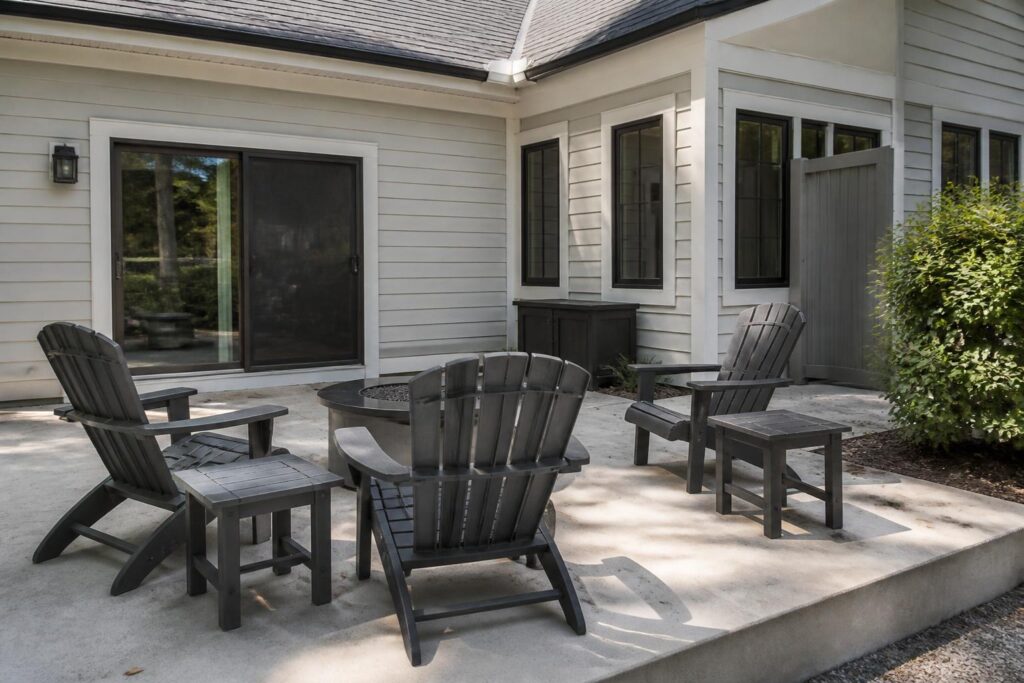

Phoenix patios ask a lot from outdoor furniture. Full sun, blowing dust, hard surfaces, and long hot seasons can expose weak materials fast.
If you are shopping for patio furniture for Phoenix dust and sun, focus on a few practical details first: material, hardware, weight, color, cleanup, and how much of your patio is truly usable day to day.
Start with the real conditions on your patio
Before comparing styles, look at the exact spot where the furniture will live. A Phoenix patio may be technically large, but part of it may be too exposed in late afternoon, too windy near a corner wall, or too dusty near a gate or open wash. That changes what you should buy.

Walk the space at three times of day: morning, midafternoon, and early evening. Notice where the sun is strongest, where dust tends to settle, and which areas stay comfortable long enough to actually use. The best layout is not always centered on the patio. Sometimes the most useful setup is pushed closer to the house, under a partial cover, or placed where walls reduce windblown dust.
Phoenix buyers should also think about surface heat. Pavers, concrete, and stone can reflect heat upward, making a seating area feel hotter than expected. If your patio gets strong reflected sun, heavier furniture with solid construction will usually feel more dependable than lightweight pieces that shift easily or seem flimsy in open conditions.
For a broader look at climate considerations, see our guide to outdoor furniture for Arizona heat.
Choose a material built for outdoor exposure
The material matters more than almost anything else. In Phoenix, furniture has to deal with UV exposure, heat, dusty conditions, and regular wipe-downs. Plastic Furniture To Go makes outdoor furniture from Marine Grade Polymer, a solid, durable material chosen for outdoor use.
That matters in daily ownership. Dusty furniture needs to be cleaned often enough that the surface should be easy to wipe down without special treatments, staining schedules, or finish touch-ups. Marine Grade Polymer also avoids the peeling, splintering, or rust concerns that can complicate ownership with some other patio furniture categories.
If you want a closer look at the material itself, visit this Marine Grade Polymer overview.
Plastic Furniture To Go products are American Made and assembled with 3/16-inch stainless steel hardware. That hardware choice is worth paying attention to because joints and fasteners do a lot of the real work outdoors. A chair may look similar in a photo, but the hidden details often decide how solid it feels after months of use.
Plan for full-sun placement, not just occasional use
Some patios in Phoenix have covered sections, but many buyers still need furniture that can sit in full sun for long stretches. That changes how you evaluate every piece. Think beyond the first week of ownership and picture the furniture after many months of direct exposure.
Look for a clear warranty structure from the seller. Plastic Furniture To Go offers a 7-year structural warranty and a 5-year fade warranty, which gives buyers practical information when comparing products for exposed patios.
Even with durable outdoor materials, comfort still depends on placement. A chair that is structurally suited to full sun can still become unpleasantly hot if it is set on dark pavers against a west-facing wall with no relief. Many Phoenix homeowners get better daily use by creating two zones: one seating group for cooler morning or evening use, and one smaller piece or pair of chairs in a partially shaded section for daytime access.
Heat safety also matters when planning any desert outdoor space. The National Weather Service has a useful summary of heat safety basics, especially during prolonged hot periods.
Dust cleanup should be quick and low hassle
Phoenix dust is not always dramatic, but it is constant enough that cleanup convenience should be part of your buying decision. Furniture with deep fabric channels, complicated woven areas, or multiple hard-to-reach crevices can turn simple maintenance into a chore.
A practical patio setup is one you will actually keep clean. Smooth, solid surfaces are easier to wipe off after a dusty week or a windy day. End tables are especially useful here because they give you a place to set drinks, mail, or planters without forcing everything onto the seating surface where dust collects most noticeably.
It also helps to think in layers. If your patio is close to a pool, grill, or back door, choose furniture that can handle frequent touch-ups with a cloth and water rather than pieces that need extra care. In a desert climate, simple maintenance usually wins over fragile-looking design details.
When arranging furniture, leave enough room to clean around it. If chairs are packed too tightly into corners, dust and leaves gather where a broom or blower cannot easily reach. A little breathing room around the legs and base area makes the entire patio easier to maintain.
Pick colors with your hardscape and sunlight in mind
Color is often treated as a style choice, but in Phoenix it is also a practical one. The right color should work with your home and patio surface while still looking good after daily exposure to bright sun and airborne dust.
Lighter and mid-tone furniture colors can visually soften very bright patios and may show dust differently than very dark finishes. Dark colors can create stronger contrast against dust, pollen, and light-colored hardscape. That does not mean dark furniture is a bad choice. It means you should expect more visible surface dust between cleanings, especially on open patios.
Also compare the furniture color to your walls, pavers, pool coping, and exterior trim. In Phoenix neighborhoods, many homes use warm neutrals, tans, off-whites, terracotta tones, and gray-beige mixes. The best patio furniture color usually looks calm against those fixed surfaces instead of competing with them.
If you are unsure, start with your largest visual field: the ground plane. A chair can look very different on pale travertine than on dark stamped concrete. Bring that context into the decision, not just the product photo on a screen.
Weight matters more in open desert patios
Weight is easy to overlook until a piece feels too light, too bulky, or harder to move than expected. On a Phoenix patio, weight affects stability, rearranging, cleaning, and seasonal use patterns.
Plastic Furniture To Go lists real product weights that help set expectations. The Hampton Adirondack Chair weighs 52 lb, giving it a substantial feel for a main seating piece. The Armless Cafe Chair weighs 27 lb, which can be a smart option when you want easier movement around a dining or conversation area. The Counter Height Stool weighs 21 lb, and Hampton round and square end tables weigh 15 lb each.
These numbers are useful because they help you match furniture to the way you live. A heavier chair may be better for a permanent seating zone that stays in place. Lighter seating can be helpful if you regularly reconfigure your patio for guests, sweep often, or move pieces to chase shade. The right answer depends on how fixed or flexible your outdoor layout needs to be.
Weight should also be considered with surface type. On smooth patios, lighter pieces are easier to shift for cleaning. On more exposed patios, a more substantial chair can feel more secure and grounded in use.
Pay attention to hardware and construction details
Outdoor furniture buyers often focus on silhouette and color, but construction details are what you live with over time. Hardware should not be an afterthought in a hot, dusty environment.
Plastic Furniture To Go uses 3/16-inch stainless steel hardware. That is the kind of specification worth comparing because connections matter every time someone sits down, leans back, scoots a chair, or lifts a stool. A good patio chair should feel solid at the joints, not just look nice from ten feet away.
Construction details also affect maintenance. Furniture that feels rigid and well assembled is simply more pleasant to use on a daily basis. If your patio gets heavy exposure and frequent cleaning, reliable hardware supports the practical side of ownership just as much as the appearance does.
For buyers who want a clean, straightforward category to shop, focusing on durable material plus stainless steel hardware can narrow the field quickly and eliminate a lot of options that look good online but may be less appealing in hard outdoor conditions.
Measure the usable patio, not just the slab
One of the most common buying mistakes is measuring only the outside edge of the patio. That gives you the total slab size, not the usable furniture zone.
Instead, subtract the space taken by door swing, grill clearance, planters, pool edges, traffic paths, and any area that becomes uncomfortable in direct late-day sun. Then measure the rectangle or group of rectangles where people can realistically sit and move around.
For dining or cafe layouts, leave enough room to pull chairs out and walk behind them. For lounge seating, think about foot traffic from the back door to the yard or pool. A patio can technically fit more furniture than it should hold. In Phoenix, a little extra breathing room often makes the area feel cooler, cleaner, and easier to use.
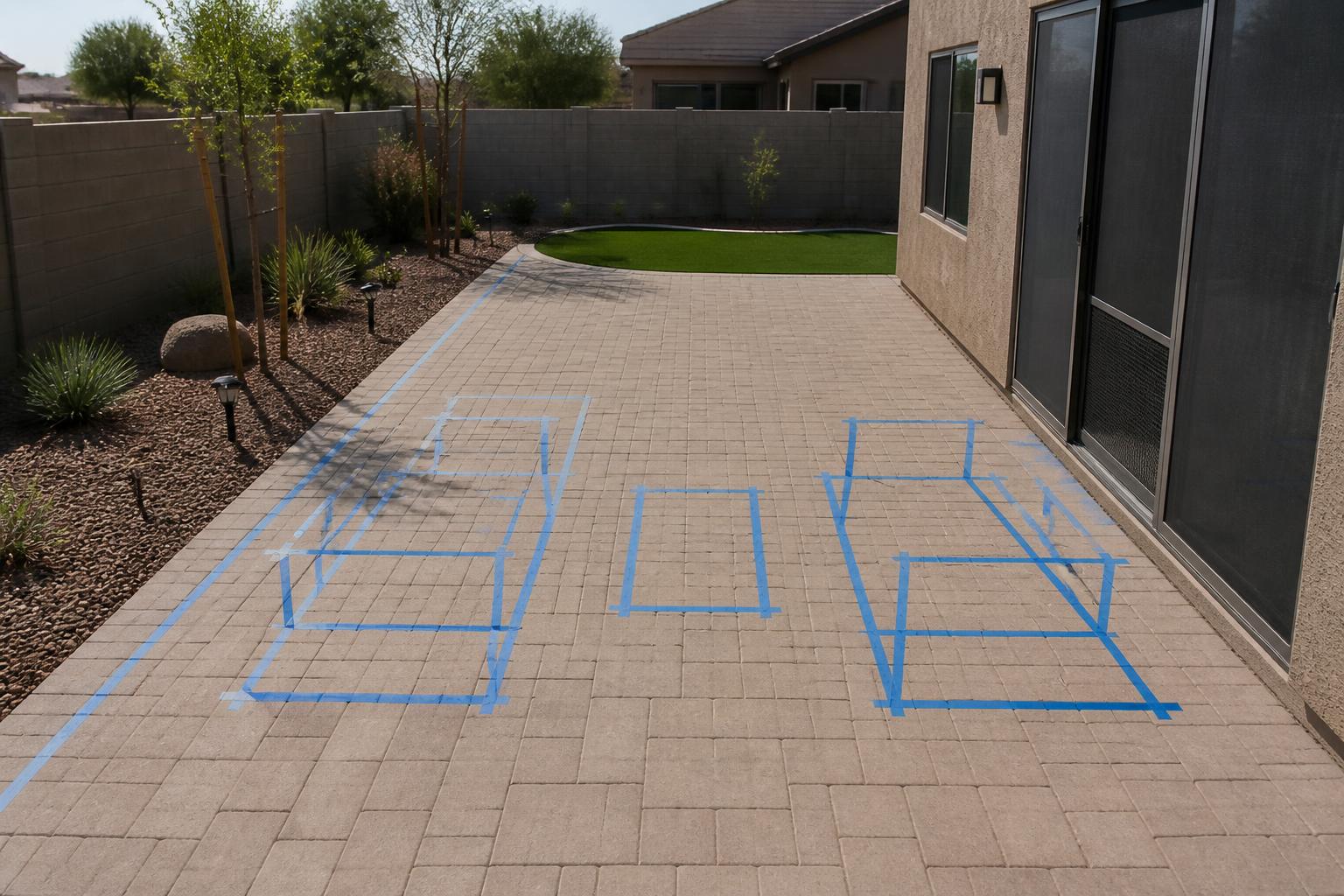
A simple painter’s tape layout on the ground can help. Mark the footprint of chairs and tables before buying. Then walk through the space as if carrying drinks, opening a door, or sweeping after a dusty day. If the path feels cramped empty, it will feel even tighter in real life.
Build a layout that matches how you actually use the space
The best patio setup is usually the one that supports a few real habits instead of trying to do everything. If you drink coffee outdoors in the morning, a pair of chairs and a small end table may serve you better than a large dining set. If you host casually in the evening, substantial seating with easy-to-clean surfaces may be the priority.
Think in zones. A front-line seating area near the house can handle regular use, while a second smaller area can take advantage of a different light pattern later in the day. End tables are often more useful than buyers expect because they make seating feel finished without taking up much room.
If your patio is exposed, avoid overfilling it. Too many pieces create more dust-catching surfaces and make cleanup harder. A well-spaced arrangement with the right furniture types usually performs better than a crowded one with mixed-use pieces that do not truly fit the space.
When you are ready to compare options, browse the shop or use the contact form to ask about layout-friendly pieces for your space.
Frequently Asked Questions
What type of patio furniture makes sense for full Phoenix sun?
Look for outdoor furniture made from durable exterior material with dependable hardware and clear warranty coverage. For Plastic Furniture To Go, that means Marine Grade Polymer construction, 3/16-inch stainless steel hardware, a 7-year structural warranty, and a 5-year fade warranty.
How do I keep patio furniture looking cleaner in dusty conditions?
Choose pieces with smooth, easy-to-wipe surfaces and avoid overcrowding the patio. Leave enough room around chairs and tables so you can sweep or clean the area without constantly moving everything. Color choice also affects how visible dust appears between cleanings.
Should I buy heavier or lighter patio furniture for Phoenix?
That depends on your layout and habits. Heavier seating like the 52 lb Hampton Adirondack Chair can be a strong choice for a stable main seating area. Lighter options like the 27 lb Armless Cafe Chair or 21 lb Counter Height Stool may work better if you rearrange often or want easier access for cleaning.
How do I know what size furniture set will really fit my patio?
Measure usable space, not just the full slab. Subtract door clearance, walking paths, grill space, planters, and areas that are too exposed to be comfortable during your normal use times. A taped floor outline is one of the easiest ways to test furniture footprints before ordering.