
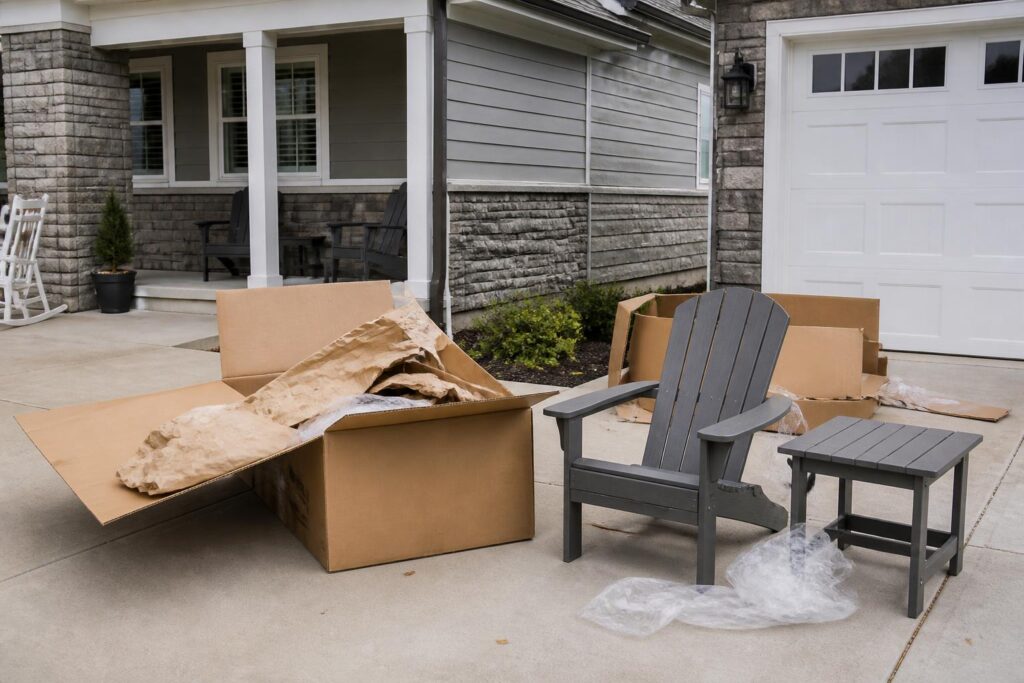
Your order has arrived, and now it is time to inspect patio furniture after delivery without rushing or second-guessing yourself. A calm, step-by-step check helps you confirm that every carton, part, finish, and connection looks as expected before the furniture goes into daily use.
When checking the model, color, and dimensions against your order, refer to the individual outdoor furniture listings.
The good news is that this process does not need to be complicated. If you give yourself a little space, good light, and a few minutes per piece, you can verify order accuracy, spot any shipping issues, and document what you see clearly from the start.
Start with the cartons before you open anything

Your first inspection begins with the packaging, not the chair or table itself. Before opening cartons, walk around each box and look for visible signs of rough handling. You are not trying to prove damage on the spot. You are simply creating a clear record of the condition in which the shipment arrived.
Check for crushed corners, punctures, deep scrapes, broken straps, torn seams, water marks, or areas that look retaped. If multiple cartons arrived, compare them. One carton that looks much more worn than the others deserves extra attention when opened.
Take a few quick photos before cutting into anything. Capture the full carton, shipping labels if present, and any visibly stressed area. Wide shots are helpful, but close photos of dents and tears matter too. Keep the packaging nearby until your inspection is complete, especially if you think you may need to reference condition later.
If you want a general consumer overview of delivery timing standards for shipped merchandise, the FTC Mail, Internet, or Telephone Order Merchandise Rule provides useful context.
Unpack in a clean, open area with good light
Once you open the cartons, avoid dragging parts across concrete, gravel, or rough decking. Instead, place each piece on a clean, flat surface where you can see edges and hardware clearly. Good daylight is best because it makes it easier to spot scuffs, finish variation, or minor transit marks.
As you remove packing material, stay organized. Group like items together so you can tell which chairs, stools, or tables belong to the same order line. This is especially helpful if your shipment includes a mix of products such as a Hampton Adirondack Chair, Armless Cafe Chairs, Counter Height Stools, or Hampton end tables.
Keep all wrapping and protective inserts until every item has been checked. That includes foam, corner guards, hardware packs, and carton labels. If a question comes up, complete packaging helps you document what arrived and how it was packed.
For reference, Plastic Furniture To Go offers free shipping to the contiguous U.S., and you can review the brand’s shipping details at /shipping-policy/.
Check order accuracy piece by piece
Before focusing on condition, make sure the shipment matches what you expected to receive. This sounds basic, but it is one of the easiest steps to skip when several cartons show up at once.
Start with quantity. Count each chair, stool, and table. Then confirm style and color. If your order included several related items, compare them side by side so any mismatch is obvious. For example, a Hampton Adirondack Chair has a larger presence than an Armless Cafe Chair, and the weights differ as well. Confirmed product weights can also help you sense-check what you unpacked: the Hampton Adirondack Chair is 52 lb, the Armless Cafe Chair is 27 lb, the Counter Height Stool is 21 lb, and Hampton round and square end tables are 15 lb each.
Next, confirm the basic product details. Look for the correct silhouette, arm style, seat height, and table shape. If a product arrived assembled or partially assembled, confirm that no obvious component is missing. If hardware packs are included, keep them with the matching item during your check.
This is also a good time to note that Plastic Furniture To Go furniture is American Made and built with 3/16-inch stainless steel hardware. If you are checking a delivered piece and its visible hardware, that specification gives you a useful reference point for what you should expect to see on applicable products.
Look over the Marine Grade Polymer finish carefully
Now move on to surface condition. Check each visible face slowly, starting with the most exposed areas such as arms, seat slats, backs, tabletops, and front edges. Marine Grade Polymer should look clean and consistent, but shipping can sometimes leave rub marks, scuffs, or impressions from packaging.
Work from top to bottom on each piece instead of darting around. That keeps you from missing a corner or checking the same spot twice. Run your eyes along edges, corners, routed profiles, and flat surfaces. Then view the furniture from a slight angle so light can reveal marks that are harder to see straight on.
Distinguish between a removable packing trace and a real issue. Some light surface dust or packaging residue may wipe away. A gouge, crack, deep abrasion, or obvious deformation should be photographed and documented. If the item has several surfaces, note exactly where the issue appears, such as front right arm, rear leg, or tabletop edge.
Do not forget the undersides. While the top surfaces get the most attention, the lower rails and bases often show signs of impact first if a carton was dropped or dragged during transit.
Inspect joints and hardware without overtightening anything
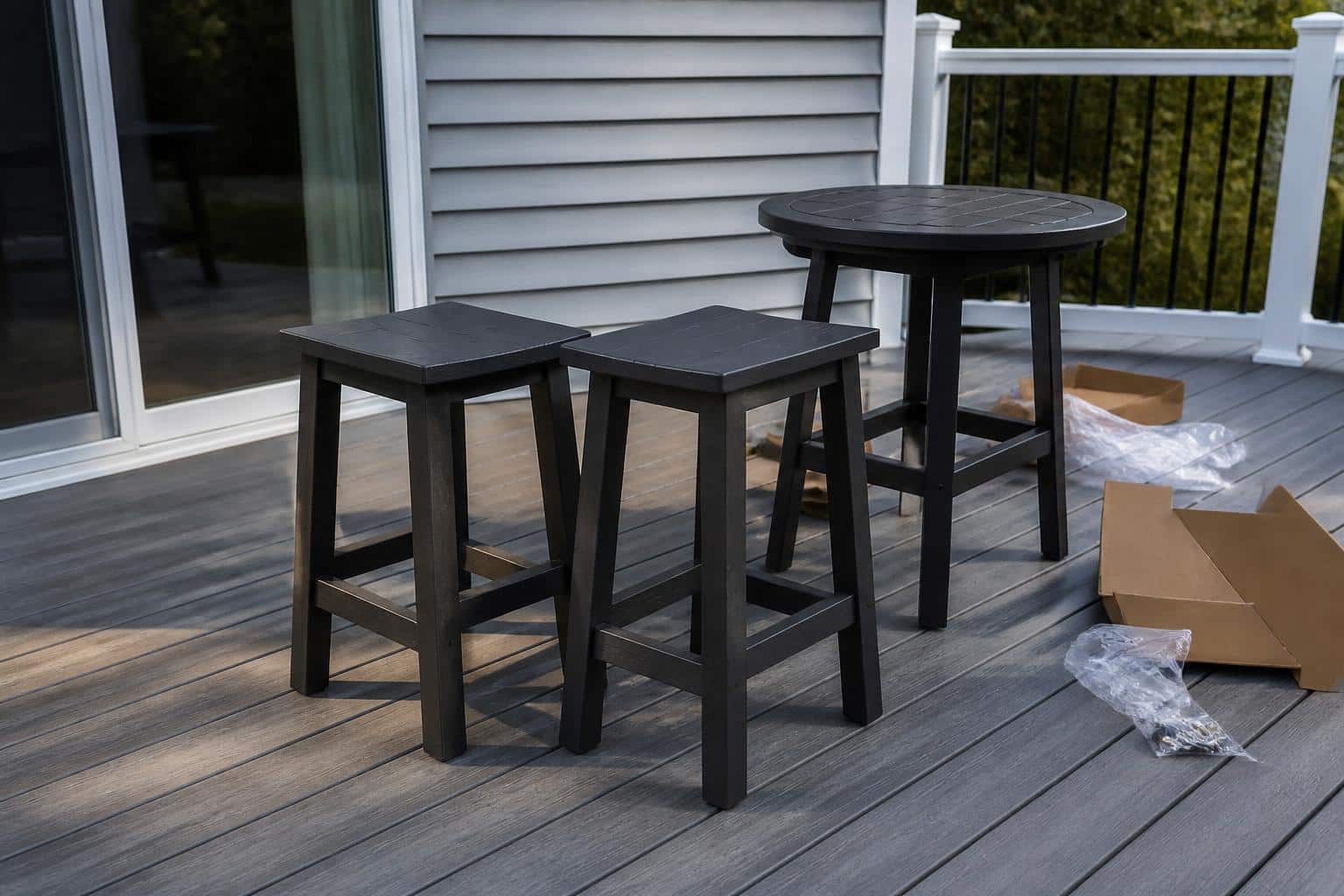
After the finish check, look at how the furniture is put together. Focus on connection points, seams, and hardware locations. The goal here is not to reengineer the piece. You are checking whether parts are seated correctly, whether joints appear even, and whether the hardware looks complete and properly positioned.
At each connection point, look for gaps that seem larger on one side than the other, parts that appear twisted, or hardware that is visibly misaligned. If you can see the fasteners, confirm that they appear present and evenly set. Plastic Furniture To Go uses 3/16-inch stainless steel hardware, so visible fasteners should look consistent across matching pieces.
Avoid the temptation to start tightening everything aggressively the minute it arrives. If furniture is already assembled, overtightening can create confusion about whether a condition was shipping-related or happened during handling after delivery. If the product requires assembly according to its instructions, follow those instructions first and then check alignment after the piece is fully set up.
Pay close attention to stress points such as arm-to-leg connections, seat supports, back attachments, and table leg junctions. Those areas tell you a lot about whether the furniture made the trip in good shape.
Test stability on a flat surface
Once the piece is unpacked and visually checked, place it on a level surface and test for stability. This should be a simple, careful check, not a force test. Set each chair, stool, or table down gently and see whether it sits squarely.
If you notice rocking, first make sure the floor or patio area is truly flat. Uneven pavers or sloped concrete can make a perfectly fine piece seem off. If possible, move the item to another smooth level spot and test again. A stable piece should feel planted, not loose or twisted.
For seating, apply light pressure at the top rail or arm to detect movement. For tables, press gently at opposite corners. Watch for wobble, leg spread, or movement at the joints. If the item was shipped in multiple parts and required assembly, recheck the assembly sequence before assuming there is a defect.
This step is also where weight can help you understand what normal handling should feel like. A 52 lb Hampton Adirondack Chair will feel substantially more substantial than a 15 lb Hampton end table. That difference is expected and should not be mistaken for instability or weakness.
Photograph and document anything that seems off
If you find a problem, slow down and document it well. Clear documentation is one of the best ways to make any follow-up easier. Start with overview photos showing the entire piece, then take mid-range and close photos of the specific issue. Include one shot that shows the problem in relation to the rest of the furniture so location is obvious.
Write down the product name, color, quantity affected, and exactly what you noticed. Keep your wording practical and specific. Instead of saying damaged chair, say scratch on left arm near front edge or table rocks on level surface after assembly. Specific notes reduce back-and-forth later.
Also note the condition of the carton that corresponds to the affected item. If there was a puncture, crushed corner, or torn seam in the same area, mention that connection. Your notes do not need to be long. They just need to be clear.
If you need to review coverage terms, visit /returns-and-warranty/. Plastic Furniture To Go offers a 7-year structural warranty and a 5-year fade warranty, so it is smart to understand what is covered and how to communicate concerns promptly.
Finish the check the same day and act promptly
The best time to complete your delivery inspection is the day the order arrives, or as soon as reasonably possible after delivery. Waiting too long makes it harder to connect packaging condition, unpacking sequence, and product status into one clear record.
Once you have checked all pieces, keep your notes and photos together in one folder. Label images by item if your order included several products. This is especially useful if you received a mixed outdoor setup with chairs, stools, and tables in the same shipment.
If everything looks good, you can recycle or discard the packing once you are comfortable the inspection is complete. If something needs attention, hold onto the relevant packaging until the issue is resolved. That way you can provide additional context if asked.
A calm same-day review does more than catch problems. It also gives you confidence that your outdoor setup arrived as expected and is ready to use. For many buyers, that peace of mind is the whole point of having a straightforward inspection routine.
Frequently Asked Questions
How long should a delivery inspection take?
For a small order, you can often complete it in 15 to 30 minutes. Larger mixed orders may take longer, especially if you are checking multiple cartons and photographing each item as you go.
Should I keep the packaging after delivery?
Yes, at least until you finish inspecting every piece. Cartons, protective inserts, and labels can help document how the order arrived if you need follow-up support.
What should I check first if a piece seems damaged?
Start with the overall condition of the item, then photograph the specific area, and compare it to the carton condition. After that, note the product name and the exact location of the issue.
Where should I reach out if I have a question about my order?
Use the online contact page so you can share written details and photos clearly. That creates a cleaner record than trying to describe several items from memory.
Shop with confidence, and if you have questions about a delivered order, use the online /contact/ page to share photos and details promptly.
Keep planning with these guides: Outdoor Furniture Assembly: A Calm, Complete Setup Plan, Outdoor Furniture Return Policies, and Stainless Steel Hardware in Outdoor Furniture: A Buyer Guide.

