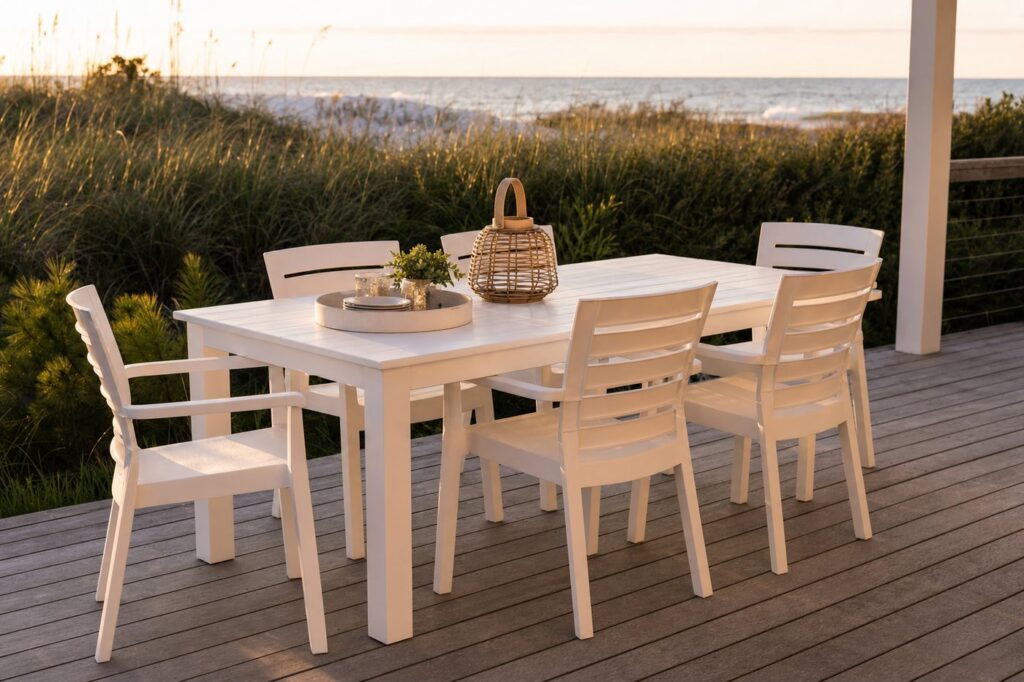
Outdoor furniture gets judged by color, shape, and comfort first, but the parts holding everything together deserve just as much attention. A chair can look solid on day one and still become loose, wobbly, or frustrating to maintain if the fasteners and connection points are not built for outdoor use.
This stainless steel hardware outdoor furniture guide explains what hardware does, where to look for quality, and why the right fasteners matter in furniture made from Marine Grade Polymer. If you are comparing outdoor seating, tables, or bar-height pieces, understanding the structure behind the style can help you buy once and buy well.
Why hardware matters more than many buyers realize
Outdoor furniture lives through expansion and contraction, regular movement, moisture, wind, and everyday use. People slide chairs across patios, lean back in Adirondack seats, rest feet on stool rungs, and drag tables into a better patch of shade. All of that repeated stress transfers to the hardware.
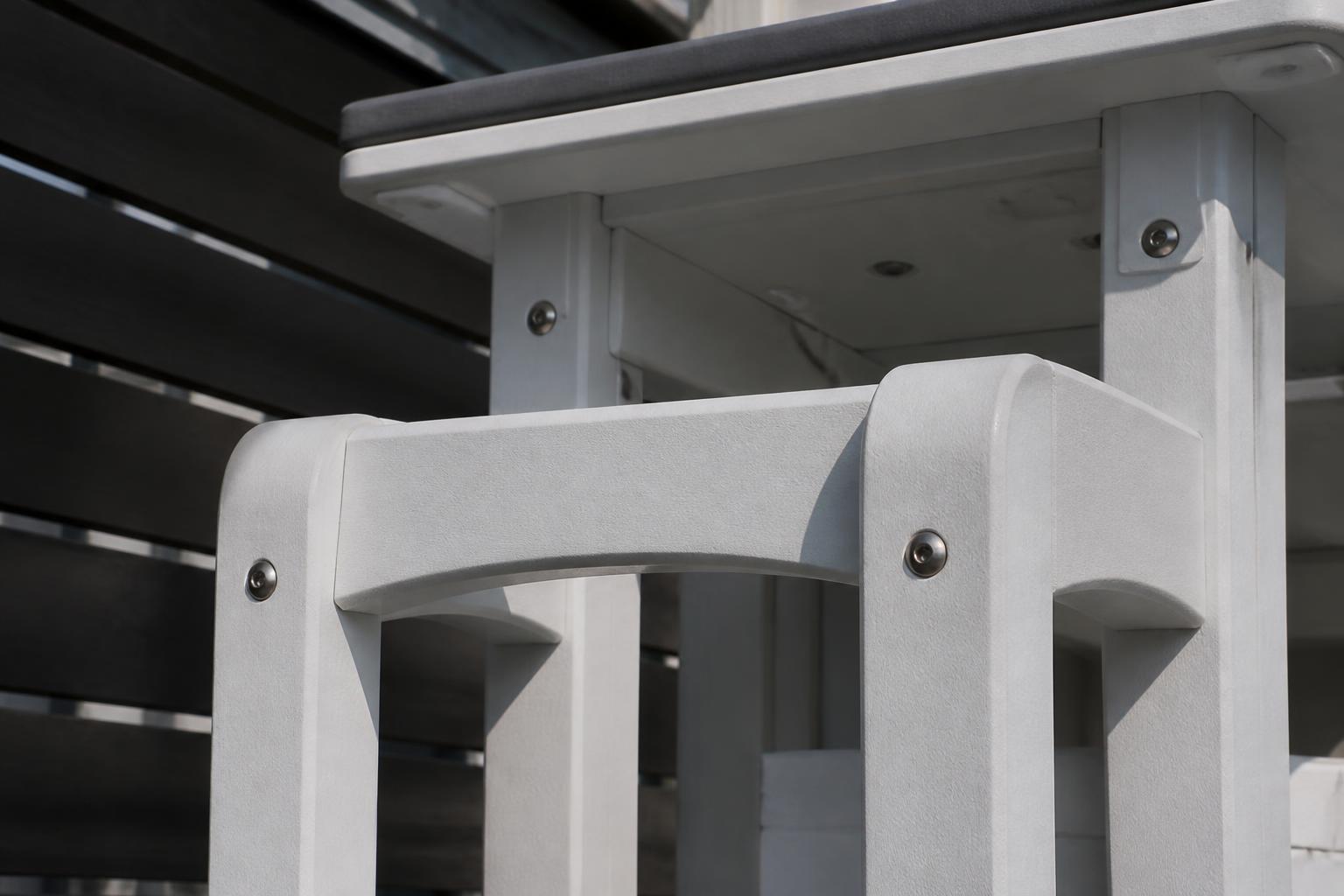
When the hardware is undersized, poorly placed, or not suited for outdoor conditions, problems usually show up in familiar ways: wobble at the arms, looseness at the seat, instability in the legs, or squeaks and shifting where pieces meet. Good furniture design does not treat hardware as an afterthought. It uses fasteners as part of the structure, helping the furniture stay tight and dependable over time.
That is especially important in heavier outdoor pieces. Weight can be a sign of substance, but it also means the connections need to do real work. Plastic Furniture To Go uses 3/16-inch stainless steel hardware, which is a meaningful detail because hardware size and material both affect long-term performance.
What stainless steel hardware actually does in outdoor furniture
Hardware has a simple job description, but several practical roles. First, it clamps structural parts together so the frame behaves as one unit rather than as a stack of separate boards or components. Second, it helps distribute force across the connection points when someone sits down, shifts position, or moves the furniture. Third, it allows the product to maintain alignment so the legs sit flat, the back stays square, and the seat feels stable.
In outdoor furniture, stainless steel is valued because it is suited to exposed conditions better than plain steel hardware. In practical terms, buyers care about that because rusting fasteners can stain surfaces, seize up, weaken connection points, or make maintenance unpleasant later.
Not every buyer needs to know technical metallurgy. What matters is looking for hardware that is clearly specified and appropriate for outdoor use. Plastic Furniture To Go confirms 3/16-inch stainless steel hardware across its furniture line, which gives shoppers a concrete structural detail instead of a vague claim.
Where to inspect the hardware before you buy
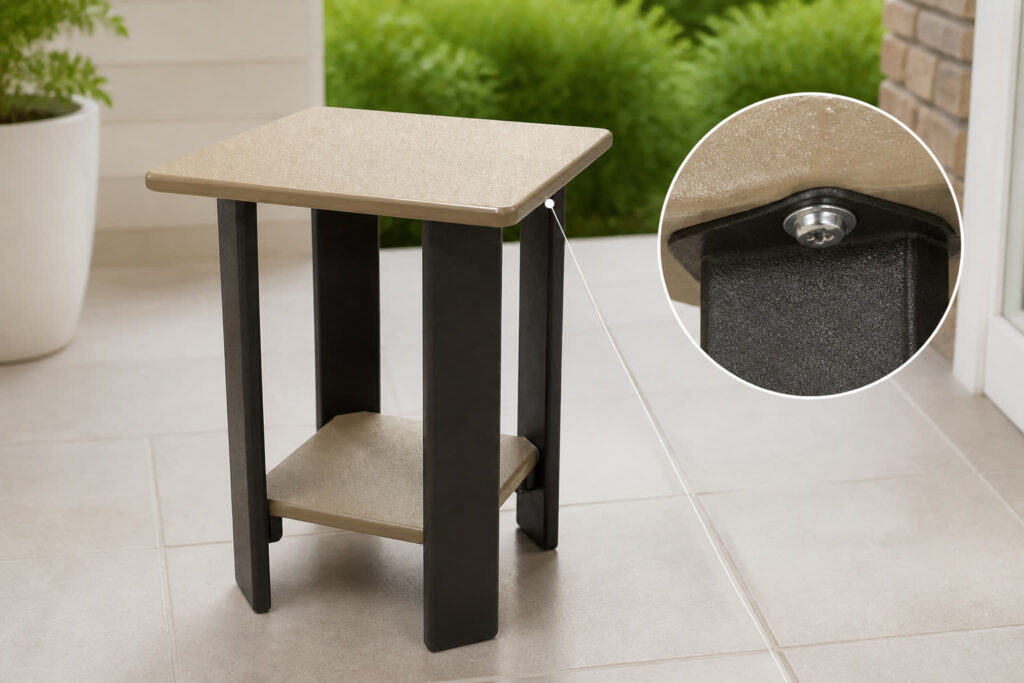
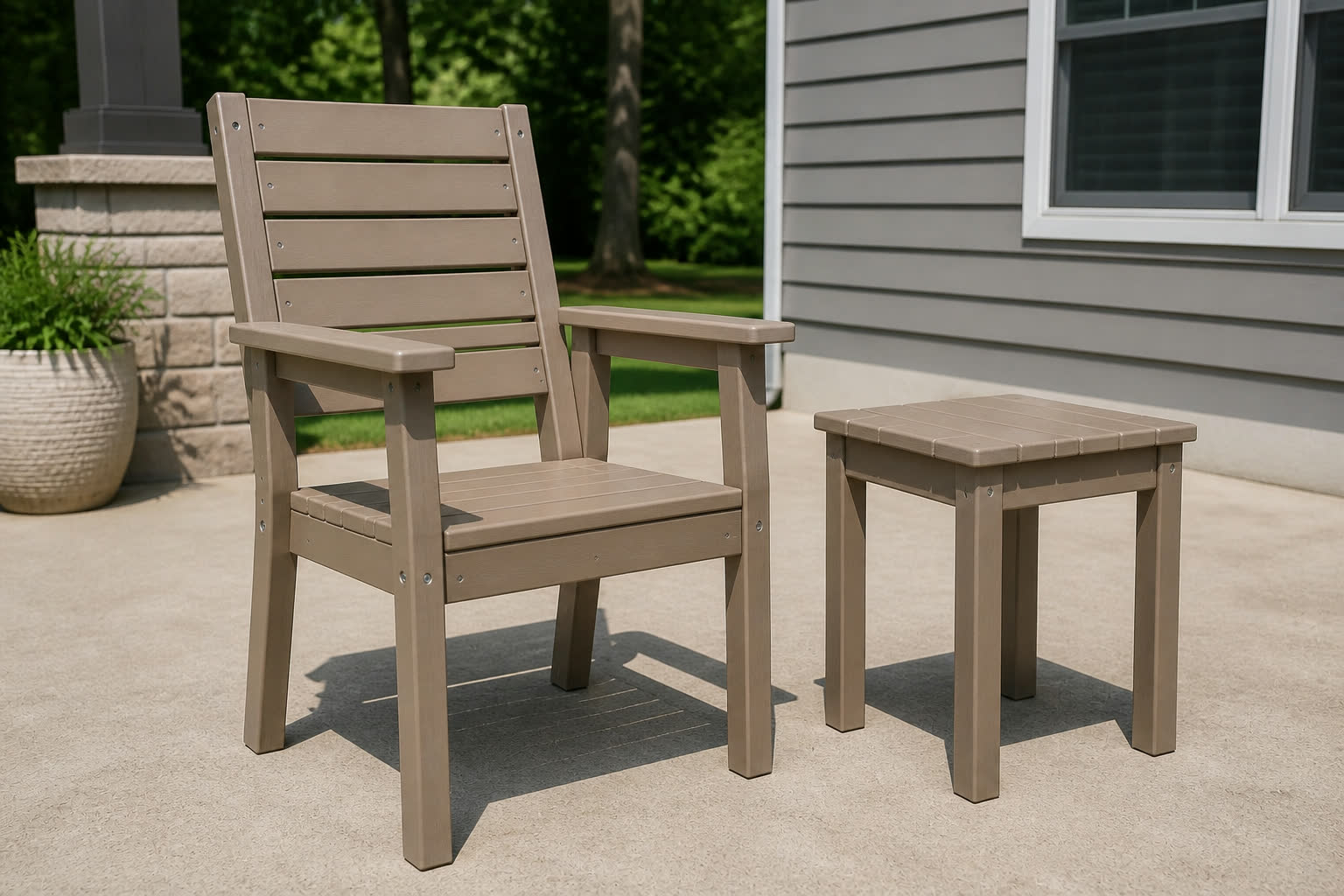
When reviewing outdoor furniture online, zoom in on the places that take the most stress. On chairs, that usually means the seat-to-leg connections, arm attachments, back supports, and lower bracing. On tables, inspect leg joints, apron connections, and any stretcher pieces below the top. On stools, look closely at the footrest area and where the seat attaches to the frame.
Here are the signs worth checking:
Visible, consistent placement matters. Fasteners should look intentional and evenly positioned, not randomly scattered. The furniture should appear balanced from side to side, with connection points placed where they can actually support load. You also want enough hardware to secure the structure without making the design look patched together.
Look at how the parts meet. Tight, clean junctions usually indicate better assembly and better fit. Large gaps, awkward angles, or obvious strain around a bolt location can suggest a weaker joint.
Think about maintenance access too. Outdoor furniture should allow occasional inspection and straightforward tightening if needed after long use. A well-designed piece does not hide every structural point at the expense of future upkeep.
How hardware works with Marine Grade Polymer
Hardware does not perform in isolation. It works with the material it is fastening, and that relationship matters. Plastic Furniture To Go furniture is made from Marine Grade Polymer, a durable material chosen for outdoor settings. The fasteners and the material must be paired in a way that supports the structure without overcomplicating ownership.
Marine Grade Polymer is used in substantial profiles, and the hardware helps lock those components into a stable assembly. In a quality outdoor chair or table, the fastener is not the entire story; the surrounding part thickness, the joinery layout, and the overall geometry all influence how solid the finished product feels.
This is where a buyer should avoid thinking only in terms of surface appearance. Two outdoor chairs can look similar from ten feet away, yet differ significantly in how they are put together. The hardware specification is one clue, but the full value comes from how that hardware is integrated into the piece.
For example, a stool used on a patio or outdoor kitchen gets repeated side loads as people climb on and off or rest a foot on the lower support. A product like the Counter Height Stool, which weighs 21 lb, benefits from a structure where hardware and material work together to keep the frame aligned and steady.
Why size and furniture weight should be part of the conversation
Fastener size should not be the only buying standard, but it should not be ignored either. Thicker hardware can contribute to a more robust connection when the design uses it correctly. Plastic Furniture To Go specifies 3/16-inch stainless steel hardware, which gives shoppers a clear benchmark compared with listings that say nothing at all.
It also helps to consider that hardware supports furniture with real mass. The Hampton Adirondack Chair weighs 52 lb, the Armless Cafe Chair weighs 27 lb, and Hampton round and square end tables weigh 15 lb each. Those are not flimsy pieces meant for a single season. The hardware in furniture like this needs to hold shape under regular use and movement, not just pass a quick visual check when first assembled.
Weight alone does not prove quality, but in outdoor furniture it often means the structure is substantial enough that connection points need to be taken seriously. Buyers should appreciate when a manufacturer provides specific hardware information instead of relying on general phrases like heavy duty.
Common failure points buyers should watch for
If you have owned outdoor furniture that loosened up too quickly, the problem often started at predictable stress points. Chair arms can begin to move if they are not tied securely into both the front and rear structure. Seats may flex more than expected when attachment points are spaced too far apart or when the hardware is too minimal for the design. Table legs can rack if the base lacks enough reinforcement. Stools often reveal weakness first at the footrest because that area sees repeated impact.
Another issue is mixed expectations about outdoor exposure. A patio piece has to tolerate wet and dry cycles, direct sun, and repeated handling. The Forest Products Laboratory has noted in its outdoor durability guidance that weather exposure places ongoing stress on materials and connections, which is one reason structural details matter so much outside.
For a buyer, the takeaway is practical: inspect the points where force concentrates. If the design looks underbuilt at the arms, seat, leg junctions, or footrest, trust that instinct and keep comparing.
Basic care for stainless steel hardware and outdoor furniture
Good hardware still benefits from simple maintenance. Outdoor furniture does not need complicated care routines, but occasional attention helps keep everything looking and feeling right.
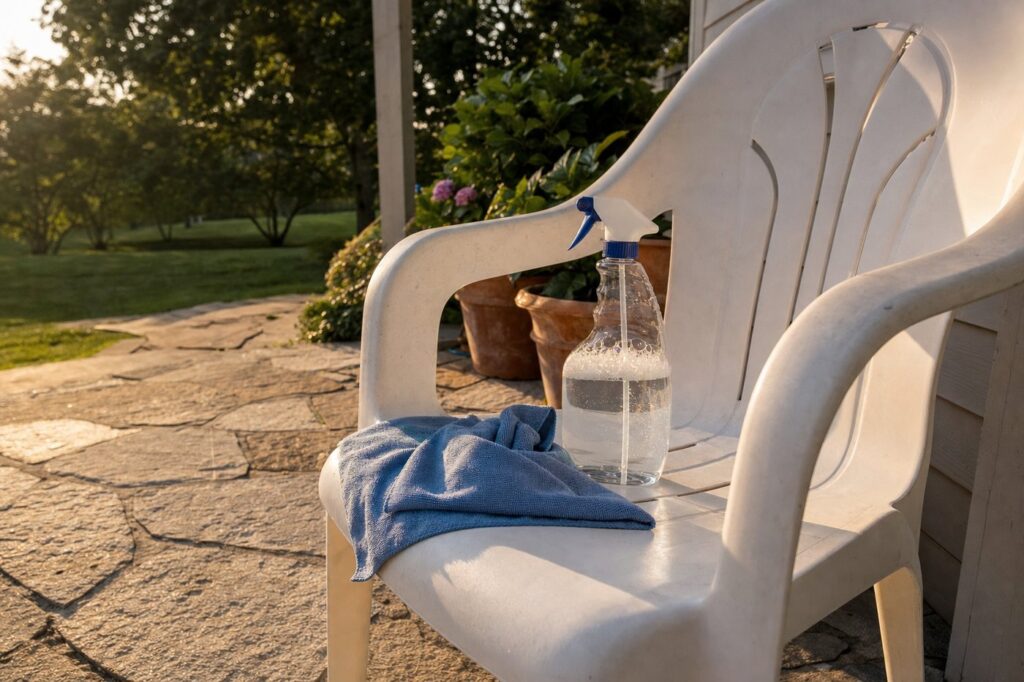
Start with routine cleaning. Wash the furniture with mild soap and water, then rinse thoroughly. That keeps dirt, pollen, and general outdoor residue from building up around connection points. If you live near salt air or in an area with frequent airborne grime, rinse more often.
Next, inspect the hardware periodically. A quick seasonal check is usually enough for most homeowners. Look for any loosening caused by regular use and tighten as needed. Do not overtighten aggressively; the goal is a secure, stable connection, not unnecessary strain.
It is also smart to notice how the furniture is being moved. Lifting a chair or table rather than dragging it roughly can reduce stress on the joints over time. During storms or off-season storage, placing pieces in a protected area can reduce unnecessary wear, even when the furniture is built for outdoor conditions.
These are simple habits, but they support the life of the whole piece, not just the fasteners.
How warranty details help support a buying decision
Hardware quality matters most when it is backed by a company willing to stand behind the product. Plastic Furniture To Go offers a 7-year structural warranty and a 5-year fade warranty, which gives buyers a clearer sense of support after purchase. You can review the full details on the returns and warranty page.
That kind of warranty information is useful because it shifts the conversation away from marketing language and toward ownership. Instead of guessing how seriously a brand takes structural performance, you can compare what is actually documented.
It is also worth remembering what Plastic Furniture To Go is and is not. The brand is American Made, sells factory-direct online, and includes free nationwide shipping. There is no public showroom and no phone-based sales process to depend on. The product information on the site, including construction details and warranty coverage, should therefore play a larger role in how you evaluate the purchase.
How to shop smarter when comparing outdoor furniture online
When two pieces look similar, use a short checklist. First, confirm the furniture material and make sure the description is specific. Second, look for a stated hardware specification, not a generic mention of rust-resistant parts. Third, compare the overall structure in product photos, especially at stress points. Fourth, review warranty terms. Fifth, consider the actual use case: lounge seating, dining, poolside placement, or an outdoor bar setup all put force in different places.
This approach helps you avoid buying on color alone. A clean silhouette is nice, but strength comes from the connections. Outdoor furniture should feel like a finished product system, with the material, hardware, and design working together.
If you are ready to compare durable outdoor pieces made from Marine Grade Polymer with 3/16-inch stainless steel hardware, browse the shop and use the product pages and warranty details to choose the right fit for your space. If you need purchase guidance, send your questions through the website contact form.
Frequently Asked Questions
Why is stainless steel hardware better for outdoor furniture?
Outdoor furniture faces moisture, temperature changes, and repeated movement. Stainless steel hardware is a better fit for those conditions than basic steel fasteners because it is intended for exposed use and helps support cleaner, longer-lasting connections.
What should I inspect first on an outdoor chair or stool?
Check the arm connections, seat attachments, leg joints, and any footrest or lower brace. Those areas take the most force during normal use and often reveal whether a piece is structurally well planned.
Does heavier furniture always mean better hardware?
No, but heavier furniture does place more demand on the connection points. Weight should be considered alongside the hardware specification, the joint layout, and the warranty. A substantial piece still needs thoughtful fastening to perform well.
How often should outdoor furniture hardware be checked?
A seasonal inspection is a good routine for most homes. Clean the furniture, look over the fasteners, and tighten anything that has loosened from regular use. If the furniture is in a windy, coastal, or high-use setting, check it a little more often.