
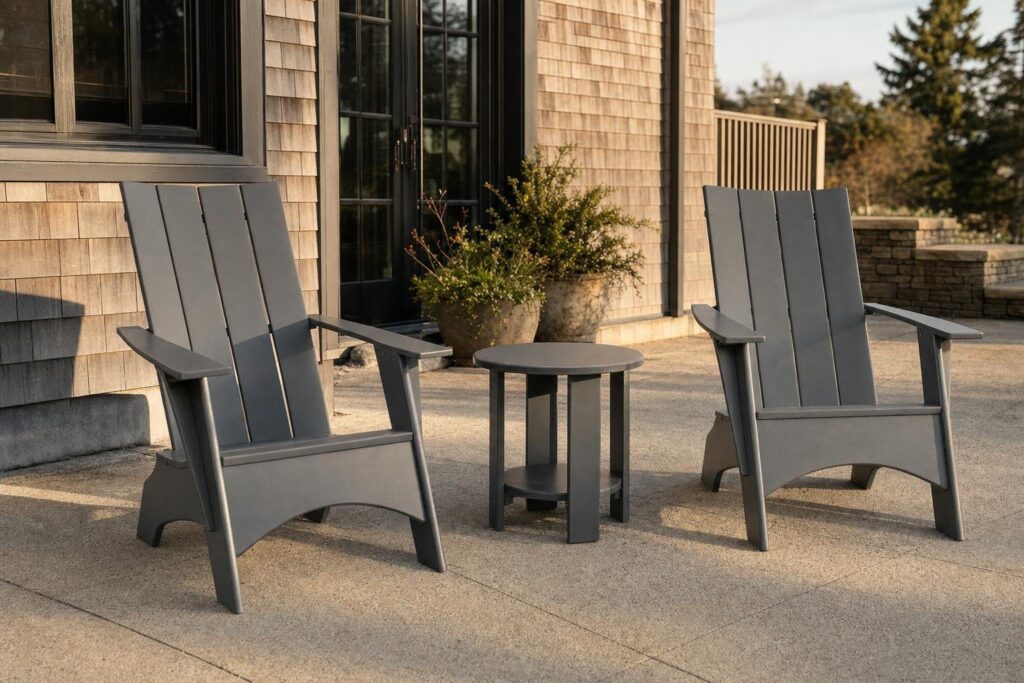
Nobody measures the distance between two chairs until it goes wrong. Set them too far apart and conversation turns into shouting across a gap. Set them too close and everyone feels crowded and knees collide. A good layout sits between those extremes, and the right distance depends on what you plan to do in the seats. This guide gives you a few simple ranges and a way to test them before you commit.
Why Distance Matters
Researchers who study how people use space, a field known as proxemics, describe different comfortable distances for different kinds of interaction. Close friends and family tolerate less space between them, while casual acquaintances prefer more. You do not need the theory to lay out a patio, but the idea is useful: the right chair distance depends on who is sitting in them. The distances below are practical rules of thumb rather than research findings.
A Simple Range for Conversation
As a general rule of thumb, seats set roughly four to six feet apart, measured from the center of one seat to the center of the other, often work well for conversation. Closer than about four feet, many people start to feel crowded. Farther than about eight feet, people often begin to lean forward and raise their voices. Treat these numbers as a starting point rather than a rule, and adjust for the people and the space.
If the two seats are side by side and facing the same direction, such as two Adirondack chairs looking at a yard or a pool, you can sit closer, because you are not looking at each other. A gap of a couple of feet with a small table between the chairs is usually plenty.
Angle Matters as Much as Distance
Chairs that face straight ahead are good for a view. Chairs that angle slightly toward each other are better for talking. If you have two chairs, try turning each about 20 to 30 degrees inward, so that you can see the yard and each other without twisting your neck. With three or four seats, a loose semicircle around a small table lets everyone see everyone.
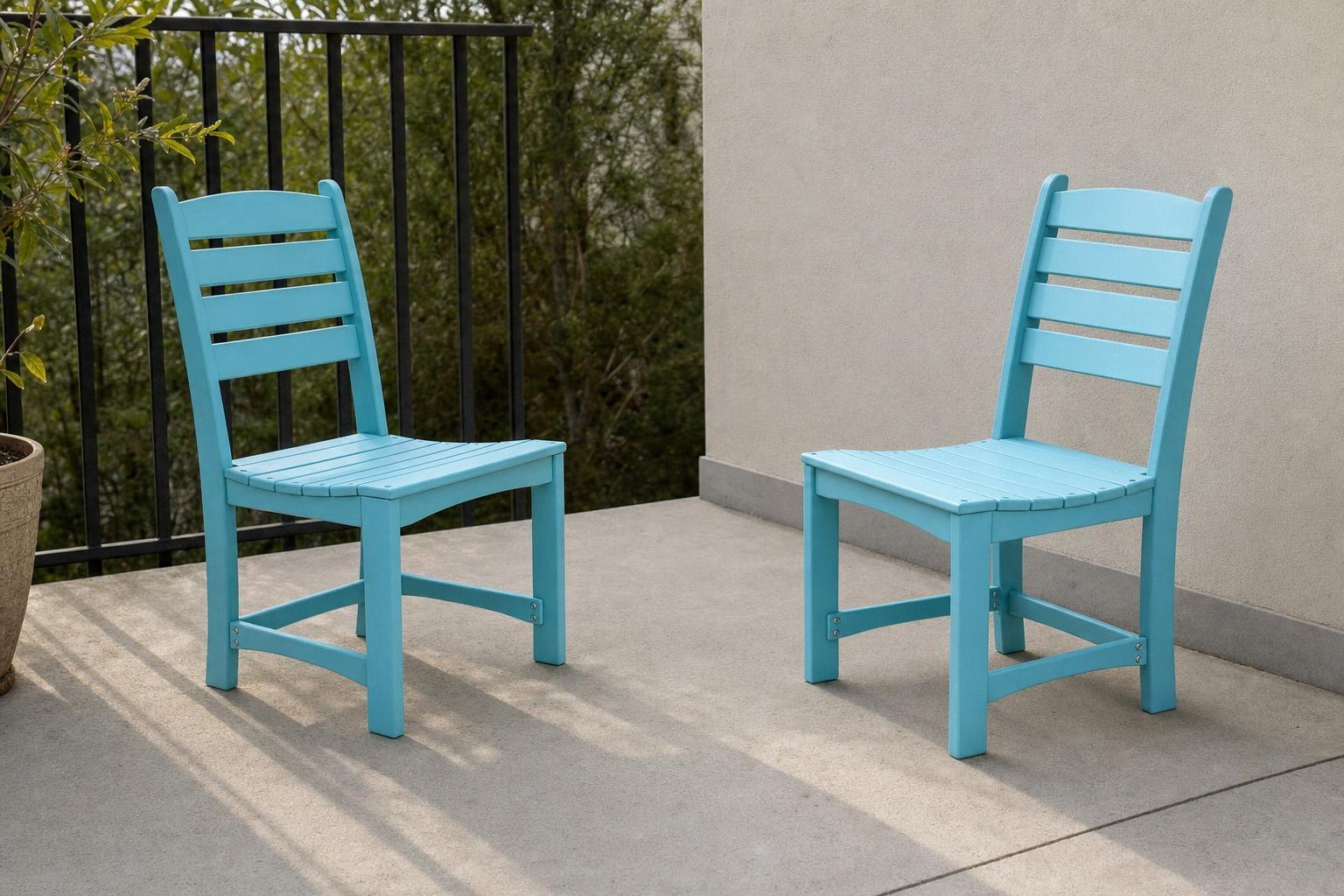
The Hampton Adirondack Chair weighs 52 lb, so it takes a moment to reposition; decide on the angle you like and then set it. The Armless Café Chair weighs 27 lb and can be shifted more readily as the conversation changes.
Leave Room to Walk
Chairs need clearance behind them as well as between them. A common guideline is to leave a walking path about 30 to 36 inches wide wherever people will pass, and a little more where two people may need to cross. When someone is seated, their chair also needs room to slide back. Tape the layout on the floor, including the space each person needs to stand up, and walk through it. Our guide to small patio layouts that keep walkways clear goes deeper on this step.
Use a Table to Set the Gap
A small table placed between two chairs is a handy way to set the gap, and it gives each person a place for a drink. Both the Hampton Round End Table and the Hampton Square End Table weigh 15 lb, so you can slide them a few inches to fine-tune the gap. If you are choosing a table for this job, the round versus square guide can help.
Test Before You Commit
The most reliable way to find the right distance is to try it. Place two chairs at your first guess, sit in them with a friend, and talk for ten minutes. If you have to lean in, move them closer. If your knees bump, move them apart. Take note of where the sun and any shade fall, because a seat that is comfortable at 10 a.m. may be in direct sun by afternoon. Adjust until it feels natural, and mark the final positions with painter’s tape so the layout is easy to restore after cleaning.
Different Setups, Different Distances
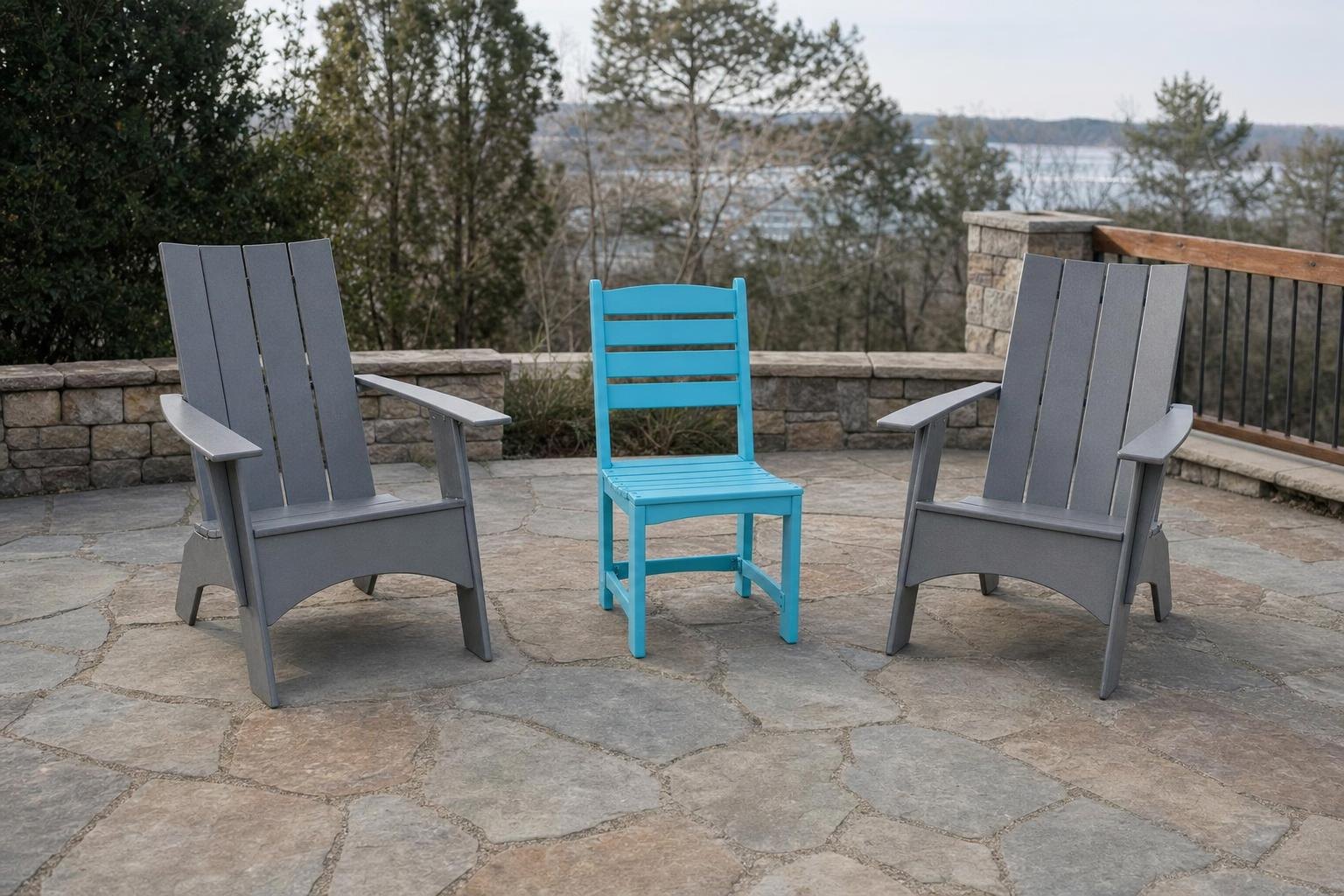
- Two chairs facing a view: a gap of about two to three feet between the chair arms, with a small table in between.
- Two chairs for conversation: roughly four to six feet apart, angled toward each other.
- Three or four seats: a loose semicircle around a central table, with about five to eight feet across the group.
- Chairs at a table: enough room behind each chair to pull it out without hitting a wall or another person.
Buying With the Layout in Mind
If you are planning a new layout, buy one or two pieces first, test the spacing, and add more when you know what works. Every piece ships free to the contiguous U.S., knock-down in a box, and is designed for simple assembly in about 20 minutes with the included 3/16-inch stainless steel hardware. Orders generally ship within 3 business days, and carrier transit is estimated at 2 to 7 business days, so plan on about 5 to 10 business days in total. Returns are accepted within 30 days of receipt for new, unused, unassembled items in the original packaging with proof of purchase, and the customer pays return packaging and freight unless the return is due to a seller error. All pieces are made in the USA from Marine Grade Polymer and carry a 7-year structural warranty and a 5-year warranty against fading. The returns and warranty page has the details.
Adjust for the People Who Use the Space
Every household is different, and the right spacing depends on the people who use it. A couple who sits together every evening will be happy with chairs close enough to reach a shared table. A family that hosts groups may want more space between seats so people can move around. Older relatives, small children, or guests who are unfamiliar with the patio may need wider paths and more room to sit down and stand up comfortably. Think through the typical evening, and adjust the gaps to match.
Revisit the Layout Each Season
A layout that works in summer may feel different in fall. The sun moves, the temperature changes, and you may sit outside at different times of day. Give the setup a quick look at the start of each season and make small changes. Because the tables and café chairs are lighter, adjusting takes only a few minutes, and the small tweaks are usually what turn a fine layout into one you love.
Spacing for Different Activities
The activity changes the answer as much as the people do. A relaxed, side-by-side view seat can sit close, since nobody needs to make eye contact. A conversation pair needs the four-to-six-foot range and a little angle. Seats around a small table for a meal or a game need enough room behind each chair to stand up and pull out, plus a clear path for anyone walking by. If your patio does all three, look for the compromise: two seats angled slightly toward each other and set a comfortable distance apart works for most of them, and you can shift a lighter chair when the activity changes.
Frequently Asked Questions
How far apart should two chairs be for conversation?
Roughly four to six feet center to center, angled slightly toward each other, is a good starting point.
How close can chairs be if they face the same direction?
A gap of two to three feet between the chairs, with a small table in between, is a good starting point.
How wide should the walkway be?
About 30 to 36 inches is a common guideline for paths where people pass.
Can I move the chairs after I set them?
Yes. Adjusting is easier with the lighter pieces (café chair 27 lb, end tables 15 lb); the Adirondack chair is 52 lb, so plan to move it deliberately.
Ready to plan your seating? Visit our shop to see the chairs and tables, or contact us through the contact page if you would like help with a layout.

