Choosing coastal patio furniture starts with your particular space: an open balcony, a sheltered porch, or a patio close to salt spray can call for different placement and care decisions. This guide helps you compare the published material, hardware, dimensions, maintenance instructions, and warranty before you order.
What Makes Coastal Exposure So Hard on Furniture

Coastal placement raises questions about salt residue, moisture, sun, wind, and hardware care. Conditions differ between a sheltered patio and an exposed balcony. Compare the instructions and written coverage for the specific furniture rather than assuming every location or material faces the same exposure.
Make a short record of the conditions at your property. Note whether rain reaches the seating area, whether salt residue is visible on nearby surfaces, and where furniture can dry after cleaning. Include how you will move the pieces indoors when local weather guidance calls for it. Share those details with the seller when asking about suitability; a general coastal label is less useful than a clear answer for your planned setup.
Check the Material and Hardware Specifications
PFTG’s published furniture material is Marine Grade Polymer. The name does not establish a resin grade, color-through construction, certification, or tested salt-air performance. Compare the exact model’s dimensions, hardware, care guidance, and written coverage.
Every PFTG piece uses 3/16-inch stainless steel hardware. Record that specification when comparing furniture, and follow the maker’s inspection and care instructions. It does not guarantee immunity from corrosion or prove that another product will fail sooner.
Make a small comparison sheet for the exact pieces under consideration. Give material, hardware, dimensions, product weight, care instructions, and warranty their own lines. Copy a specification only when the seller identifies it for that model. Leave an unanswered field marked as a question rather than filling it from a similar-looking product. This is especially useful when shopping across different websites, where a collection photograph may show several models but a specification table describes only one.
What “Marine Grade” Actually Refers To
Marine Grade Polymer is our published material description. We do not publish a specific HDPE grade or represent the furniture as certified for marine or saltwater use. Ask about your intended placement if the available product and policy information does not answer the question.
Keep material, performance, and warranty statements separate. A named material and a written fading warranty do not establish a testing certification or universal suitability for continuous salt exposure.
Placement Tips for Coastal Homes
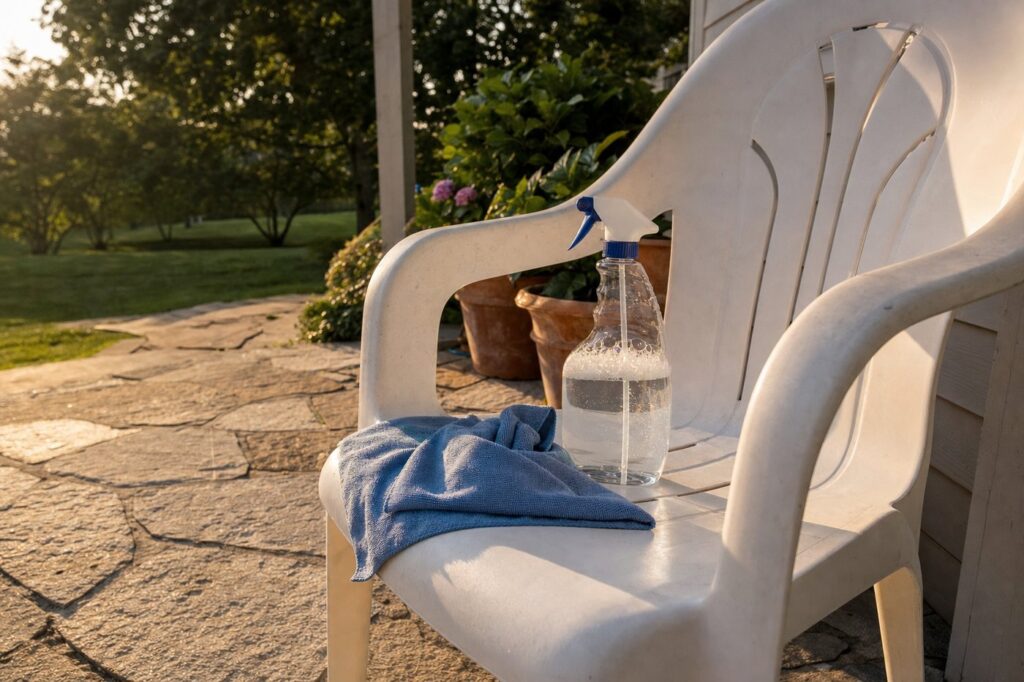
Follow the product’s care instructions for salt residue, surfaces, and hardware. Inspect the complete piece after impacts or movement, and ask the seller about an unfamiliar cleaner or damaged fastener. Do not assume that a quick rinse replaces all product-specific care.
Consider how exposed the proposed location is and whether you can safely reach storage before severe weather. A wall, roof, or windbreak may change exposure but is not proof that unsecured furniture will stay in place. Follow local alerts and appropriate securing guidance.
Sketch the everyday arrangement and the storage arrangement separately. Include doors that need to open, the path to the stairs, and any building equipment that must remain accessible. A chair that fits neatly beside a balcony rail may have to travel through a narrow doorway when it is moved. Measure that route before ordering, then decide whether you can handle the piece or need help. An appealing coastal arrangement should also work on the days when everything needs to be put away.
Weight and Wind Considerations Near the Water

Use product weight to plan handling and storage. PFTG end tables weigh 15 lb and the Hampton Adirondack Chair weighs 52 lb. Neither number is a wind rating or a reason to leave the piece unsecured in an exposed spot.
Include every loose item in an indoor-storage or suitable manufacturer-approved securing plan. Choosing a heavier piece does not provide a verified storm-safety margin. Prepare before dangerous conditions arrive; staying sheltered takes priority once they do.
Read the Written Warranty for Your Intended Use
PFTG publishes seven-year structural and five-year fading coverage under the written policy. Do not assume an unstated salt-exposure or location exemption. Ask the team if the policy does not clearly answer a question about your intended use.
Describe the placement when you ask: for example, an uncovered balcony, a screened porch, or a patio that receives visible salt residue. Explain whether the property is occupied throughout the year and who will handle routine care. Ask where the relevant instruction or policy term is written, then keep that answer with your purchase record. Do not treat a seller’s general recommendation for outdoor use as a promise about every coastal condition or a substitute for the full terms.
What to Ask Before Buying Any “Coastal” Furniture
A coastal style label can describe appearance rather than a tested performance standard. Ask about the frame, hardware, care requirements, and written coverage for the exact product. Missing information is a question to resolve before buying. Keep the seller’s answer with the model name and a copy of the order details so it is easy to find later. If more than one person looks after the property, leave the instructions where everyone can use the same cleaning, inspection, and storage routine. Include the location of assembly instructions and the seller’s contact details, plus any building requirements that affect your furniture arrangement.
Balconies, Rooftops, and Other Exposed Coastal Spots
For balconies and rooftops, check building rules, clear routes, surface support, and a practical storage plan before ordering. If the building has a property manager, obtain its current furniture and storage rules early. Ask about access arrangements for moving bulky pieces and identify a place to store small loose items as well as chairs. Keep that building guidance beside the furniture instructions so both are considered when planning the layout. Follow care instructions for the complete assembly and inspect surfaces and connections after movement or impact. For weather preparation, use National Weather Service hurricane planning guidance and local instructions rather than inferring protection from a material label.
For a home used only part of the year, make the care handover practical. Identify who can inspect the furniture, where the order details are kept, and how to contact the seller if something changes. Leave a current photograph of the intended storage arrangement with the instructions. If a piece has an unresolved problem, label it as out of use and tell the person looking after the property. This helps prevent an unfamiliar caretaker from returning it to the seating area simply because the rest of the patio is ready.
Frequently Asked Questions
Is Marine Grade Polymer certified for saltwater or marine use?
We do not publish a marine or saltwater certification. Marine Grade Polymer is the stated material; check the product instructions and written terms for your intended use.
Does salt air affect the warranty?
Read the written policy and ask about any unclear exposure or intended-use condition before ordering. Do not assume a location exemption that the policy does not state.
What hardware is used?
PFTG uses 3/16-inch stainless steel hardware. Follow the assembly, inspection, and care instructions; the material name does not guarantee that corrosion or damage cannot occur.
Should I rinse furniture near the ocean?
Follow the exact product’s directions for removing salt residue, including whether fresh-water rinsing is appropriate. Check the hardware and joints as well as the broad surfaces. If residue remains after the permitted method, ask about a compatible next step rather than increasing cleaner strength.
Where can I see furniture options and weights?
Visit our shop to compare pieces and their published weights.