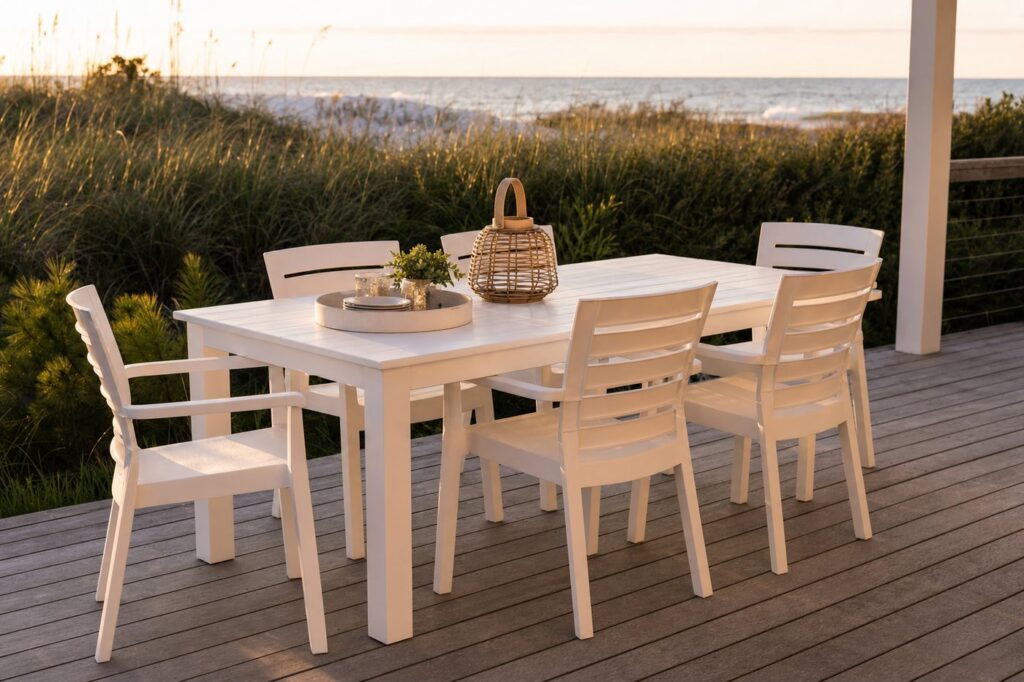

Cleaning Marine Grade Polymer furniture starts with the instructions for the exact piece, including its finish and hardware. This guide provides a practical order for checking those instructions, choosing a compatible cleaning method, inspecting connections, and planning seasonal storage. Do not substitute a general material claim for the maker’s care guidance.
The Basic Routine: Soap, Water, and a Soft Cloth

Check whether the maker recommends mild soap, water, and a soft cloth for routine dirt and pollen. Follow the permitted method, rinse residue as directed, and allow the furniture to dry. Inspect joints and areas where debris collects rather than assuming the material cannot be affected by moisture or contamination.
Choose the cleaning interval from the product instructions and the conditions you actually see. A covered porch can still collect dust or pollen, while an uncovered piece may need attention after a particular spill or weather event. Check the seat, armrests, and joints instead of assuming a fixed number of weeks suits every setting.
Before starting, set out the approved supplies and identify where rinse water can go. Work in an area where you can reach the surfaces without climbing on the furniture. Remove separate cushions or accessories according to their own care instructions, and keep their cleaning directions apart from those for the frame. Use clean cloths so that material collected from the patio floor is not carried onto the seating surface.
Dealing With Tougher Stains
For grease, sunscreen, or a persistent mark, identify the stain and ask which cleaner is compatible with the finished furniture. Test an approved method in an inconspicuous area. Avoid increasing concentration or switching to an abrasive tool simply because a first attempt did not remove the mark.
If you suspect mildew or another unfamiliar deposit, check the product’s care instructions or ask the seller about a compatible treatment. Do not apply a vinegar solution, bleach dilution, or other household recipe based only on the general material name.
Photograph a persistent mark before trying another method. Note what contacted the furniture, roughly when it happened, and what you have already used. That gives the seller a clearer starting point than a description such as “a stain that will not come off.” Include the product name and color when you ask for guidance, and retain the cleaner label so its ingredients and directions can be checked. If the cause is unknown, say so rather than guessing.
What to Avoid
Do not use bleach, solvents, or a pressure washer unless the instructions for the exact product permit that method. A general material label cannot establish a safe nozzle distance, pressure setting, or chemical concentration. Follow cleaner labels and never mix cleaning products.
Check the manufacturer’s instructions before applying a sealant, coating, or treatment. Do not infer color-through construction or the absence of a finish from the words Marine Grade Polymer. Use product-specific guidance for covers and storage too.
Caring for the Hardware
PFTG uses 3/16-inch stainless steel hardware. Inspect connections as directed and after movement, impacts, or other events that may have affected the piece. Look for loose or damaged parts and contact the seller when an adjustment or replacement is unclear.
Stainless steel is the published hardware material, not a promise that corrosion or damage cannot occur. Stop using a piece with a damaged connection or unresolved instability. Follow the assembly instructions for adjustment rather than applying an improvised tightening method.
Keep the assembly sheet with the order record so you can identify a connection by its diagram or part reference. If you need help, take a clear photograph of the entire joint as well as the affected fastener. Do not substitute a hardware-store part merely because it appears to fit. Ask which replacement is appropriate and whether the piece should remain out of use until it is fitted. Record the answer with the other care information.
Year-Round Outdoor Storage

Follow the exact product’s seasonal-storage instructions. Include every loose chair, table, and stool in a severe-weather plan, regardless of weight. Arrange indoor storage or appropriate securing before dangerous conditions arrive, and follow local alerts.
Why This Matters for Long-Term Value
A manageable care routine and clear records can help you notice changes in the furniture’s condition. PFTG provides seven-year structural and five-year fading coverage under the written policy. Neither the routine nor the policy proves that this material outlasts wood, wicker, or another resin product.
A Seasonal Checklist, If You Want One
A seasonal checklist can help organize the tasks called for in the care instructions. Inspect surfaces and connections, remove accumulated dirt using a compatible method, and confirm that storage routes are clear. Add checks after movement or impacts rather than assuming one schedule fits every household.
Before a period of reduced use, review the storage instructions, clean and dry the piece as directed, and check its condition. Consider local weather and the complete furniture assembly. Do not assume that all polymer furniture can remain uncovered outside throughout winter.
For a shared or seasonal home, leave one short care note where the next person can find it. List the furniture models, the approved cleaning supplies, the location of the instructions, and any issue awaiting a response from the seller. This avoids a well-intended change of cleaner or an improvised repair by someone unfamiliar with the furniture. Review that note when the pieces return to regular use, and remove outdated directions when the manufacturer provides a replacement.
How This Compares to What You Might Be Used To
When changing from another material, read the new product’s instructions instead of carrying over its cleaning routine. The EPA Safer Choice product search offers information about certified cleaning products, but certification does not replace furniture-specific compatibility guidance. Follow the label, test an approved cleaner in a small area, and keep runoff away from pools and drains.
When the approved cleaning process is complete, look over the piece before putting accessories back. Check whether a remaining mark is on the broad surface, beside a joint, or around a fastener, and note that location in any follow-up message. Keep the original photograph alongside a new one taken from a similar angle. There is no need to keep treating the same area while waiting for an answer. A clear record of the attempted method makes the next discussion more useful.
Store cleaning supplies with their labels intact and away from the furniture instructions if a leaking container could damage the paperwork. If another person will carry out the next cleaning, show them which products were approved. Do not transfer an unidentified liquid into a spare spray bottle and expect the next person to know its contents or permitted use.
Frequently Asked Questions
Do I need to cover my furniture in winter?
Follow the exact product’s storage instructions for your climate. Consider wind, drainage, debris, and hardware condition rather than assuming that a material label guarantees damage-free winter exposure.
Can I use a pressure washer?
Use one only if the exact product’s care instructions permit it, following the specified settings and method. Otherwise ask the seller for a compatible cleaning approach.
What cleaner should I avoid?
Avoid any cleaner or concentration that the product’s care instructions do not permit. Follow labels, do not mix products, and confirm compatibility before treating an unfamiliar stain.
What should I check on the hardware?
Our furniture uses 3/16-inch stainless steel hardware. Follow the assembly, care, and inspection instructions; the specification does not promise immunity from corrosion or damage.
Where can I shop the current lineup?
Visit our shop to see current colors and pieces.