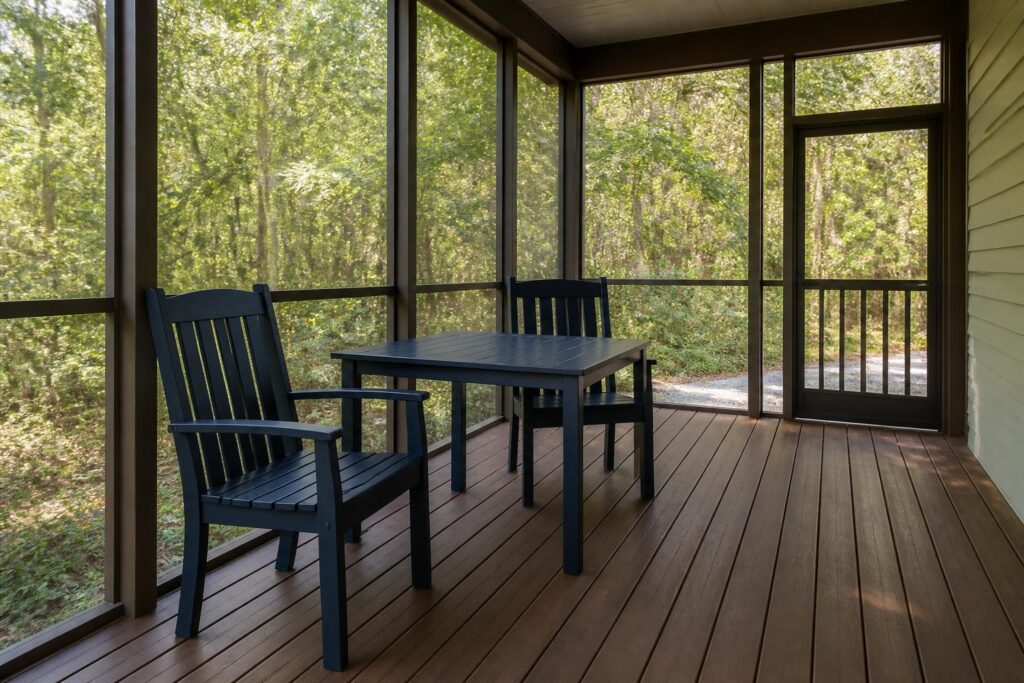
Choosing patio furniture for screened porches sounds simple until you start measuring around door swings, rail lines, posts, and the space you need to walk through every day. A porch may look roomy when empty, but the true usable area often gets smaller once furniture is in place.
The best layout starts with movement, not just style. If you plan around entries, airflow, roof coverage, and easy cleaning first, you can create a porch that feels open and comfortable instead of crowded.
Measure the usable porch, not just the outside footprint

One of the biggest mistakes people make is measuring wall to wall and assuming every inch is available. On a screened porch, that is rarely true. Door trim, screen framing, support posts, low rails, and traffic paths all reduce what actually fits.
Start by measuring the full interior length and depth. Then subtract the areas that cannot realistically hold furniture. That includes:
screen door swing space; the path from the house door to the yard or deck steps; any clearance needed near stairs; the zone where you naturally turn corners; and the space required to pull out chairs without blocking circulation.
A useful way to think about this is to break the porch into functional rectangles. One rectangle may be your dining or coffee zone, another may be a pass-through area, and another may need to stay open for cleaning or access. This approach gives you a far more accurate picture than one big width-by-depth number.
If you want a more comfortable route through the porch, general accessibility guidance can help you think through clear passage widths. The accessible route guidance from the U.S. Access Board is a useful reference point when planning pathways, even in a private residential setting.
Before ordering, mark furniture footprints on the floor with painter’s tape. Include the chair when occupied, not just the base. That quick test often reveals whether a layout will feel easy or frustrating in daily use.
Plan around doors first
Screened porches often have more than one entry point, and each one affects what fits. A screen door can steal a surprising amount of floor space because the issue is not only the swing arc. People also need a landing area to step in, pause, and turn without bumping into furniture.
Give every door its own buffer zone. If the porch connects the house to the yard, treat that route like a hallway and keep it reliably open. Furniture that works against a far wall may still fail if it pinches the path to the door.
This is where lighter, simpler silhouettes are often easier to use than oversized deep seating. For tighter porches, an option like the Armless Cafe Chair can make more sense than bulkier seating because it keeps edges clean and reduces visual crowding. At 27 pounds, it has enough substance to feel sturdy while still being practical to reposition when you want to refresh the layout.
If your porch has a narrow side entry, avoid placing a table where someone has to sidestep around it every time they pass. Cornering furniture away from entries usually makes the porch feel larger, even if the actual pieces are the same size.
Keep airflow working for you
One of the best features of a screened porch is ventilation. That benefit can disappear if furniture is packed too tightly or if tall arrangements interrupt the natural movement of air.
Try to preserve open lanes where breezes can move across the room. This does not mean the porch needs to feel sparse. It means avoiding a layout where every piece is pushed into the center or stacked tightly along the screens. A porch usually feels cooler and calmer when furniture groups are intentional and scaled to the room.
Lower-profile combinations often help here. A pair of chairs with a small table between them can create a conversation spot without building a visual wall. On a modest porch, a compact accent piece such as the Hampton Round End Table can add function without making the area feel blocked off. Hampton round and square end tables weigh 15 pounds each, so they are easy to place where you need a landing spot for drinks or a book.
Airflow also connects to comfort under a roof. A screened porch already offers more protection than a fully open patio, so you may not need the same kind of oversized arrangement you would choose for a wide backyard seating area. Often, a cleaner and more open footprint simply works better.
Use the roofed setting to your advantage
A screened porch gives furniture a more sheltered environment than an uncovered patio, but that does not mean every oversized setup belongs there. Roof lines, beams, fans, lighting, and trim details all affect how large furniture will feel once it is inside the space.
Instead of asking only whether a piece physically fits, ask whether it suits the porch’s scale. Heavy-looking furniture can overwhelm a porch with low ceilings or narrow screen panels. Pieces with straightforward lines tend to feel more natural and easier to arrange.
Material choice matters too. Marine Grade Polymer furniture is a practical fit for porches because it offers a clean, substantial look with straightforward care. For long-term durability, construction details count. Plastic Furniture To Go furniture is American Made and built with 3/16-inch stainless steel hardware, which supports dependable everyday use in covered outdoor living areas.
Because the porch already has a roof, many homeowners find they can focus less on filling the space and more on preserving comfort. Leaving intentional open zones near screens, corners, or doorways often improves the room more than squeezing in another chair.
Create conversation zones without crowding the walkway

A screened porch usually works best when it has one clear purpose or two closely related ones. Trying to fit dining, lounging, storage, and circulation into a small footprint can make everything feel compromised. Instead, decide what you want the porch to do most often.
If you mainly drink coffee there in the morning or sit outside in the evening, a simple conversation layout is often the best use of space. Two chairs and an end table can be enough. If the porch is a pass-through from the house to the yard, keeping the center open may matter more than adding extra seating.
For larger porches, separate the layout into zones rather than one oversized cluster. A pair of chairs near one corner can become a reading area while another small grouping supports casual visiting. The key is to keep sightlines open so the porch still feels breathable.
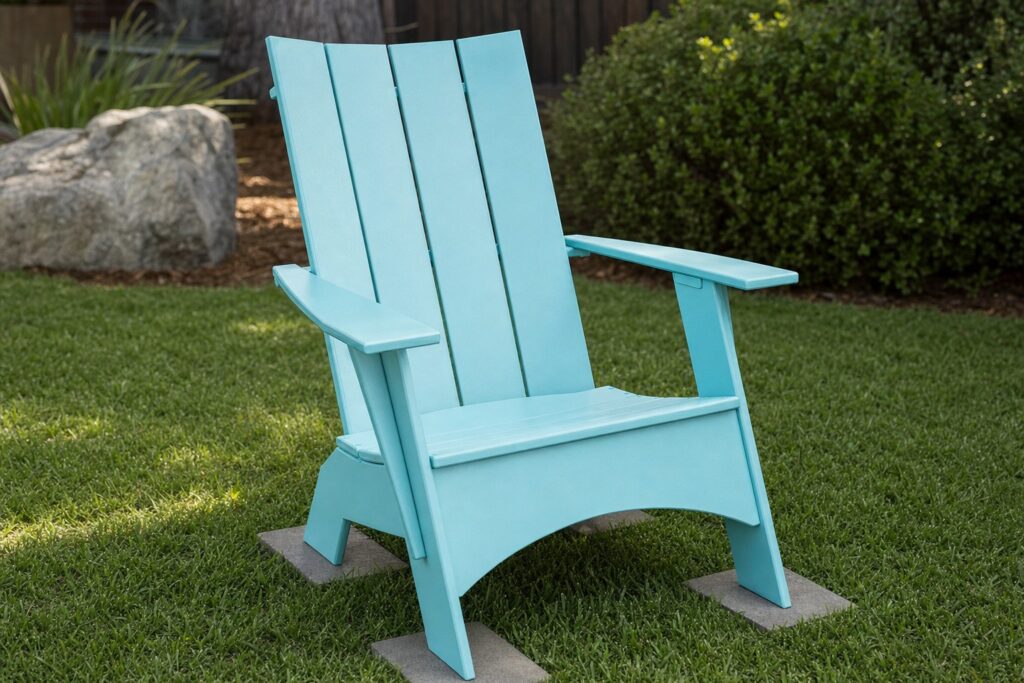
Weight can also be useful when choosing pieces for flexible layouts. The Hampton Adirondack Chair weighs 52 pounds, which gives it a substantial presence for a settled seating area. The Counter Height Stool weighs 21 pounds, which may suit a porch setup where you want seating that is easier to move around as needs change. Thinking about weight this way helps you match furniture to how fixed or flexible you want the layout to be.
In tighter rooms, do not underestimate the value of one small table over several scattered accessories. Fewer pieces often create a porch that feels more finished and easier to use.
Leave room to clean the porch easily
Screened porches collect dust, pollen, leaves, and everyday outdoor debris, even when they are covered. That is why cleaning space should be part of your layout plan from the beginning. If furniture is jammed tightly into corners or packed wall to wall, routine sweeping becomes a chore.
Think about where debris tends to gather. It is often near doors, corners, and the lower edges of screens. Leave enough access so you can move through the porch with a broom or other cleaning tools without having to dismantle the whole setup.
This is another reason to avoid overfurnishing. A porch with a little breathing room is not only more comfortable, it is easier to maintain. If you like to rework your arrangement seasonally, choosing pieces that can shift locations without a struggle makes the space much more usable over time.
Marine Grade Polymer furniture also suits a practical maintenance mindset. It has a crisp finished appearance that works well in everyday porch settings where you want furniture that looks polished without inviting unnecessary fuss.
Think about how furniture gets into the porch
Even if a layout works on paper, you still have to get each piece through the house, through the porch opening, or through a narrow screen door. On some homes, the access point is more limiting than the porch itself.
Measure entry widths and turning areas before you shop. Include any trim, storm door hardware, and corners that reduce clearance. If the porch entrance comes off a hallway or mudroom, check those spaces too. A piece can fit the porch perfectly and still be awkward if the path into the room is too tight.
This is one reason to favor layouts built from individual seating pieces and small tables instead of assuming a large all-at-once arrangement is the answer. Separate pieces are easier to place, easier to adjust, and usually better suited to the real geometry of a screened porch.
It also helps to think ahead about future changes. Maybe you want to swap a chair from one side to another, open up more floor space for guests, or use the porch differently across the year. A flexible plan generally outperforms a packed plan.
Choose a porch layout that matches daily life
The best screened porch furniture plan is the one that supports how you actually use the space. If you pass through the porch several times a day, circulation should lead every decision. If the porch is mostly for quiet sitting, comfort and sightlines may matter more. If you use it for casual meals, prioritize chair placement and table access.
Try to picture ordinary moments, not just finished styling. Where do you set a drink? How do you open the door while carrying a tray? Can two people sit and still let someone walk through? Can you clean around the furniture without turning it into a project?
Those practical questions usually reveal what fits better than a simple product count. In many cases, a screened porch works best with fewer, better-placed pieces made from durable materials and built for everyday outdoor living.
Plastic Furniture To Go offers American Made furniture with free shipping to the contiguous U.S., plus a 7-year structural warranty and a 5-year fade warranty. That combination can be especially appealing when you want to furnish a porch thoughtfully and buy with confidence.
Frequently Asked Questions
How much clearance should I leave around a screen door?
Leave enough room for the full door swing and for a person to step through comfortably without immediately hitting a chair or table. It is smart to test this with tape on the floor before choosing a final layout.
What type of furniture works best on a narrow screened porch?
Narrow porches usually benefit from smaller-scale seating, open walkways, and compact tables instead of deep or bulky arrangements. Armless chairs and small end tables are often easier to fit while keeping the space functional.
Is heavier porch furniture better for screened porches?
Not always. Heavier pieces can feel more anchored in a dedicated seating zone, while lighter pieces are easier to move for cleaning or layout changes. The better choice depends on whether you want a fixed arrangement or more flexibility.
Does covered porch furniture still need to be durable?
Yes. Even under a roof, porch furniture still deals with outdoor exposure, changing conditions, and routine use. Well-built Marine Grade Polymer furniture with stainless steel hardware can be a smart choice for a space that needs to look good and hold up over time.
Shop Plastic Furniture To Go to find American Made porch seating and tables that fit your screened porch layout, with free shipping to the contiguous U.S. and durable everyday construction.
You may also find these helpful: Buying Your First Patio Furniture Set, Austin Balcony and Small-Yard Furniture Layouts, and Accessible Patio Furniture Layouts With Clear Paths.