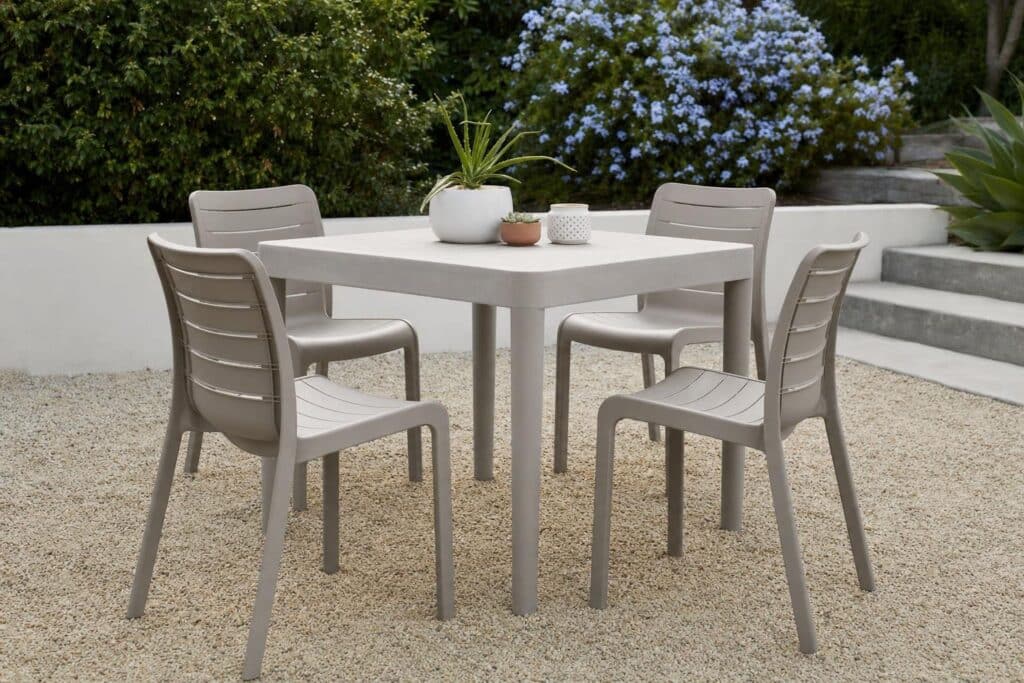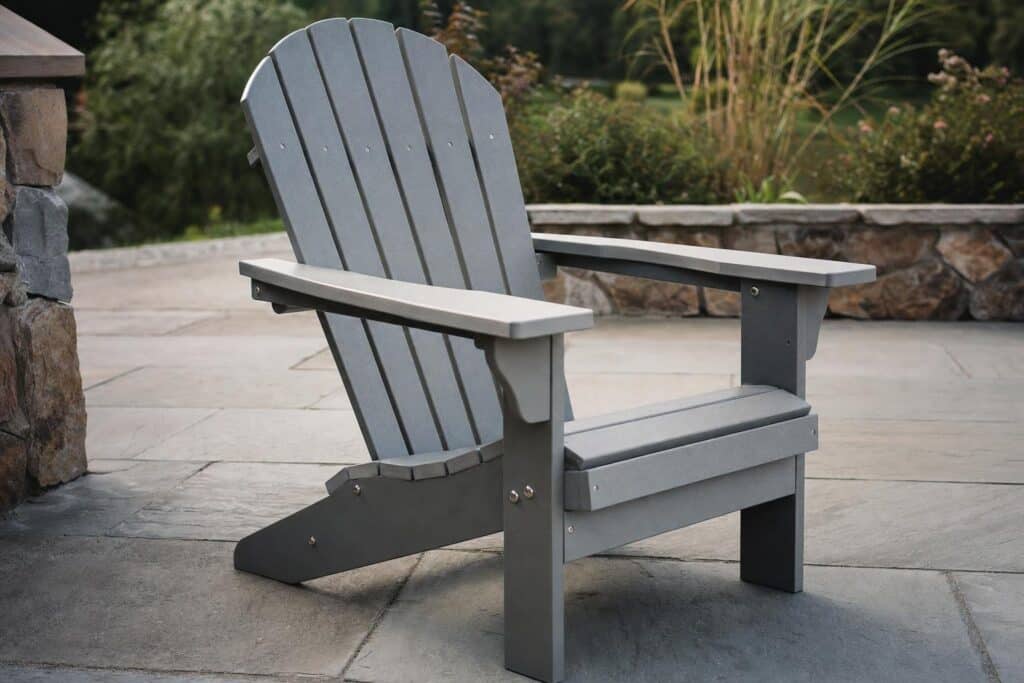
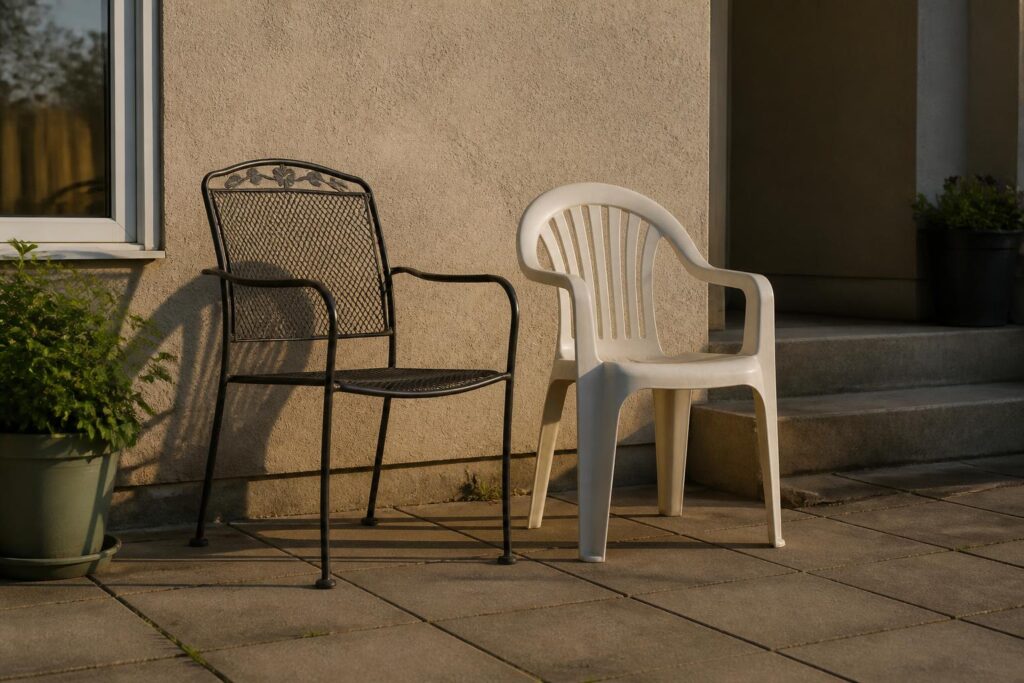
Choosing between plastic vs metal patio furniture comes down to how each material behaves in real backyard conditions: how hot it gets in July sun, whether it rusts near a pool or ocean, how heavy it is when you need to rearrange the deck, and how it actually feels to sit in for two hours at a barbecue. Both categories have loyal fans and legitimate strengths, but they solve different problems. This guide walks through the honest tradeoffs — surface temperature, corrosion resistance, weight, maintenance, seating comfort, and long-term cost — so you can pick the material that fits your climate, your patio, and the way you actually use outdoor space.
How Each Material Behaves in Direct Sun
The single biggest daily difference between plastic vs metal patio furniture is what happens when the sun hits it. A dark aluminum or steel chair sitting in full afternoon sun can reach surface temperatures of 140–160°F on a 95°F day. Cast iron and wrought iron climb even higher because the mass holds heat. That means bare arms on armrests, backs of thighs on seats, and small kids in shorts all feel it immediately. You end up dragging cushions everywhere or waiting until the sun moves.
Poly and other quality outdoor plastics run cooler to the touch in the same conditions — typically 15–30°F below a comparable dark metal surface — because the material doesn’t conduct heat into your skin the way metal does. Light colors help further; a white, sand, or light-gray plastic chair in direct sun is usually sit-able without a cushion, while a black metal chair in the same spot often isn’t.
If your patio faces west, sits on a south-facing balcony, or lives in a desert or Sun Belt climate, this single factor may decide the question for you. Readers dealing with brutal summer conditions will find more climate-specific advice in our guide to outdoor furniture for extreme heat, which covers color choice, placement, and shade strategy in more depth.
Rust, Corrosion, and Coastal Air
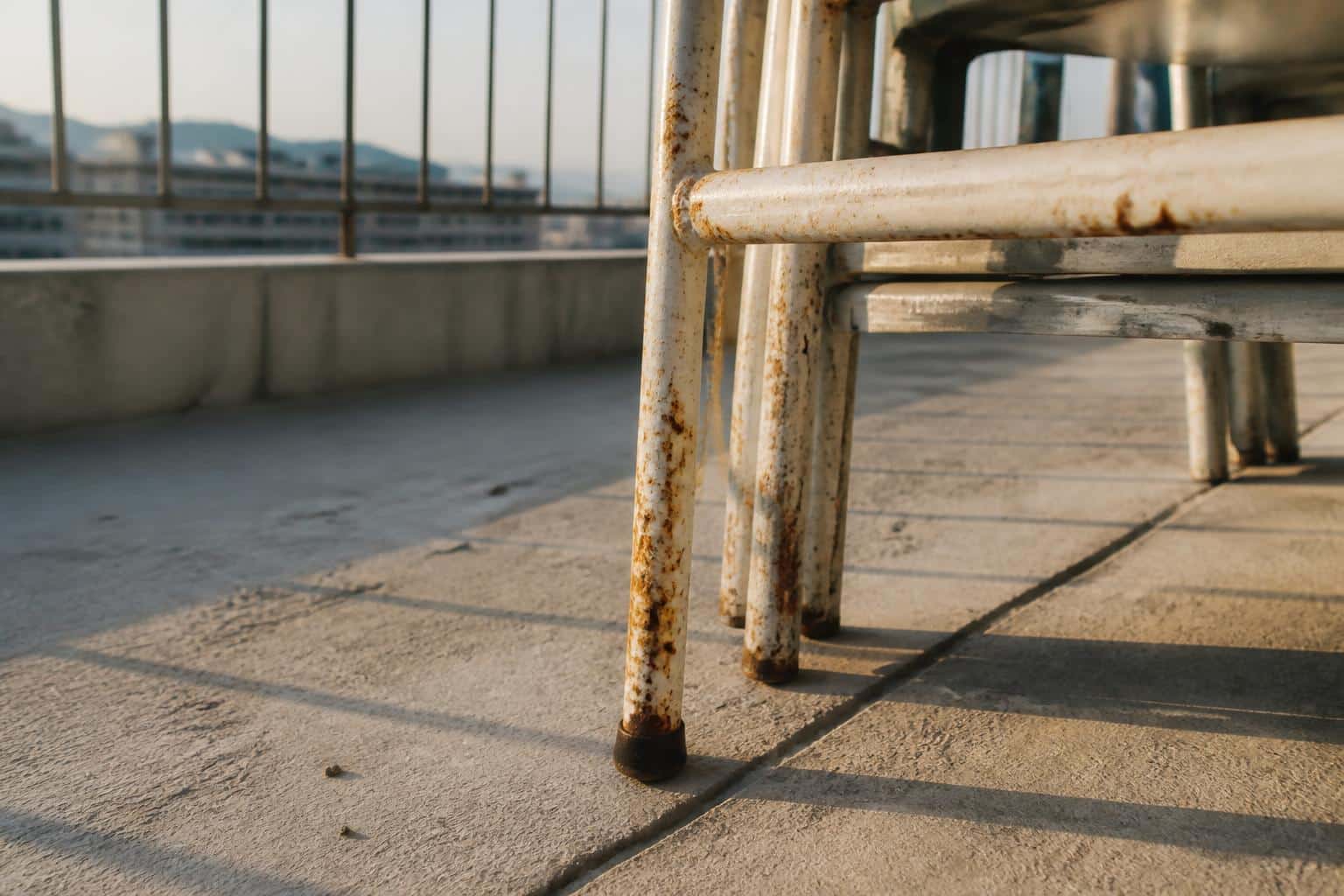
Metal patio furniture is a broad category, and corrosion behavior varies enormously within it. Wrought iron and steel are strong and heavy but will rust wherever the powder-coat finish chips, scratches, or wears thin — and outdoor coatings do eventually wear. Once moisture gets under the coating, rust spreads outward from the damage point. In humid climates, near pools with chlorinated splash, or within a few miles of salt water, this process accelerates dramatically.
Aluminum is the corrosion-resistant metal option. It doesn’t rust in the iron-oxide sense, though it can develop a chalky oxide layer and pitting in salt-heavy coastal air. Cast aluminum sets tend to hold up well when the finish is intact, but repainting is a realistic maintenance task every several years.
Quality outdoor plastic sidesteps the corrosion question entirely. There’s no metal frame to rust, no coating to chip, and salt spray, chlorine, and pool chemicals don’t degrade it the way they attack ferrous metals. For homeowners near the coast, around a saltwater pool, or in humid regions where anything metal eventually shows orange streaks, this is a meaningful advantage. It’s also why municipal parks, boardwalks, and marinas often standardize on poly seating — the maintenance math wins over time.
Weight, Wind, and Moving Furniture Around
Weight cuts both ways, and it’s worth thinking through how you actually use your patio. A cast iron bistro chair might weigh 25–35 pounds; a cast aluminum dining chair typically runs 15–22 pounds; a solid poly Adirondack usually falls in the 30–50 pound range depending on size and wall thickness.
Wind preparation applies to every material. Product weight alone cannot tell you whether a piece will slide or tip, particularly on exposed patios and rooftops. Before severe weather, follow local instructions and bring loose furniture indoors or use an appropriate manufacturer-approved securing method. Do not wait for a named storm or a particular wind-speed threshold.
On the other hand, if you rearrange furniture often — pulling chairs closer to the fire pit, sliding end tables between loungers, moving everything to sweep the deck — lighter aluminum is genuinely easier to handle. Cast iron is the worst of both worlds for frequent movers: heavy, and hard on flooring if you drag it.

Maintenance, Cleaning, and What Each Material Needs From You
Honest expectations here save frustration later. Every outdoor material needs some care; the question is what kind and how often.
Metal Maintenance
Powder-coated steel and wrought iron want annual inspection for chips, followed by touch-up paint before rust starts. Expect a full repaint every 5–8 years in mild climates, sooner near salt water. Aluminum needs less, but check fasteners (which are often steel) and hardware for corrosion, and wash off pollen and grime once or twice a season with mild soap.
Plastic Maintenance
Quality outdoor plastic is mostly a wash-and-go proposition. A bucket of warm water with a few drops of dish soap and a soft brush handles typical dirt, pollen, and food splatter. For stubborn stains, a diluted bleach solution (roughly 1 part bleach to 10 parts water) works on white and light colors; test on a hidden spot first for darker shades. No sanding, no repainting, no rust touch-ups.
Cushions and Fabric
Both categories usually involve cushions if you want extended lounging comfort. Solution-dyed acrylic covers (like Sunbrella-grade fabric) resist fading and mildew far better than generic polyester. Store cushions in a deck box during long wet stretches regardless of frame material — that’s what actually extends their life.
For guidance on responsible disposal or recycling of old outdoor furniture when you finally do replace it, the EPA’s recycling resources are a solid starting point for finding local options.
Comfort: What It’s Actually Like to Sit There
Metal chairs without cushions are almost universally uncomfortable for more than 20 minutes. The seat has no give, the temperature is whatever the sun and air have made it, and the shape is usually dictated by what the metal can be bent into rather than what fits a human body. That’s why nearly every metal dining set is sold with — or requires — a cushion.
Plastic furniture comes in many shapes and constructions, so comfort should be evaluated on the specific chair. Compare its seat height, depth, recline, and arm position with seating you already use comfortably. Cushion preference and ease of standing are personal; neither a material label nor a particular price guarantees a comfortable evening.
Café-height and counter-height seating is worth measuring carefully. Standard dining chairs put the seat about 17–18 inches off the ground; counter stools land around 24–26 inches; bar stools sit at 28–30 inches. Match your stool seat height to a table or counter that’s roughly 10–12 inches taller than the seat for proper leg room.
Cost Over Ten Years, Not Ten Minutes
Sticker price and long-run cost tell different stories. Entry-level metal sets can look attractive at $400–$600 for a table and four chairs, but you’re often buying thin steel with a decorative powder coat that will need attention within a few seasons. Mid-range cast aluminum runs $1,200–$2,500 for a comparable set and lasts longer with reasonable care. Genuine wrought iron is $2,000+ and heavy enough to be a permanent installation.
Quality poly furniture sits in a similar mid-range price band but shifts the math because there’s no repainting, no rust repair, and no coating replacement. When comparing options, look at the structural warranty and the fade warranty separately — these are two different things, and honest manufacturers state both. At Plastic Furniture To Go, the coverage is a 7-year structural warranty and a 5-year fade warranty, which gives you a concrete benchmark to compare against other brands you’re considering.
A quick planning checklist before you buy either material:
- Measure your usable patio area and subtract 36 inches of walking clearance around the perimeter.
- Allow 24–30 inches of table width per diner for comfortable elbow room.
- Leave 36 inches behind dining chairs so people can push back and stand up.
- Check whether your HOA or building rules restrict metal or fixed furniture on balconies.
- Note prevailing wind direction — heavier furniture upwind, lighter pieces sheltered.
Frequently Asked Questions
Is plastic patio furniture more likely to blow away in storms than metal?
Neither “plastic” nor “metal” establishes a furniture wind rating. Weight, shape, placement, surface, and securing method all affect movement, and no universal number of pounds makes an unsecured chair storm-safe. Plan indoor storage or appropriate securing for every loose item before severe weather and follow local instructions.
Does plastic outdoor furniture fade faster than painted metal?
It depends on the plastic. Cheap resin fades noticeably within a season or two. Quality poly made for outdoors incorporates UV inhibitors during manufacturing, so color runs through the material rather than sitting on the surface, and fade resistance is dramatically better. Powder-coated metal can hold color well too, but once the coating starts to chalk or chip, refinishing is a much bigger job than simply hosing off a poly chair.
Which material is better around a pool?
Poly generally wins here. Chlorinated and saltwater splash accelerates corrosion on steel and wrought iron, and even aluminum can pit over time. Quality outdoor plastic is unaffected by pool chemistry, doesn’t rust, and dries quickly after swimmers sit on it in wet suits. It also stays cooler underfoot and under bare skin on hot decks, which matters when everyone’s shoeless and dripping.
How do I decide between an Adirondack and a café-style chair for my patio?
Think about posture and activity. Adirondacks are lounge seating — reclined, relaxed, oriented toward a view or fire pit, with wide armrests for a drink. Café and armless dining chairs are upright, meant for eating, playing cards, or working at a table. Many patios use both: a pair of Adirondacks in the corner for evening relaxing, and a dining set for meals. Measure your space and let the activities guide the mix.
When you’re ready to compare specific pieces, Plastic Furniture To Go offers American-made, factory-direct outdoor furniture with free nationwide shipping — no dealer markup, no freight surprises at checkout. Browse the full lineup on our shop page to see current colors and pricing on Adirondacks, café chairs, counter stools, and end tables, and reach out through the contact page if you’d like a second opinion on sizing or layout for your space.