
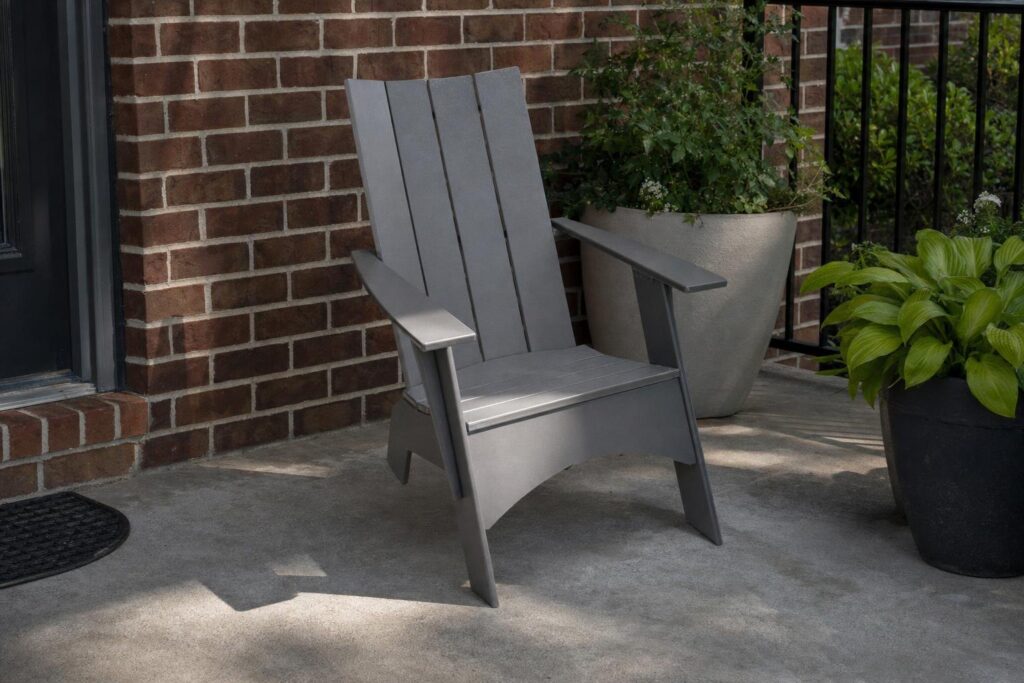
Patio furniture sits against your house all season, so it should look at home there. But standing in front of a color chart or a product photo, most people have no idea whether a color will suit their brick, siding, or stucco. The good news is that a few simple ideas take the guesswork out, and you can test the choice cheaply before ordering. This guide walks through how to match patio furniture colors to your home’s exterior.
Start With the Wall Behind the Furniture
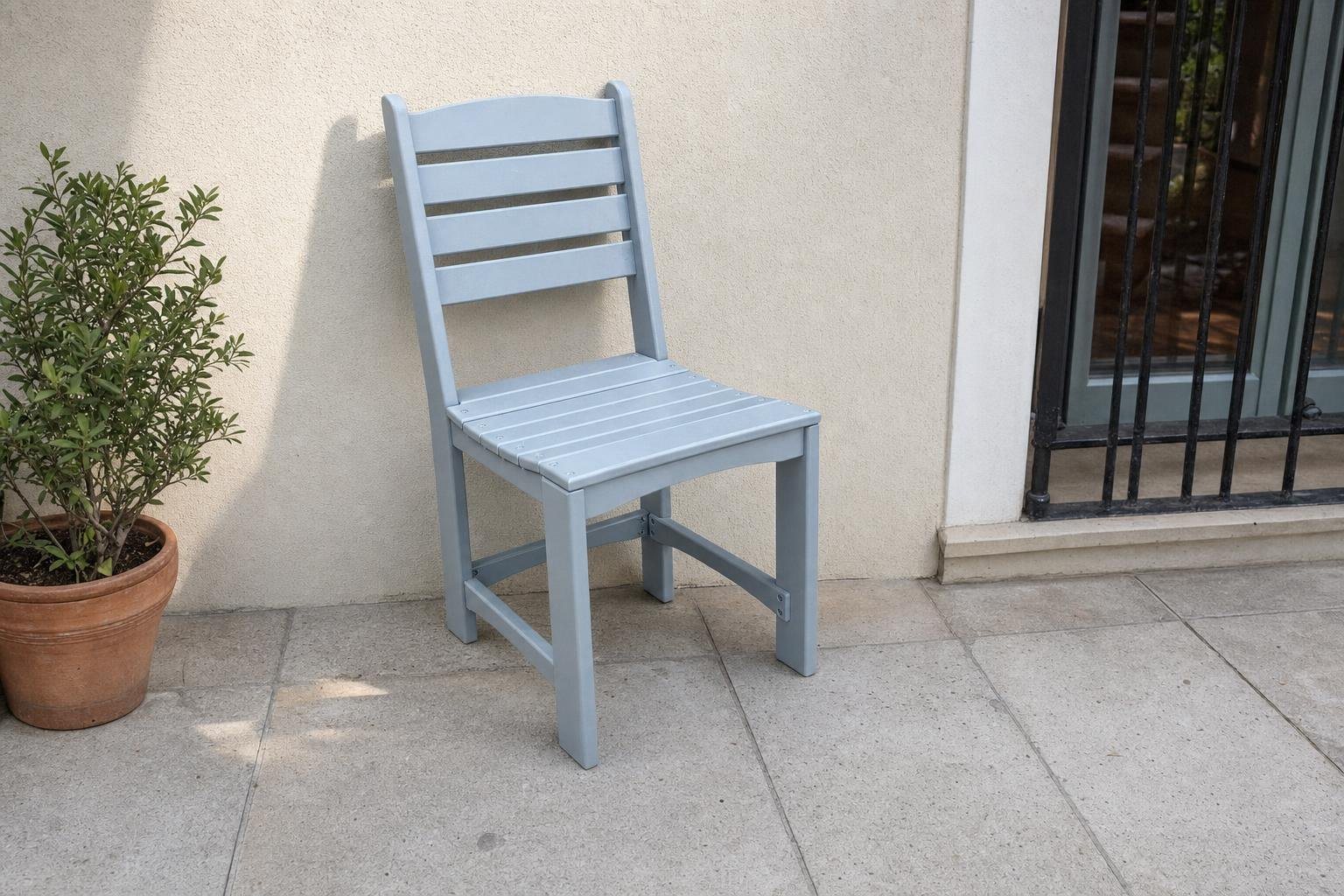
The wall directly behind your seating has more influence than the rest of the house. Look at it in the light where you will use the furniture. Is it warm or cool? Light or dark? Textured or smooth? Brick and natural stone tend to read as warm and textured. Painted siding and stucco read as flat and can be either warm or cool. Write down your wall’s main color in a few plain words, such as “warm red-brown brick” or “cool light gray siding”. That description is more useful than a paint code when you compare it to furniture photos.
Contrast or Blend?
You have two basic strategies. You can choose furniture that contrasts with the wall so it stands out, or one that blends so it recedes.
- Contrast: a dark chair against a light wall, or a light chair against dark brick. The furniture becomes a clear focal point.
- Blend: tones close to the wall or the surrounding materials. The furniture feels like part of the setting and the eye goes to the yard or the view instead.
Neither is better. If the patio is small and you want it to feel larger, blending often helps. If you want a lively corner, contrast does the job.
Warm and Cool Undertones
Colors come in warm and cool families. Reds, oranges, yellows, and tans lean warm. Blues, greens, and many grays lean cool. A useful principle from basic color wheel theory is that colors next to each other tend to feel harmonious, while colors opposite each other create more contrast. Warm brick pairs comfortably with warm neutrals and stands out sharply against cool tones. A cool gray house feels natural with cool colors and gets a lift from a warmer accent.
When in doubt, neutral tones are the safest choice, because they pair with almost every wall. If you want a bit more personality, one accent piece in a bolder color can carry the whole setup.
Consider the Ground and the Surroundings
The wall is only part of the picture. Look at the floor of your patio, the color of the railings or fence, and the plants nearby. A gray concrete slab, a wood deck, and a paver patio each change the balance. If your floor is dark, a very dark chair may disappear into it. If your floor is light, a very light chair may look washed out. It helps to picture the whole scene, not just the wall.
Check the Real Colors on the Product Page
The colors offered for each piece are shown on its product page, so start there rather than assuming. Photos on a screen can shift color, so look at each option on more than one device if you can, and read the color names carefully. If you are furnishing more than one piece, our guides on mixing outdoor furniture colors and matching patio furniture colors across orders cover how to keep a set looking consistent.
Test Before You Buy
You can test a color at home for almost nothing. Print or display the product photo, or hold a piece of similarly colored fabric or paper against your wall, and look at it in morning, midday, and late afternoon light. Colors change more than people expect through the day. If the color looks right at all three times, it is likely a good choice. If it only looks right at one time, think again.
Think About Sun and Shade
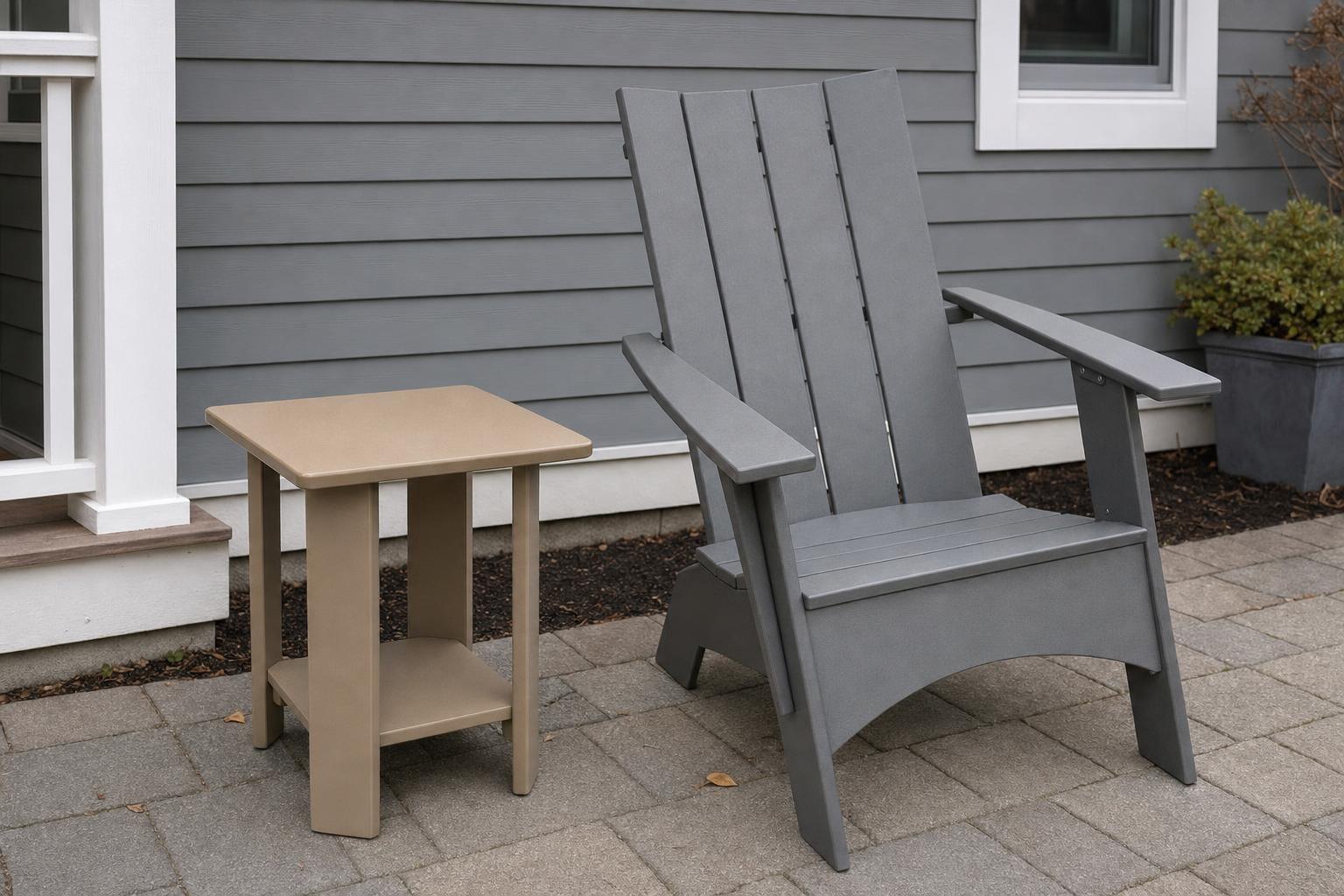
Light and shade change how a color looks. In full sun, colors look brighter and lighter. In shade, they look darker and cooler. If your seating sits under a covered porch or in the shade of a tree, a color that looks bright in the product photo may feel deeper in place. Consider the spot’s typical light when you choose. Each piece carries a 5-year warranty against fading, and you can read the terms on the returns and warranty page.
Practical Buying Notes
Every piece is made in the USA from Marine Grade Polymer and ships free to the contiguous U.S., knock-down in a box. Each piece is designed for simple assembly in about 20 minutes with the included 3/16-inch stainless steel hardware. Orders generally ship within 3 business days, and carrier transit is estimated at 2 to 7 business days, so plan on roughly 5 to 10 business days. Because returns require the item to be new, unused, unassembled, and in its original packaging with proof of purchase within 30 days of receipt, it is smart to judge the color in your own light before you assemble anything. Refunds are issued to the original payment minus the original shipping, and the customer pays return packaging and freight unless the return is due to a seller error.
A Quick Decision Guide
- Warm brick or stone: warm neutrals blend, while a dark or cool color adds contrast.
- Light stucco or pale siding: mid or dark tones stand out, and lighter tones blend.
- Gray siding: cool tones blend, and warmer tones add contrast.
- Wood or natural cladding: neutral tones let the material do the talking.
Keep a Simple Palette
A good rule for outdoor spaces is to limit the palette. Two or three colors, including the house, the floor, and the furniture, often look calm and intentional. Once you add a fourth or a fifth, the space starts to feel busy. If your house already has a strong color, let the furniture play a supporting role. If your house is neutral, the furniture is a great place to add a little personality. It also helps to keep the same finish and style across the pieces so they read as a set.
Plants and Accessories Change the Picture
Remember that plants, pots, and accessories will add color too. Green foliage works with almost every furniture color, and a few potted plants can soften a strong contrast. If you plan to add cushions, towels, or other soft accessories, choose them after the furniture, and keep them in the same family so the patio does not feel scattered. The furniture is the long-term piece, and everything else can change with the season.
Trust Your Own Eye
Design rules are helpful, but the best test is whether you like looking at the result. Stand at the door you use most often and look at where the furniture will sit. Imagine the color there on a sunny day and on a gray one. If it still makes you glad to walk outside, it is the right color, whatever a rule says. If you are torn between two options, choose the one you would rather see every morning.
Frequently Asked Questions
Should patio furniture match the house?
It does not have to match, but it should feel related. Either contrast clearly or blend gently, rather than landing somewhere in between.
What is the safest color choice?
Neutral tones pair with the widest range of walls, floors, and plants.
Can I mix colors on one patio?
Yes. A neutral base with one accent piece is a common approach, and our mixing guide explains how to keep it from looking random.
Where can I see the available colors?
On each product page in the shop.
Ready to see the options? Visit our shop to compare colors on each piece, or contact us through the contact page if you would like a second opinion.

