If you have ever slid onto a stool and felt like your knees were tucked under your chin, or perched so high your feet dangled in space, you already know that stool height is not a small detail. This outdoor stool height guide walks you through the exact measurements that separate a comfortable seat from a daily annoyance. You will learn how to measure your counter or bar, match the correct seat height, space stools properly, and avoid the single mistake most shoppers make when they order online. By the end, picking the right stool for your patio will take about five minutes.
Start With The Surface, Not The Stool
Before you look at a single product listing, grab a tape measure and measure the vertical distance from your finished patio floor to the top of the counter, bar, or serving ledge where the stool will live. That single number decides everything. Outdoor surfaces fall into three general categories, and each one pairs with a specific seat height.
Standard dining height surfaces run 28 to 30 inches from the floor to the tabletop. These pair with chairs, not stools, so if your table falls in this range you actually want an outdoor dining chair rather than any stool at all. Counter height surfaces run 34 to 36 inches, which is the same as most indoor kitchen counters. These are the most common heights for outdoor kitchens, prep islands, and casual serving bars. Bar height surfaces run 40 to 42 inches, typical of a raised outdoor bar top or a poolside cocktail ledge.
Measure at the actual seating spot, not a random corner. Patios often slope slightly for drainage, and a half-inch of slope translates into a stool that feels crooked. If your counter has a lip, an overhang, or a thick stone edge, measure to the top surface where a drink or plate would actually sit. Write the number down before you shop.
The Seat-To-Counter Math That Actually Works
Here is the rule that professional designers use: leave 10 to 12 inches of clearance between the top of the stool seat and the underside of the counter. That gap is what allows your thighs to slide underneath without banging, and it lets you pull the stool in close enough to eat without leaning forward.
Run the math backward from your surface measurement:
- Counter height surface (36 inches): subtract 12, and you want a seat height around 24 to 26 inches. This is called a counter stool.
- Bar height surface (42 inches): subtract 12, and you want a seat height around 30 inches. This is called a bar stool.
- Extra-tall pub surface (44 to 46 inches): you want a spectator or pub stool with a 33 to 34 inch seat, but these are uncommon outdoors.
The biggest mistake shoppers make is assuming that “bar stool” is a generic term. It is not. A 30-inch seat under a 36-inch counter leaves only 6 inches of thigh room, which is miserable. A 24-inch seat under a 42-inch bar leaves an 18-inch gap that turns eating into a stretch. Match the seat height to the surface height, not to what the product happens to be called.
If you fall between sizes, size down rather than up. A slightly lower seat feels relaxed. A too-tall seat forces your shoulders up and your elbows out, and you feel it after twenty minutes.
Spacing, Elbow Room, And How Many Stools Fit
Once the height is right, you still need horizontal room. Plan on 26 to 30 inches of counter length per stool, measured center-to-center. That figure accounts for shoulder width plus enough elbow space that two people can lift forks or drinks without knocking into each other. If you crowd stools closer than 24 inches apart, you will find that only every other seat gets used.
For a straight bar, measure the usable countertop length, subtract about 6 inches on each end for wall clearance or corner blockage, then divide by 28. That gives you a realistic stool count. A 10-foot bar (120 inches) minus 12 inches of end clearance leaves 108 inches, which comfortably seats three or, at a squeeze, four.
Behind the stools you want 30 to 36 inches of walking clearance so someone can pass without asking a seated guest to scoot. If the stool has a backrest, remember that pulling it out to sit down needs another 12 to 18 inches of travel. Armless stools save space here, which is one reason they dominate outdoor kitchens and pool bars where traffic flow matters.
If your stools face a pool, a firepit, or a view rather than a counter, spacing can loosen slightly to 32 inches on center so guests can turn their bodies to talk without bumping knees.
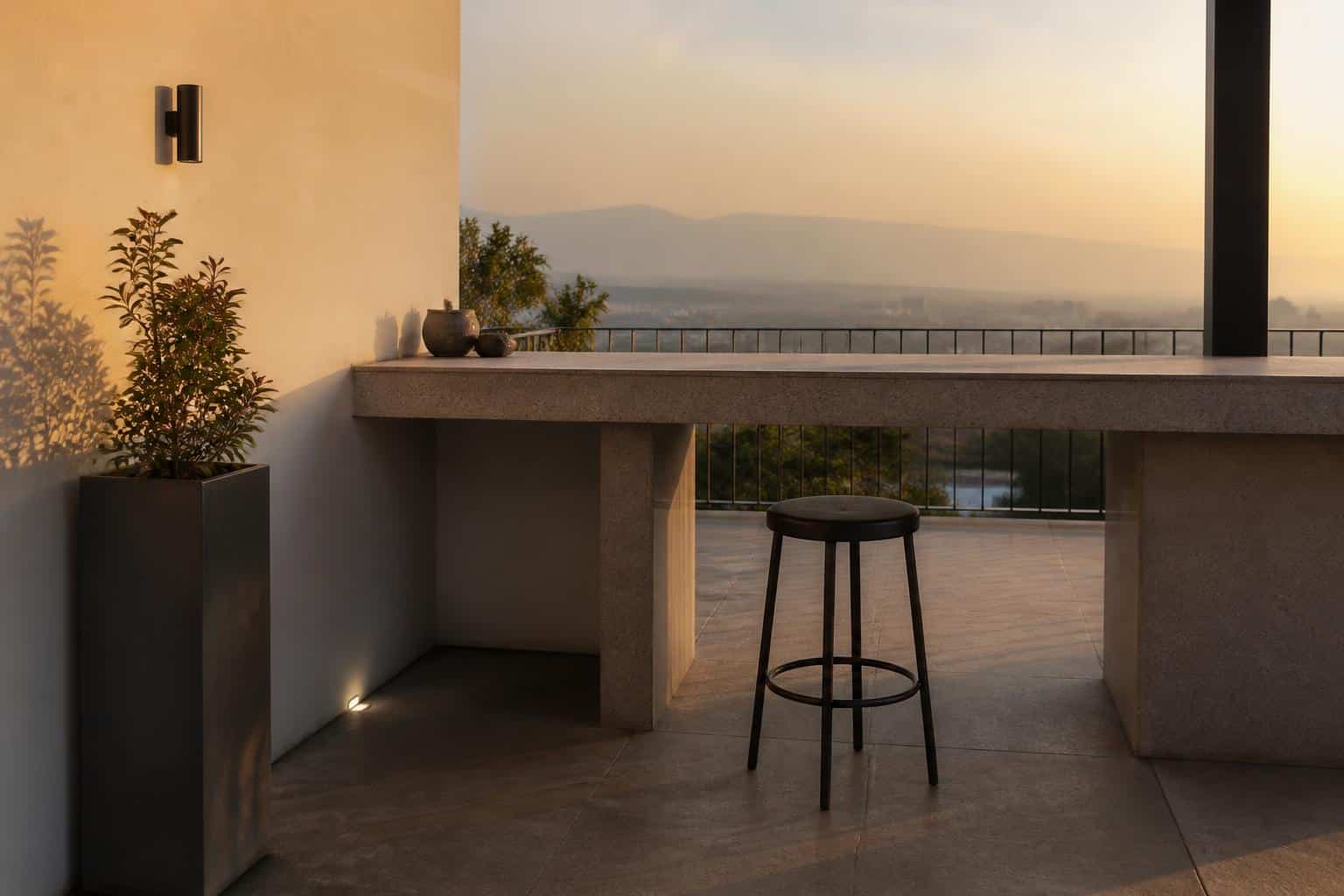
Footrests, Seat Depth, And The Details That Decide Comfort
Height gets you into the right ballpark, but three smaller measurements decide whether guests actually stay seated.
Footrest Position
Any stool taller than about 24 inches needs a footrest, because at that height your feet no longer reach the ground. The footrest should sit roughly 12 inches below the seat. Too low and your knees drop uncomfortably; too high and your thighs lift off the seat. When you shop online, check the product specs for the footrest measurement, not just the overall seat height.
Seat Depth
Look for a seat depth of 15 to 18 inches. Deeper seats feel plush for lounging but push shorter guests forward so their feet dangle. Shallower seats work better for eating and conversation, which is what most outdoor bars are actually used for.
Seat Contour And Drainage
Outdoor stools sit in the rain. A flat seat pools water; a contoured seat with drainage channels or small holes sheds it in minutes. If you live somewhere with sudden storms or heavy morning dew, drainage is not optional. It is the difference between wiping the seat before every use and just sitting down.
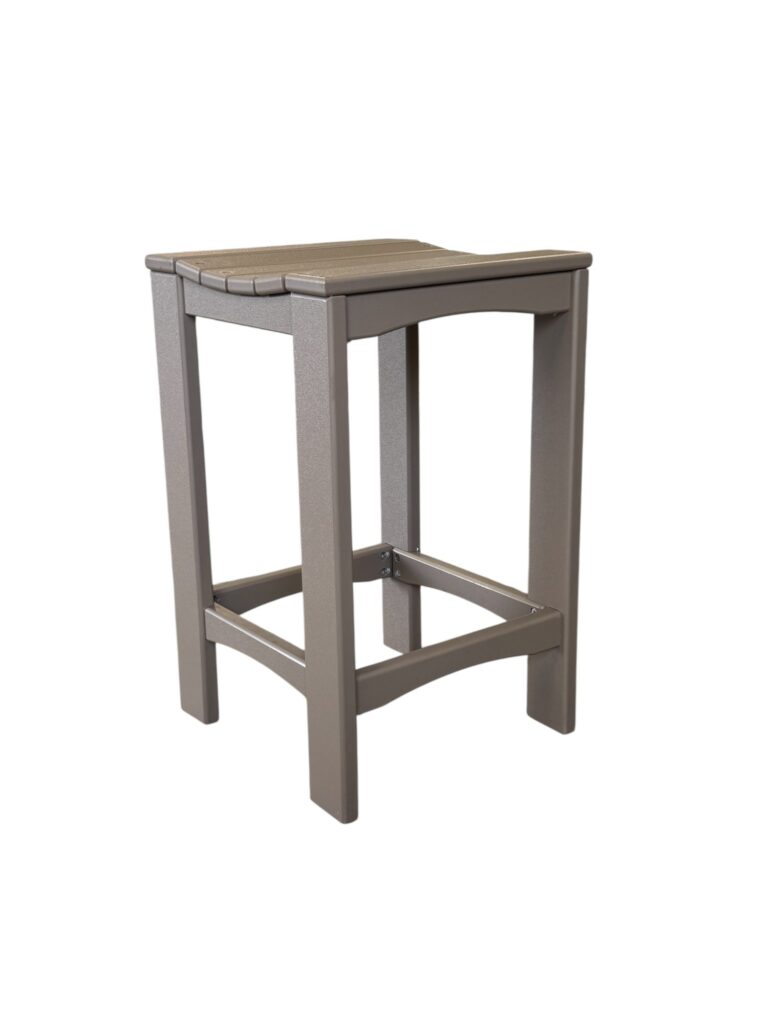
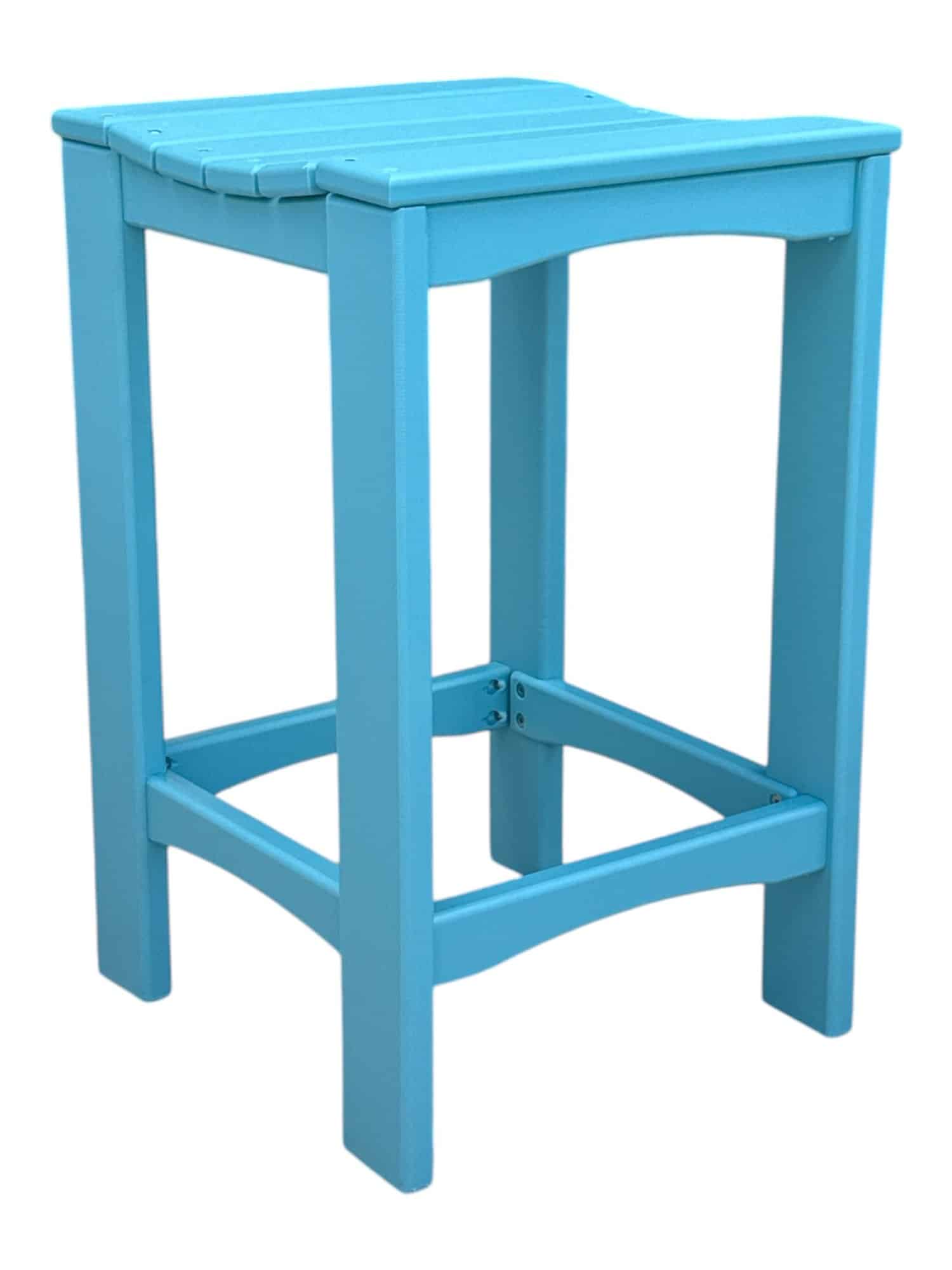
Armrests on stools are polarizing. They add comfort for long lingering meals but block the stool from tucking fully under a counter, and they eat into your per-stool spacing budget. For most outdoor bars, armless is the more flexible choice. If you want a dedicated stool built for outdoor counter and bar setups, the Counter Height Stool is worth a look because it hits the 24 to 26 inch sweet spot most home counters need.
Weather, Material, And Why Plastic Wins Outdoors
Height only matters if the stool survives outside long enough to use. Wood stools crack and gray, powder-coated metal chips and rusts at the welds, and woven wicker unravels after a few seasons of sun. Poly and HDPE stools have taken over the outdoor category because they handle UV, moisture, and temperature swings without changing shape.
When you compare outdoor stools, check the stated material, product weight, hardware, seat dimensions, and intended use. Product weight does not establish wind resistance or a load capacity. Our Counter Height Stool uses Marine Grade Polymer with 3/16-inch stainless steel hardware, weighs 21 lb, and has a 25-inch seat height. We do not publish a load-capacity rating.
Color choice affects heat more than shoppers expect. On a sunny 90-degree day, a black seat surface can reach 140 degrees or higher, while a white or light-tan seat stays 20 to 30 degrees cooler. If your stools live in full afternoon sun, lean toward lighter colors or plan on cushions. For readers dealing with punishing summers, the guide on choosing patio furniture for extreme heat covers material behavior in detail.
Recycled plastic outdoor furniture also fits neatly into broader waste-reduction habits. The EPA publishes helpful background on plastic recycling streams and what happens to the material after collection at epa.gov/recycle if you want to understand how post-consumer plastic ends up in durable goods like patio furniture.
Putting The Numbers Together Before You Buy
Before you click order, run through this quick checklist so nothing surprises you on delivery day:
- Measure the surface height from finished floor to countertop. Write it down.
- Subtract 10 to 12 inches to find your target seat height.
- Measure the usable counter length and divide by 28 to find how many stools fit.
- Check behind-stool clearance for foot traffic, aiming for 30 to 36 inches.
- Confirm footrest placement in the product specs, roughly 12 inches below the seat.
- Pick a color based on how much direct sun the seats will get.
Two more practical notes. First, order all your stools at the same time in the same color. Poly colors are consistent from batch to batch, but ordering a matching stool a year later still runs a small risk of subtle fade differences on the older pieces. Second, if you are furnishing a bar that will also see meal service, think about pairing the stools with a small end table nearby so guests have a landing spot for drinks that will not fit on a crowded counter.
Get the height right and everything else follows. Get it wrong and no cushion, no upgrade, and no rearrangement will fix it.
Frequently Asked Questions
Can I use a bar stool at a counter height island?
Not comfortably. A 30-inch bar stool under a 36-inch counter leaves only about 6 inches of thigh clearance, which forces most adults to sit sideways or slouch. You want a counter stool with a seat around 24 to 26 inches for a standard 36-inch island. If you already own bar stools and cannot swap them, the only real fix is raising the counter, which is rarely practical.
How do I measure if my patio floor slopes?
Take the measurement at the exact spot the stool legs will rest, not at the counter edge. Patios slope roughly a quarter inch per foot for drainage, so a stool sitting three feet out from the counter may be almost an inch lower than the base of the counter wall. Measuring at the actual seating position gives you the real floor-to-counter distance the stool has to bridge.
Do outdoor stools need cushions to be comfortable?
Not necessarily. A well-contoured poly seat with proper depth and a correctly placed footrest is comfortable for meals and conversation without cushions. Cushions become useful for long lounging sessions, cooler climates where the seat surface feels cold in the morning, or hot climates where you want a barrier between skin and sun-heated plastic. If you add cushions, choose quick-dry outdoor foam and solution-dyed acrylic covers.
What if my counter is an unusual height?
Custom-built outdoor bars sometimes land between standard heights, especially when they cap a stone or block wall. Use the 10 to 12 inch clearance rule from whatever your actual measurement is. A 39-inch counter, for example, wants a seat around 27 to 29 inches, which falls between stock counter and bar stool sizes. In that case, size down to the counter stool for better thigh room rather than up.
Once your measurements are locked in, browsing gets fast. Plastic Furniture To Go builds American-made outdoor stools in the sizes that fit real home counters and bars, ships free anywhere in the country, and skips the retail markup entirely. Take a look at the Counter Height Stool when you are ready, and reach out through the contact page if you want a second opinion on measurements before you order.