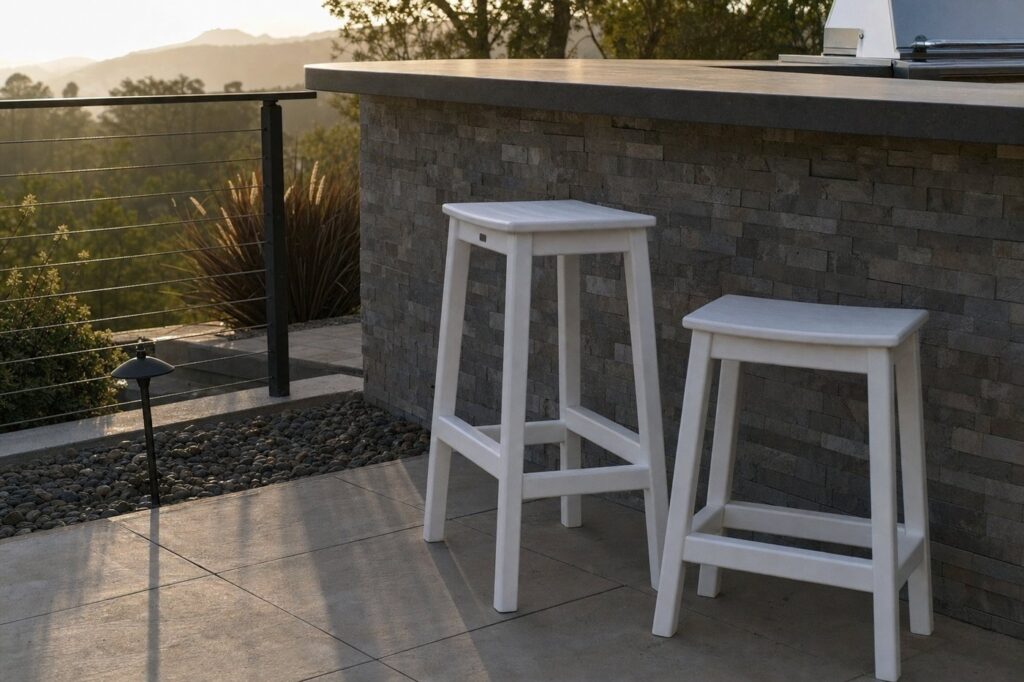
Getting the seat height right is an important part of choosing outdoor stools. Before ordering, measure your counter, its underside and apron, and the space needed for legs and feet. This guide explains how to compare counter-height and bar-height listings using the actual dimensions rather than relying only on the product label.
The Core Difference: About 4 to 6 Inches
“Counter height” and “bar height” are industry terms tied to standard surface heights, not exact universal numbers. Counter height typically pairs with surfaces around 34 to 36 inches tall — the height of a standard kitchen counter or a lower outdoor kitchen island. Bar height pairs with taller surfaces, generally 40 to 42 inches, matching a traditional home bar or a tall outdoor pub table.
The stool itself is sized to leave roughly 10 to 12 inches of clearance between the seat and the counter or bar top above it, so your knees have room and your arms rest comfortably when you lean on the surface. Get that clearance wrong in either direction and the stool feels awkward no matter how nice it looks.
How to Measure Your Counter or Bar Before Ordering
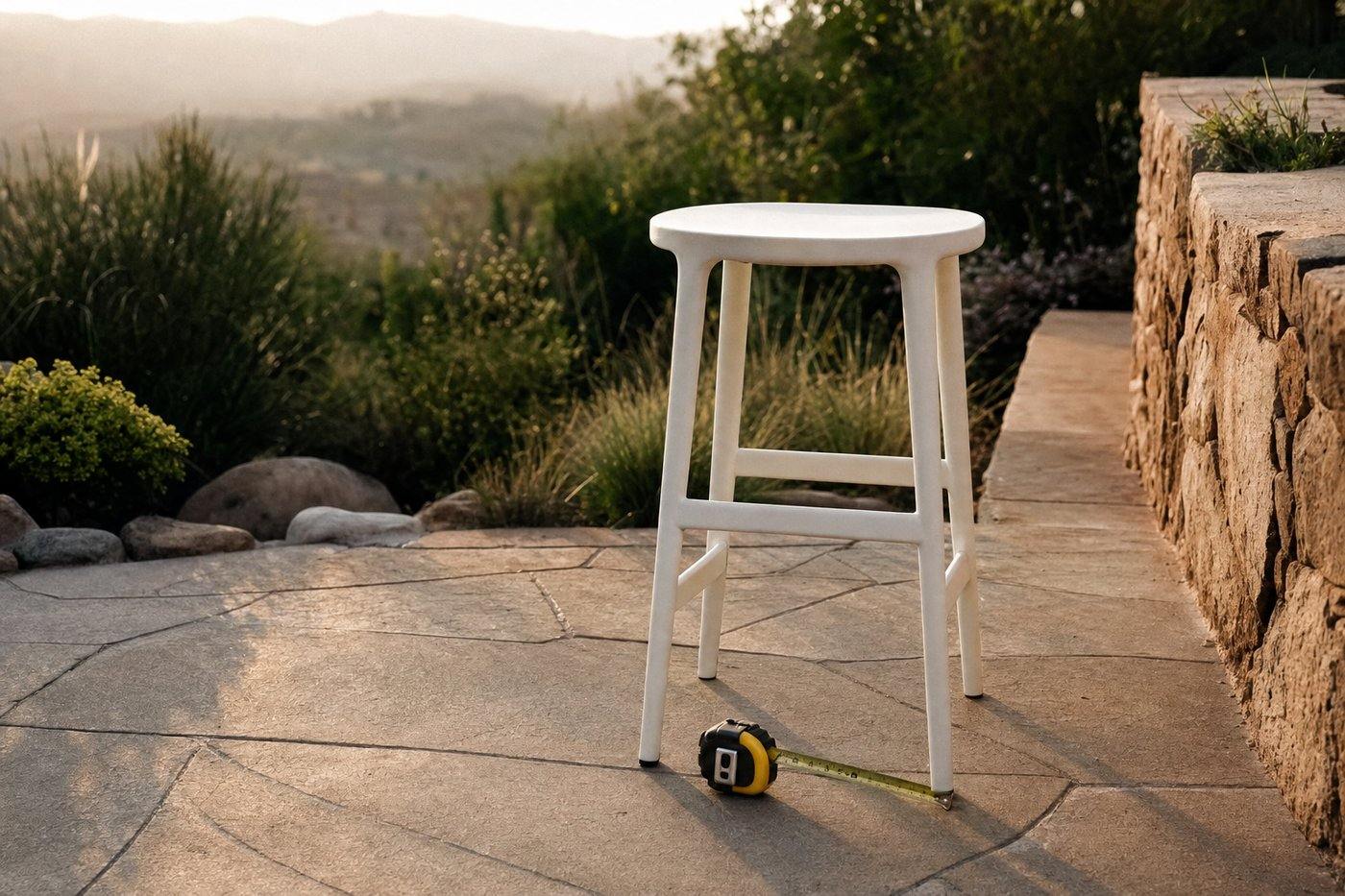
Measure straight up from the floor to the top surface of your counter, island, or table — not to the underside of an overhang, and not from a raised planter box or step nearby. Write that number down, then subtract roughly 10 to 12 inches to find the stool seat height you actually need.
Keep a separate measurement for the lowest obstruction underneath. An apron, drawer, bracket, or support rail can reduce usable legroom even when the top is at a familiar counter height. Measure each seating position, especially where a counter changes level or meets a corner. Take a side photograph showing the underside and bring that together with your measurements when asking about fit. Also mark the stool footprint on the floor and check that the person seated at the end can get in and out without moving the whole row.
If your outdoor surface falls right in between the two standard categories, lean toward the shorter option. A slightly low stool is still comfortable to sit in; a stool that’s too tall for the surface forces you to hunch or sit at an awkward angle every time you use it.
Our Counter Height Stool, By the Numbers
Our Counter Height Stool uses Marine Grade Polymer with 3/16-inch stainless steel hardware and weighs 21 lb. It has a 25-inch seat height and is American Made. The written policy sets out seven-year structural and five-year fading coverage.
Because it’s built for a standard counter-height surface, it’s a natural fit for the growing number of outdoor kitchen islands, tiki bars, and raised patio counters homeowners are adding to backyards and pool decks.
Why Weight Matters for Stools Specifically
Use the stool’s 21-lb product weight to plan pulling it out, cleaning around it, and moving it to storage. Weight alone does not establish stability or a wind rating. Use a suitable level surface and follow the intended-use instructions; a seating stool should not be treated as a step ladder.
Matching Stools to an Existing Set
If you already own an outdoor table or island and you’re adding stools later, measure the existing surface rather than guessing based on what “looks right” in photos. Two counters that look similar in height from across a room can differ by several inches once you actually measure them, and that difference is exactly what causes a mismatched, uncomfortable seating setup.
If you’re building an outdoor kitchen or bar area from scratch, it’s easier to work in the other direction: pick the stool height you want first, then build or buy your counter or island to the matching standard height.
Mixing Stool Heights on Purpose

Some outdoor kitchens genuinely benefit from both heights — counter-height stools at a food-prep or seating counter, and a couple of bar-height stools at a taller adjacent pub table for a more social, standing-height gathering spot. As long as each stool is matched to its own surface correctly, mixing heights across different zones of the same patio works well and adds some visual variety to the space.
Care and Maintenance
Follow the product’s care and seasonal-storage instructions, including guidance for the hardware. A material name does not mean that covers, inspection, cleaning, or storm preparation are unnecessary. Check the seat and connections for damage and resolve instability before use.
Footrests, Backs, and Other Small Details Worth Checking
Beyond height, a few smaller details separate a comfortable outdoor stool from an awkward one. A footrest bar positioned at a natural resting height keeps legs from dangling uncomfortably, especially at bar height where the floor is further away. Whether a stool has a back or is backless also changes how it’s typically used — backless stools tend to work better where people are moving in and out frequently, like a kitchen island, while a stool with some back support is more comfortable for longer sitting at a bar-height table where people linger over a meal.
Arm width and overall footprint matter too, particularly if you’re placing several stools close together along a counter. Measure the total counter length and divide it by the number of stools you want to fit, leaving at least a few inches of shoulder room between each one so seating doesn’t feel cramped once everyone sits down at the same time.
Buying for an Outdoor Kitchen Build
If you’re planning an outdoor kitchen from the ground up rather than retrofitting stools to an existing counter, it’s worth deciding on stool height before your contractor finalizes counter height. It’s much easier to build a counter to match a stool you’ve already chosen than to hunt for a stool that happens to match a counter height decided months earlier. Bring the stool’s published seat height to that conversation the same way you’d bring an appliance spec sheet. Counter- and bar-height seating can improve sightlines, but the taller seat is not equally usable for every guest. The U.S. Access Board’s outdoor guide notes that accessible dining surfaces are generally 28 to 34 inches above the ground and need usable knee and toe clearance. Those federal standards apply to covered facilities, not every private residential patio, but the measurements are a practical reminder to include at least one lower, easy-approach dining surface when children, older adults, or people using mobility devices may share the space. After choosing the table height, measure the underside rather than only the top, leave comfortable thigh clearance, confirm the stool has a usable footrest, and test the route behind occupied seats. A height that looks right in a product photo can still feel cramped once people and traffic are added.
Frequently Asked Questions
What height counter does the Counter Height Stool fit?
It’s designed for standard counter-height surfaces, typically 34 to 36 inches tall, leaving comfortable knee clearance underneath.
How much does it weigh?
21 lbs.
What’s it made from?
Marine Grade Polymer with 3/16″ stainless steel hardware, American made.
What if I order the wrong height for my counter?
Reach out through our contact page before ordering if you’re unsure, or review our returns and warranty page for return terms on new, unassembled items within 30 days of receipt.
Where can I see current stool pricing?
Visit our shop for current availability and colors.