
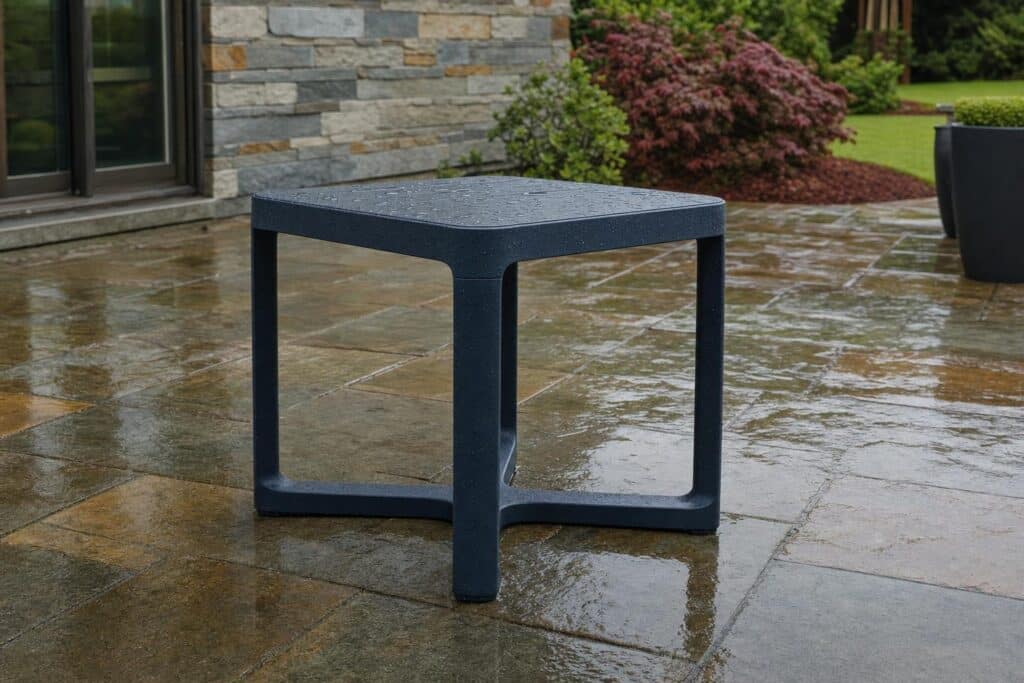
Shopping for an outdoor side table, you’ve almost certainly seen listings that promise a “waterproof” surface. Understanding what waterproof means for outdoor side tables is the decision this article will help you make clearly and confidently. The term is used loosely across the furniture industry—sometimes it describes a coating, sometimes a material property, and occasionally it’s just marketing shorthand for basic rain resistance. Before you buy, you deserve a plain explanation of what exposure resistance actually looks like in practice, which construction details matter most, and why the label alone should never be the last thing you read.
Why “Waterproof” Is Not One Standard
Unlike “flameproof” or “food-safe,” the word waterproof carries no single regulated definition in outdoor furniture retail. A manufacturer can print it on a box because the tabletop sheds pooled water, because a coating causes surface beading, or simply because the product isn’t made of untreated wood. None of those claims are technically false, but none of them tell you what happens after two summers of UV exposure, freeze-thaw cycles, or sustained humidity.
A more honest term you’ll encounter—and one worth looking for—is weather-resistant. It acknowledges that outdoor furniture faces a spectrum of conditions: rain, sun, salt air, pollen, and temperature swings. A product built to handle that spectrum over years is more useful to you than one that passes a single surface-bead test. The practical question isn’t whether water rolls off on day one; it’s how the material, hardware, and seams behave through repeated exposure.
Material Is the Foundation of Weather Resistance
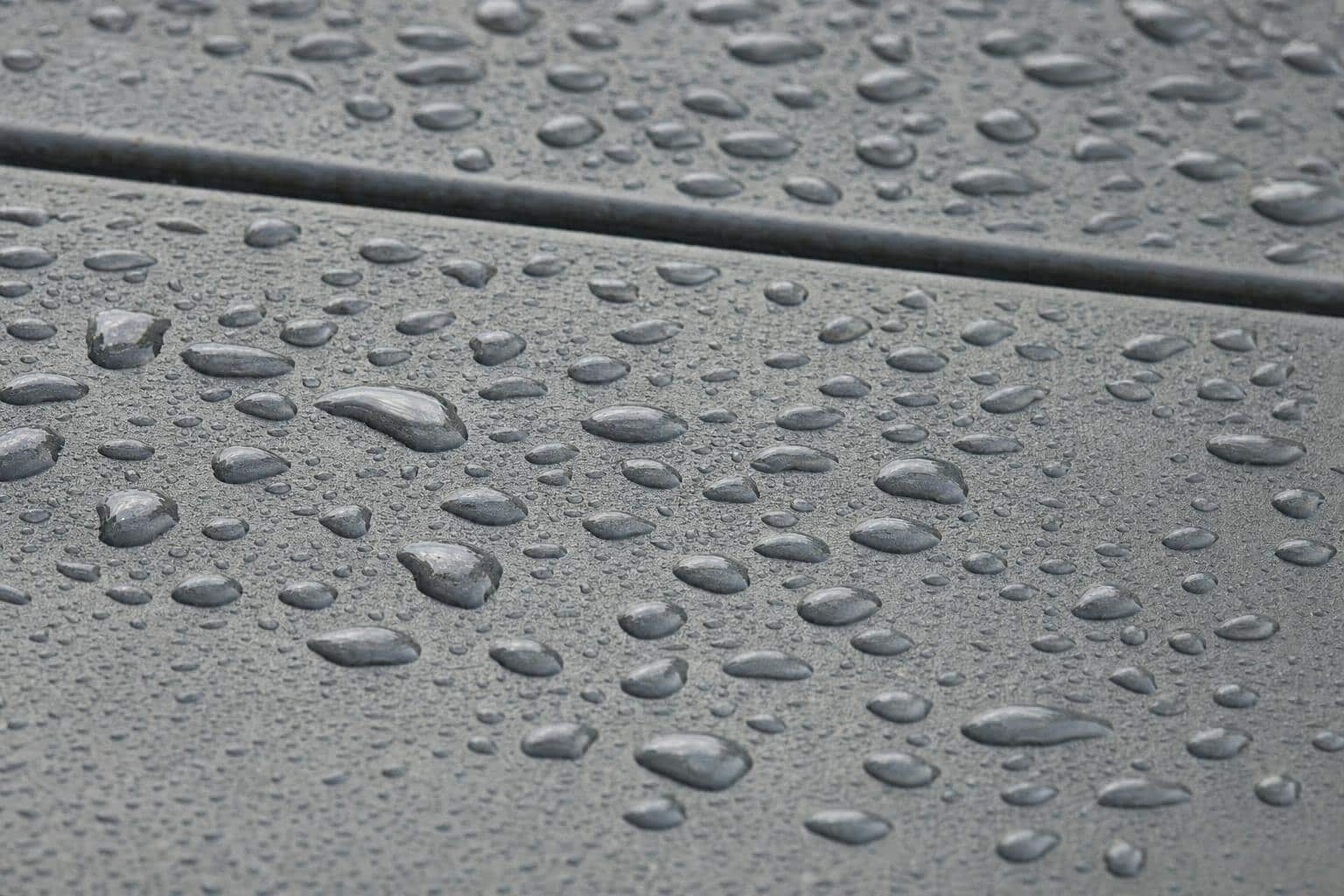
The most durable outdoor side tables on the market today are made from polymer-based materials precisely because they don’t have the structural vulnerabilities that water exploits in wood, iron, or lower-grade plastics. Wood absorbs moisture, swells, warps, and eventually rots. Powder-coated steel resists rust only as long as the coating is intact—a chip or scratch admits water and the damage spreads invisibly. Cast aluminum resists corrosion well but can pit in salt-air environments over time.
Polymer furniture sidesteps most of those failure modes. Plastic Furniture To Go identifies these outdoor tables as made from Marine Grade Polymer. The material has lower moisture absorption than many woods, and the polymer itself has no exposed metal surface that can rust. The “marine grade” description signals that the material is intended for demanding outdoor exposure, but buyers should still evaluate the complete table, hardware, warranty, and care guidance. The Hampton Round End Table and the Hampton Square End Table are both made from this material, which makes them a reasonable benchmark when you’re comparing how different tables handle outdoor exposure.
Even so, no responsible manufacturer should describe any outdoor furniture as completely impervious to every condition forever. The material resists degradation; it doesn’t eliminate it entirely.
Hardware: The Part Buyers Overlook
A table made from excellent material can still fail at the joints if the hardware corrodes. This is the detail most shoppers skip over in a product listing, and it’s where cheaper outdoor furniture quietly falls apart—sometimes literally.
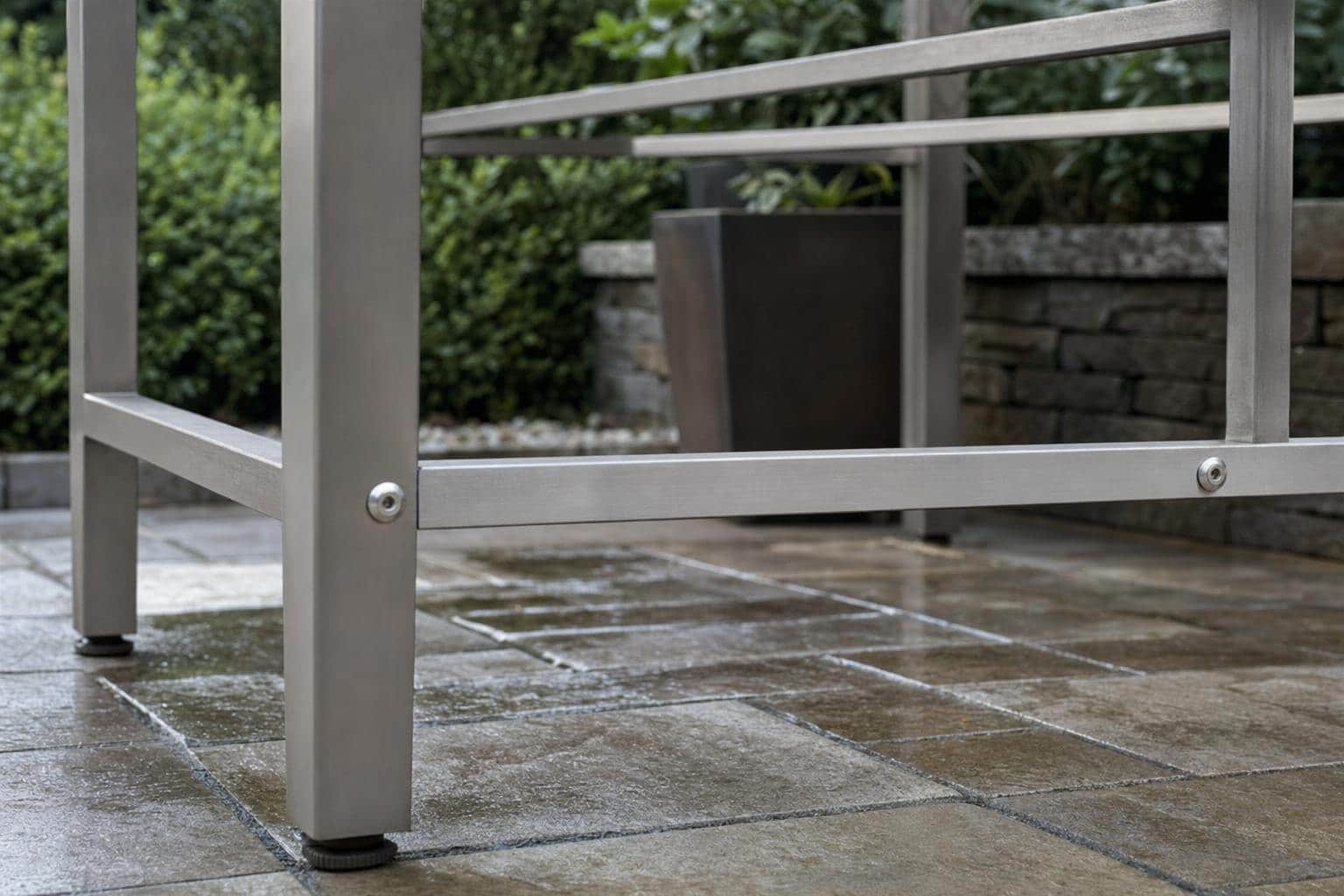
Standard zinc-plated or carbon-steel screws will rust when exposed to rain and humidity, leaving orange stains on your furniture and eventually compromising the joint’s integrity. What you want to see specified is stainless steel hardware, ideally noted by grade. For reference, the end tables at Plastic Furniture To Go ship with 3/16-inch stainless steel hardware included. That’s a concrete, verifiable spec—the kind worth looking for in any listing you’re evaluating.
When hardware details aren’t listed at all, that’s worth noting. You can contact most retailers and ask directly. If they can’t tell you the hardware material, assume it’s uncoated steel and factor in eventual replacement or early corrosion.
Seams, Joints, and Where Water Actually Sits
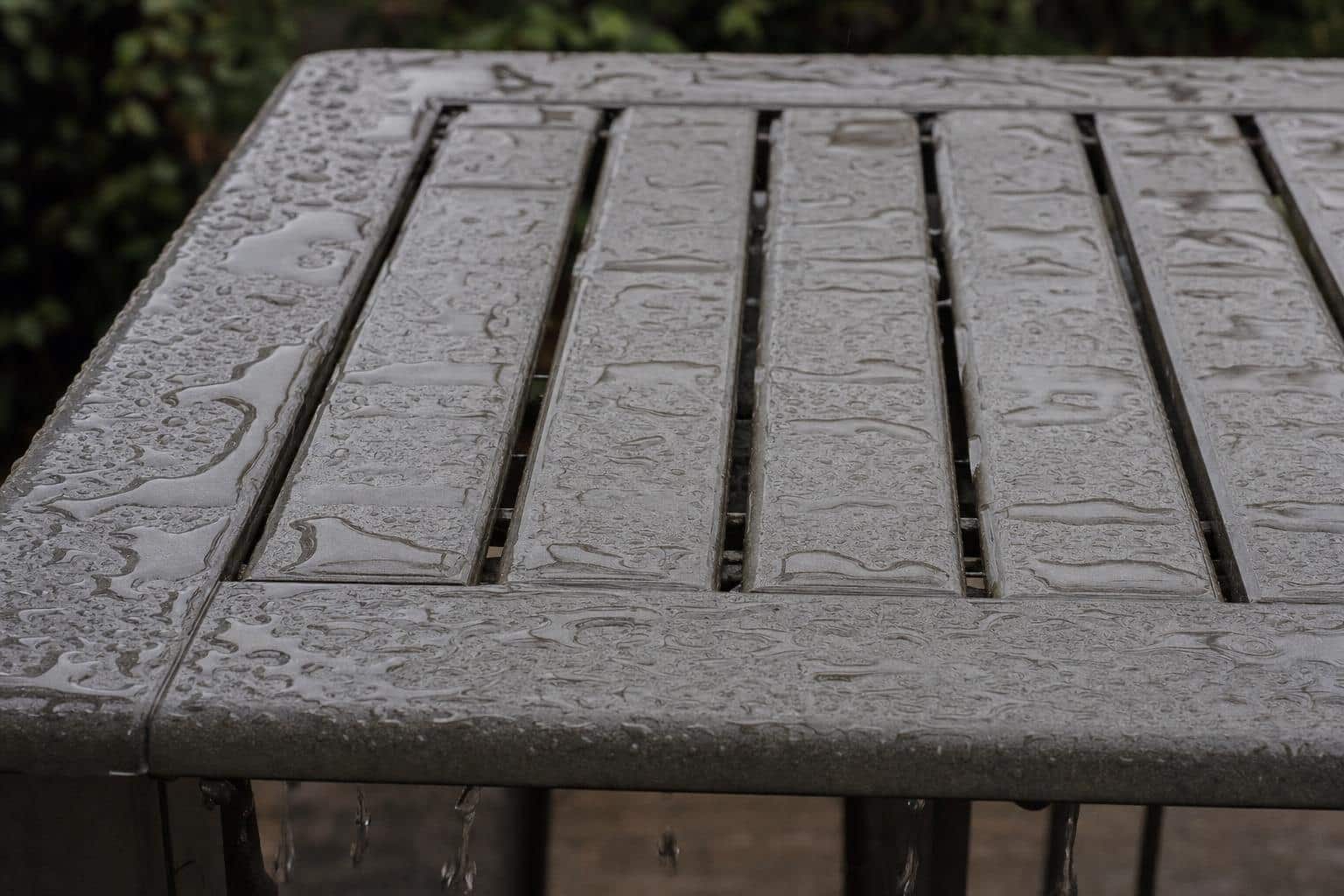
Even on a weather-resistant table, design determines where water collects. Flat, unslotted surfaces pool water in the center. Tight enclosed joints trap moisture between surfaces where it can’t evaporate. These aren’t catastrophic flaws in every material, but in wood-composite or MDF-core tables with laminate skins, trapped moisture is exactly how delamination begins.
Look at the surface design of any table you’re considering. Open-slat or slightly crowned tops allow water to shed naturally. Solid flat tops in a non-absorbent polymer can handle pooling better than wood-core alternatives, but drainage is still preferable to standing water over long periods. Check whether the leg-to-top connection is exposed metal or polymer-encased. A fully polymer joint avoids an exposed-metal corrosion point, while a partially exposed metal bracket may need closer inspection and care.
The EPA moisture and mold guide is written for indoor environments, but its core principle applies outdoors too: sustained damp conditions on any surface—especially organic debris like leaves sitting on your table—create the conditions mold and mildew need to establish. Rinse debris off regularly. This is basic upkeep, not evidence that your furniture is poorly made.
What Fading Actually Means for Outdoor Side Tables
Color stability is a separate question from water resistance, but buyers often conflate the two. UV radiation, not water, is the primary driver of color change in outdoor furniture. Polymer materials with pigment mixed throughout the material—rather than applied as a surface coat—hold color more consistently over time than painted or stained alternatives. If the surface of a painted table gets scratched, the underlying material is a different color; with a through-pigmented polymer, a scratch reveals the same color beneath.
No outdoor furniture material is guaranteed never to shift in appearance after years of direct sun. Warranties against fading are more useful than blanket claims. The end tables at Plastic Furniture To Go, for example, carry a 5-year warranty against fading and a 7-year structural warranty—those are real, time-bounded commitments you can hold a company to, which is more meaningful than an unqualified marketing claim.
Assembly, Shipping, and What Arrives at Your Door
Weather resistance isn’t only about the finished product. How a table ships and how it’s assembled can introduce vulnerabilities. Tables that arrive pre-assembled in large boxes often have hardware already torqued, surfaces that may have shifted during transit, and joints that weren’t inspected after shipping. Knock-down furniture that you assemble yourself at least lets you see every connection point before the table is in service.
The Hampton Round and Square End Tables ship flat-packed and are designed for assembly in roughly 20 minutes with included hardware. Inspect every component before assembly, then follow the current instructions and use the included 3/16-inch stainless steel hardware. If anything appears damaged or missing, pause before assembly and contact the seller.
Shipping damage is a practical concern with any online order. Orders from Plastic Furniture To Go generally ship within 3 business days, with carrier transit estimated at 2–7 business days, and the displayed delivery window is 5–10 business days. Free shipping to the contiguous U.S. is included, which matters when you’re comparing total cost across retailers.
Routine Care That Extends Any Table’s Life
Even a well-built, weather-resistant outdoor side table benefits from simple maintenance. Debris accumulates in seams and on surfaces, retaining moisture longer than bare material would. A periodic rinse with a garden hose removes most of it. For stubborn grime or mildew spots, mild soap and a soft brush are sufficient for polymer furniture—no stripping, sanding, or resealing required.
Storage matters too. If you live in a climate with hard freezes, storing tables in a covered space over winter extends their appearance and reduces the mechanical stress of repeated freeze-thaw expansion. Furniture covers are available from third parties, but no cover inclusion, compatibility, or warranty effect is asserted here. Check fit dimensions, ventilation, care instructions, and the published warranty before relying on a cover.

Frequently Asked Questions
Is Marine Grade Polymer actually waterproof?
Marine Grade Polymer is designed to be weather-resistant, with lower moisture absorption than many woods; the polymer itself also has no metal surface that can rust. The term “waterproof” is used loosely in furniture marketing, so “weather-resistant” is more precise and honest. The material is designed for sustained outdoor exposure, including rain and humidity, but no furniture maker should promise absolute imperviousness to every condition indefinitely. Use this guide to what waterproof means for outdoor side tables as a framework for comparing the complete product rather than the label alone.
Do the end tables need to be sealed or refinished over time?
Do not apply sealers, refinishing products, or strong cleaners based only on the material name. Follow the current care instructions for the complete table, and ask Plastic Furniture To Go before using any treatment that is not listed there.
What does the warranty cover, and for how long?
The Hampton Round End Table and Hampton Square End Table carry a 7-year warranty against structural defects in materials and workmanship, and a 5-year warranty against fading. These are written, time-bounded commitments. Read the full warranty terms before purchasing so you understand what documentation is required and what constitutes a covered defect versus normal wear.
Can I return a table if it doesn’t work for my space?
Returns are accepted within 30 days of receipt, provided the product is new, unused, unassembled, and in its original packaging with proof of purchase. The customer is responsible for return packaging and freight costs, except in cases of seller error. Refunds exclude the original shipping cost. Assemble carefully once you’re confident the table suits your space, since assembled products are not returnable.
If you have questions about dimensions, materials, or which end table suits your patio layout, contact Plastic Furniture To Go directly before placing your order. You can also browse the full specifications for the Hampton Square End Table to compare surface size and confirm the fit for your space.
Keep planning with these guides: Marine Grade Polymer vs. Wood, Weatherproof Outdoor Bar Stools: What to Check, and Heavy-Duty Plastic Patio Chair Specs.

