Small outdoor spaces can work hard in Austin when the layout is honest about measurements and realistic about how people move through the area. A narrow balcony, side yard, compact patio, or fenced courtyard does not need a lot of furniture to feel useful, but it does need the right scale and clear walking room.
This guide to Austin balcony and small-yard furniture layouts focuses on dimensions first, then on seating and table choices that make tight spaces easier to live with. The goal is simple: fit durable outdoor pieces into a compact footprint without blocking doors, crowding railings, or turning every chair movement into a shuffle.
Start with the true usable footprint
Before shopping, measure the part of the space you can actually use, not just the overall slab or deck. On a balcony, railing lines, door swings, trim, drain locations, and HVAC equipment can reduce the furniture zone more than expected. In a small yard, planter beds, gates, uneven edges, and stepping paths can do the same thing.
A practical approach is to sketch the shape and write down these dimensions:
- Wall-to-railing depth
- Overall width between corners or posts
- Door width and door swing arc
- Gate width if pieces must pass through a side entrance
- Any fixed objects such as outlets, hose bibs, condensers, or columns
Leave room for actual use, not just room where furniture can technically fit. A chair that clears the railing by an inch on paper may still make the space awkward once someone sits down or tries to carry a drink outside.
Keep a clean path from the door to the far edge
In compact outdoor areas, circulation matters more than adding one extra seat. The best layouts usually protect a simple path from the door to the open part of the balcony or yard. That route helps the space feel bigger, and it keeps daily use easy when carrying food, watering plants, or moving around with guests.
As you plan, think in terms of a clear route rather than a furniture count. If you want a general reference for how unobstructed routes are considered in accessible design, this accessible routes guide is a useful place to start. Even when full accessibility standards are not required for a private residence, the basic idea is still smart: wider, simpler paths feel better and function better.
On many balconies, the easiest solution is placing seating to one side and keeping the center or one long edge more open. In small yards, a path along the house often works better than a path through the middle of the furniture grouping.
Armless chairs earn their keep in tight layouts
When square footage is limited, armless seating can make a noticeable difference. Chairs without projecting arms slide in more cleanly at tables, tuck tighter against walls, and reduce the visual bulk that can make a balcony feel cramped.
The Armless Cafe Chair is especially useful in this kind of plan. At 27 lb, it has enough heft to feel substantial outdoors while still being easier to reposition than a larger lounge-style chair. Around a small bistro or side table, that simpler profile gives you more flexibility with entry angles and leg room.
Armless seating also helps when two chairs need to sit side by side on a shallow balcony. Instead of each chair demanding extra width at elbow level, the footprint stays cleaner. That can be the difference between a layout that looks good in a photo and one that actually works every day.
If your space is exposed to hard sun, review our guide to patio furniture for Texas heat for material and comfort considerations that matter in Central Texas conditions.
Use small tables that can shift roles
Compact spaces benefit from tables that do more than one job. A small end table can serve as a coffee table for two lounge chairs, a landing spot next to a single chair, or a shared surface between seats on opposite sides of a balcony.
That flexibility matters because the ideal setup changes throughout the week. Morning coffee, laptop time, plant care, and evening drinks do not all need the same arrangement. In a small yard, a pair of lightweight-feeling end tables often works better than one oversized central table because each piece can be moved where it is needed without redesigning the whole area.
The Hampton round and square end tables weigh 15 lb each, which makes them practical in tighter outdoor layouts. They are substantial enough for everyday use but easy to reposition when you need to open up the floor area. For many Austin balconies, two smaller tables beat one larger one because they let you keep pathways open while still giving each seat a place for a drink or book.
Match seating style to how the space will actually be used
Not every compact outdoor space should be furnished the same way. A deep chair can be relaxing, but it may not be the best answer for every footprint. The right choice depends on whether you want dining, casual sitting, or a mix of both.
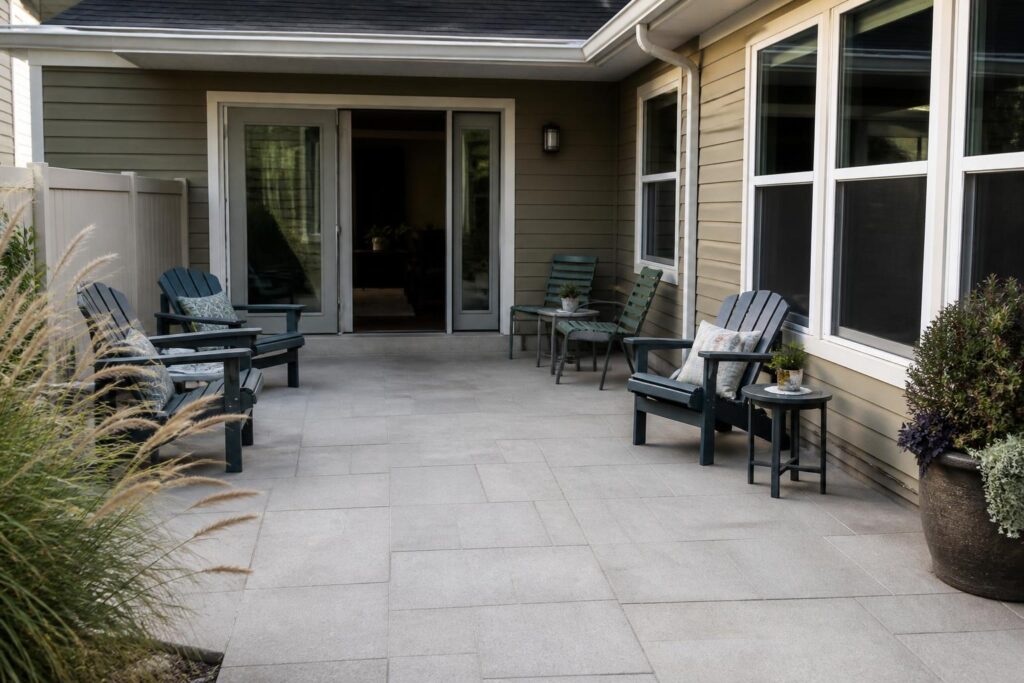
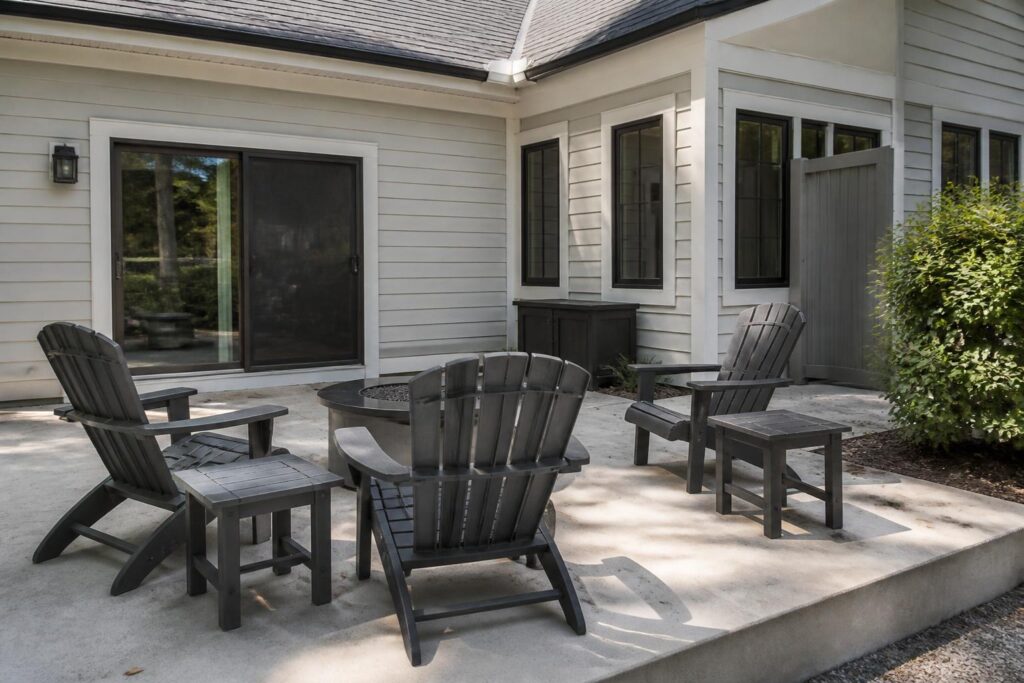
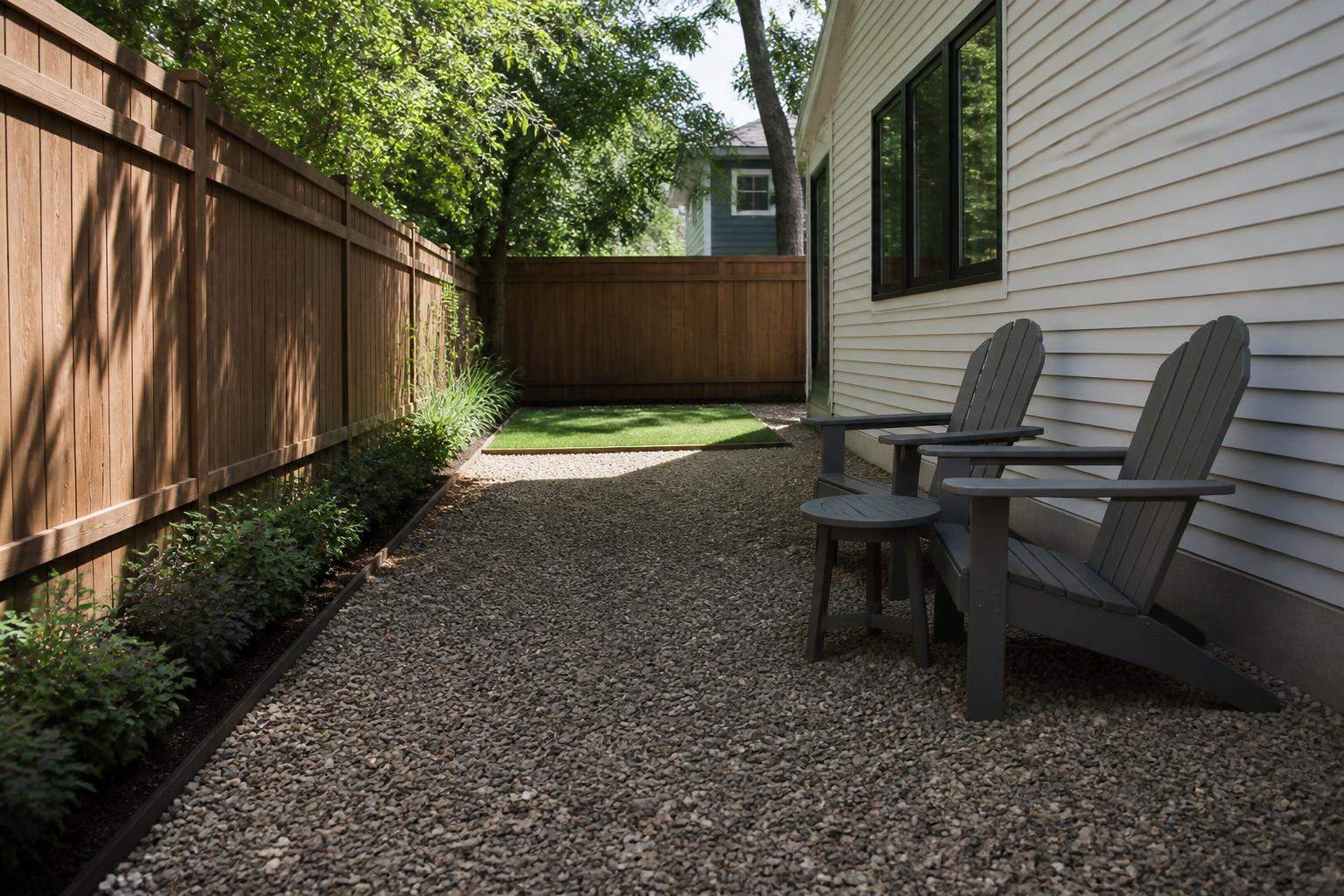
For example, the Hampton Adirondack Chair weighs 52 lb and creates a grounded, substantial seating area. In a small yard with a little breathing room, two of these chairs with a 15 lb end table can make a clean conversation layout. On a narrow balcony, though, that same arrangement may dominate the space and leave too little room to pass.
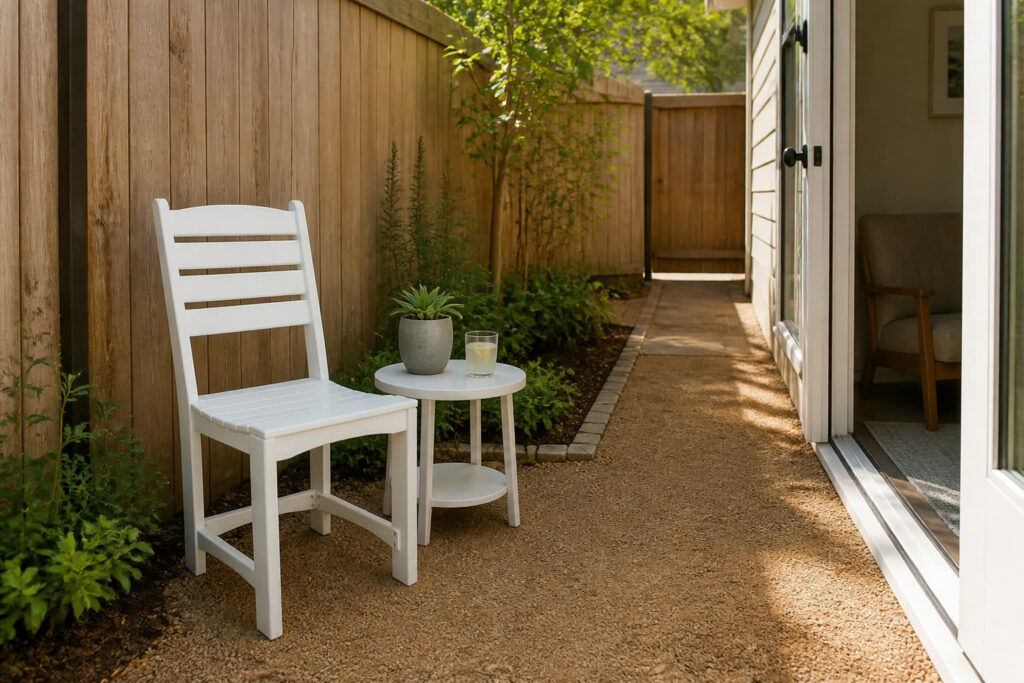
For slimmer footprints, cafe seating is often more practical. If the goal is occasional meals, coffee, reading, or a place to sit while enjoying the evening air, a pair of armless chairs with one or two small tables usually keeps the area more open. If your balcony has a railing-height ledge or an outdoor counter, a Counter Height Stool at 21 lb may make sense, but only if the remaining floor area still allows easy movement.
The best test is to imagine using the space with a tray, a watering can, or a guest arriving. If every activity requires moving furniture first, scale back.
Respect door swings, railings, and corners
Doors and corners are where small-space layouts often fail. A chair can fit nicely once placed, but if it blocks the natural opening zone of a door, the space will feel frustrating from day one. The same problem happens when furniture is pushed too tightly into a corner and becomes difficult to access.
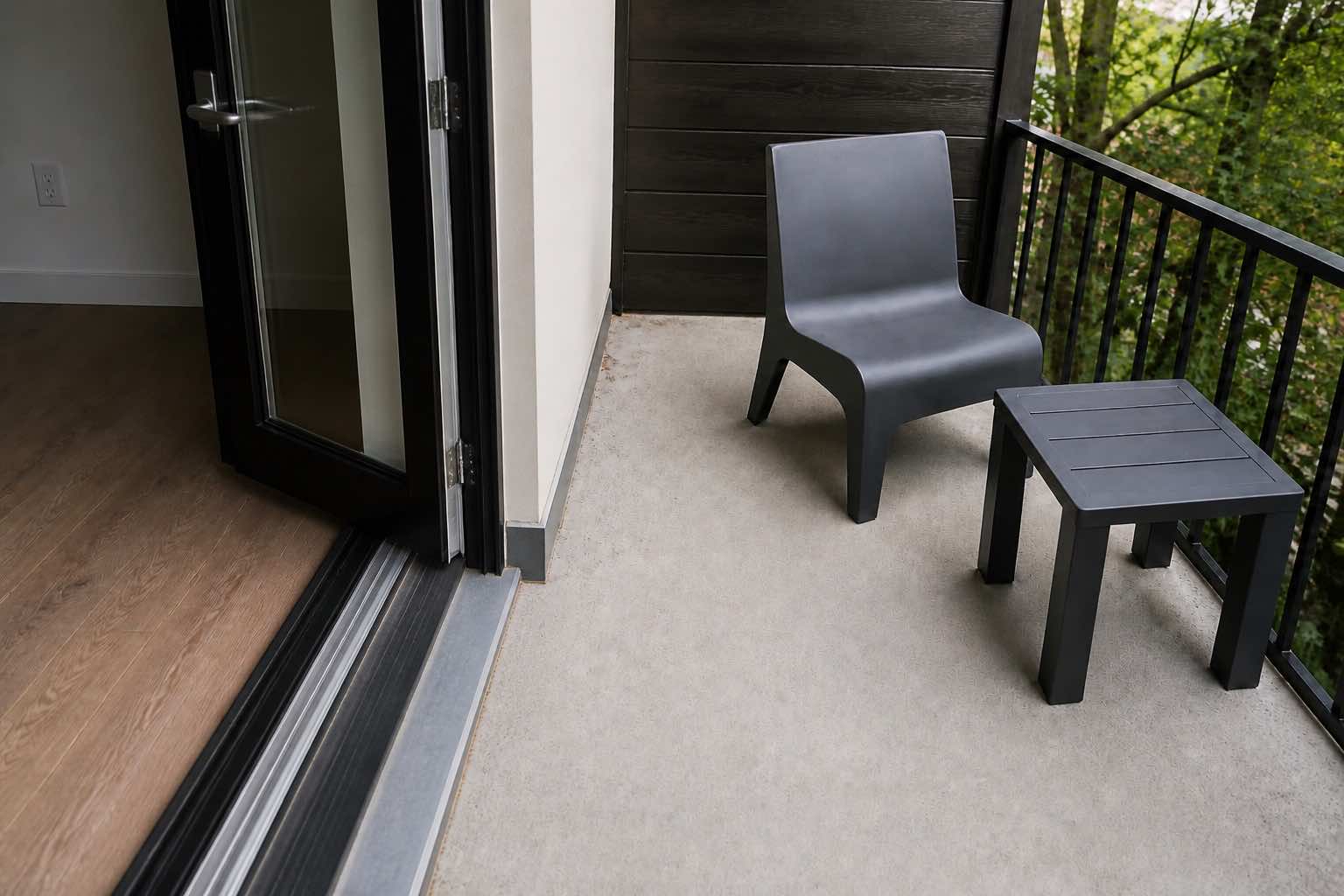
On balconies with inward-swinging doors, leave enough room so the door can open without striking a table or forcing a chair to be moved each time. On sliding doors, think about the standing area immediately outside the threshold. People need a place to step out, pause, and close the door without stepping straight into furniture.
Railings also deserve attention. Even if building code is satisfied, furniture that is packed tightly against the railing can make the edge feel cluttered and reduce usable elbow room. A few inches of breathing room often improves both comfort and the look of the layout.
Corner placement can be effective, especially with a small table anchoring two seats at an angle. Just avoid creating dead corners where one chair is technically present but awkward to reach.
Plan for sun exposure and material performance
Austin outdoor spaces can see intense sun, reflected heat, and fast weather swings. Material choice matters, especially in smaller areas where furniture sits close to walls, glass, and masonry that hold heat.
Plastic Furniture To Go furniture is American Made from Marine Grade Polymer with 3/16-inch stainless steel hardware. That combination makes sense for outdoor use where moisture, sun, and daily exposure are part of the equation. The brand also offers a 7-year structural warranty and a 5-year fade warranty.
In practical planning terms, this means you can focus on layout and comfort instead of babying the furniture. For Austin spaces, that is helpful because balconies and compact yards are often used in short windows of time: early morning, late evening, or after a storm passes through. Durable materials support that kind of real-life use.
If you are comparing pieces by stability, the listed product weights are worth noting. A 52 lb Adirondack chair feels very different in placement than a 27 lb cafe chair or a 15 lb end table. In a windy upper-floor setting, those details matter.
Think about delivery access before you place an order
One of the easiest mistakes in small-space planning is measuring the final location but forgetting the access route. A balcony setup may look perfect on paper, but the pieces still need to make it through the gate, door, hallway, stair landing, or elevator path that leads there.
Check the narrowest points along the route to the installation area, including:
- Apartment or condo entry doors
- Elevator interiors and door openings
- Hallway turns
- Side gates into backyards
- Stair width and landings
This is especially important when mixing piece types. A compact chair may be easy to handle, while a larger lounge profile may require more planning. Thinking about access in advance helps avoid ordering a layout that fits the balcony but struggles to reach it.
Plastic Furniture To Go is factory-direct with free nationwide shipping, so a little pre-planning goes a long way. Since there is no public showroom, your own measurements and access notes are the best tools for making a confident decision.
Simple layout ideas that work in Austin-size spaces
For a narrow apartment balcony, one of the most reliable arrangements is two armless chairs on one side with a small table between or just ahead of them, leaving the opposite side or center open for movement. This creates a destination without closing off the whole floor.
For a shallow square balcony, try a diagonal composition instead of lining everything against the railing. Two smaller tables and a single chair can sometimes feel more functional than forcing in a matched pair that leaves no room to pass.
For a small fenced yard, create one seating zone and preserve one open strip for circulation. Two Adirondack chairs with an end table can work well if the yard has enough depth, while a pair of cafe chairs is usually the safer option in narrower side-yard patios.
For a compact outdoor dining corner, keep the furniture count disciplined. Two to three well-placed seats often outperform a larger set that makes every meal feel cramped.
The common thread is restraint. In small Austin outdoor spaces, the layout succeeds when each piece has room to function and the overall plan still feels easy to move through.
Frequently Asked Questions
What furniture works best on a small Austin apartment balcony?
Armless seating and smaller tables are usually the safest choices. They preserve more walking space, fit more easily around door swings, and make narrow footprints feel less crowded than bulkier lounge seating.
How much clearance should I leave around balcony furniture?
There is no single answer for every home, but you should leave a comfortable path from the door into and through the space. Focus on practical daily movement, especially near thresholds, railings, and corners.
Is heavier outdoor furniture better for upper-floor balconies?
Weight can be a useful consideration, especially in exposed settings. Product weights such as 27 lb for the Armless Cafe Chair, 15 lb for Hampton end tables, and 52 lb for the Hampton Adirondack Chair help you compare stability and moveability as you plan.
How do I get help choosing the right layout without a showroom visit?
Start with a simple sketch, your measurements, and notes about door swings and access points. Then use those details to shop confidently online or send your questions through the contact form. If you are ready to furnish your space, explore the shop and choose pieces that fit the way your balcony or small yard will actually be used.