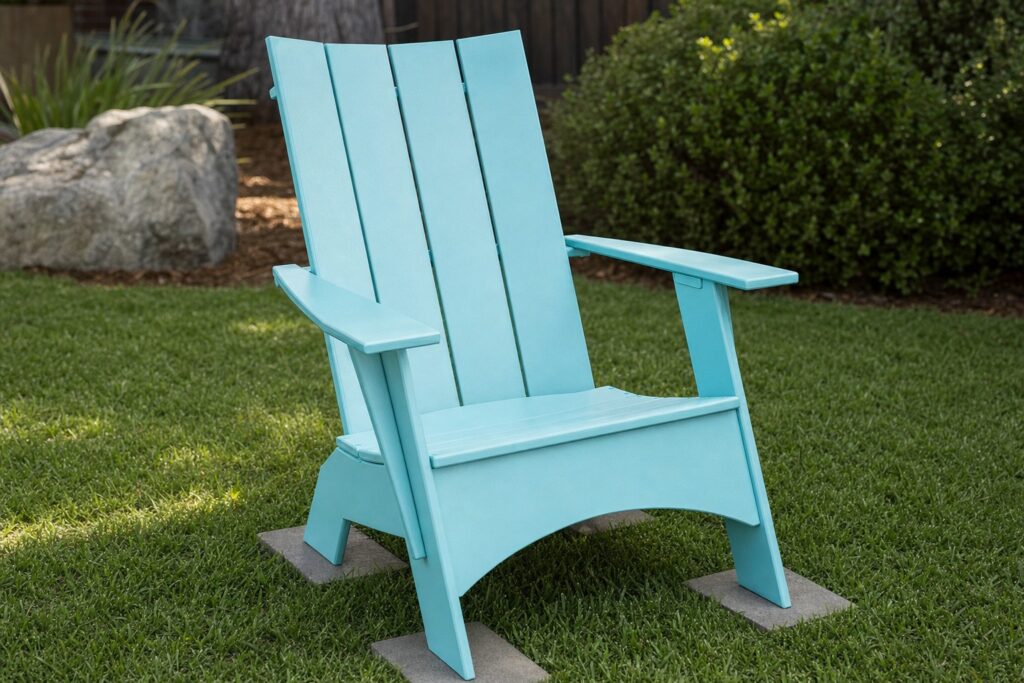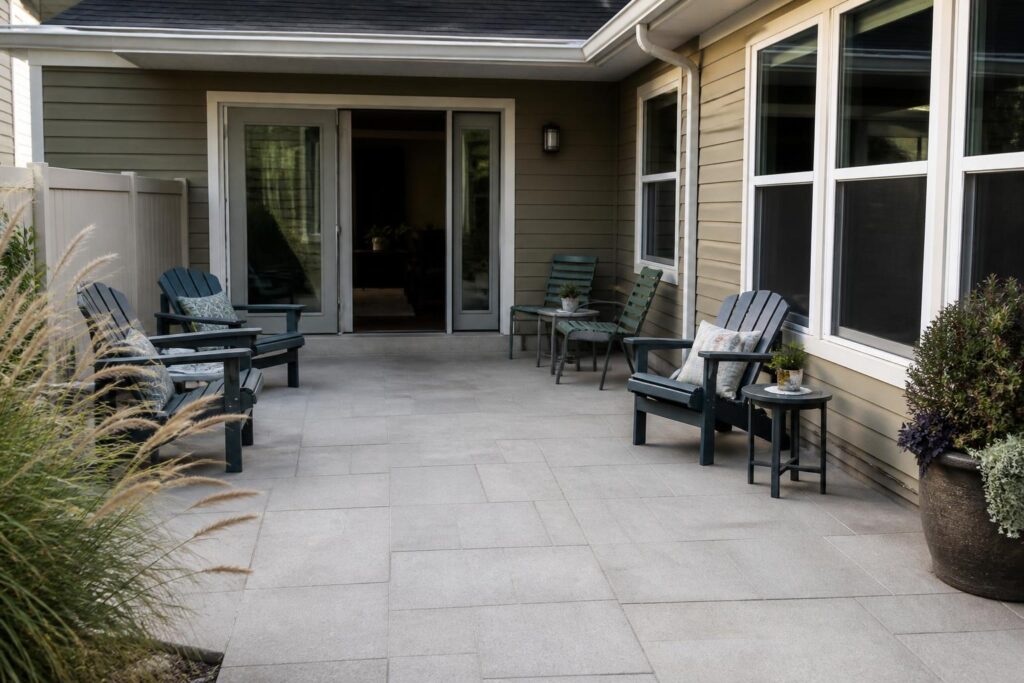
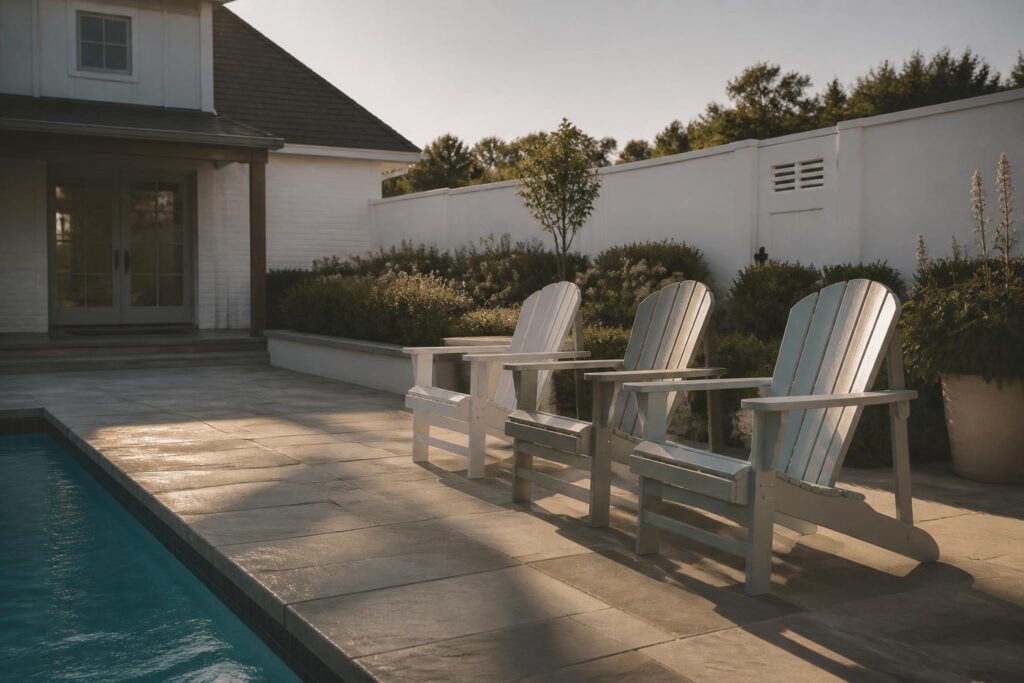
Picking the best adirondack chair color for sun exposure is one of those decisions that seems small until you’re squinting at a swatch chart wondering whether that gorgeous navy is going to turn into a heat sink by July. Color affects surface temperature, visible fading over time, how visible dirt and pollen show up, and how the chair looks against your house and landscaping. This guide walks you through how different shades behave in strong, direct sunlight, what to look for in a fade warranty, and how to match your color choice to the way you actually use the chair.
How Sunlight Actually Affects Outdoor Chair Colors
Two things happen when a poly or plastic Adirondack chair sits in direct sun day after day: the surface heats up, and the pigments slowly break down under ultraviolet radiation. These are separate issues, and they play out differently depending on color.
Heat absorption follows a fairly predictable rule. Darker colors absorb more of the visible light spectrum and convert it to heat, so a black or dark green chair can measure 30 to 50 degrees Fahrenheit hotter on its surface than the surrounding air on a sunny 90-degree afternoon. A white or light gray chair, by contrast, reflects more light and typically runs 10 to 20 degrees cooler than a dark one under the same conditions. That surface temperature difference is what you feel when you sit down in shorts.
UV fading is a different story. Ultraviolet radiation breaks the chemical bonds in pigments, and some pigments hold up dramatically better than others. Reds and bright oranges historically fade fastest in outdoor applications. Deep blues and blacks can chalk or lighten over years of exposure. Whites, tans, and light grays generally hide fading well because the shift is subtle. Quality poly furniture uses UV-stabilized pigments blended throughout the material rather than painted on the surface, which is why the color runs all the way through the plank.
Understanding both effects lets you make a color decision based on how the chair will actually feel and look in year three, not just year one.
Light Colors: White, Sand, Light Gray, and Soft Pastels
If your patio gets full sun for six or more hours a day and you plan to sit in the chairs during the hottest part of the afternoon, light colors are the easier choice for comfort. White, sand, driftwood, weathered wood, and light gray all reflect a significant portion of incoming sunlight, so the seat and armrests stay closer to ambient air temperature. You can typically sit down in shorts on a light-colored poly chair even after several hours of direct sun without that first-second flinch.
Light colors also tend to age gracefully. Because the starting shade is already near the pale end of the spectrum, any UV-driven shift is minor and often reads as a gentle patina rather than a defect. If you photograph your patio for family gatherings or list your home in a few years, light chairs will look consistent throughout their life.
The tradeoffs are real, though. Light colors show pollen, dust, red clay, sap, and bird droppings much more visibly than darker shades. In a pollen-heavy spring, a white chair may need a wipe-down every week or two to look its best. Mildew and green algae in humid climates also show up faster on pale surfaces. A quick rinse with a garden hose and mild dish soap (about a tablespoon per gallon of warm water) handles most of it in ten minutes, but you should be honest with yourself about whether you’ll actually do that.
Dark Colors: Black, Navy, Forest Green, and Deep Red
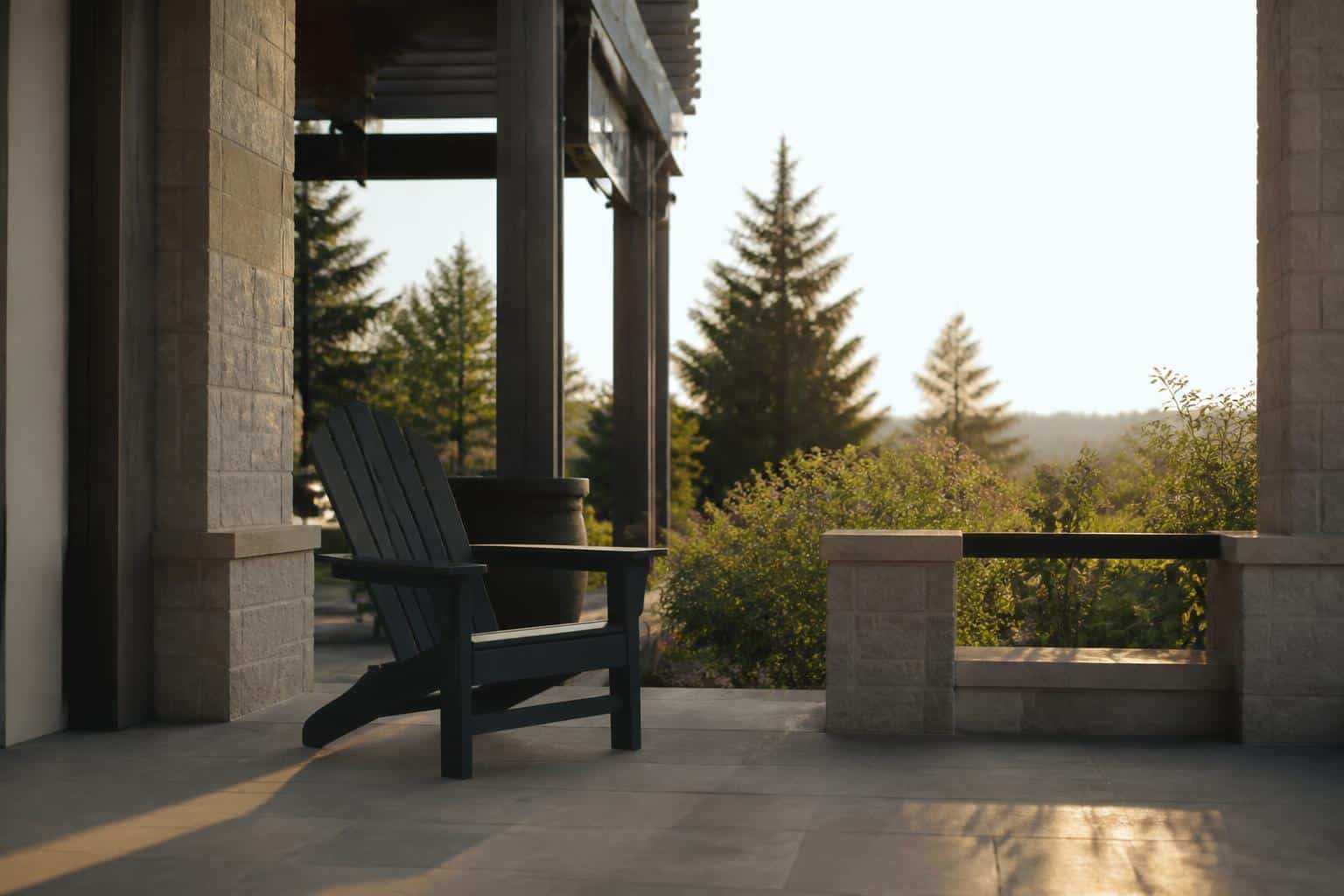
Dark colors deliver drama. A row of black Adirondack chairs against a white farmhouse, or forest green chairs tucked into a wooded lot, looks intentional in a way that light colors sometimes don’t. Dark shades also hide most everyday grime — pollen, dust, and light dirt essentially disappear on a black or deep navy surface until you get up close.
The catch is heat. In full sun on a hot day, a black poly Adirondack can reach surface temperatures of 150 to 170 degrees Fahrenheit. That’s hot enough to be uncomfortable through thin clothing and genuinely painful on bare skin. If your chairs live in an open yard with no afternoon shade and you’re in a climate that regularly hits 95-plus, dark colors will limit when you actually want to use them. Readers dealing with extreme conditions may want to review our notes on choosing outdoor furniture for intense heat before committing to a dark shade.
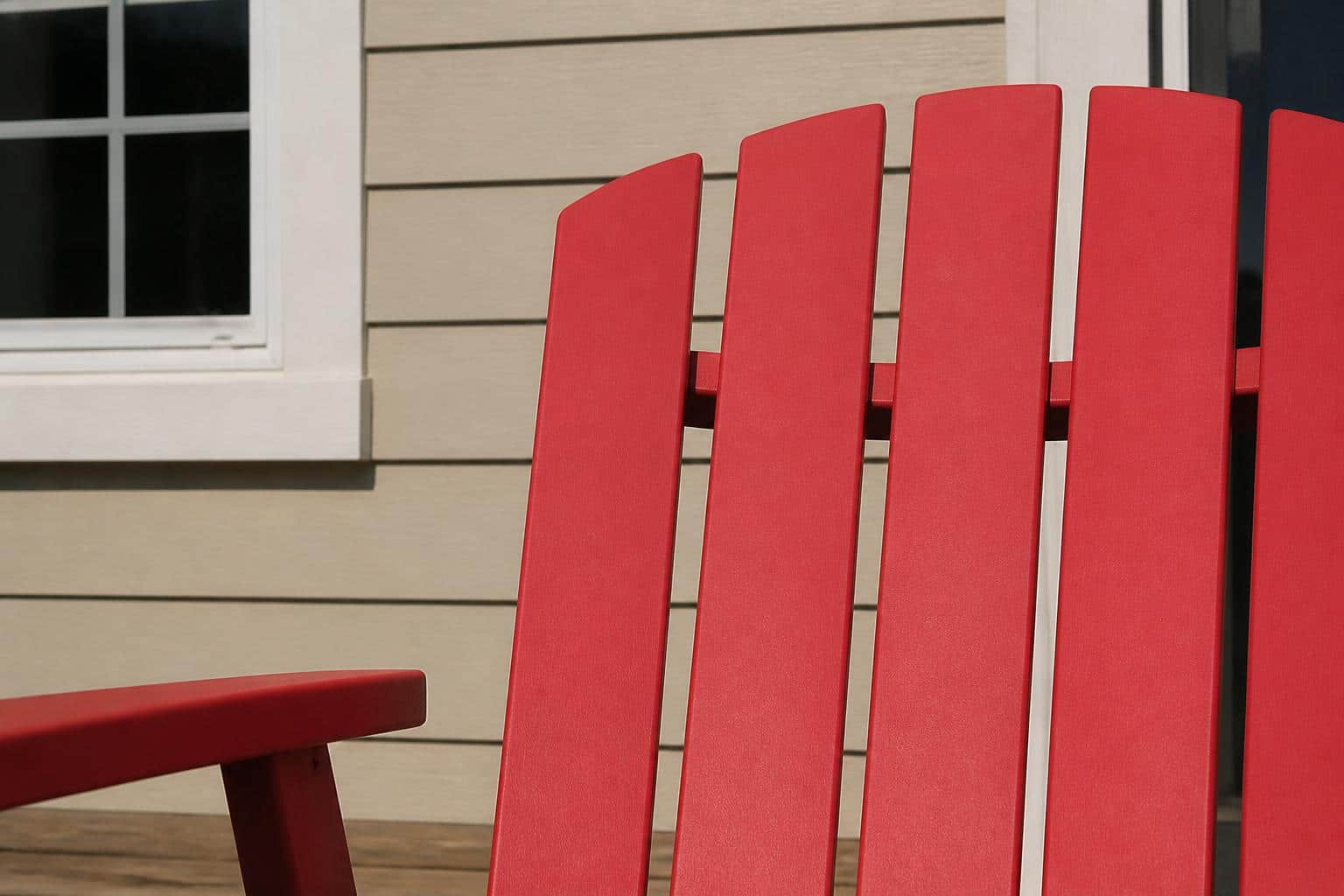
Dark colors also show any fading more visibly. A deep red that shifts even 10 percent over five years reads as noticeably lighter, especially in the areas that catch the most direct sun (usually the tops of the armrests and the front of the seat slats). This is where a written fade warranty stops being a marketing detail and starts being a real financial protection.
Mid-Tone Colors: The Underrated Middle Ground
If you want most of the visual richness of a dark chair without the extreme surface temperature, mid-tone colors are worth serious consideration. Think aruba blue, teal, patriot blue in its lighter form, medium gray, dove gray, and warm tans that lean toward khaki rather than white.
Mid-tones typically run 15 to 25 degrees cooler than true blacks on a sunny afternoon, but they still hide pollen and light dirt better than whites. They photograph well, coordinate with a wider range of home exteriors, and tend to age evenly because the pigments are neither at the extreme heat-absorbing end nor at the visually delicate light end.
How to Test a Color Against Your House
Before ordering, hold up a swatch or a printed color sample against your siding, trim, and any existing outdoor cushions in both morning and late-afternoon light. Colors read differently at different times of day, and a shade that looks perfect at noon may clash with the warm tones of a 6 p.m. sun.
How to Test for Heat
If you already have any dark outdoor surface — a grill lid, a dark planter, a black mailbox — touch it at 2 p.m. on a sunny day. That’s roughly how a dark Adirondack will feel. If you flinch, choose lighter.
How to Think About Resale
Neutrals (gray, tan, white, black) appeal to the widest range of taste if you ever sell the chairs or move. Bold colors are more personal and can be harder to rehome.
Why the Fade Warranty Matters More Than the Color Itself
A color you love in year one is only useful if it still looks like that color in year five. This is why the written fade warranty is more important than the specific shade you pick. A generous return policy protects you against the wrong choice; a fade warranty protects you against the sun itself.
When you compare Adirondack chairs across brands, look for language that specifically addresses color fading — not just structural durability. Structural warranties cover cracks, splits, and breakage. Fade warranties cover pigment loss and color shift, which is a separate failure mode. Many outdoor furniture sellers quietly leave fading out of their warranty entirely, meaning if your red chair turns pink in year three, you have no recourse.
At Plastic Furniture To Go, the Hampton Adirondack Chair is backed by a 7-year structural warranty and a 5-year fade warranty. That written fade coverage is the piece that lets you pick a bolder color with less anxiety. If you were going to choose light gray anyway because it’s safe, the warranty is a bonus. If you’ve been wanting to try a saturated blue or a deep green, that written fade commitment is what changes the risk calculation.
For general guidance on how UV exposure affects plastic materials over time, the U.S. Environmental Protection Agency’s overview at epa.gov/sunsafety covers the underlying UV index concepts that also drive outdoor material degradation.
Matching Color to How You Actually Use the Chair
Beyond heat and fade, think about the specific role the chair plays in your outdoor life. A pair of Adirondacks flanking a firepit gets used mostly at dusk and after dark, when surface temperature is irrelevant — pick whatever color looks best against firelight (deep colors and warm tans photograph beautifully here). A row of four chairs on a sunny lakefront dock gets used at midday in swimsuits, so lean light. A single reading chair tucked under a covered porch never sees direct sun at all, so pigment fade is minimal and you can pick purely on aesthetics.
Also consider what the chair sits next to. If your house is a warm cream or tan, cool grays and blues create pleasant contrast. If your trim is crisp white, almost any shade works but darks read most sharply. Brick homes generally look best with greens, tans, and blacks rather than blues that fight the red undertone. Gray siding pairs well with almost anything except muddier browns.
Finally, think about how many chairs you’re buying. A single accent chair can be bold — a bright yellow or aruba blue reads as intentional design. Four matching chairs in the same bold color can feel overwhelming; in that case, either drop to a mid-tone or mix two coordinating shades (two navy and two white, for example) for a more balanced look.
Frequently Asked Questions
Does black outdoor furniture really get that much hotter than white?
Yes, and the difference is larger than most people expect. On a sunny 90-degree day, a black poly surface can reach 150 to 170 degrees Fahrenheit, while a white surface under the same conditions typically stays between 100 and 115 degrees. That’s a 40 to 60 degree gap you feel immediately when you sit down. If your chairs get afternoon shade or you use them mostly in the morning and evening, the gap matters less.
Which Adirondack chair colors fade the fastest in direct sun?
Historically, bright reds, oranges, and some purples have been the most vulnerable to UV fading because those pigments are chemically less stable under ultraviolet exposure. Deep blues and blacks can also shift or chalk over many years. Quality poly furniture uses UV-stabilized pigments blended throughout the material, which slows fading dramatically compared with painted or surface-dyed finishes. A written fade warranty is your best indicator of how confident the manufacturer is in their pigments.
Can I put a dark Adirondack chair in full sun if I use a cushion?
A cushion helps considerably because you’re no longer sitting directly on the hot poly surface. However, the armrests and any exposed slats will still be hot to the touch, so setting a drink down or resting your forearm can still be uncomfortable. If you’re set on a dark color in full sun, plan on cushions for the seat and back, and consider whether you’ll actually want to use the armrests during peak afternoon hours.
How do I clean a light-colored Adirondack chair without damaging it?
Mix about a tablespoon of mild dish soap into a gallon of warm water, apply with a soft brush or sponge, and rinse with a garden hose. For stubborn pollen or mildew, a diluted solution of one part white vinegar to three parts water works well. Avoid abrasive scrubbers, bleach at full strength, or pressure washers on a close setting, which can dull the surface texture over time. A rinse every few weeks in pollen season keeps light colors looking fresh.
When you’re ready to compare specific shades, the Hampton Adirondack Chair is offered in a range of colors at $299 with free nationwide shipping and factory-direct pricing straight from an American manufacturer. Browse the full palette on the Hampton Adirondack product page, and if you’d like a second opinion on which color suits your patio, the contact form is the easiest way to send a photo of your space and get a straightforward recommendation.