
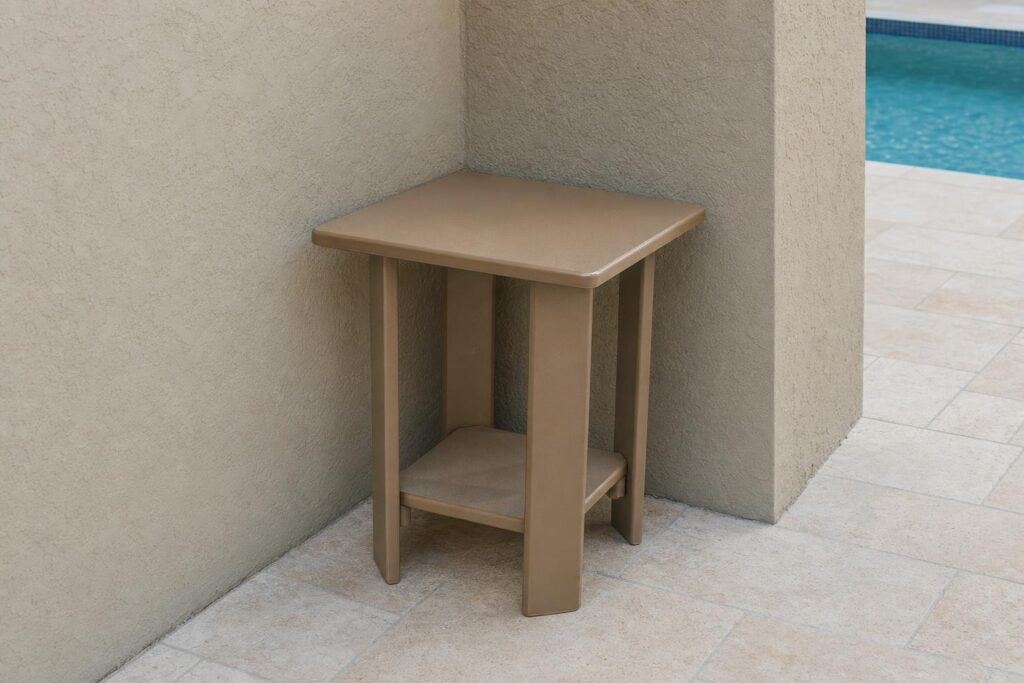
Round tables look great in open space, but they waste room in a tight corner. The curve leaves a gap on two sides that a squared-off table simply does not. If you are furnishing a narrow strip along a pool deck, a fenced-in corner, or the gap between two loungers, the shape of the table matters as much as its style. That is the case for the Hampton Square End Table around a pool.
Why a Square Profile Works in a Corner
Push a round table into a 90-degree corner and you will see gaps between the curve and both walls. A square-edged table can sit closer to a corner, which leaves more walking room in the rest of the deck. That extra space matters around a pool, where deck space already competes with loungers, steps, and equipment.
A square edge also lines up with straight deck boards, fence lines, and the posts of a screened enclosure. Anywhere the surroundings have hard right angles, a squared table looks intentional rather than dropped in.
What a Poolside Table Ends Up Holding
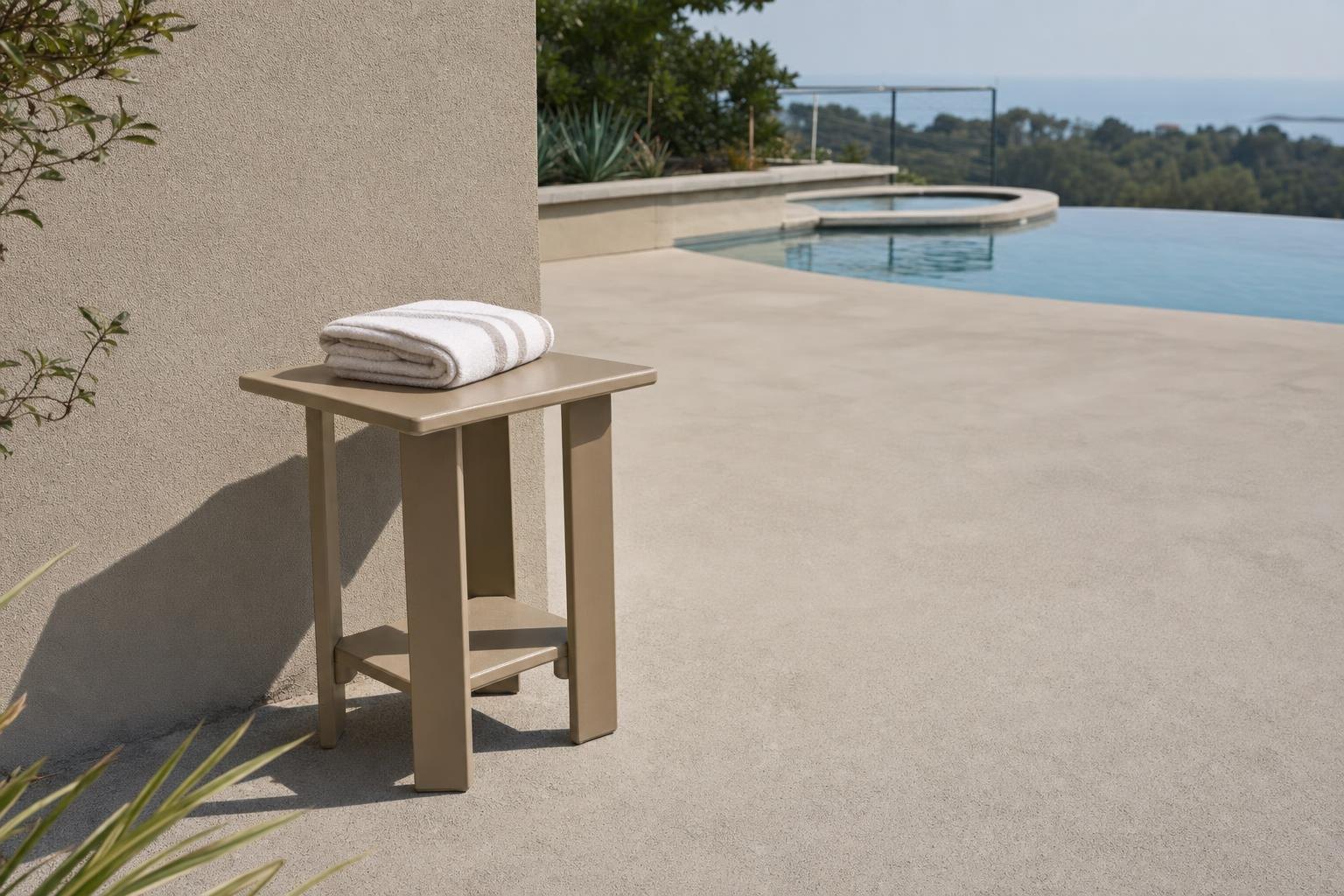
A table by the pool has a predictable job. It holds sunscreen, a drink, sunglasses, and a folded towel. Because that list is small, you do not need a big table, just one in the right place. At 15 lb the Hampton Square End Table is easy to lift out of the way when you need to hose down or sweep the deck, then set back in its corner.
Keep phones and other electronics away from the water’s edge and out of the splash zone, including on the water-facing side of the table.
Measure the Corner at Its Narrowest Point
Most pool decks have slight tapers near railings, steps, or equipment that are not obvious until you hold a tape measure to them. Measure the corner where it is narrowest, then compare that with the dimensions on the product page for the table. Mark the footprint with painter’s tape and walk around it. If you have to turn sideways to pass, the table is too close to the traffic path. The Hampton Square End Table product page lists the size so you can tape out the real footprint before ordering.
Follow local rules and your own safety judgment for the area around the water. The federal pool safety campaign at Pool Safely is a helpful reference for keeping a pool area safe, and it is a good reminder that furniture should never crowd an entry point, a ladder, or a gate.
Keep Entry Points Clear
Corners near pool steps or ladders see more foot traffic than open lounge areas, and people climbing out are wet and moving quickly. Keep the table well clear of the direct entry line, so it is a convenient spot for a towel without becoming an obstacle. If a corner is where people naturally step out of the water, choose a different corner and use the table beside a lounger instead.
Pairing Square and Round on the Same Deck
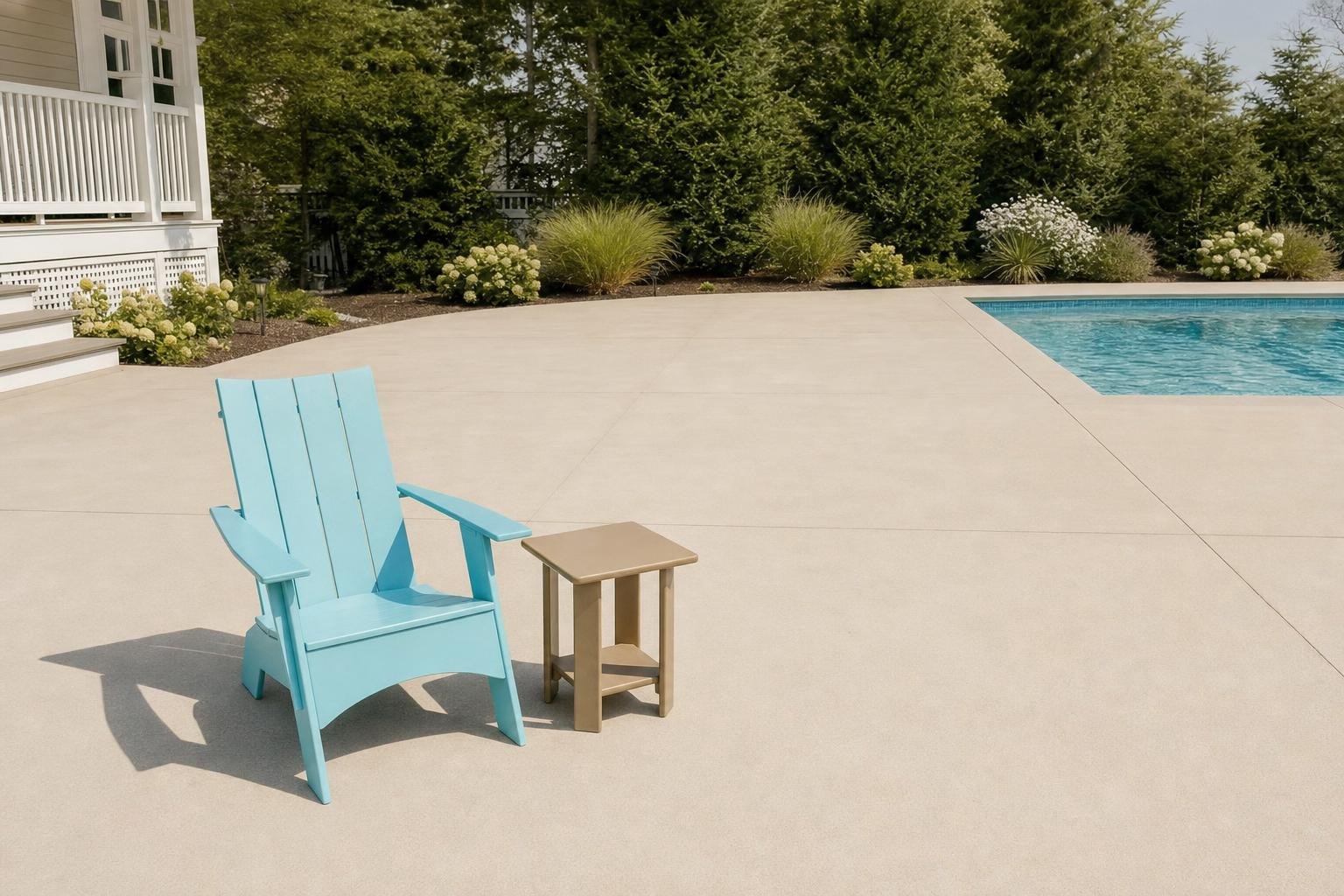
A pool deck often needs both shapes. Use square tables in corners and against walls, where the straight edge saves space, and use the Hampton Round End Table in open areas beside loungers, where a curved edge is friendlier to people walking past. Both weigh 15 lb, so mixing them does not change how easy they are to move.
If you are not sure which shape suits a particular spot, mark each table’s footprint with chalk or painter’s tape while the deck is dry, and remove the marks before anyone swims. The shape that blocks the least walking space is usually the right one.
Materials and Warranty
The Hampton Square End Table is made from Marine Grade Polymer and assembled with 3/16-inch stainless steel hardware. It is made in the USA by a family-owned company, and it carries a 7-year structural warranty and a 5-year warranty against fading. The full terms are on the returns and warranty page.
Ordering and Assembly
The table ships free to the contiguous U.S., knock-down in a box, and is designed for simple assembly in about 20 minutes with the included hardware. Orders generally ship within 3 business days, and carrier transit is estimated at 2 to 7 business days, so allow about 5 to 10 business days in total. New, unused, unassembled items in the original packaging can be returned within 30 days of receipt with proof of purchase, which is one more reason to tape out the corner before you assemble anything.
Making the Most of a Small Corner
A corner is often the most underused part of a pool deck, and a small table can turn it into a useful landing spot. The idea is simple: give people a place to put down what they are carrying so they do not set it on the ground or on the pool edge. Put the table a few steps from the pool exit and off the wet walkway, so someone drying off can reach it without stepping around a lounger. Keep it clear of steps, ladders, and gates. A folded towel and a spot for sunglasses are usually all a corner table needs to hold.
The table is light, at 15 lb, so you can try a spot and move it if it does not work. If the corner turns out to be awkward, place the table beside a lounger instead.
Set It on a Level Spot
Whatever corner you choose, place the table on a flat, level part of the deck and check that it does not rock before you set anything on it. Wet decks can be slippery, so take care when you move the table with wet hands or wet feet, and dry the spot around it if you can. If a storm is forecast, a 15 lb table is easy to carry inside so it is not left in the wind, and it is just as easy to bring back out afterward.
Keeping the Corner Tidy
A poolside table stays useful when it stays uncluttered. Keep a small basket or a hook nearby for towels so they do not pile onto the table, and clear the surface at the end of each pool day. A quick wipe with a soft cloth, mild soap, and water is a simple way to tidy up after drinks. Because the table is light, it is easy to lift, sweep under, and set back in place, which makes regular tidying a two-minute job instead of a chore.
Check the Spot Again After the First Week
A corner that looked right on day one can feel different once the table is in use. After a week, notice whether people walk around the table comfortably, whether it stays dry enough to be useful, and whether it stays out of the way of the pool exit. If anything feels off, slide the table a few inches or move it to the other side of the deck. Because it is light, that kind of adjustment takes only a moment, and it is the easiest way to get the placement exactly right.
Frequently Asked Questions
Why choose a square table over a round one for a corner?
A square edge sits flush against walls and railings, so it uses less of the deck. A round table leaves gaps at the corners.
How much does the Hampton Square End Table weigh?
It weighs 15 lb, the same as the Hampton Round End Table.
Can I use one square and one round table on the same deck?
Yes. Many decks work best with square tables in the corners and round tables beside open seating.
How close to the water should the table sit?
Set it back from the water’s edge, out of the entry path and away from steps, ladders, and gates. The Pool Safely resources linked above are a good starting point.
Browse both table shapes in our shop, or contact us through the contact page if you would like a second opinion on a tricky corner.

