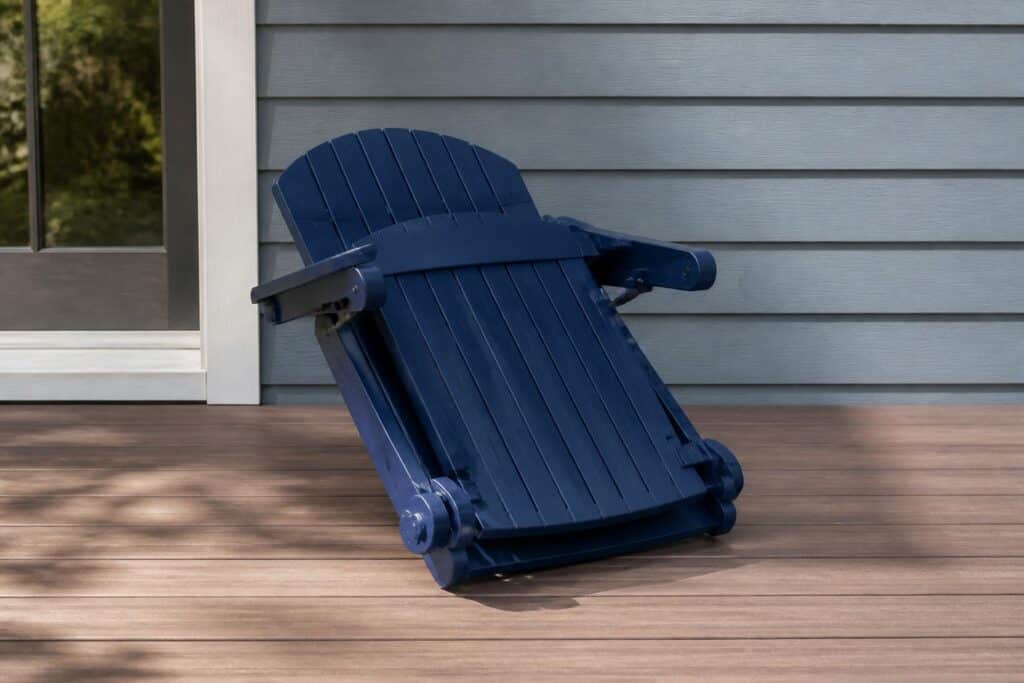
A folding Adirondack chair can solve a storage problem, but only if its folded size and handling requirements suit your space. Before paying for that feature, decide where the chair will go between uses, how often you expect to move it, and whether you can comfortably operate the mechanism. When comparing folding Adirondack chairs, the pros and cons depend on your storage routine and the specifications of the exact models.
Start with the storage route and folded dimensions
Measure the proposed storage space before browsing chairs. A narrow shed door, stair landing, or garage aisle can matter as much as the total floor area. For a folding chair, ask for the folded width, depth, and height as well as the dimensions when open. Do not assume that folding cuts the footprint in half or makes the chair fit in a vehicle.
Use actual product weight when planning the move. A folding mechanism does not necessarily make a chair light. Check whether the shape gives you a practical carrying position, whether the folded chair stays closed as instructed, and whether you will need help. Avoid planning to carry a bulky piece on stairs without first considering the route and your own ability to handle it.
For a fixed chair, measure the full route to storage and any turns along the way. Products may arrive unassembled even though the finished chair will not fold. Delivery-carton dimensions, assembled dimensions, and folded dimensions describe three different situations; use the right set for each stage of ownership.
Check the folding mechanism and everyday seating fit
Ask for the operating instructions before ordering. They should explain how to open and close the chair, engage any required lock, and keep hands clear of moving parts. Confirm what inspection or maintenance the maker requires and how to obtain replacement parts. Do not improvise a load test or treat an audible click as proof that every design is locked correctly.
A fixed frame also needs inspection and care. Compare the hardware, connections, and support arrangements described for each model without assuming that fewer moving parts guarantee a longer service life. If a chair wobbles, has damaged hardware, or will not lock as instructed, stop using it until the problem has been addressed.
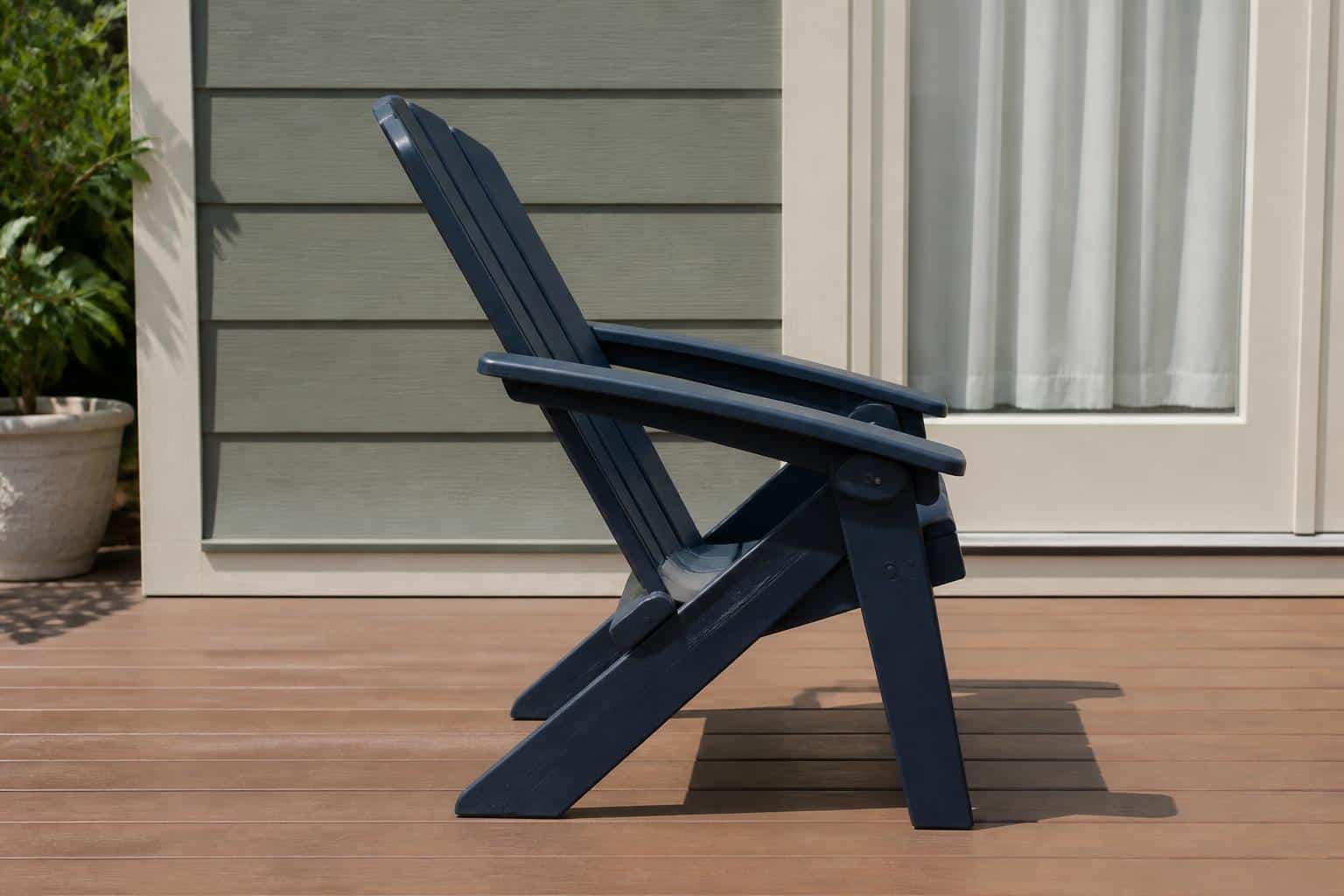
Comfort depends on the model’s proportions and your preferences. Compare seat height, seat depth, recline, and arm position with seating you already find comfortable. A folding model is not automatically more upright, and a fixed model is not automatically more comfortable. When you cannot try a chair in person, detailed measurements and clear return conditions become especially useful.
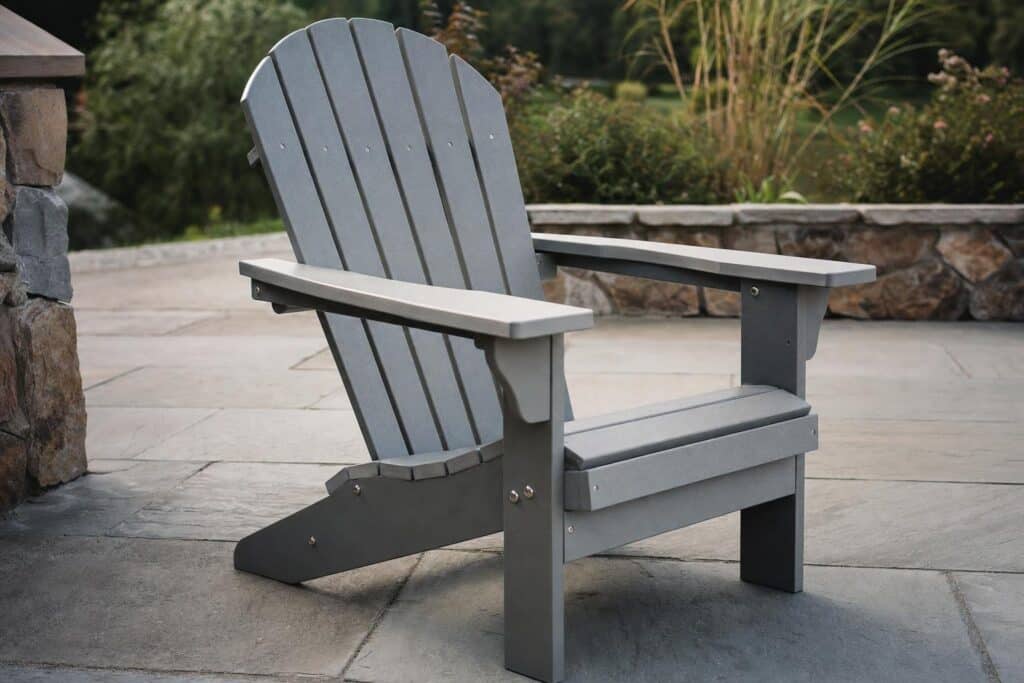
The Hampton Adirondack Chair is a fixed design with a 16-inch seat height. Its overall dimensions are 36 inches wide, 30 inches deep, and 38 inches high, and its product weight is 52 lb. Those figures let you compare fit and handling; they are not a load-capacity or wind-resistance rating.
Compare material, price, and written terms separately
Listings may use “poly,” “HDPE,” or other plastic-material descriptions. Ask each manufacturer what the exact product uses rather than treating all terms as equivalent. Plastic Furniture To Go specifies Marine Grade Polymer with 3/16-inch stainless steel hardware. The EPA recycling information can help explain general recycling topics, but it does not establish recycled content or performance for an individual chair.
Compare the current configured prices of the models you are considering. There is no universal percentage premium for a folding chair. The Hampton’s current listed starting price is $299 with free nationwide shipping. Check the selected finish, quantity, delivery charges, and any accessories when comparing it with another listing.
Our furniture ships knock-down in a box and is designed for simple assembly in about 20 minutes with the included hardware. That assembly arrangement is separate from whether the finished chair folds. Ask other sellers what their assembly requirements involve, and use the supplied instructions rather than substituting a generic tool or tightening method.

Choose the feature your routine will actually use
Folding can be useful when chairs need to move between a patio and a limited storage area. It may also help when seating is brought out only for occasional gatherings. Check the exact folded dimensions and weight before deciding that a model solves either problem. Stacking and folding are different features, so confirm whether stacking is permitted if that is part of your plan.
A fixed design may work well when the seating layout stays consistent during ordinary use and there is a practical storage route. Mark the chair and any end table on the patio with tape, then leave space for approaching, sitting, standing, and passing behind other people. Our furniture fit calculator helps compare a simple row arrangement with available floor space.
Both styles need a severe-weather plan. Product weight, frame style, and material do not guarantee that furniture will stay in place during wind. Follow local alerts and appropriate manufacturer-approved storage or securing instructions. Make those arrangements before dangerous weather arrives.
Read the written warranty and return terms before ordering. PFTG provides seven-year structural and five-year fading coverage subject to the policy. Returns have a 30-day window from receipt and condition, packaging, and freight requirements. Warranty length should not be converted into an expected lifespan for a frame or hinge.
Frequently asked questions
Does a folding chair always take up less storage space?
Compare its actual folded dimensions with your storage area. The shape, locking arrangement, and whether stacking is allowed determine how the chair can be stored.
How long will the folding hardware last?
There is no universal interval. Design, use, exposure, inspection, and maintenance vary. Ask about warranty coverage and replacement-part availability for the exact mechanism.
Can a folding Adirondack stay outside through winter?
Follow the manufacturer’s guidance for the full chair and its mechanism. Do not assume that a plastic frame removes the need for storage, drainage, inspection, or weather preparation.
Should I choose folding or fixed seating?
Choose folding when verified dimensions and handling make a storage routine easier. Choose a fixed model when its assembled footprint and storage route suit your needs. Compare comfort and written terms in either case.
Browse our current furniture to compare the Hampton with matching end tables, or send a product question before ordering.