
Armless Dining Chairs: The Small-Patio Space Saver
If your patio is measured in feet you can count on one hand, armless patio dining chairs are the quiet upgrade that changes how the whole space feels. Swap in slim, arm-free seats and suddenly the table tucks flush against the wall, one more chair fits along the long side, and traffic flows around the setup instead of squeezing past chair arms. This guide walks you through how much space you actually save, how to measure your patio before you buy, how to seat more guests without crowding, and how to pair armless seating with the right table for a small footprint.
Why Armless Chairs Change Small-Patio Math
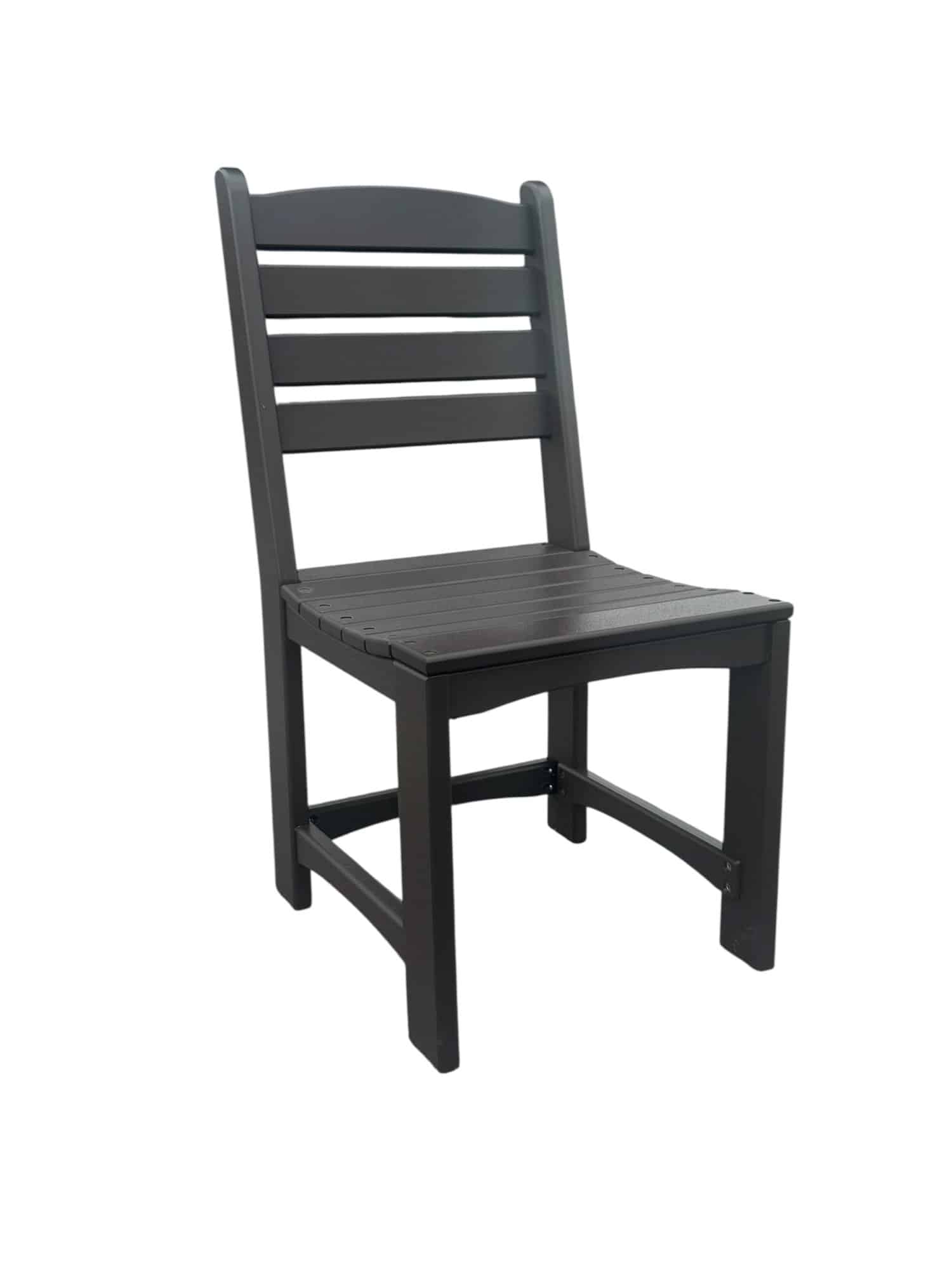
A traditional outdoor dining chair with arms typically measures 22 to 25 inches wide at the armrests. An armless patio dining chair usually runs 17 to 19 inches wide at the seat. That difference of five to eight inches per chair sounds minor until you multiply it across a table. Four armed chairs demand roughly 88 to 100 inches of linear space when placed side by side. Four armless chairs need only 68 to 76 inches. On a 10-foot patio, that recovered space is the difference between a cramped setup and a walkway you can actually use.
Width is only half the story. Armless chairs also tuck completely under the table apron when not in use, which armed chairs almost never do. A standard outdoor dining table has an apron height of 24 to 26 inches from the ground. Armrests on outdoor chairs typically sit at 25 to 27 inches. That one-inch mismatch is why armed chairs stick out and eat traffic space even when nobody’s sitting in them. Slide four armless chairs fully under a table against a wall and you’ve reclaimed 15 to 20 inches of patio depth in one move.
For balconies, condo patios, townhome courtyards, and compact backyards, that reclaimed footprint is often the difference between a dining area you use and one that just looks pretty in staging photos.
Measure Your Patio Before You Shop
Before you look at a single chair, grab a tape measure and sketch your space. You need three numbers: the total usable dimensions of the patio, the size of any table you plan to keep, and the clearances you need on each side for people to move.
The Clearance Rules Worth Memorizing
Standard dining clearance guidance is 36 inches from the table edge to the nearest wall or obstacle. That’s enough for a person to pull out a chair, sit, and stand without hitting anything behind them. If space is tight, 30 inches is the working minimum, and you’ll want the chair on that side to be armless so it can slide back farther without collision. On the “walk-through” side, budget 44 inches so someone can pass behind a seated diner.
Table Footprint Versus Patio Footprint
Small square patio tables usually run 30 to 36 inches per side and seat two to four. Round tables at 36 to 42 inches seat four comfortably. If your patio measures 8 by 10 feet, a 36-inch square table centered with armless chairs on all four sides needs about 8.5 by 8.5 feet including clearances – workable, but tight. Push the table to a wall, use armless chairs on three sides only, and you free up the fourth side entirely for a grill or a lounge chair.
Draw It on Paper First
A ten-minute sketch at 1 inch = 1 foot scale saves you from ordering furniture that technically fits but ruins the flow. Cut paper rectangles to represent chairs and the table, then slide them around your patio outline. You’ll see instantly whether armless is the answer or whether you need to go even smaller.
How Many People You Can Actually Seat
Seating capacity is where armless patio dining chairs earn their keep. Each diner needs 22 to 24 inches of table edge to eat comfortably without bumping elbows. On a 60-inch rectangular table, that means three armless chairs fit along each long side – six total plus one on each end for eight. Try that with armed chairs and you’re jamming shoulders by the second course.
Round tables tell a similar story. A 48-inch round table seats four comfortably with any chair, but bumps to five or even six with armless seating because you can slide chairs closer along the curve. A 60-inch round can genuinely hold six armless diners with room to breathe, where the same table with armed chairs feels crowded at five.
Bench-and-chair combinations open up further. On the wall-facing side of a rectangular table, a slim outdoor bench holds two to three people. Pair that with two armless chairs on the opposite side and one at each end, and a 60-inch table seats six or seven in a footprint that would only hold four with traditional armed seating. If you host holidays or weekend dinners on a small patio, the math is worth the switch on its own.
One tradeoff to name honestly: armed chairs are more comfortable for long, lingering meals because you have somewhere to rest your forearms. For patios that see two-hour dinners regularly, some people mix both – armed chairs at the ends, armless along the sides.
Materials That Suit Outdoor Life
Whatever chair style you choose, the material decides how it holds up. Outdoor dining chairs generally fall into four camps: wood, metal, woven synthetics, and poly or recycled plastic. Each has tradeoffs worth knowing before you spend.
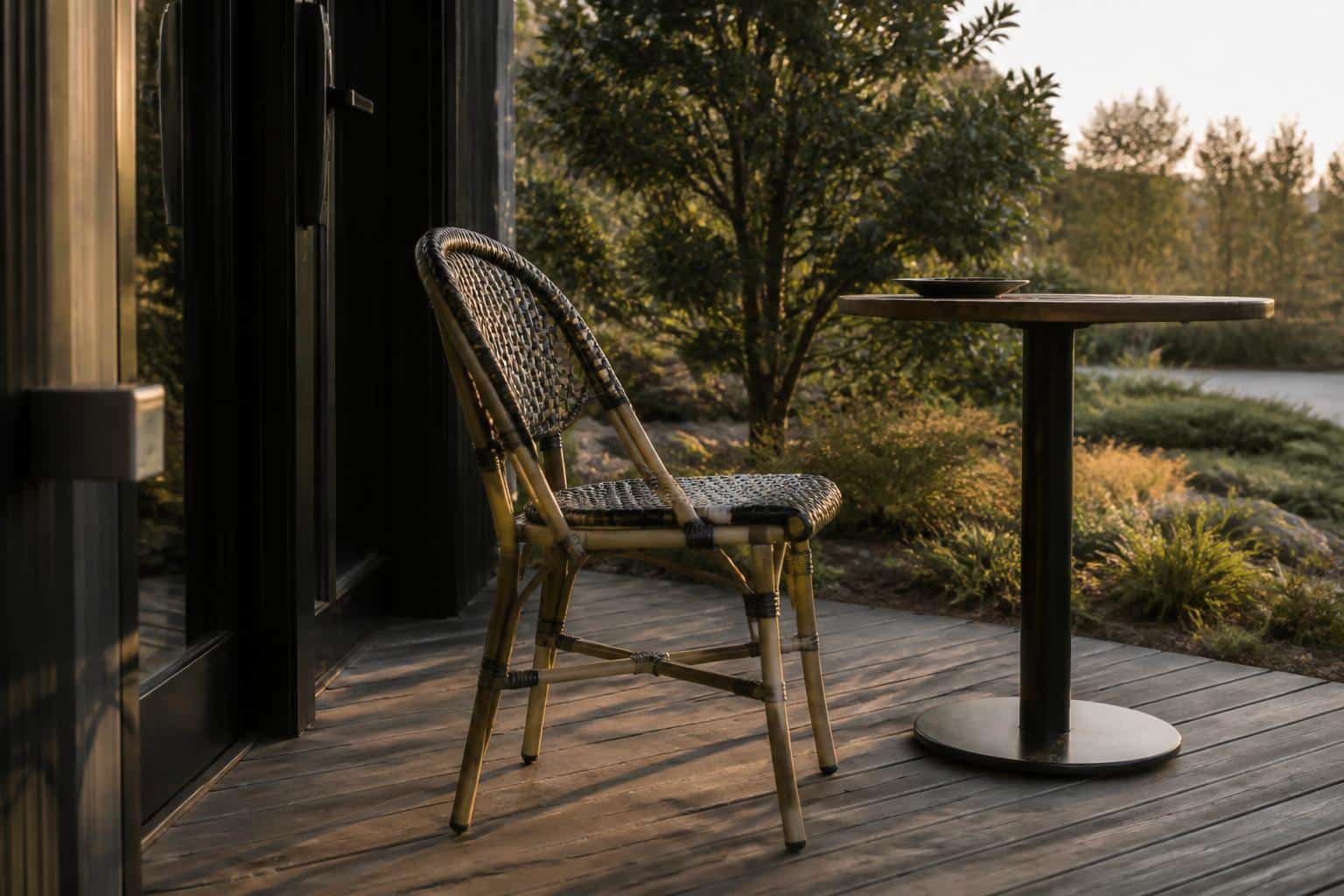
Wood chairs (teak, eucalyptus, acacia) look warm but require annual sealing or oiling and can crack or gray if left untreated. Metal chairs (aluminum, powder-coated steel) resist weather well but can get uncomfortably hot to the touch in direct summer sun, especially on dark finishes. Woven synthetic wicker looks upscale but can trap moisture in the weave and degrade under prolonged UV exposure unless the resin is UV-stabilized.
Poly and recycled-plastic outdoor furniture has become popular for small patios specifically because it needs no seasonal maintenance, doesn’t absorb water, and shrugs off UV when the material is properly formulated. High-density polyethylene formulations used in outdoor furniture typically include UV inhibitors that keep color from fading quickly, and the material is dense enough to resist warping through temperature swings from freezing winters to 100°F summers. The EPA’s guidance on recycled plastics is a good primer if you want to understand how post-consumer plastic gets reprocessed into durable outdoor goods.
When you shop, look for UV stabilization, stainless hardware (not zinc-plated, which rusts), and a real structural warranty from the manufacturer. Warranties that separate structural coverage from fade coverage tell you the maker has thought about both failure modes. At Plastic Furniture To Go, that looks like a 7-year structural warranty and a 5-year fade warranty – a useful benchmark when you’re comparing options across brands.
Styling Armless Chairs on a Small Patio
Slim seating gives you visual breathing room, and there are a few tricks that make a small patio feel intentionally designed rather than just under-furnished.
Match chair color to the wall or fence behind them to make the chairs recede visually, which makes the patio read larger. White chairs against a light stucco wall almost disappear until someone sits down. Alternatively, pick one bold chair color and repeat it in one other element (a planter, a cushion, a door) to create a designed look without clutter. Avoid mixing three or more colors in a small space – it tightens the room visually.
Keep the table lower-profile if you can. A slim-apron table paired with the Armless Café Chair reads lighter than a chunky farmhouse table with the same footprint. Skip a rug on a truly small patio – rugs shrink spaces optically. Instead, define the dining zone with a single planter at each corner.
Finally, resist the urge to fill every square foot. One clear zone for dining and one clear zone for anything else (grill, lounge chair, plant collection) reads better than three overlapping half-zones. If you’re building the whole setup from scratch, browse the full lineup at the shop page and start with the table size that leaves you the clearances you measured, then choose chairs around that.
Frequently Asked Questions
Are armless patio dining chairs less comfortable than chairs with arms?
For meals under an hour, most people don’t notice a difference. For long, lingering dinners, arms give your forearms a place to rest, which some diners prefer. A common compromise is armed chairs at the two head positions and armless chairs along the sides – you get the space savings where it matters and the comfort where guests linger longest. Adding a cushion also softens the tradeoff for extended sitting.
How much space should I leave behind each chair?
Aim for 36 inches from the table edge to the nearest wall or obstacle. That’s enough clearance for someone to pull out a chair, sit, and stand without hitting anything behind them. On the side people walk past, budget 44 inches. In genuinely tight spaces, 30 inches works if the chair is armless, because armless chairs slide back farther before the seatback hits an obstruction.
Can armless chairs work at a counter-height or bar-height table?
Yes, though the terminology shifts – you’d typically call them stools rather than dining chairs at that height. The same space-saving logic applies: armless counter or bar stools tuck fully under a raised table when not in use, freeing the walkway. Match seat height to table height using the standard 10 to 12 inch gap between seat top and table underside so diners have comfortable leg room.
Do armless chairs blow over more easily in wind?
Weight matters more than the presence of arms. A solid poly or recycled-plastic chair typically weighs 15 to 25 pounds and stays put in normal wind. In gusty coastal or open-plains conditions, any lightweight outdoor chair can move. If you live somewhere windy, look for chairs with a wider stance and heavier base material, and consider stacking or storing them when storms are forecast.
Small patios reward furniture that respects the space, and armless patio dining chairs are one of the simplest upgrades you can make. Plastic Furniture To Go builds the Armless Café Chair in our own factory and ships it free anywhere in the United States, so you can compare colors, plan your layout, and know exactly what you’re getting before you order. If you’d like a second opinion on whether armless is right for your patio, reach out through the contact page – we’re happy to talk through measurements and options.