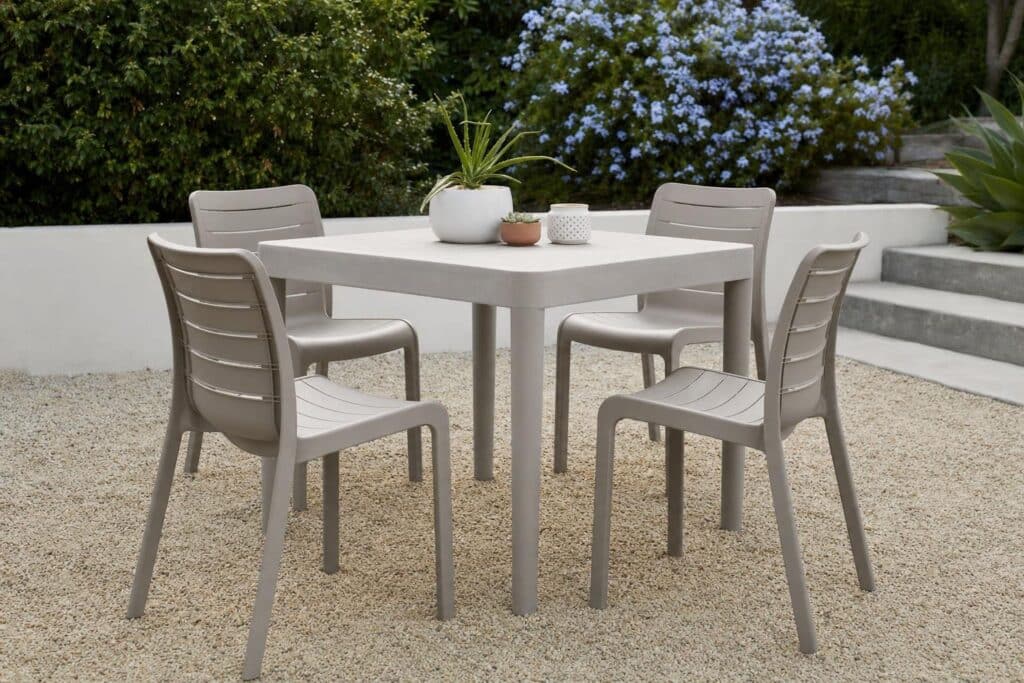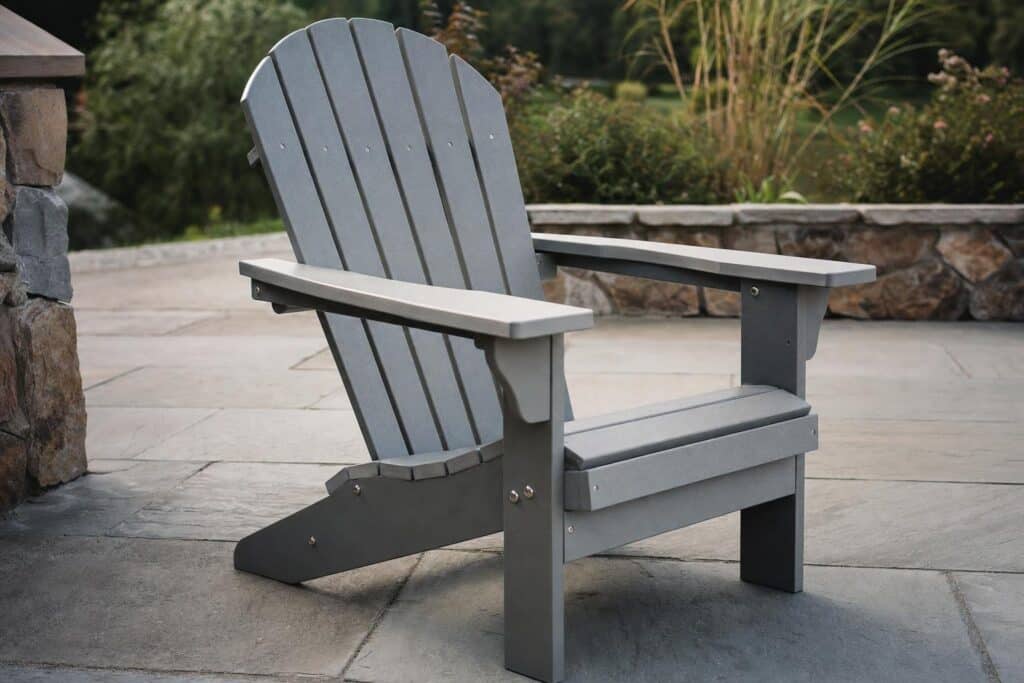
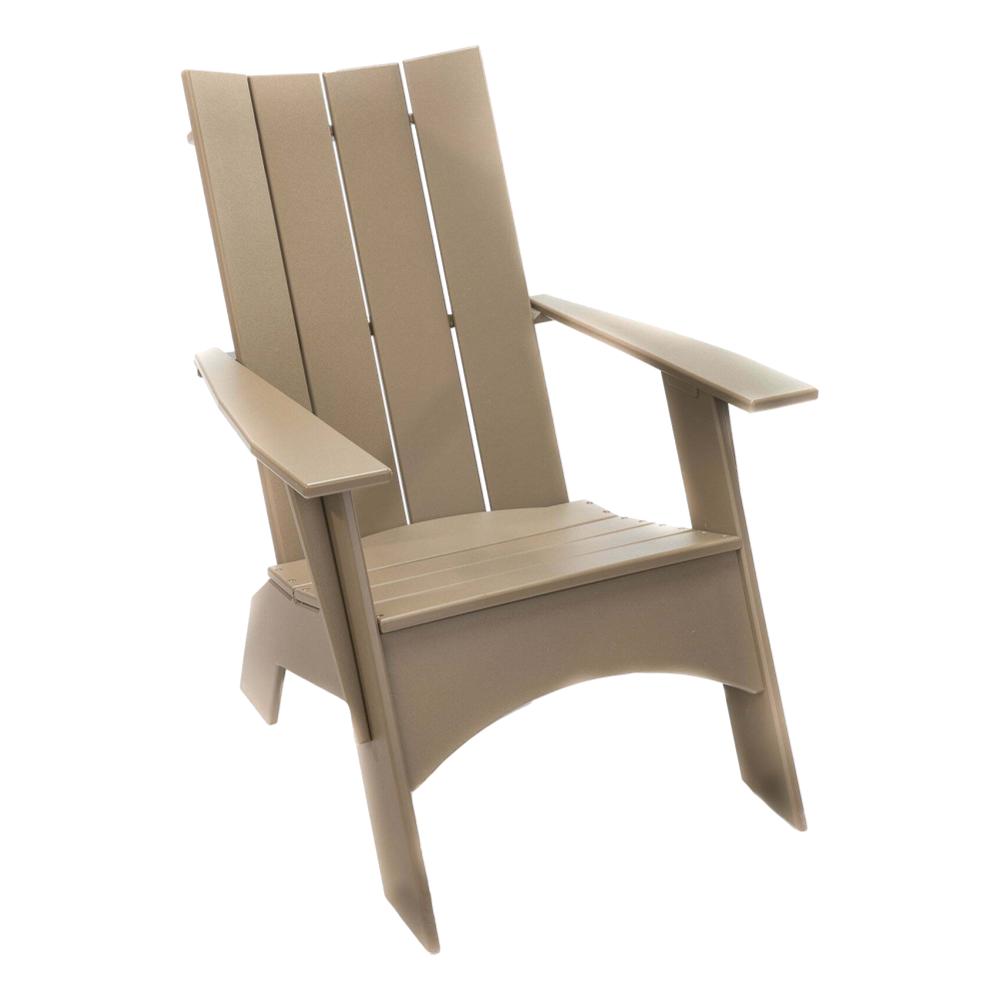
Choosing between poly, teak, and aluminum patio furniture starts with how you want to use and care for the space. In Arizona and Texas, direct sun is also a practical comfort consideration. The material name alone cannot tell you which chair will feel comfortable, how often its particular finish needs attention, or whether you can easily move it into storage.
This guide compares the decisions each material raises: appearance, documented care, finished product weight, and the terms behind the purchase. It does not rank surface temperatures or predict a universal lifespan. Plastic Furniture To Go sells Marine Grade Polymer furniture; we use our published specifications as one product example while explaining what to ask of teak and aluminum sellers.
Start by writing down three things: whether you want to preserve a particular color, who will move the furniture, and when you normally sit outside. These answers give you a more useful starting point than a claim that one material is always best for a hot climate.
Compare the material and the finished product separately
| Material option | What to examine | What to request |
|---|---|---|
| Poly or polymer furniture | The seller’s actual material description, hardware, and color terms | Product measurements, care directions, and separate component coverage |
| Teak furniture | The wood’s current finish and the appearance you want as it weathers | Care instructions for that finish and guidance on changes requiring inspection |
| Aluminum furniture | Frame construction, coating, hardware, and any sling or cushions | Finish-specific cleaning instructions and coverage for each component |
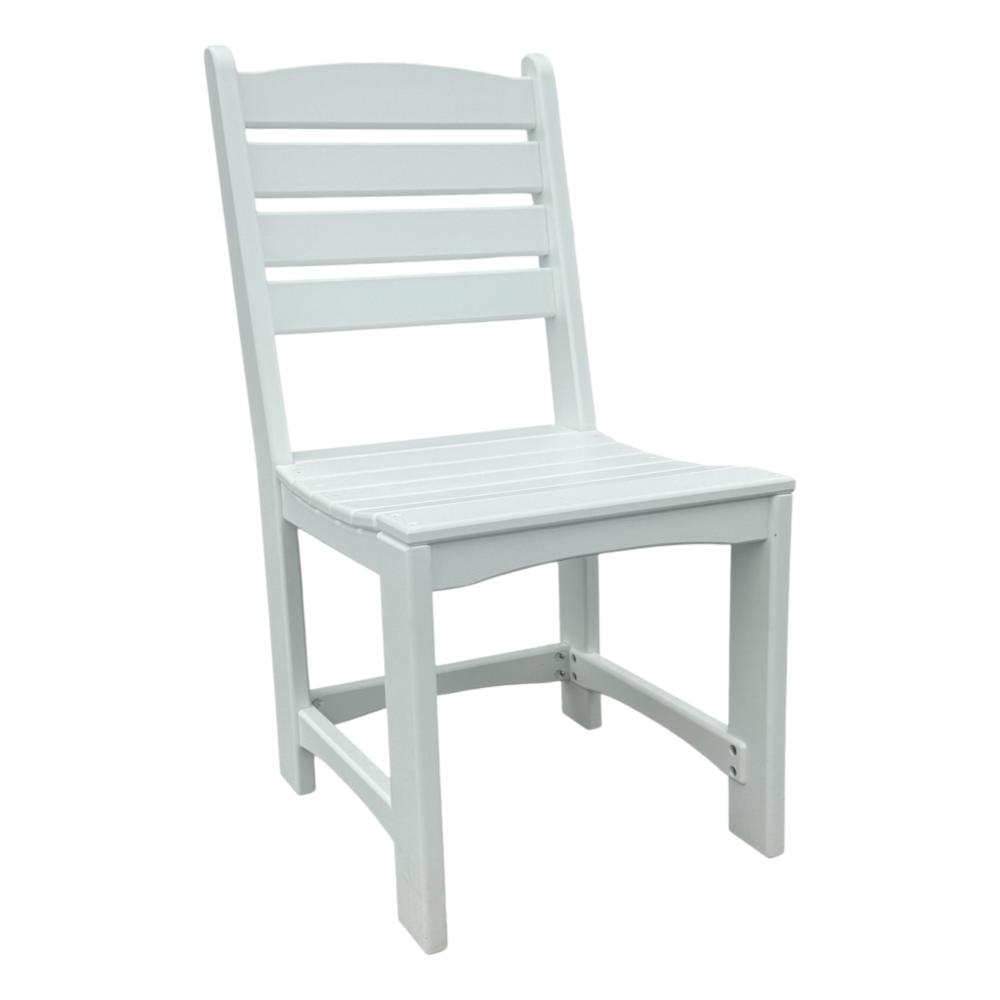
Compare chairs that serve the same purpose. A reclining lounge with a cushion, an upright dining chair, and an Adirondack may all be outdoor seating, but their shape and additional components change the comparison. A material choice that works for a dining area may not be the one you prefer for a reading corner.
Poly: begin with the seller’s precise material description
“Poly” is a broad shopping term. Manufacturers use different material names and specifications, so do not assume identical formulations or construction. Plastic Furniture To Go identifies its current catalog as Marine Grade Polymer outdoor furniture and includes 3/16-inch stainless steel hardware. Those are the facts to compare with another seller’s documentation.
Look for the maintenance instructions supplied with the product and ask about cleaners before trying them. A low-maintenance description is not a promise that inspection or cleaning will never be needed. Likewise, a color name does not establish a temperature rating, and an outdoor material label does not answer whether a particular product is suitable for immersion or another unusual use.
Teak: decide how you feel about weathered wood
Natural wood appearance changes outdoors. The USDA Forest Service’s guidance on finishing wood describes color change and surface effects associated with weathering, and explains that finish selection depends on the desired appearance and protection. That general guidance is useful context; it is not a warranty or a diagnosis of any individual teak chair.
A gray patina is a familiar weathered teak appearance. The University of Washington’s teak bench information describes that change in its own benches without treating the patina alone as a loss of quality. Your seller’s product and care directions should guide your purchase. Do not assume a fixed time to gray, a universal oiling schedule, or that every crack is merely cosmetic.
If keeping a particular wood color matters to you, ask which finish the chair has when delivered and what the maker recommends for maintaining it. If you prefer a weathered look, ask how to clean and inspect it while allowing that appearance to develop. Both preferences can be valid; the useful question is whether you are willing to follow the instructions for the chair you choose.
Aluminum: include the finish and upholstery in the comparison
The Aluminum Association explains that aluminum forms a protective oxide layer and does not rust in the same way steel does, while also documenting conditions that can cause staining. That is material background, not a guarantee that an assembled outdoor chair is immune to corrosion, staining, or finish problems.
Check the actual coating, joints, fasteners, and any fabric components. The association’s care guidance distinguishes between finishes, including painted and anodized surfaces. Follow the furniture maker’s instructions for your finish rather than applying a generic touch-up routine. For a cushioned or sling chair, read those components’ cleaning, storage, and warranty terms too.
Plan shade before trying to pick a temperature winner
Direct sun affects how comfortable a patio feels, regardless of the chair you select. The National Weather Service’s heat tools guide explains that Heat Index describes shaded, light-wind conditions, while other measures account for direct sun. This supports planning for exposure; it does not establish which furniture material has the coolest seating surface.
We do not publish a model-specific surface-temperature test for Plastic Furniture To Go furniture. We therefore do not promise that Marine Grade Polymer stays cooler than teak or aluminum, or assign a safe surface temperature to a color. Check the seating surface before use and consider how shade reaches the area at the time you actually want to sit there.
Observe the space in the morning and afternoon. A covered corner may receive low-angle sun later in the day, while a place that looks exposed at noon may be shaded when you use it. Mark where you would place the chairs and the route you use to reach them. Shade planning is useful even when you are replacing furniture with the same material.
For more about planning the space, see our Arizona outdoor furniture guide and Texas patio furniture guide. Use the material comparison here to choose what to investigate, then use those guides for the patio’s location and layout.
Make a realistic care and handling plan
Ask each seller for care instructions before buying. Record the permitted cleaners, any recommended finish treatment, and what to do if you notice a loose fastener, damaged finish, or unusual movement. A short written routine is easier to evaluate than a promise of effortless ownership.
Include everything you will maintain. Cushions, slings, covers, and matching tables may have different instructions from the chair frame. Decide where removable items will go when they are not in use. If storage is upstairs or through a narrow doorway, check the product’s dimensions and weight against that route.
A material category is not a reliable substitute for the finished item’s weight. Our Hampton Adirondack is 52 lb, the Armless Café Chair is 27 lb, and the Stool is 21 lb. These figures describe three specific products, not a universal weight range for polymer furniture. Ask teak and aluminum sellers for the same finished-product figure rather than comparing a chair’s weight with another product’s packaged shipping weight.
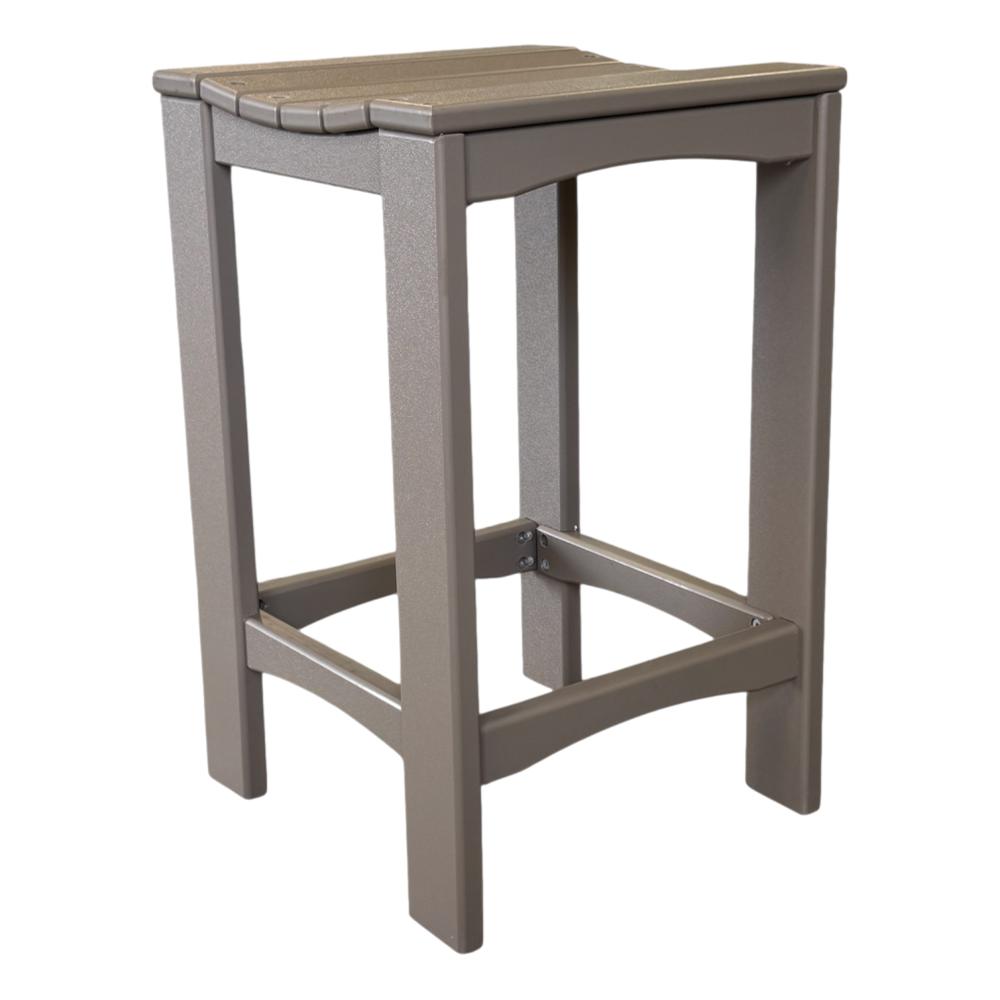
Think through the full move: lifting from its normal position, passing a threshold, and setting the chair down without dragging it. Weight alone does not tell you whether a shape will be easy for you to handle. It also does not provide a wind rating or load capacity. Secure or move outdoor items according to local weather warnings and the maker’s directions.
Choose a product whose appearance and terms suit you
If the appearance of real wood is your priority, investigate teak models and the care needed for the finish you want. If a coated frame, sling, or cushioned design appeals to you, investigate specific aluminum models and their component instructions. If you prefer a polymer option, compare the seller’s material, dimensions, hardware, and written terms.
For our current catalog, the purchase terms include a seven-year warranty against structural defects in materials and workmanship and a separate five-year fading warranty. Read the full returns and warranty terms. Warranty duration is not a service-life prediction, and fading coverage is not a promise that color never changes.
Compare the complete order cost, including accessories, delivery, and applicable taxes. Plastic Furniture To Go offers free nationwide shipping. Change-of-mind returns have conditions: items must be new, unused, unassembled, in their original packaging, and returned within the published window. Read those conditions before deciding that you can assemble a chair and send it back if the feel disappoints you.
Then check the fit. A material preference should not override the available footprint or your seating needs. Our furniture fit calculator helps compare layouts using our product dimensions. For a model-by-model shopping process, use the Adirondack comparison checklist.
Frequently asked questions
Which material stays coolest in Arizona or Texas?
This guide does not establish a temperature winner. Exact products, finishes, exposure, and conditions differ. Plan shade, check the seating surface before use, and ask for model-specific evidence if a seller makes a temperature claim.
Is teak’s gray appearance a reason to reject it?
A weathered appearance can be part of the attraction of teak. Decide whether you like it and follow the maker’s care guidance. The appearance alone does not diagnose the condition of a particular chair.
Can I choose based on material alone?
Use material to narrow the search, then compare the actual design, care instructions, dimensions, and terms. To consider our Marine Grade Polymer options, view the catalog or send us your product questions.