A smart pet friendly patio furniture layout should work for everyone who uses the space, including dogs and cats that move fast, nap often, and track in messes. The goal is not to turn your patio into a kennel. It is to create a clean, easy outdoor setup with safer pathways, stable seating, and simple maintenance.
That starts with furniture placement, not just furniture style. By leaving clear routes, choosing durable pieces, and setting up eating, lounging, and water zones with intention, you can make your patio more comfortable for pets while keeping it attractive for everyday living and entertaining.
Start with open routes instead of a crowded seating plan
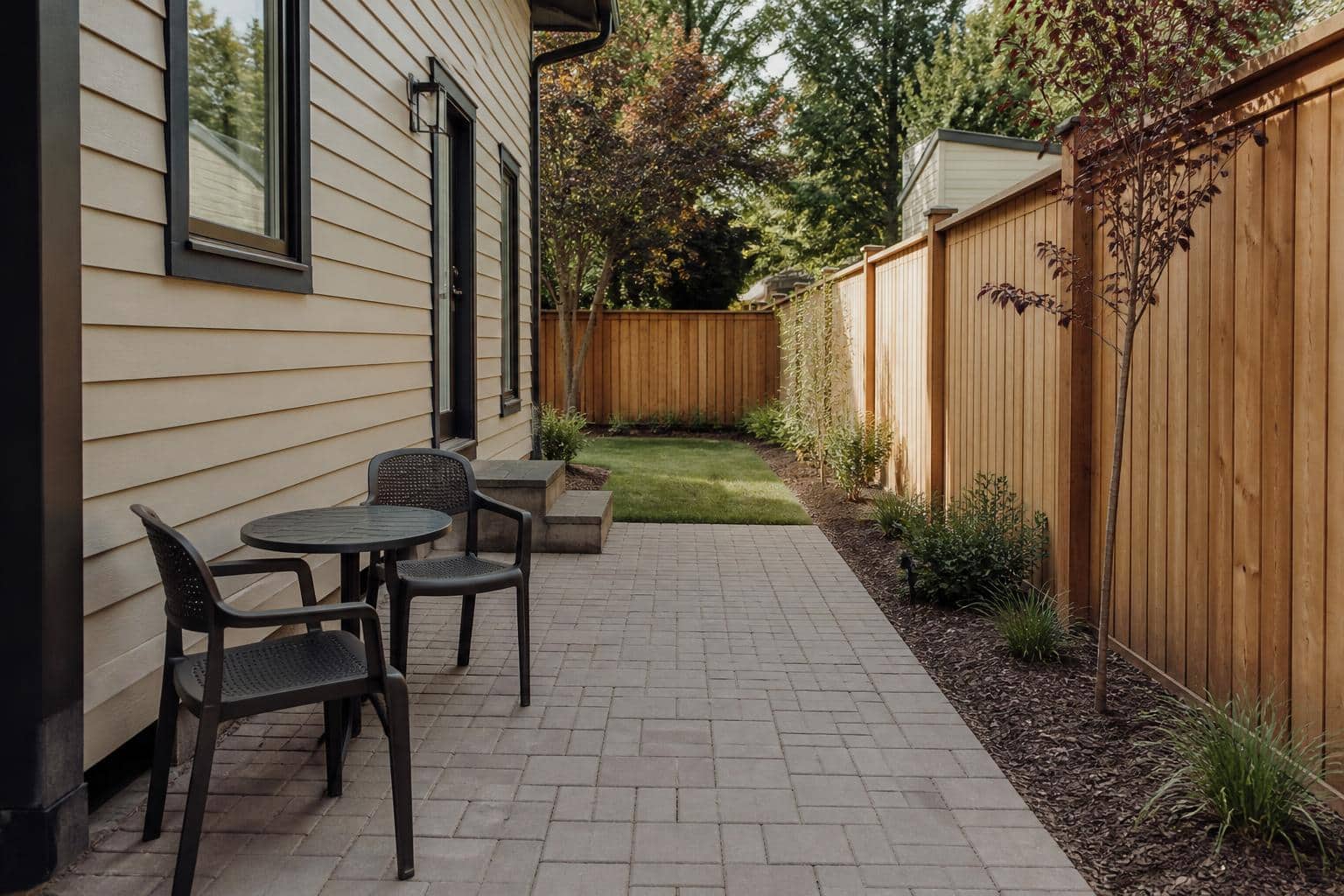
Pets rarely move through a patio the same way people do. They cut corners, loop around table legs, pause near gates, and sprint toward a door when they hear movement inside. A pet-aware layout leaves obvious paths rather than forcing animals to weave through a tight cluster of chairs.
Begin by identifying the routes your pet already uses. These usually include the back door, steps, a gate, the yard, and any shaded rest spot. Keep those lines as open as possible. Instead of centering every piece around one table, shift seating to the perimeter so the middle of the patio stays easy to cross.
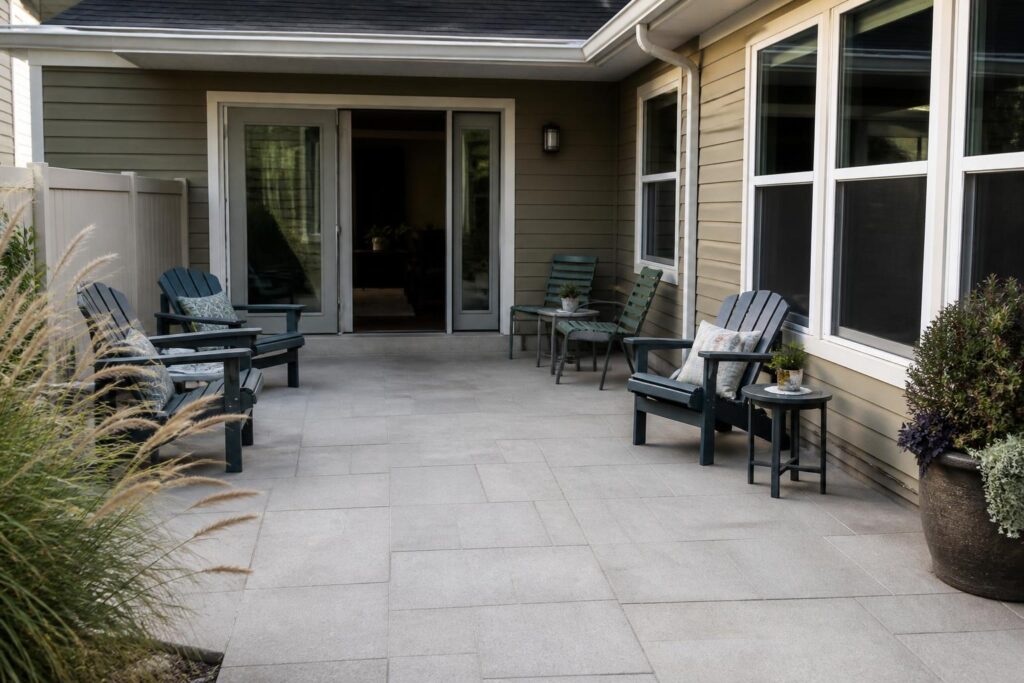
This is also where heavier furniture can help the overall feel of the layout. Substantial pieces are less likely to feel flimsy or get nudged out of place during daily movement. For example, a Hampton Adirondack Chair weighs 52 lb, while Hampton round and square end tables weigh 15 lb each. That weight can support a more grounded layout that does not feel temporary or fussy.
If you are planning a full refresh, browse Marine Grade Polymer furniture first so you can map routes around the actual furniture types you want to use.
Create distinct zones for people, pets, and traffic
One of the easiest ways to improve a pet-friendly patio is to stop asking every square foot to do everything at once. Give each activity its own zone. Even small patios can usually support three simple areas: a seating area, a pass-through route, and a pet rest or water area.
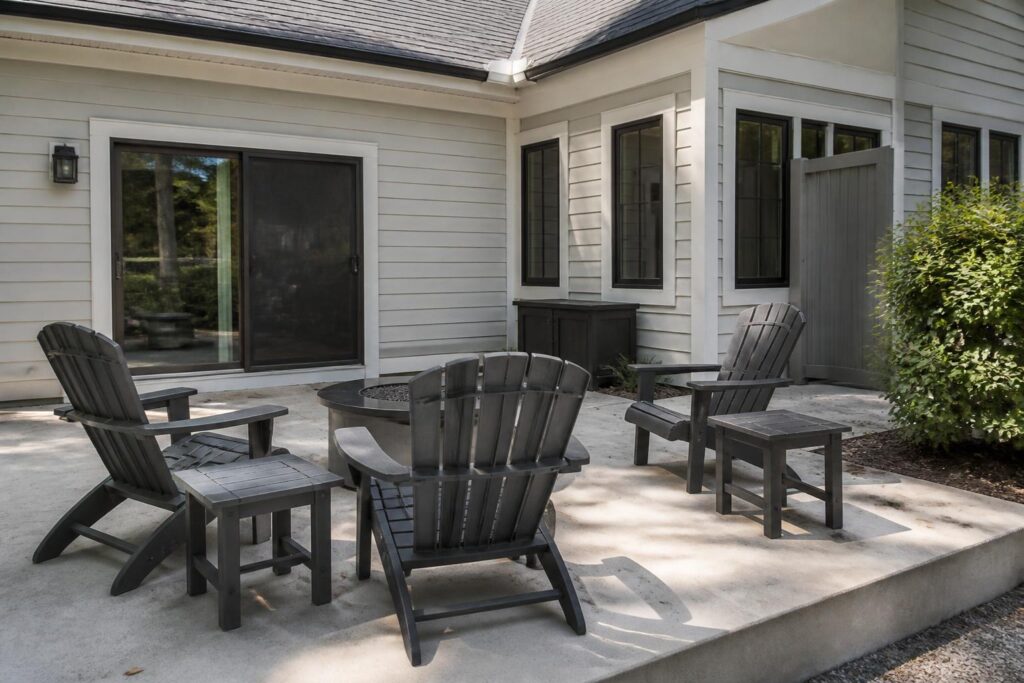
Your seating zone can hold the main chairs, side tables, or a dining set. Keep this zone visually cohesive so the space still feels designed. A pair of Adirondack chairs with end tables works well along one side, while cafe chairs can tuck into a smaller dining corner without taking over the full footprint.
The traffic zone should stay open and direct. Avoid placing stools, planters, or side tables where they interrupt the line between the door and yard. Counter Height Stools weigh 21 lb and Armless Cafe Chairs weigh 27 lb, so they can feel more substantial than lighter outdoor pieces, but they still need placement that does not create a slalom course.
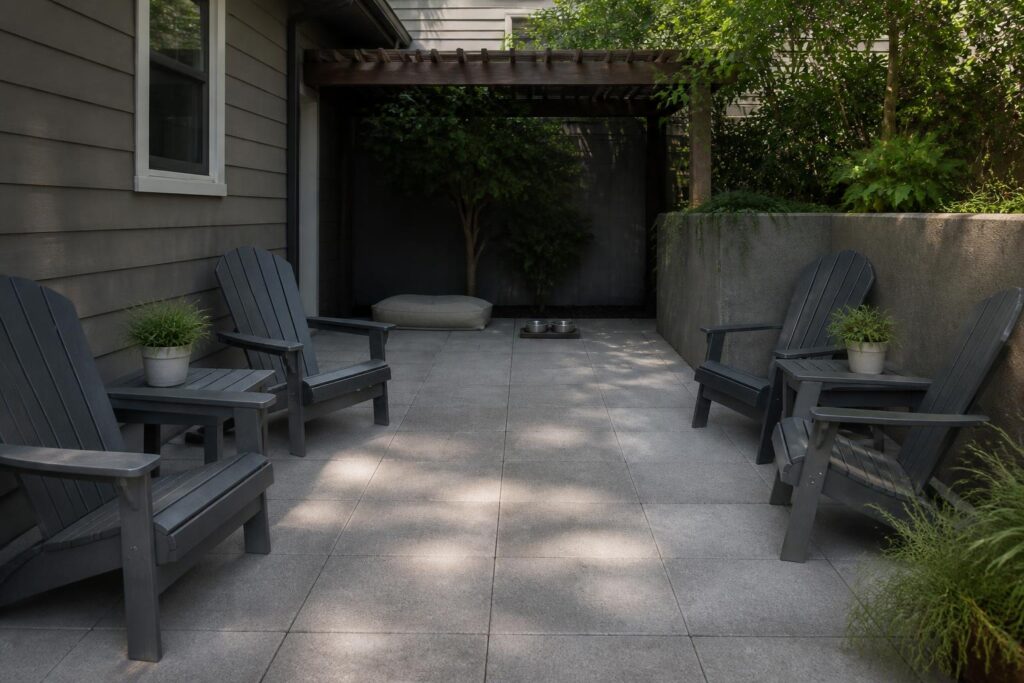
The pet zone should be near the family, not hidden away. Pets typically settle better when they can see the people they came outside with. A corner with shade, a water bowl, and enough open floor area to lie down can prevent your dog or cat from claiming the middle of the main walkway as a resting place.
Use shade to encourage better resting spots
If your pet always ends up under a chair, under a table, or pressed against the house wall, that behavior often points to a comfort problem in the layout. Shade can guide where pets choose to rest, which in turn affects how smoothly everyone moves through the patio.
Think about where the shade falls during the times you actually use the space. Morning shade and late afternoon shade may land in completely different places. Arrange primary seating where people will be comfortable, then identify a nearby shaded area where a pet can settle without blocking circulation.
This does not require a large footprint. Often, moving a chair grouping a few feet to one side is enough to free up a cool edge area for a pet bed or mat. It can also help to avoid filling every corner with decorative accessories. Empty floor space is useful when you share the patio with an animal that wants to sprawl, stretch, or reposition throughout the day.
For cleaning products used around bowls or pet areas, choose labels carefully and follow directions. The EPA Safer Choice program can be a helpful starting point when you compare household cleaners for routine use.
Choose stable furniture that stands up to daily movement
A pet-friendly layout works better when the furniture itself feels planted and dependable. Dogs brushing past chair legs, paws landing on table edges, and the normal bumping of outdoor life all add up. Lightweight pieces may need frequent repositioning, which can slowly break down the layout you intended.
Furniture made from Marine Grade Polymer is a practical fit for this kind of everyday use. It is also worth paying attention to hardware and construction details. Plastic Furniture To Go uses 3/16-inch stainless steel hardware, which supports a sturdy feel in outdoor settings.
Stable placement matters too. Keep chairs fully on level surfaces rather than half on and half off a rug edge or paver transition. If you use side tables, place them where they are useful to seated adults but not in the direct path of a pet racing around a corner. Avoid balancing an entire arrangement around one narrow access point. A little extra space between major pieces can make the patio feel calmer and easier to use.
Because these products are American Made and ship free nationwide, it is possible to plan a cohesive layout without piecing together mismatched items from several sources.
Make cleanup simple with easy-to-reach surfaces
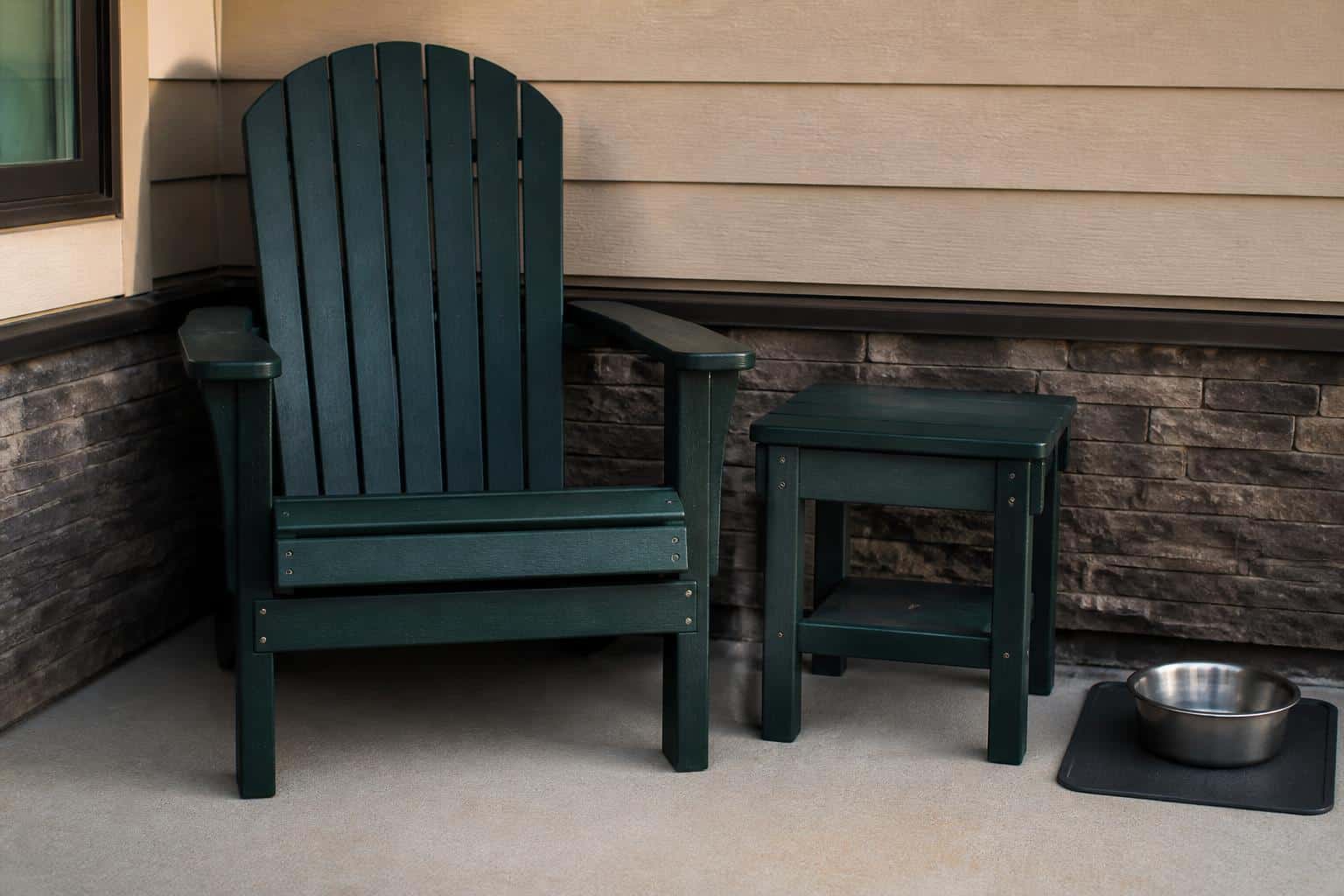
Pet-friendly design is not only about movement. It is also about how fast you can recover from muddy paws, water drips, shedding, and the occasional tipped bowl. A better layout reduces the number of fussy corners and hard-to-reach areas that trap debris.
Leave enough space between the back edge of furniture and the house wall to wipe down surfaces and sweep underneath. If chairs are packed tightly around a table all season, cleanup becomes a chore, and the patio starts feeling less usable. On the other hand, a bit of breathing room makes regular maintenance more realistic.
Try to avoid placing the pet water area directly beside soft furnishings or in the narrowest route on the patio. Water bowls are easier to manage when they sit on a stable section of the patio with open access from at least one side. That way, refilling and wiping up does not interrupt the whole arrangement.
Marine Grade Polymer furniture is especially helpful when you want a straightforward outdoor setup that can handle routine wipe-downs. If low-maintenance performance is a priority, the material overview at this page is a good place to compare options for your patio plan.
Protect the water area without turning it into clutter
Every pet-friendly patio needs a sensible place for water, but many setups treat it like an afterthought. The result is a bowl jammed next to a doorway, tucked under a chair, or left where people constantly kick it. A better layout gives the water station a fixed home.
Look for a spot that is easy for your pet to reach but not centered in the busiest route. A side zone near seating often works well because it keeps the bowl visible and convenient while reducing accidental bumps. If you use a side table nearby, keep enough distance that splashes stay away from items you want to keep dry.
It is also smart to think about edges. Avoid placing a water bowl where a pet has to crowd against a stair, threshold, or narrow railing line to drink. Animals should be able to approach, pause, and step away without creating a traffic jam. In a compact space, moving one chair or table can solve the problem better than adding more accessories.
The most successful water areas are simple: open floor area, easy refill access, and no decorative clutter around the bowl.
Keep dining and snack spots separate from pet routes
Outdoor meals and pet movement can compete for the same square footage if the layout is too compressed. If your patio includes a dining set or cafe arrangement, give that area enough separation from the most active pet route so people are not stepping over an animal while carrying drinks or plates.
Armless Cafe Chairs can be a smart option for smaller spaces because they support a tidy footprint without adding unnecessary bulk. Keep them arranged so guests can slide in and out without backing directly into the pet zone. If your dog tends to circle under tables, leave a little extra clearance around the dining area rather than packing chairs tightly together.
Counter-height seating should also stay clear of high-traffic pet paths. Stools can work well along a defined edge, such as an outdoor bar or narrow conversation area, where they do not interrupt movement to the yard or door.
The bigger idea is separation by purpose. Dining should feel relaxed, and pets should have a comfortable place nearby that does not put them underfoot every few minutes.
Plan for everyday use, not a staged photo
The best pet-friendly patio layouts are usually the least overdecorated ones. A patio can still look polished, but it should reflect how your household actually uses the space. If your pet spends time outside every day, the layout needs to support repeated movement, regular cleanup, and comfortable resting spots.
That may mean fewer decorative pieces and more open floor area. It may mean selecting two substantial lounge chairs instead of squeezing in four mismatched seats. It may mean setting one end table beside a chair and leaving the opposite side open for a pet bed or water station.
Long-term value also comes from buying furniture built for outdoor living. Plastic Furniture To Go offers American Made furniture with free nationwide shipping, a 7-year structural warranty, and a 5-year fade warranty. Those details can make a difference when you want a patio setup that stays usable season after season.
If you are still sketching out the layout, start with your biggest pieces first, then leave more open space than you think you need. Pets will use it.
Frequently Asked Questions
How much open space should a pet-friendly patio have?
There is no single number that fits every patio, but the main traffic route should feel clear and direct from the door to the yard or steps. If your pet has to zigzag around multiple chair legs or tables, the layout is probably too tight.
Where should I put a pet water bowl on the patio?
Place it in a visible side zone that is easy to reach but outside the busiest walking path. Keep it on a stable surface with enough surrounding space for your pet to approach and leave comfortably.
What type of outdoor furniture works well for homes with pets?
Look for durable, easy-to-clean furniture with a stable feel and straightforward placement. Marine Grade Polymer furniture is a strong fit for patios where daily messes, frequent movement, and regular wipe-downs are part of normal use.
Can a small patio still be pet-friendly?
Yes. Small patios benefit even more from simple zoning, fewer obstacles, and carefully placed seating. Focus on one clear route, one comfortable pet rest area, and furniture that does not overcrowd the footprint.
Shop outdoor pieces that support a cleaner, more practical layout at /shop/, or contact the team online if you want help choosing a better patio setup.